SGS Onsite-Verified Fused Quartz Manufacturer [email protected]
0%

Choosing among Fused Silica manufacturers in China takes more than comparing prices or polished product pages. Buyers should check whether a supplier’s grades match their intended use, from precision casting and refractories to electronic materials. Small differences matter. Purity, particle-size distribution, thermal expansion, moisture levels, and batch consistency can affect processing and final performance.

A reliable shortlist starts with verifiable details. Review technical data sheets, recent certificates of analysis, quality-control procedures, and sample results. Ask how the manufacturer manages raw materials, production changes, packaging, and traceability. These questions help distinguish a genuine production partner from a trading company, though clear documentation alone cannot guarantee consistent quality. Requesting samples and checking them against agreed specifications is still important.

There is no universal “best” supplier. A manufacturer suited to high-purity applications may not offer the right grade or service for foundry work. Compare production capacity, customization, communication, lead times, and export experience alongside price. Where possible, speak with existing customers or arrange an independent inspection. Some information may remain difficult to verify from a distance; that deserves honest consideration. This guide explores how to assess leading Chinese manufacturers using practical criteria, while treating rankings as a starting point rather than a substitute for your own technical checks.
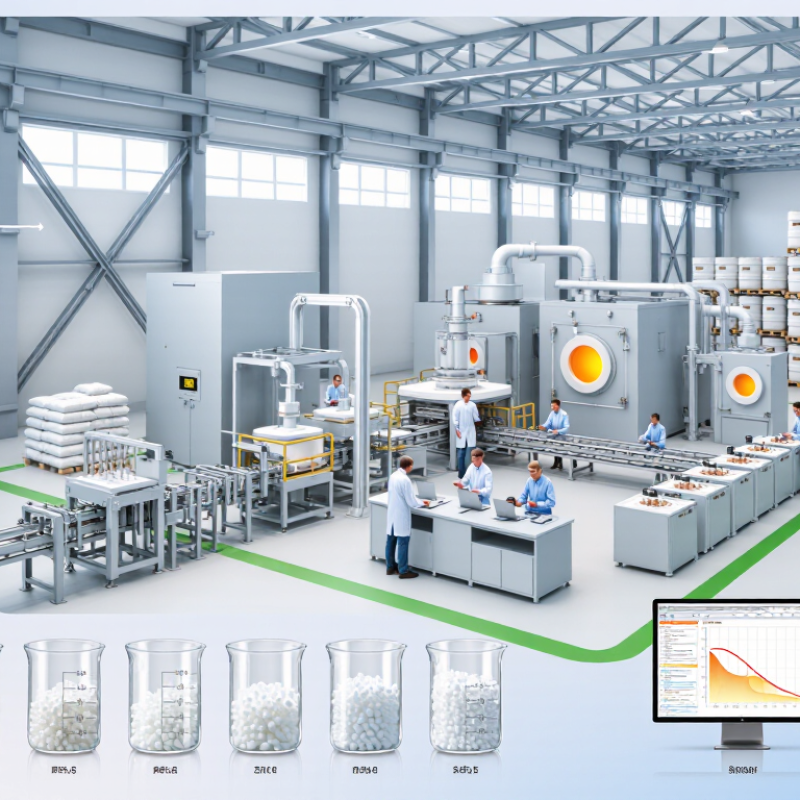
Who Are the Best Fused Silica Manufacturers in China?

What Fused Silica Is and How It Is Made

Fused silica is glass made almost entirely from silicon dioxide, or SiO₂. Unlike ordinary glass, it contains very little added material. Its atoms lack the orderly pattern found in crystals. That matters. This structure gives fused silica low thermal expansion, strong resistance to heat, and useful optical clarity. It is used in applications such as laboratory ware, furnace components, and optical parts.

Manufacturers commonly produce it by melting selected high-purity quartz or silica sand in an electric furnace. Some also make synthetic fused silica through flame hydrolysis, using silicon-containing feedstock. The molten material is refined to reduce bubbles and inclusions, then cooled into a solid block. That block may be cut, crushed, or ground to meet a buyer’s size requirements.

Quality checks can include chemical analysis, particle-size measurement, and inspection for visible defects. Small differences in raw material or furnace conditions can affect the final product. A clear appearance alone does not prove consistent purity. The process sounds straightforward, but controlling contamination and temperature takes careful work.

Even so, no production route is flawless, and specifications should be checked against the intended use.

How to Evaluate Fused Silica Manufacturers in China

Evaluating fused silica manufacturers in China starts with the material, not the sales brochure. Ask how they control quartz feedstock, melting conditions, cooling, and crushing, since each step can affect purity and thermal behavior. Request a current specification sheet and a lot-specific test report. Check chemical composition, particle-size distribution, moisture, and whether reported values describe a typical lot or a guaranteed limit. Details matter. Compare the documents with a sample tested under your own process conditions.

Production capacity is useful only when quality remains stable between batches. Ask about sampling plans, retained samples, calibration records, and procedures for handling out-of-spec material. Request photos or a video of relevant production and packing areas, then confirm that the process matches the provided records. Talk with technical staff about your application, including operating temperature and required grain size. A fast quotation is not proof. Ask for a small trial order and review packaging, labeling, and delivery consistency. That takes time. Some buyers overvalue certificates; they help, but cannot replace traceable test data and clear answers when results differ.

Who Are the Best Fused Silica Manufacturers in China? — How to Evaluate Fused Silica Manufacturers in China

Evaluation Dimension What to Request or Check How to Evaluate It Practical Importance
Product specifications Request a current technical data sheet stating grade, intended application, particle-size range, chemical composition, and applicable test methods. Check that the specification is specific to the offered grade and matches the requirements of your process. Do not compare products using grade names alone. Confirms that the material is suitable for the intended use.
Chemical purity Ask for a lot-specific certificate of analysis (COA), including SiO₂ content and limits or results for relevant impurities such as Al₂O₃, Fe₂O₃, and alkalis. Compare reported values and test methods with your limits. Confirm whether results are measured values or guaranteed maximums. Impurities can affect performance in high-purity and temperature-sensitive applications.
Particle-size distribution Request the full particle-size distribution, including D10, D50, and D90 where applicable, plus the measurement method and sample preparation details. Compare the distribution—not just a single nominal size—with your process limits. Laser diffraction particle-size analysis is covered by ISO 13320. Particle size and distribution can influence packing, flow, surface finish, and processing consistency.
Physical and thermal properties Request relevant data for the specific grade, such as density, thermal expansion, thermal stability, and softening or transformation characteristics where applicable. Check test conditions and methods before comparing values. Properties depend on material form, composition, and measurement conditions. Helps determine suitability for thermal cycling, casting, refractory, or other demanding processes.
Batch consistency Ask for COAs from several recent production lots and written limits for key properties. Compare lot-to-lot variation in chemistry, particle size, and other critical characteristics. Ask how out-of-specification batches are handled. Consistent batches reduce production variation and incoming inspection risk.
Quality management Request the quality-management certificate, its validity dates, certification body, and the sites and activities within its scope. Verify the certificate with the issuing certification body or its official registry. A certificate alone does not establish product suitability. Provides evidence of a documented quality system and defined process controls.
Traceability and change control Ask how each shipment is linked to its production lot, raw materials, inspection records, and COA. Request the supplier’s change-notification process. Check that lot numbers appear on packaging and documents, and that material or process changes are communicated before implementation. Supports investigations, repeat orders, and controlled qualification.
Sampling and qualification Request a representative sample, sample identification, and a written procedure for ordering and evaluating trial material. Test the sample using your own acceptance methods. Confirm that production orders will use the same approved specification and grade. Verifies fit with your equipment and process before larger orders.
Packaging and contamination control Confirm packaging material, moisture protection, sealing, labeling, and measures to prevent cross-contamination during handling. Match packaging to transport, storage, and cleanliness requirements. Inspect sample packaging and request written handling instructions. Protects material condition and helps maintain traceability during transit and storage.
Capacity and delivery reliability Request confirmed production capacity for the required grade, typical lead time, minimum order quantity, and shipment documentation. Assess whether the supplier can meet your forecast and delivery schedule; distinguish confirmed capacity from estimates. Reduces supply interruptions and supports production planning.
Technical support and corrective action Ask who handles technical questions, complaints, root-cause investigations, and corrective-action reports. Evaluate response quality and whether the supplier can provide documented investigation findings and follow-up actions. Useful when trial results or production performance differ from expectations.
Total cost and commercial terms Compare quoted price, sample and testing charges, packaging, freight, payment terms, minimum order quantity, and delivery terms. Compare the complete delivered cost and agreed specification—not unit price alone. Confirm quotation validity and responsibility for transport risks. Supports a fair comparison of offers and avoids unexpected costs.

Leading Fused Silica Manufacturers in China

Leading fused silica manufacturers in China are best assessed by process control, not polished product descriptions. Buyers should ask how raw quartz is selected, how melting conditions are monitored, and how contamination is limited during crushing and grading. These steps influence purity, thermal stability, and particle-size consistency. Request batch-specific test records for chemical composition and size distribution. Good documentation matters. A reliable supplier should explain how each measurement relates to the intended use, such as precision casting, refractory mixes, or electronic components.

A practical evaluation includes testing a sample lot with the same methods used for incoming production material. Compare particle shape, flow, and moisture after opening the package; small differences can affect mixing and handling. Check whether packaging protects the powder from moisture and damage during transport. Price alone is a weak guide. No producer is perfect. Even a detailed datasheet cannot predict every result in a customer’s process, so trial batches remain useful. If a supplier’s answers are incomplete, record what needs verification rather than treating an assumption as a specification.

Fused Silica Manufacturing: A Material Benchmark

Typical room-temperature coefficients of thermal expansion show why fused silica is valued for applications requiring dimensional stability. These material-level figures do not rank manufacturers; actual product specifications vary by grade and supplier.

Products and Applications Offered by Chinese Manufacturers

Chinese manufacturers supply fused silica in several forms, including transparent plates, tubes, rods, crucibles, and custom-machined parts. Availability varies by producer and production line. For optical systems, low-bubble plates and shaped components can serve as windows, lenses, or protective covers. Semiconductor and laboratory equipment may use tubes and vessels where heat resistance and low thermal expansion are important. Foundries also use silica crucibles in high-temperature processes. Exact grades and tolerances differ.

Applications depend on purity, dimensions, surface finish, and operating temperature. A component that looks clear may still contain bubbles or inclusions that affect demanding optical work. It matters. Buyers can request material specifications, inspection records, and sample measurements before placing a large order. For custom parts, confirm drawing tolerances and edge quality, not just the material name. Some manufacturers can cut, grind, polish, or drill silica to order, though available processes vary. A practical discussion with the supplier helps match the product to the actual equipment. Not always a neat match; prototypes can reveal gaps that a datasheet misses.

How to Choose a Manufacturer for Your Requirements

Choosing a fused silica manufacturer starts with your application, not a catalogue grade. For UV optics, ask for transmission data at your operating wavelengths. For furnace parts, check thermal expansion, hydroxyl content, and dimensional tolerances. Request recent inspection records, test methods, and batch traceability. A certificate alone may not show how consistently a supplier controls bubbles or inclusions.

The USGS Mineral Commodity Summaries 2024 estimates U.S. industrial sand and gravel production at about 120 million metric tons in 2023. This figure covers a broad silica market, not fused silica specifically. It does, however, underline why raw-material origin and processing controls deserve separate checks. Compare sample measurements with the supplier’s stated limits, then ask whether the same process can meet them across repeat orders. Small differences matter.

Tips: Send a drawing, operating temperature, wavelength range, and expected order volume before requesting quotes. Ask for a representative sample and its test report. Check lead time, packaging, and replacement procedures, too. A polished datasheet is useful, but not enough. Verify the details.

FAQS

What is fused silica?

It is glass made almost entirely from silicon dioxide. Its atoms lack the orderly pattern found in crystals, helping it resist heat and expand very little.

How is fused silica made?

High-purity quartz or silica sand is melted in an electric furnace. Synthetic material can also be made through flame hydrolysis. The molten silica is refined, cooled, and cut, crushed, or ground.

What properties make fused silica useful?

It offers strong heat resistance, low thermal expansion, and useful optical clarity. Small changes in raw materials or furnace conditions can affect the final product.

What forms are available?

Products may include plates, tubes, rods, crucibles, and custom-machined parts. Options vary by producer and production line.

Where is fused silica used?

Uses include laboratory vessels, furnace parts, optical components, and foundry crucibles. The right grade depends on operating temperature, purity, dimensions, and surface finish.

How can buyers assess a supplier?

Ask how raw materials are selected and how melting, contamination, crushing, and grading are controlled. Request batch-specific test records. Price alone tells little.

Why request samples and test records?

Chemical analysis and particle-size measurements help verify a batch. Testing a sample with your usual methods can reveal differences in particle shape, flow, or moisture. Looks can mislead.

What should buyers check for custom parts?

Confirm drawing tolerances, edge quality, dimensions, and surface finish. A clear appearance does not rule out bubbles or inclusions. Not always.

Can a datasheet guarantee performance?

No. Specifications cannot predict every result in a customer’s process. Trial batches and prototypes can expose gaps before a larger order. A useful, imperfect check.

Conclusion

Fused Silica is a high-purity material valued for its low thermal expansion, heat resistance, and stable performance. It is typically made by melting carefully selected silica at high temperatures and processing it into forms suited to different industrial needs. When comparing manufacturers in China, buyers can assess raw-material quality, production capabilities, testing procedures, consistency between batches, technical support, and delivery reliability.

Chinese manufacturers may offer Fused Silica as powders, grains, or custom-sized products for applications such as ceramics, precision casting, electronics, and thermal insulation. The right supplier depends on the required purity, particle size, physical properties, order volume, and intended use. Clear specifications and direct communication can help buyers compare options, confirm product suitability, and build a reliable supply relationship.

Ethan Calloway

Ethan Calloway

Ethan Calloway is a marketing professional focused on helping people understand how products can address practical needs. With a strong command of the company’s product range, he combines careful research, clear communication, and a customer-centered perspective to make complex features easier to......