The Optical Core: High-Transmission Synthetic Silica (JGS1)
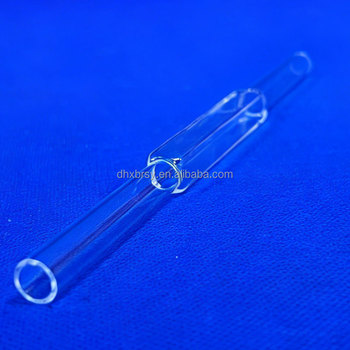
The primary advantage of choosing a fused silica or quartz flow through cuvette lies in its transmission window. While optical glass (borosilicate or BK7) loses transmittance below 320 nm, high-purity synthetic fused silica (JGS1) provides an uncompromising optical window from 185 nm deep-UV all the way to 2500 nm near-IR.
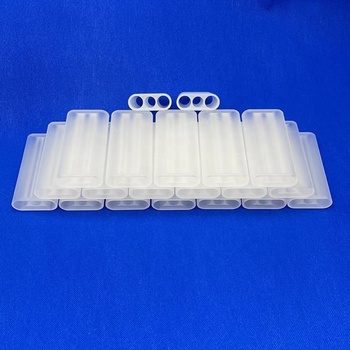
In life science monitoring—such as direct nucleic acid measurement at 260 nm, aromatic amino acid quantification (tryptophan, tyrosine) at 280 nm, or peptide bond detection at 205 nm—signal attenuation within the cuvette wall introduces unacceptable baseline noise. Lovri Quartz Products Co., Ltd. builds flow through cells exclusively with optical-grade synthetic quartz ensuring >82% internal transmittance at 200 nm, virtually zero auto-fluorescence, and total freedom from microscopic bubble inclusion striations.
Additionally, quartz provides extraordinary chemical inertness. Unlike acrylic, polystyrene, or polymethyl methacrylate disposable micro-cells, a fused silica flow cell withstands ultra-pure HPLC grade organic solvents (acetonitrile, tetrahydrofuran, hexane, dimethyl sulfoxide), strong concentrated acids, and alkaline cleaning regimes without clouding or surface crazing.
 SGS Onsite Assessed
 Verified Supplier
 CE-Compliant Standards