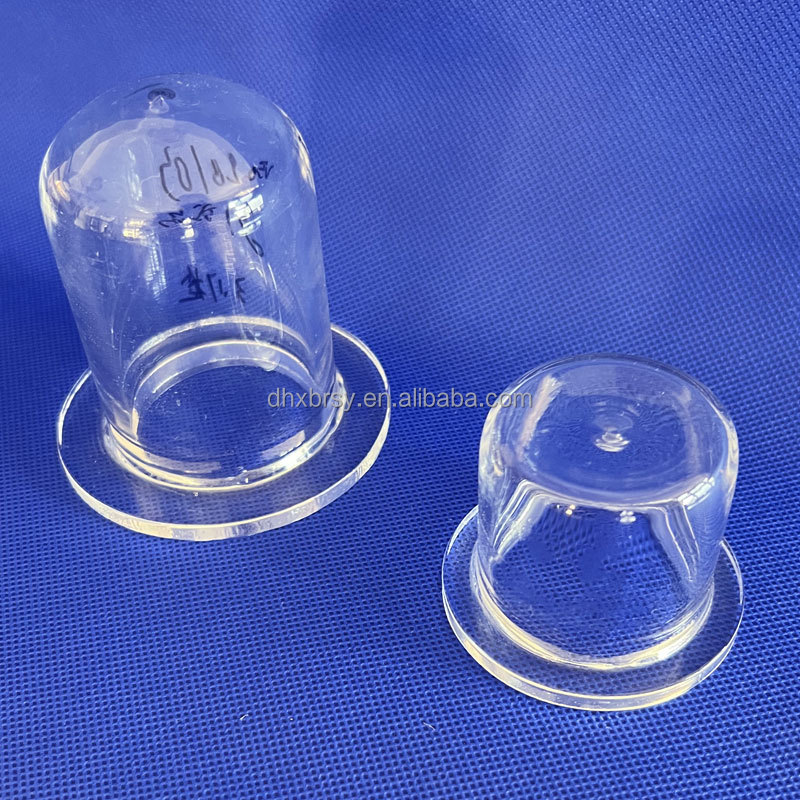
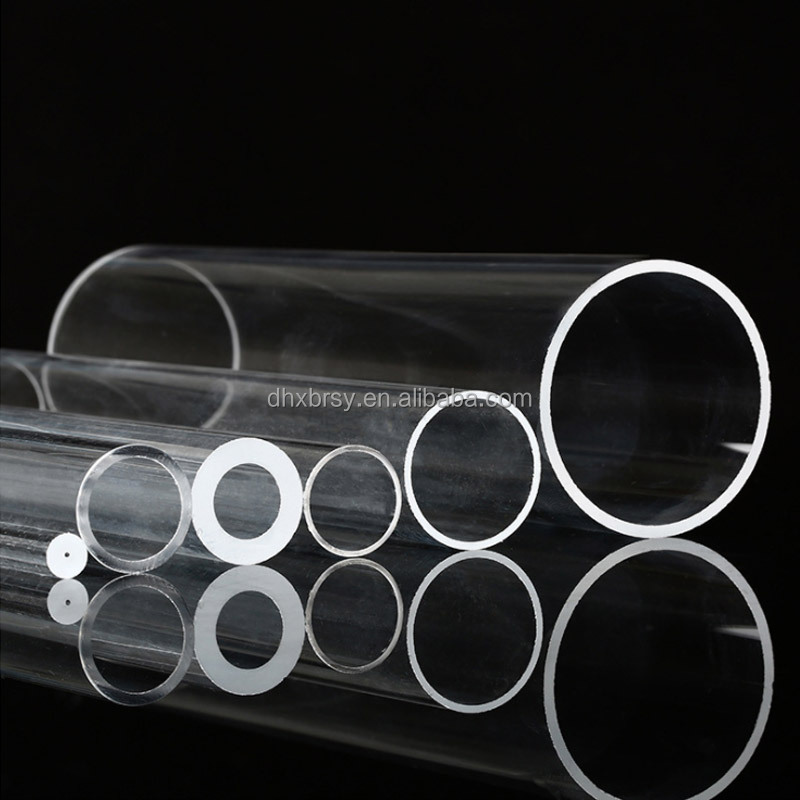
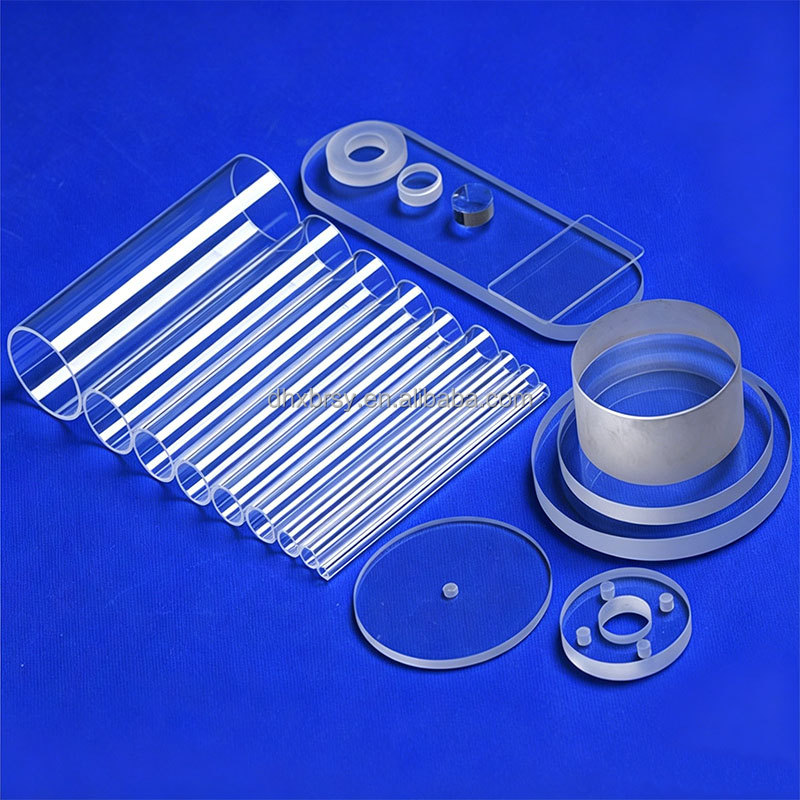
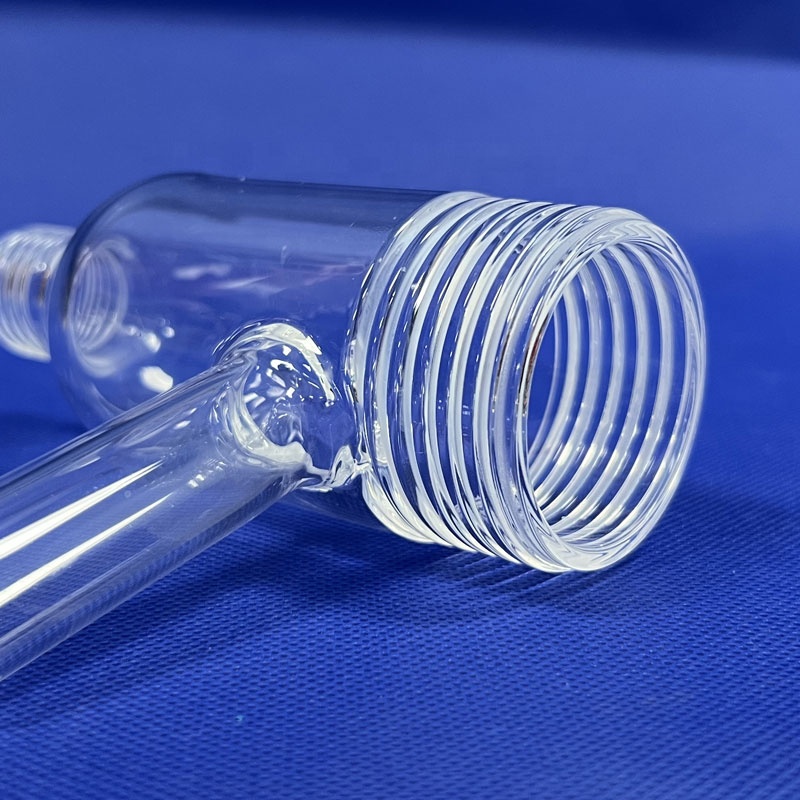
Technical Material Taxonomy: Synthetic Fused Silica vs. Natural Fused Quartz
In high-performance optics, precision viewports, and microelectronics fabrication, standard borosilicate or float glass fails completely due to excessive thermal expansion, low softening thresholds, and strong absorption bands. Optical quartz glass represents the pinnacle of single-component silicon dioxide (SiO₂) engineering. However, procurement directors and optical payload engineers must differentiate clearly between Synthetic Fused Silica (chemically vaporized from high-purity silicon tetrachloride SiCl₄) and Natural Fused Quartz (melted from refined natural quartz crystal sand).
The primary distinguishing technical parameters center on trace metallic impurities, hydroxyl content ([OH⁻] radical groups), and optical bubble inclusion grades according to ISO 10110 standards. Synthetic fused silica, characterized by Chinese Standard JGS1 (equivalent to Corning 7980, Suprasil 1/2, or Heraeus Spectrosil), is fundamentally free of metallic inclusions, enabling extraordinary transmission down to 185 nm in the deep ultraviolet (DUV) range. It exhibits zero fluorescence under UV excitation and possesses high resistance to excimer laser radiation damage.
Conversely, JGS2 represents flame-fused optical quartz manufactured from natural rock crystals. While offering robust mechanical stability, excellent dielectric breakdown resistance, and superior cost-efficiency for industrial observation viewports, it contains intrinsic absorption bands at 245 nm and an OH⁻ peak at 2.73 μm. JGS3 is electrically fused quartz melted under vacuum conditions; its minimal hydroxyl concentration (< 5 ppm) completely suppresses infrared water absorption bands, yielding unmatched optical clarity through the near-to-mid infrared band up to 3500 nm.
| Standard Grade | Material Origin | Effective Spectral Band | Typical OH⁻ Level | Key Strategic Applications |
|---|---|---|---|---|
| JGS1 (UV Fused Silica) | Synthetic Chemical Vapor (SiCl₄) | 185 nm – 2500 nm (DUV to NIR) | 800 – 1200 ppm | Semiconductor Steppers, Excimer Laser Windows, Flow Cytometry Cuvettes |
| JGS2 (Optical Fused Quartz) | Flame-Fused Natural Quartz Crystal | 220 nm – 2500 nm (UV to NIR) | 150 – 300 ppm | High-Temperature Inspection Viewports, UV Curing, Furnace Sintering Sight Glass |
| JGS3 (IR Fused Quartz) | Vacuum Electrically Fused Quartz | 260 nm – 3500 nm (Vis to MIR) | < 5 ppm | Infrared Pyrometry Windows, Laser Cavity Shells, Thermal Imaging Sensors |
| Opaque Fused Silica | Sintered High-Purity Micro-Sand | Diffuse Scattering / IR Blocker | Variable | Thermal Shielding, Diffusion Furnace Flanges, Heating Element Insulators |
Dimensional tolerances, parallelism, and surface roughness are governed directly by cold-machining parameters. While commercial-grade sight glasses accept surface finishes of 60/40 scratch-dig and λ/2 surface figure, high-energy laser windows demand double-side chem-mechanical polishing (CMP) achieving surface roughness Ra < 0.2 nm, scratch-dig 10/5, and wavefront distortion below λ/10 at 632.8 nm helium-neon calibration wavelengths.