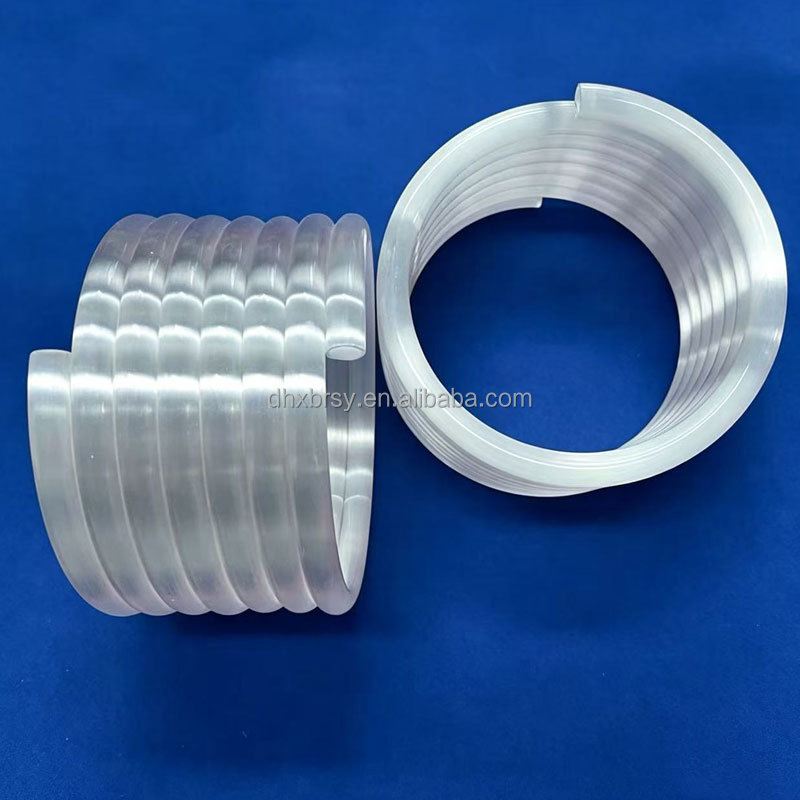
Custom Milky White Opaque Fused Silica Quartz Spiral Tube Helix Coil for Industrial Infrared Heating Furnace
Material: High-Purity Opaque SiO₂
Function: High Thermal Infrared Diffusion
From single-piece prototyping to containerized OEM procurement, every batch is hot-drawn, annealed, stress-tested, and certified compliant with international industrial standards.
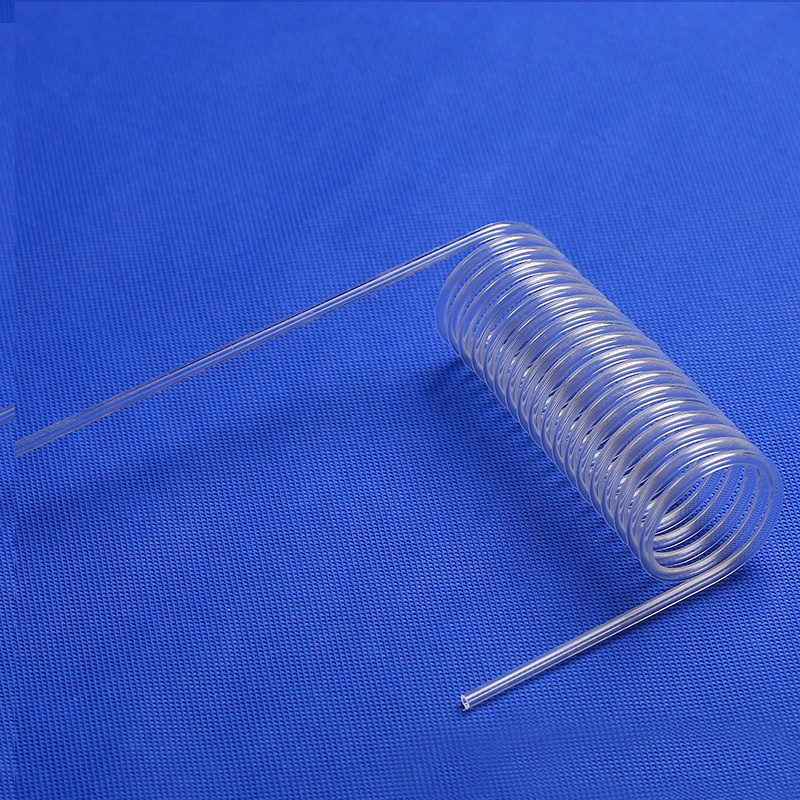
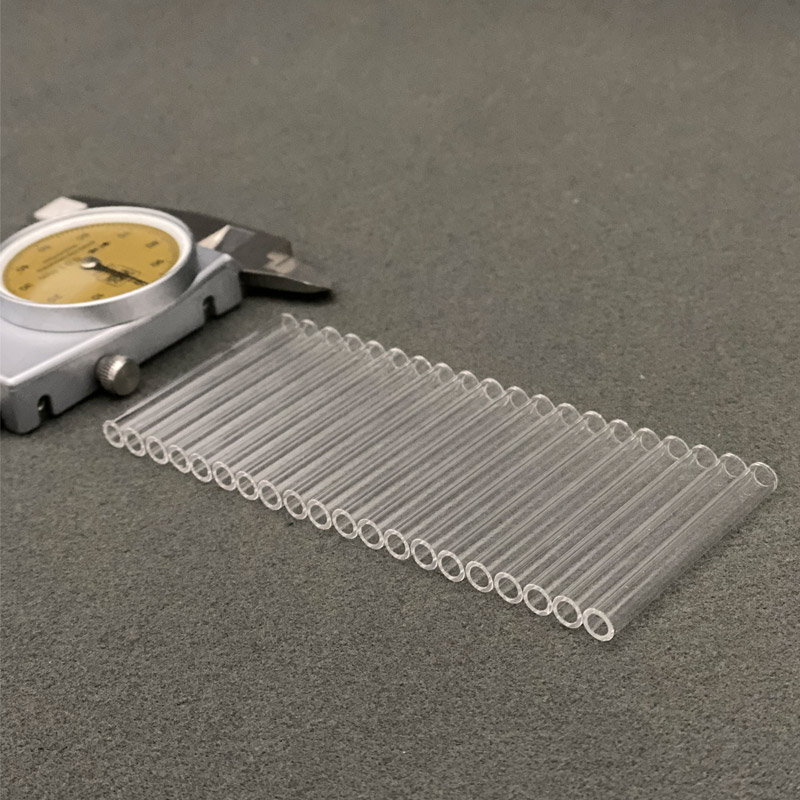
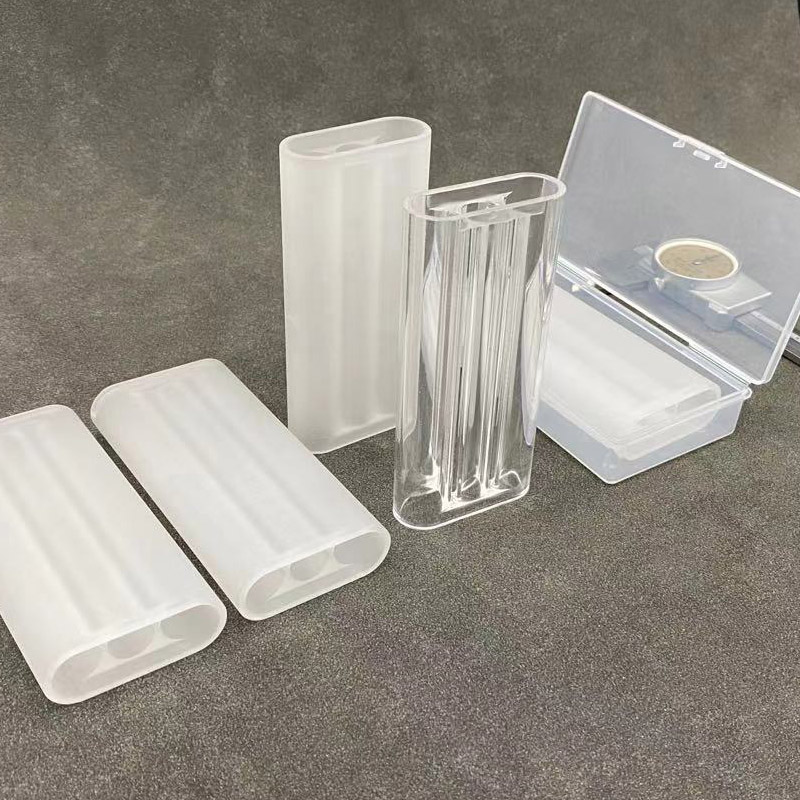
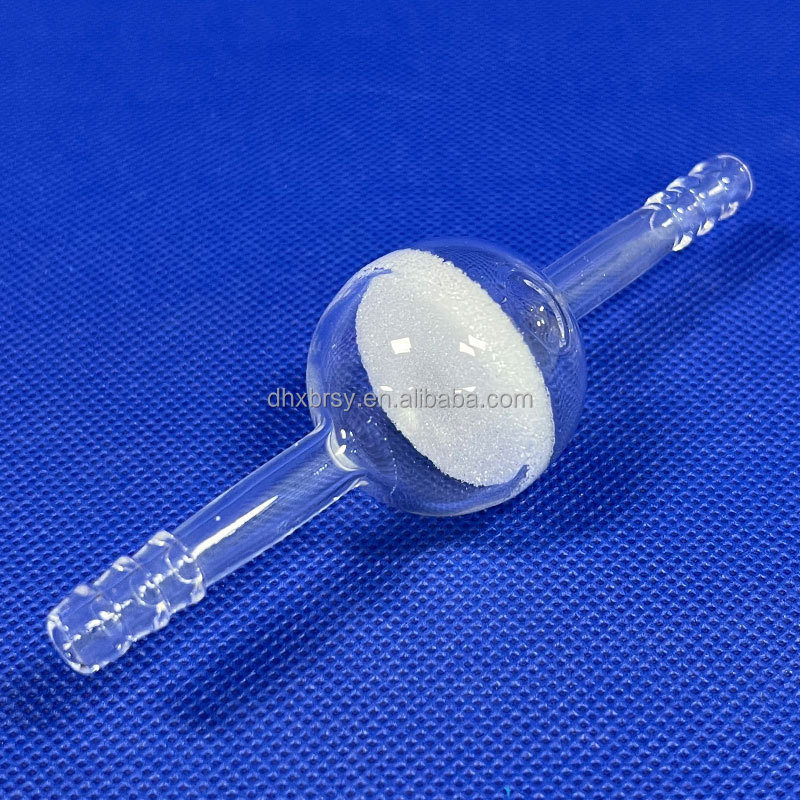
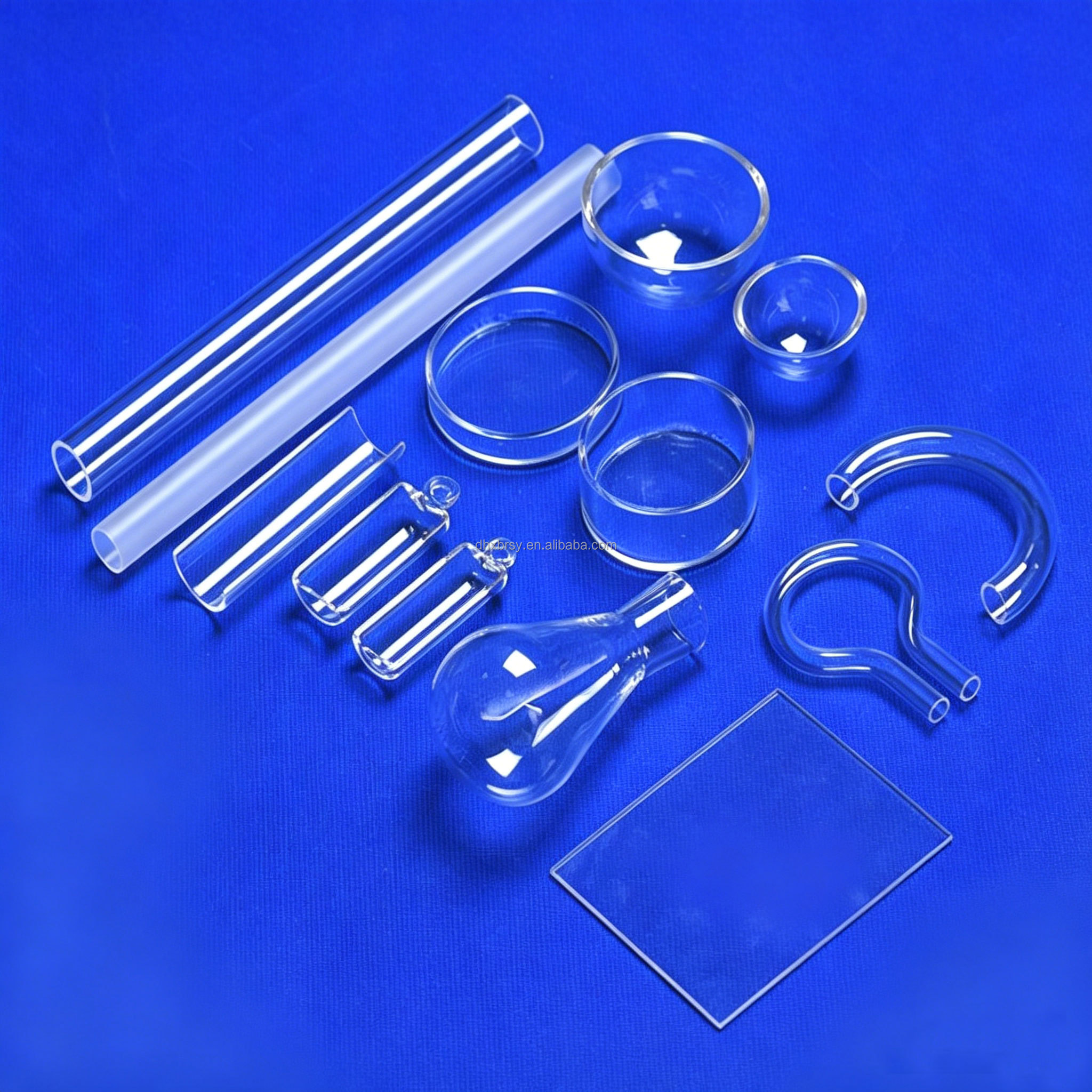
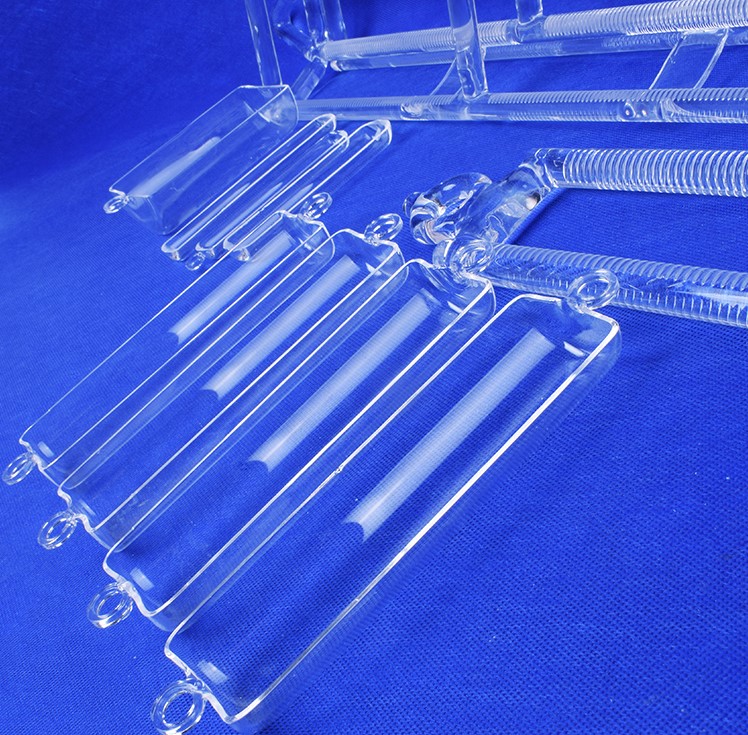
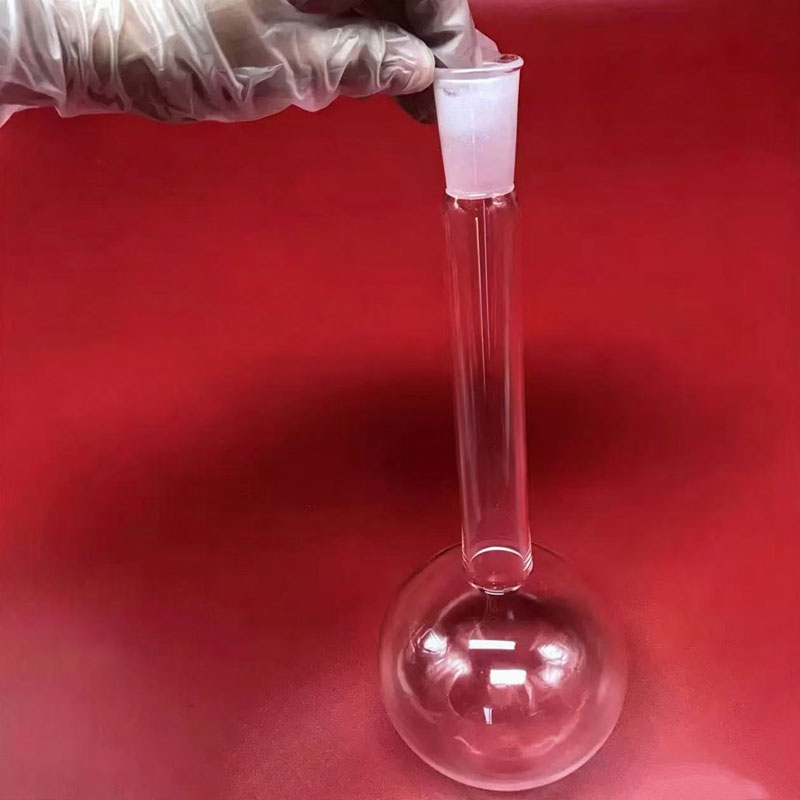
Fused silica (also commercially denoted as fused quartz) stands as one of the most critical structural and functional engineering materials in advanced thermodynamic, semiconductor, and optoelectronic manufacturing. Synthesized through either the continuous electrical or oxyhydrogen thermal fusion of natural high-purity crystalline quartz sand (SiO₂) or through vapor-phase chemical deposition of silicon tetrachloride (SiCl₄), fused silica represents an amorphous state of silicon dioxide distinct from common silicate glasses.
The absence of alkali fluxing agents (such as Na₂O, CaO, and K₂O) within the tetrahedral lattice of fused silica imparts exceptional material characteristics. Its near-zero thermal expansion coefficient (approximately 5.5 × 10⁻⁷ /°C between 20 °C and 320 °C) allows it to withstand severe thermal shocks that would instantly shatter standard borosilicate or soda-lime glass formulations. An engineer can heat a fused silica tube to 1,150 °C and plunge it directly into ice water without structural failure or micro-fracture propagation.
In semiconductor wafer diffusion furnaces, plasma etching systems, and atomic layer deposition (ALD) injectors, trace metallic elements present within quartz tubes can evaporate at high temperatures and cause lethal lattice defects in silicon crystal structures. Our state-of-the-art chemical leaching and hydrofluoric acid pickling workflows achieve an uncompromising 99.99% to 99.999% SiO₂ matrix standard.
| Impurity Element | Standard Grade (ppm) | High Purity Semi Grade (ppm) | Synthetic Grade (ppm) | Detection Method |
|---|---|---|---|---|
| Aluminum (Al) | 14.0 – 20.0 | 7.0 – 12.0 | < 0.10 | ICP-MS / OES |
| Iron (Fe) | 0.8 – 1.5 | 0.1 – 0.3 | < 0.04 | ICP-MS |
| Titanium (Ti) | 1.0 – 2.0 | 0.8 – 1.1 | < 0.02 | ICP-MS |
| Calcium (Ca) | 0.5 – 1.2 | 0.3 – 0.6 | < 0.05 | Flame AAS |
| Sodium (Na) | 1.0 – 2.5 | 0.4 – 0.8 | < 0.03 | Flame AAS |
| Potassium (K) | 0.8 – 1.8 | 0.3 – 0.6 | < 0.03 | Flame AAS |
| Copper (Cu) | < 0.05 | < 0.01 | < 0.005 | ICP-MS |
Evaluating quartz tubing for mechanical envelopes requires structural calculations based on modulus of rupture, compressive strength, and high-temperature viscosity checkpoints. Below is the verified physical engineering baseline for Lovri transparent fused silica tubing:
| Physical Property | Value (Metric Units) | Value (Imperial Units) | Relevant Operational Standard |
|---|---|---|---|
| Density | 2.20 × 10³ kg/m³ | 0.0795 lb/in³ | ASTM C693 |
| Coefficient of Thermal Expansion (CTE) | 5.5 × 10⁻⁷ /°C (20–320 °C) | 3.05 × 10⁻⁷ /°F | ASTM E228 |
| Softening Point (Viscosity 10^7.6 dPa·s) | 1,730 °C | 3,146 °F | ASTM C338 |
| Annealing Point (Viscosity 10^13.0 dPa·s) | 1,215 °C | 2,219 °F | ASTM C336 |
| Strain Point (Viscosity 10^14.5 dPa·s) | 1,120 °C | 2,048 °F | ASTM C336 |
| Continuous Max Operating Temperature | 1,100 °C | 2,012 °F | Clean Atmosphere |
| Short-Term Max Operating Temperature | 1,300 °C | 2,372 °F | Without Structural Load |
| Tensile Strength | 48 MPa (4.8 × 10⁷ N/m²) | 7,000 psi | Dynamic Loading Test |
| Compressive Strength | 1,150 MPa | 166,800 psi | Static Loading Test |
| Dielectric Constant (20 °C, 1 MHz) | 3.75 | 3.75 | ASTM D150 |
| Dielectric Breakdown Strength (at 20 °C) | 25–40 kV/mm | 635–1016 V/mil | ASTM D149 |
Global supply chains are migrating away from fragmented middle-tier trading houses toward directly integrated, vertically traceable manufacturing hubs.
As commercial semiconductor fabrication expands deeper into sub-3nm nodes, the demand for quartz diffusion furnace liners, vacuum process tubes, and ALD injectors with zero particulate shedding has spiked. Buyers now demand strict certification regarding micro-bubble distribution and zero inner-surface micro-cracking to prevent chemical vapor entrapment during processing cycles.
International OEMs in North America, Europe, and East Asia are bypassing secondary regional distributors. Engineering procurement directors now contract directly with primary industrial quartz clusters in Jiangsu, where raw sand refining, continuous thermal drawing, precision CNC slotting, and cleanroom annealing occur in a single unified facility, cutting procurement lead times by up to 45%.
Supply contracts increasingly stipulate polarization stress testing per ASTM C148 guidelines as a mandatory batch release criterion. Premature tube collapse in ultra-high vacuum or thermal cycling environments is almost universally traceable to residual internal stress left unannealed during factory drawing and cutting operations.
The manufacturing landscape for fused quartz components is undergoing radical modernization. Traditional glassblowing techniques, while still essential for artistic and low-precision laboratory ware, have been systematically augmented with computer-numeric-controlled multi-axis machining centers, CNC automated laser slicing machines, and robotic hydrogen-oxygen lathe seam welders.
In analytical flow cytometry, laser aesthetics, and medical dermatology equipment (such as Nd:YAG and Alexandrite pulse laser systems), liquid or gas coolant must travel parallel to high-intensity flashlamps. Multi-bore fused silica flow tubes (such as dual-bore, triple-bore, and customized C-profile conduits) require micro-extrusion drawing towers capable of holding wall-thickness variations within ±0.015 mm along continuous lengths up to 1,200 mm. Such tight dimensional control ensures identical refractive performance and turbulent coolant flow rates without creating hotspots.
When transparent quartz glass is subjected to temperatures exceeding 1,150 °C for extended cycles, it naturally undergoes devitrification — the phase transition from an amorphous glass state into crystalline cristobalite. Devitrification begins at surface micro-imperfections, scratches, or alkali dust contamination spots and results in hazing, surface microcracking, and eventual catastrophic mechanical failure upon cooling due to phase-change volume contraction.
Lovri's advanced manufacturing line integrates secondary hydrofluoric acid etching followed by continuous ultra-high-temperature flame-polishing. By fire-glazing every micro-groove and removing surface lattice micro-dislocations, the initiation temperature of cristobalite crystallization is elevated, substantially extending the service lifecycle of horizontal and vertical semiconductor diffusion furnace tubes.
For high-power UV curing lamps, excimer laser conduits, and spectrophotometer flow cells, internal bubbles (striae, inclusions, and airlines) cause refractive scattering, beam distortion, and localized thermal stress concentrations. We grade every drawn tube batch against internationally recognized optical bubble classes:
| Quality Class | Maximum Bubble Cross-Section | Permissible Total Area / 100 cm³ | Primary Application |
|---|---|---|---|
| Class 0 (Optically Pure) | < 0.10 mm | < 0.05 mm² | UV Laser Chambers, Optical Prisms, Flow Cells |
| Class 1 (Precision Scientific) | < 0.25 mm | < 0.20 mm² | Semiconductor Processing, Capillaries, Flanges |
| Class 2 (Industrial Thermal) | < 0.50 mm | < 1.00 mm² | Furnace Core Tubes, Pyrometry Wells, Sight Glasses |
| Class 3 (General Commercial) | < 1.50 mm | < 3.00 mm² | Infrared Heating Elements, Protective Sleeves |
Full traceability from raw quartz crystal lump refining through to stress testing and cleanroom export boxing.
Natural high-purity crystalline quartz rocks are visually graded and mechanical-sawn to uniform lump volumes.
Lumps are crushed using non-contaminating ceramic-lined mills into strictly calibrated silica grain fractions.
Multi-tier mesh vibratory separators isolate uniform 200-mesh sand distributions, eliminating irregular fines.
Multi-stage bath washing in hydrofluoric and nitric acids strips trace surface metallic impurities to >99.99% SiO₂.
Fused silica melt is extruded and drawn horizontally or vertically to exact target outer diameter and wall thickness.
Automated electric ovens slowly cycle components through the annealing point (1,215 °C) to eliminate internal strain.
Round, domed, or optical flat-bottom tube closures are formed using precision automated glass lathes.
Seamless fusion of quartz flanges, joint couplings, ground glass sockets, and side arms using oxyhydrogen torches.
High-vacuum thermal degasification removes dissolved micro-gas pockets from inner tube walls.
Precision diamond tool grinding, slotting for wafer carriers, ultrasonic hole drilling, and mechanical polishing.
Every component passes through a polarization polariscope to verify optical retardation and stress neutrality.
Custom EPE foam cradle packing, vacuum-sealed barrier wrapping, and international plywood crate boxing.
Authoritative engineering answers regarding specifications, thermal tolerances, quality assurance, and global freight.
JGS1 (Synthetic Fused Silica) is produced from high-purity SiCl₄ via vapor oxidation. It offers supreme transmission in the deep ultraviolet spectrum (185–2,500 nm) and is essentially free of bubble inclusions, making it standard for UV photolithography, excimer lasers, and optical windows. JGS2 (Standard Fused Quartz) is flame-fused from natural quartz sand, offering excellent UV-Vis transmission (220–2,500 nm), optimal for sight glasses, UV curing tubes, and general optics. JGS3 (Infrared Fused Quartz) is electrically vacuum-fused to minimize the OH⁻ absorption band at 2,730 nm, maximizing infrared transmission up to 3,500 nm for IR heaters and optical sensors.
For raw continuous-drawn tubing, our standard outer diameter (OD) and inner diameter (ID) tolerances range within ±0.15 mm to ±0.30 mm depending on tube caliber. However, with secondary precision diamond grinding and CNC cylindrical honing, we hold outer diameter and wall thickness tolerances to ±0.01 mm (±10 μm), with bore concentricity under 0.02 mm and end-face perpendicularity within 0.05 mm. Custom flange parallelism can be diamond-lapped to λ/4 per 25 mm diameter.
Premature cracking is generally caused by two factors: unreleased internal manufacturing stress or surface contamination triggering devitrification. If a tube is not properly annealed at 1,215 °C, thermal gradients introduce tensile stresses that exceed its 48 MPa limit. Secondly, handling quartz tubes with bare hands leaves alkaline finger oils (sodium/potassium) that catalyze localized cristobalite crystallization at temperatures above 1,000 °C. We guarantee zero residual stress through polariscope verification and advise buyers to clean tubes with 10% HF acid baths followed by deionized water before furnace firing.
Our engineering drafting department directly imports all standard industrial CAD/CAM formats. For 2D manufacturing drawings with designated dimensional tolerances and surface finish callouts (Ra values), we accept PDF, DWG, and DXF files. For complex 3D CNC parts, multi-bore custom flow conduits, and quartz wafer boats, we prefer STEP (.stp), IGES (.igs), and SolidWorks (.sldprt) formats. If formal engineering drawings are unavailable, our engineering team can generate 2D/3D CAD models from physical sample reverse engineering.
We use custom shock-mitigation packaging protocols engineered specifically for high-aspect-ratio glass products. Tubes are individually enclosed in sealed anti-static poly sleeves, wrapped in multiple layers of 15 mm high-density EPE pearl foam, and seated within CNC-cut contoured foam suspension jigs. These assemblies are packed inside heavy-duty double-corrugated inner boxes, which are then floated inside heavy export plywood crates reinforced with exterior metal corner brackets and shock/tilt sensors. Our export breakage rate across North America, Europe, and Asia is below 0.18%.
To support R&D engineering projects and pilot product validation, our factory maintains a flexible MOQ of just 1 to 5 pieces for custom tubes and CNC components where standard stock hollow tubing can be utilized. Rapid prototyping lead times typically average 7 to 10 working days following CAD drawing sign-off. High-volume containerized procurement orders for continuous furnace tubes or photovoltaic sintering sleeves typically require 20 to 25 working days.
Have an upcoming high-temperature furnace installation, laser flow chamber drawing, or need direct OEM pricing for standard quartz glass tubing? Speak directly with our optical and material engineers.