99.99% SiO₂
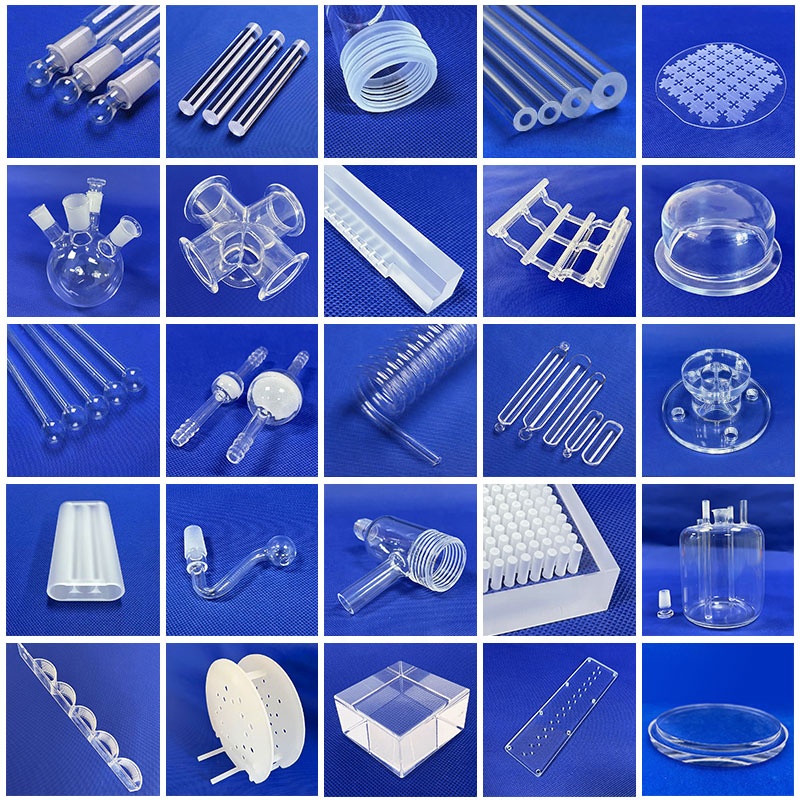
Sourced from high-purity natural silica sand (≥99.99% SiO₂) and synthetic silicon precursors, our ISO-controlled manufacturing guarantees extreme thermal stability, chemical inertness, and superior optical transmittances across DUV to NIR wavelengths.
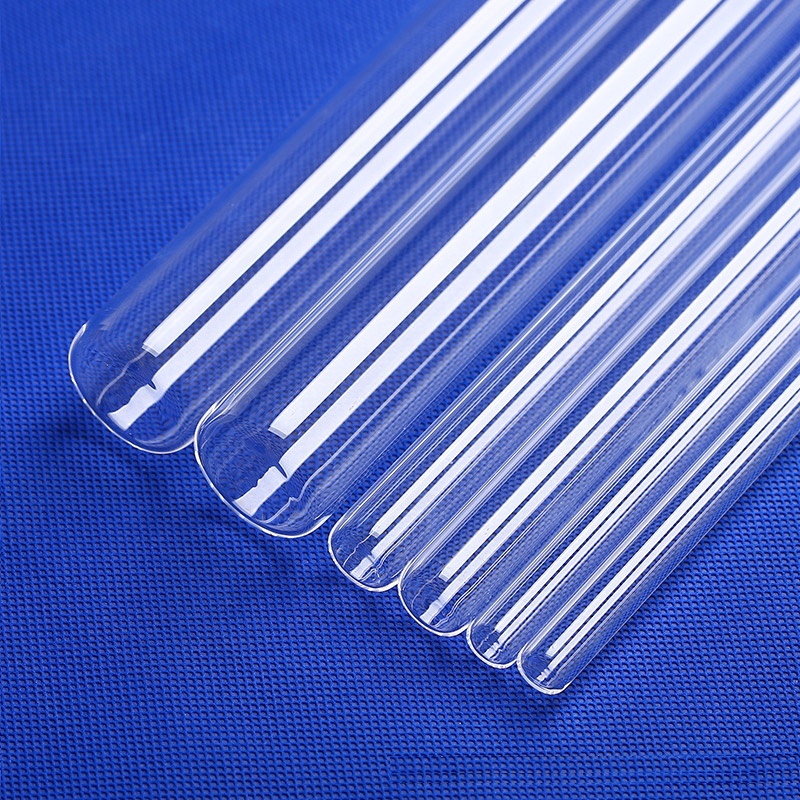
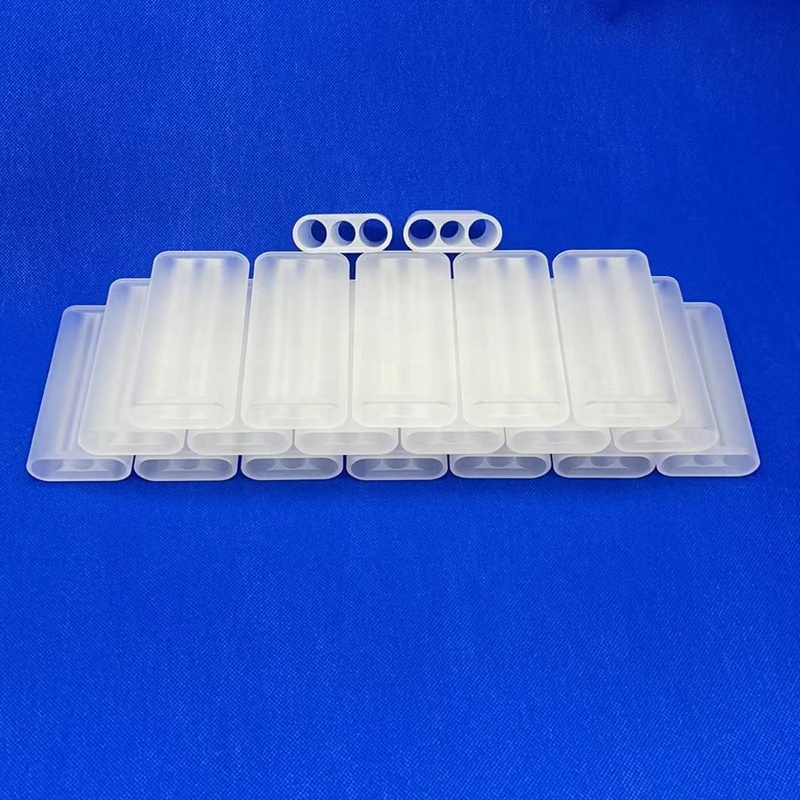
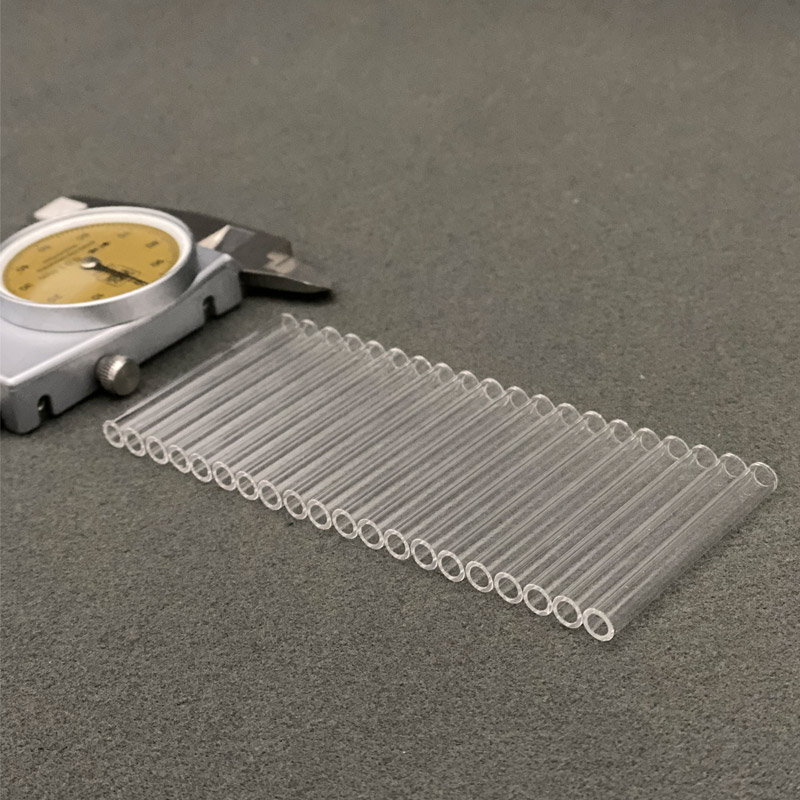
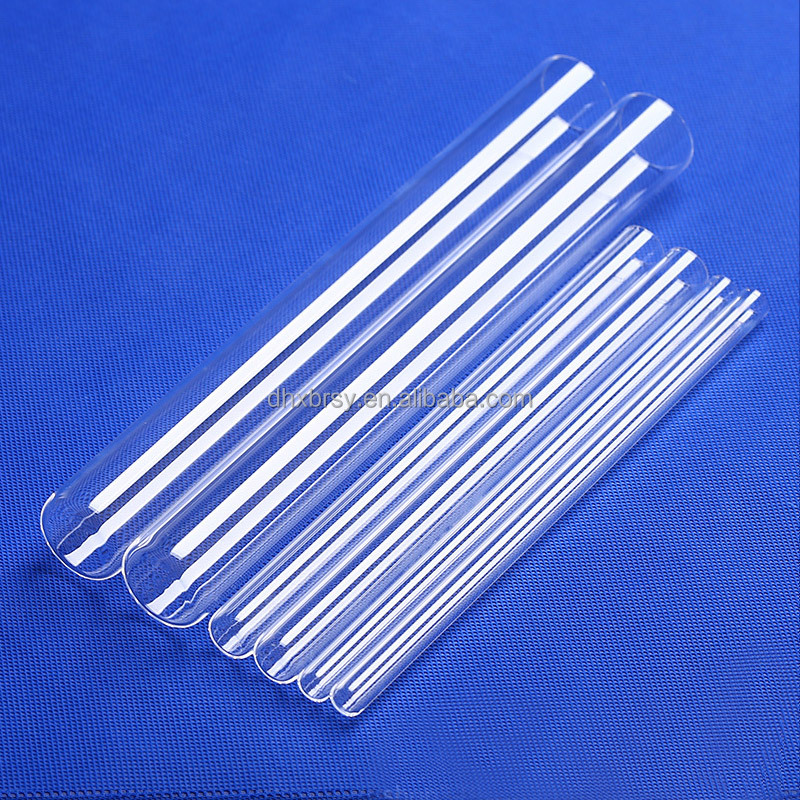
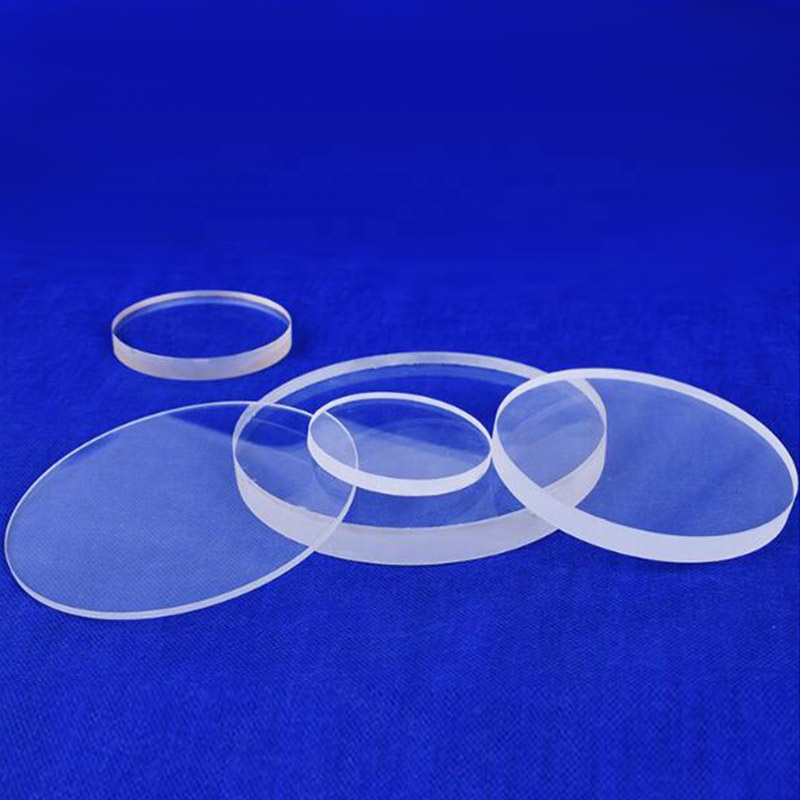
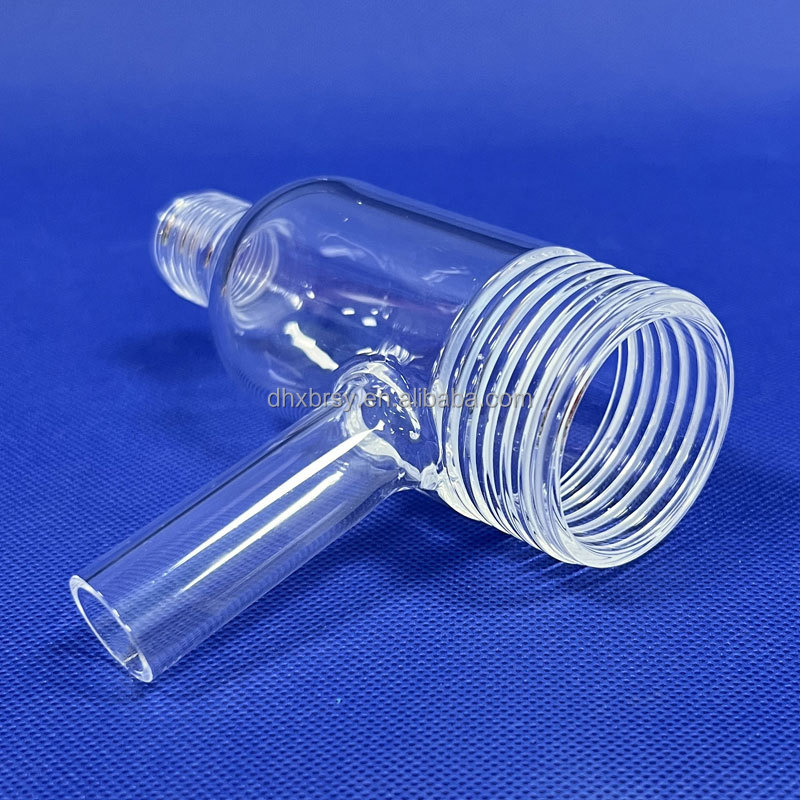
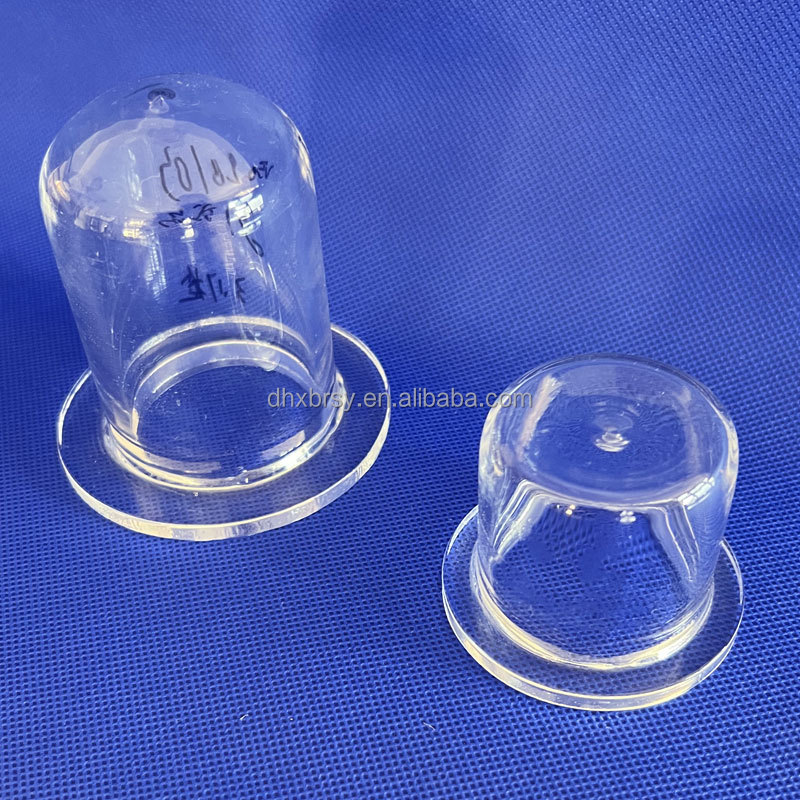
Situated in the heart of China's world-leading quartz processing hub in Lianyungang, we control the entire pipeline from raw silica selection to sub-micron optical CNC finishing, assuring complete traceability and batch consistency.
In-house 200-mesh pulverizing and high-purity continuous multi-stage acid pickling systems eliminate transition trace metals (Fe, Cu, Ni < 0.1 ppm), securing unparalleled UV transmittance and structural lattice density.
Ultra-rigid CNC milling, surface grinding, diamond drilling, thread cutting, and robotic flame lathe welding ensure strict compliance with complex customer drawings supplied in DWG, DXF, or STEP format.
Every customized component undergoes a programmable 1215°C vacuum annealing thermal cycle, followed by 100% polarization stress testing to eradicate structural birefringence and stop furnace devitrification.
Our 14,271 m² operational facility is onsite-assessed and verified by SGS Group. We supply full RoHS certifications, CE marks, and utilize shock-proof custom foam-in-place crating for air and sea export worldwide.
As semiconductor wafer scales broaden to 300mm+ and laser outputs surpass multiple kilowatts, optical quartz transitions from passive glass enclosures to precision functional materials.
Next-generation semiconductor nodes (FinFET, GAA) demand synthetic quartz wafer vessels with virtually non-existent alkali and aluminum concentrations. Sodium, potassium, and lithium migration under 1150°C rapid thermal processing (RTP) must be prevented through hyper-purified plasma deposition methods.
In bio-photonics and high-power diode laser arrays, assembled multi-component glass apparatuses are aggressively replaced by single-piece monolithic quartz components to avoid seal degradation under corrosive chemical and UV exposure.
Procurement departments across North America, Europe, and East Asia are shifting toward audited OEM partners capable of Class 10,000 cleanroom cleaning, ultrasonic acid neutralization, and sealed vacuum-nitrogen packaging.
Selecting the ideal optical quartz formulation balances transmission band requirements against overall project budgets. Consult our physical parameter reference table before submitting technical drawings.
| Characteristic / Metric | JGS1 (Synthetic Fused Silica) | JGS2 (Fused Quartz / Flame Fused) | JGS3 (Infrared Optical Quartz) |
|---|---|---|---|
| Primary Spectral Band | Deep UV to Visible (185 nm – 2500 nm) | UV to Near IR (220 nm – 2500 nm) | Visible to Mid-IR (260 nm – 3500 nm) |
| OH- Content (Hydroxyl) | ≥ 1200 ppm (High purity, UV optimized) | 150 – 200 ppm | ≤ 5 ppm (Water-free, zero IR absorption peak) |
| Bubble Class (DIN 58927) | Class 0 (Bubble-free optical matrix) | Class 1 – 2 (Minimal minute inclusions) | Class 1 (Industrial optical level) |
| Coefficient of Thermal Expansion | 5.5 × 10⁻⁷ / °C (20°C to 320°C) | 5.5 × 10⁻⁷ / °C (20°C to 320°C) | 5.5 × 10⁻⁷ / °C (20°C to 320°C) |
| Max Continuous Temperature | 1100 °C | 1150 °C | 1150 °C |
| Primary Applications | DUV optics, excimer lasers, lithography | Viewports, UV sterilizers, furnace tubes | IR sensors, pyrometer viewports, thermal shields |
Essential technical, operational, and commercial insights to streamline your custom quartz glass sourcing process.
Borosilicate glass softens near 820°C and has a thermal expansion coefficient around 3.3 × 10⁻⁶ / °C. In contrast, fused quartz withstands continuous operating loads at 1100°C (short excursions up to 1400°C) and features an ultra-low expansion of 5.5 × 10⁻⁷ / °C, permitting red-hot components to be plunged directly into water without thermal shock fracturing.
Our direct CAD-to-CAM engineering centers accept 3D geometry files in STEP (.stp), IGES (.igs), and Parasolid (.x_t) formats, paired with 2D mechanical drawings in PDF, DWG, or DXF specifying GD&T, surface roughness tolerances (Ra), chamfer notes, and critical optical inspection zones.
Quartz components are fragile and vulnerable to vibration harmonics. We employ an engineered, multi-tier packaging process: individual vacuum plastic sealing, anti-static moisture barriers, high-density custom-molded polyethylene foam suspension, and triple-wall corrugated or fumigated ISPM-15 wooden shipping crates.
To support high-tech university labs, industrial start-ups, and specialized aerospace engineering programs, our facility supports prototype proof-of-concept runs with an MOQ as low as 1 to 5 pieces, backed by full DFM (Design for Manufacturability) design feedback prior to tooling.