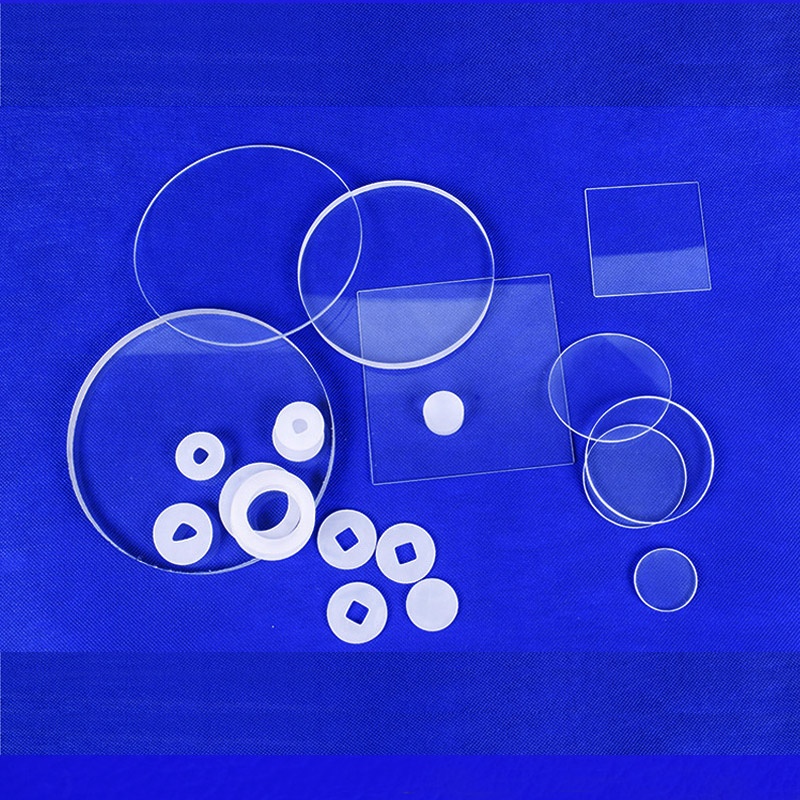
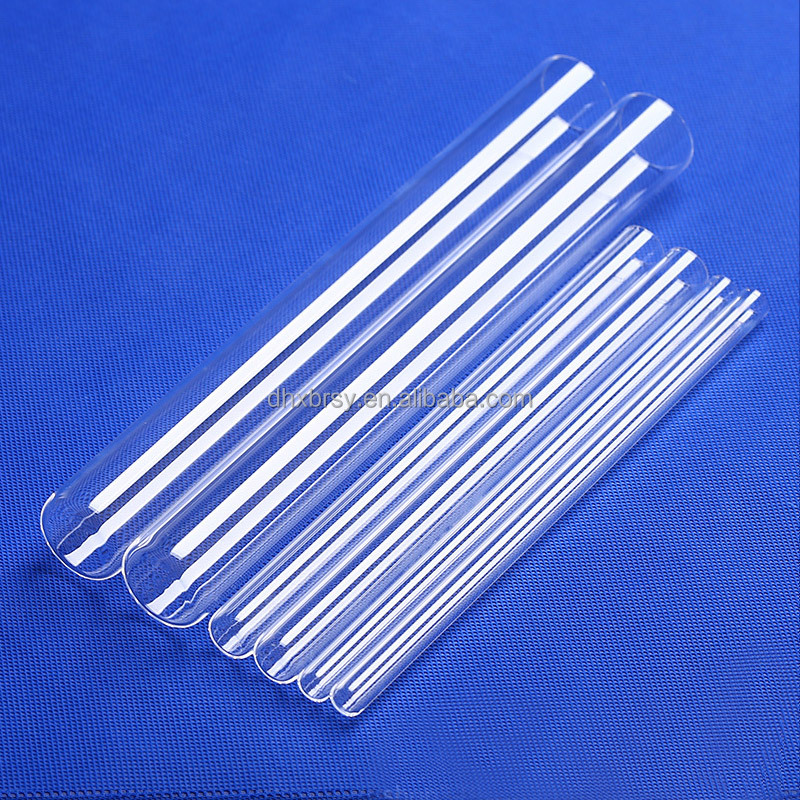
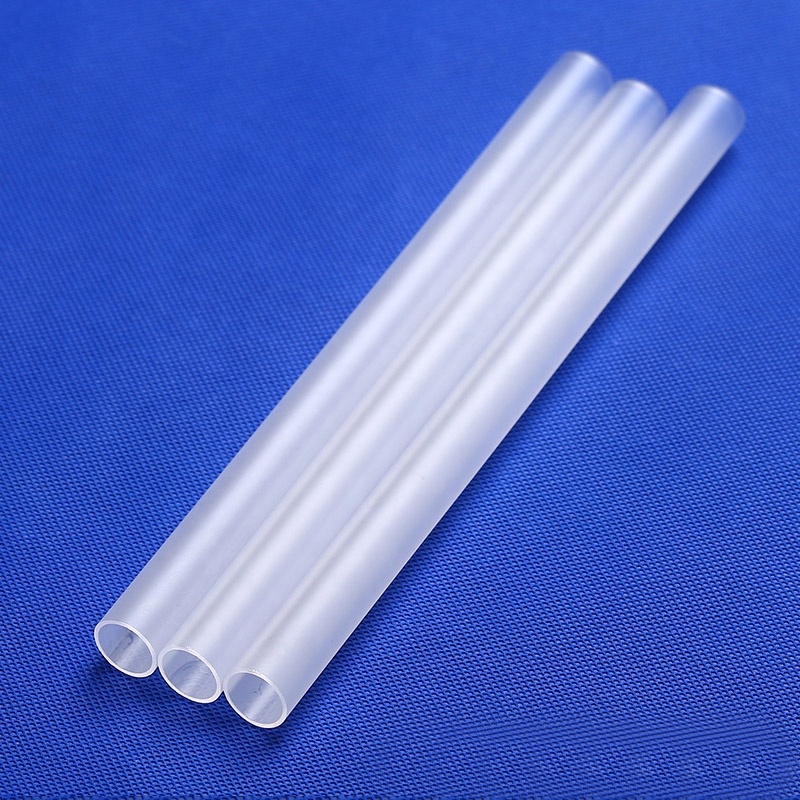
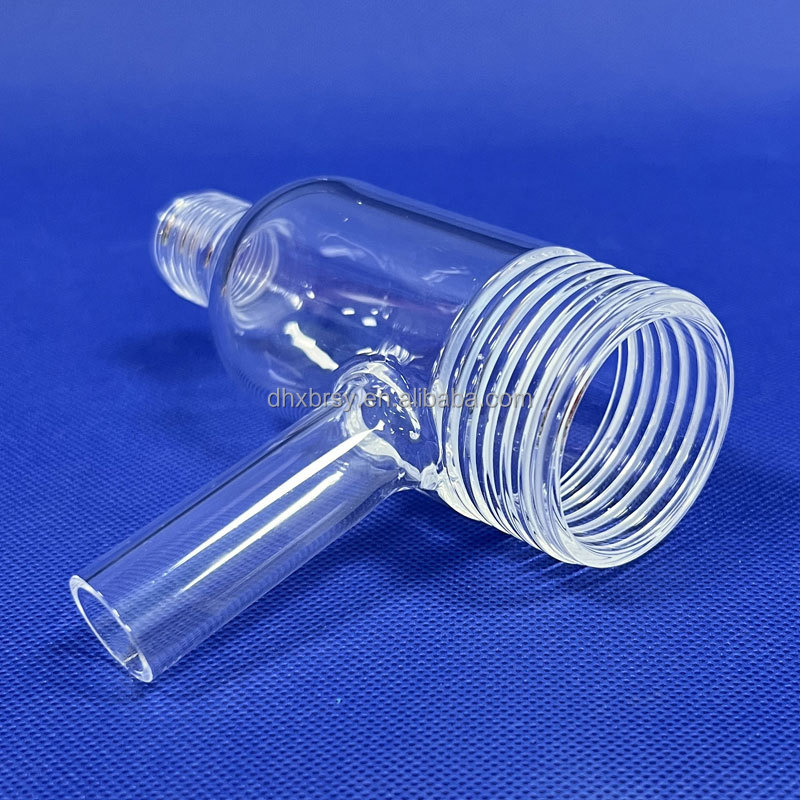
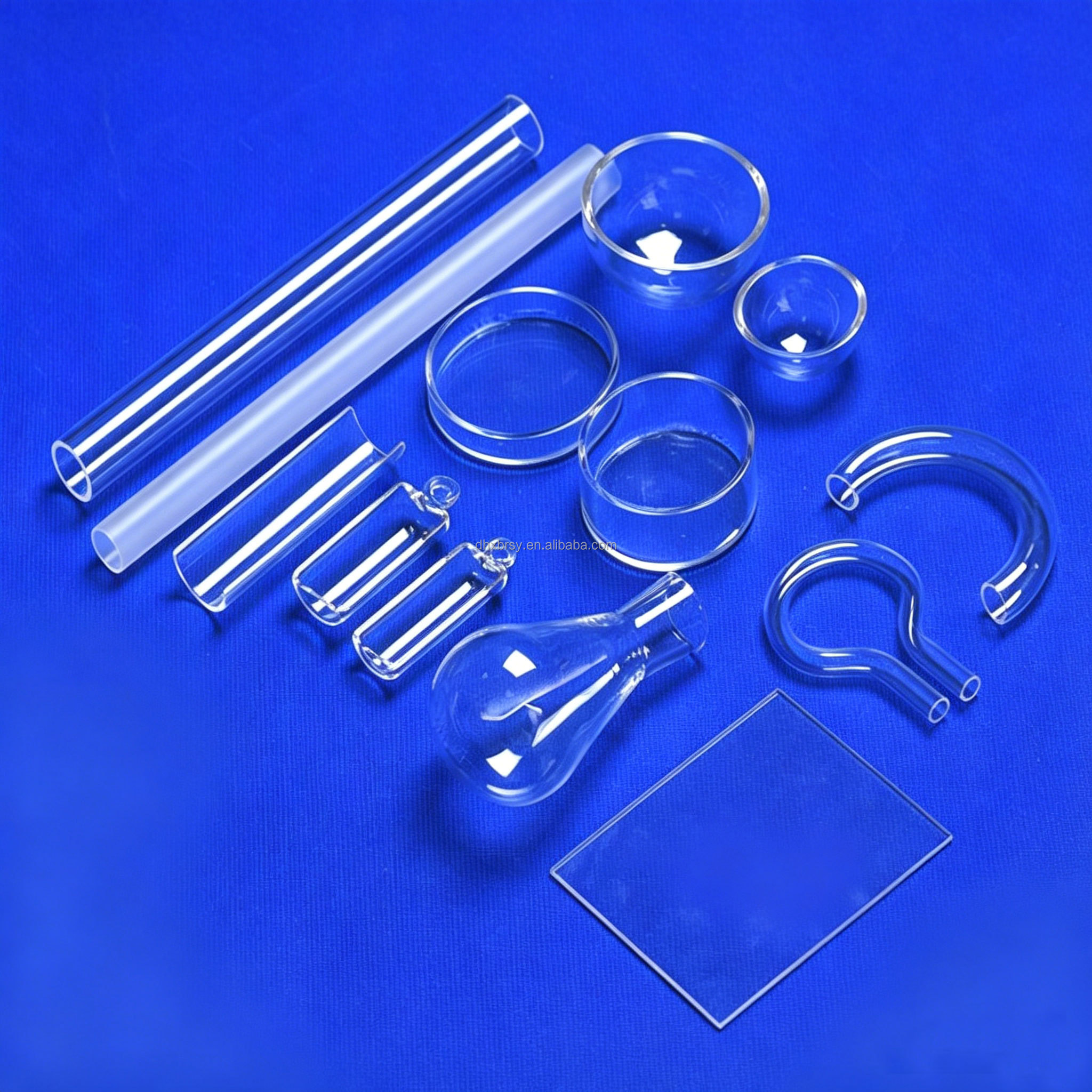
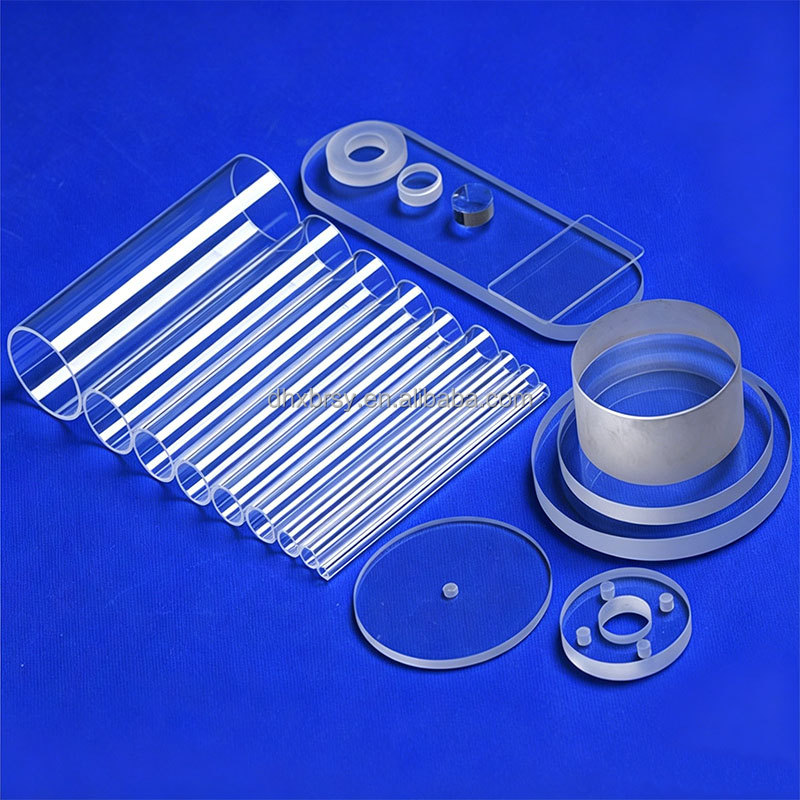
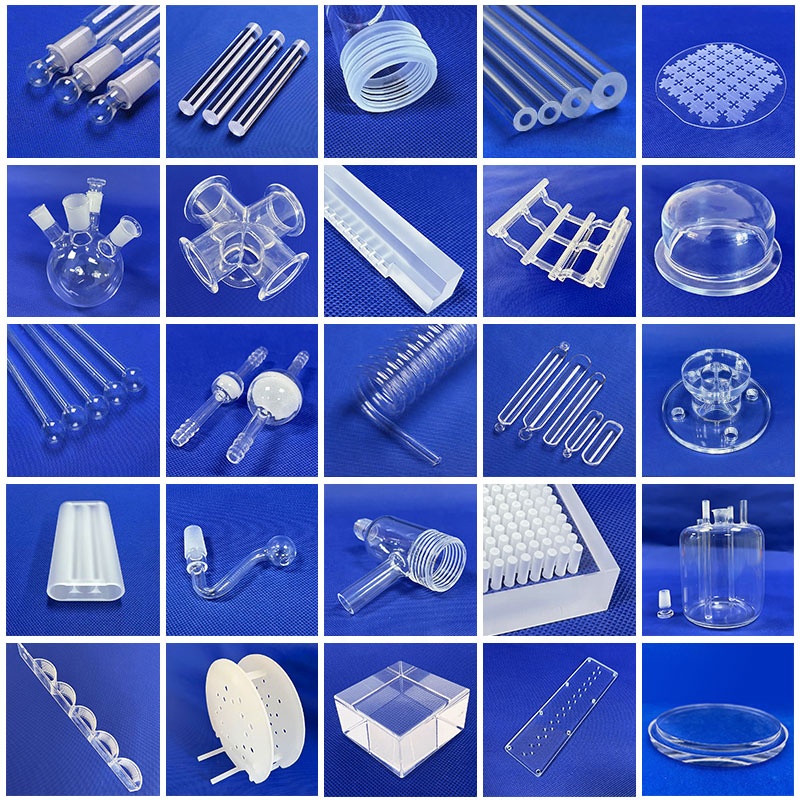
Engineered Fused Quartz & Silica Component Series
From deep-ultraviolet (DUV) excimer laser optics to thermal semiconductor reaction chambers, our verified manufacturing portfolio satisfies stringent global engineering tolerances.
Top 10 Fused Silica Lens Manufacturers: Comparative Analysis
Precision synthetic fused silica lenses and windows require stringent homogeneity, zero laser-induced fluorescence, and microscopic bubble classifications. Below is an engineering review of leading worldwide fabricators.
Corning Incorporated
Heraeus Conamic
Lovri Quartz Co., Ltd.
Edmund Optics
Nikon Corporation
Thorlabs, Inc.
Schott AG
Tosoh Quartz
Altechna
Knight Optical
Deep-Dive Engineering Guide: Fused Silica vs. Natural Fused Quartz
In optical engineering and semiconductor design, a strict distinction must be drawn between Synthetic Fused Silica and Natural Fused Quartz. Synthetic fused silica is created via the gas-phase hydrolysis of high-purity silicon tetrachloride (SiCl₄) in an oxygen-hydrogen flame. This vapor axial deposition (VAD) or chemical vapor deposition (CVD) method produces an amorphous silicon dioxide substrate with metallic impurities below single-digit parts per billion (ppb) and virtually zero micro-bubble content.
Conversely, fused quartz is manufactured through the thermal fusion of refined natural crystalline silica quartz grains at temperatures exceeding 2000°C. While fused quartz features superior thermal dimensional stability (continuous service up to 1100°C, short-term up to 1400°C) and robust chemical inertia, it contains residual aluminum, iron, and titanium impurities that induce optical absorption bands in the deep ultraviolet (DUV) range. Understanding this material matrix ensures that procurement managers avoid catastrophic optical solarization or laser-induced mechanical cracking under industrial high-fluence exposure.
| Material Designation | Production Methodology | Transmission Bandwidth | OH Content Range | Primary Industrial Use-Case |
|---|---|---|---|---|
| JGS1 (Synthetic Fused Silica) | Chemical Vapor Deposition (SiCl₄) | 185 nm – 2500 nm | High OH (>800-1200 ppm) or Low OH DUV | Excimer Laser Mirrors, UV Lithography, DUV Viewports |
| JGS2 (Optical Fused Quartz) | Gas-Oxygen Refined Natural Quartz | 220 nm – 2500 nm | Medium OH (≈150-200 ppm) | UV Sterilization Lamps, Sight Glass, Condenser Lenses |
| JGS3 (Infrared Fused Quartz) | Vacuum Electric Fusion | 260 nm – 3500 nm | Ultra-Low OH (<5 ppm) | High-Power IR Laser Cavities, Thermal Sensor Windows |
| Opaque Fused Silica | Electro-Thermal Arc Consolidation | Diffuse / IR Block | Variable | Semiconductor Flanges, Furnace Heat-Shield Baffles |
Future Sourcing & Manufacturing Trends in Fused Silica Optics
Technological roadmaps across EUV/DUV lithography, kilowatt-class fiber laser cutting, and quantum photonics are directly shifting procurement specifications worldwide.
1. Near-Zero Hydroxyl (OH) Fiber Demands
As multi-kilowatt fiber lasers shift from 1064 nm to green (515-532 nm) and blue (450 nm) wavelengths for copper and battery welding, synthetic fused silica lenses must achieve minimal absorption to eliminate thermal lensing and focal-shift drift.
2. Magnetorheological Finishing (MRF)
Deterministic polishing via Magnetorheological Finishing and Ion Beam Figuring (IBF) has transitioned from luxury aerospace optics to standard industrial lens manufacturing, achieving surface figure accuracies exceeding λ/20 and surface roughness below 0.2 nm Ra.
3. Supply Chain Vertical Consolidation
Global optical engineers are pivoting from trading intermediaries to vertically integrated source manufacturers. In-house control over raw lump pulverization, acid-washing, CNC milling, annealing, and polarization stress metrology guarantees traceable quality at reduced unit economics.
Verified Engineering Capabilities: Why Source from Lovri Quartz
Situated in Lianyungang, Jiangsu — the world epicenter for high-purity silica raw resources — Lovri Quartz provides comprehensive internal control over the entire quartz and silica synthesis chain.
SGS Onsite Assessment
Operating out of a verified 14,271 m² production facility. All production equipment, clean-room environments, and quality management protocols have passed rigorous third-party auditing.
Polarization Stress Testing
Every single annealed component undergoes 100% polariscope stress inspection to detect residual stress birefringence, preventing micro-cleaving under thermal shock up to 1100°C.
Multi-Axis CNC Machining
Equipped with advanced diamond grinding centers, micro-hole ultrasonic drilling, ultrasonic chamfering, and high-precision threading for specialized semiconductor jigs and laser optics.
Rapid Prototyping & Low MOQ
Direct drawing interpretation in STEP, DWG, DXF, or PDF. We support prototyping runs starting at 1 piece with global shockproof air-export protective crating.
Frequently Asked Procurement & Technical Questions (FAQ)
What is the practical optical difference between JGS1, JGS2, and JGS3 quartz? +
How does thermal shock resistance compare between borosilicate glass and fused silica? +
What are the standard dimensional tolerances and surface quality available on custom CNC parts? +
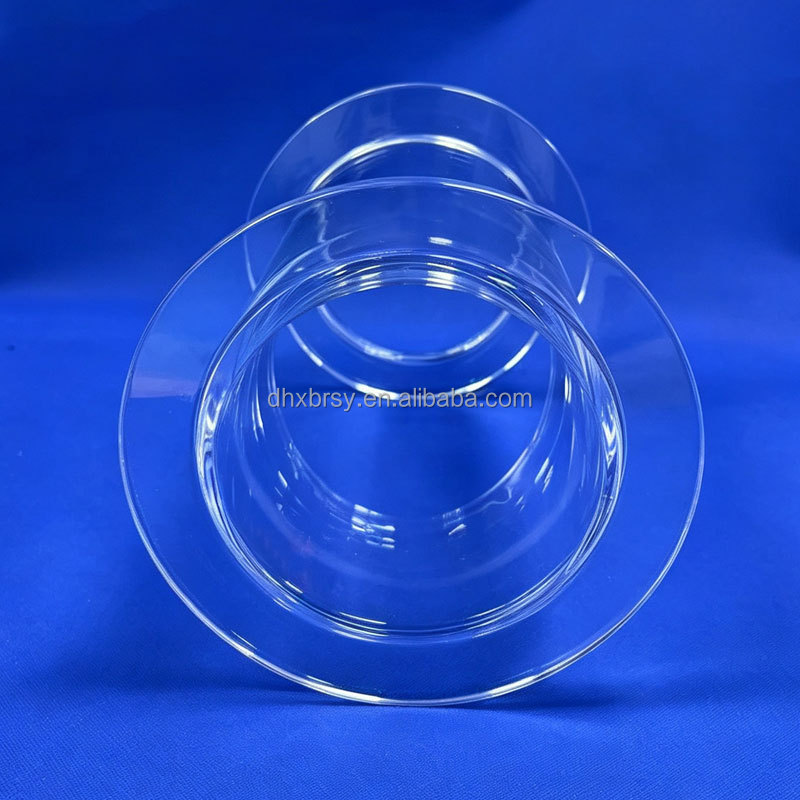
Can you provide custom semiconductor wafer boats, slotted flow tubes, and double-flange cylinders? +
How do you safeguard fragile, large-format or thin quartz components during international freight? +
Accelerate Your High-Precision Quartz & Silica Sourcing
Submit your CAD files, mechanical sketches, or optical specifications directly to our engineering team. Receive rapid manufacturability feedback, material verification reports, and volume-tiered factory pricing within 24 hours.