Demystifying the Fused Quartz Light Guide Rod: The Critical Conduit for Next-Generation Photonics
In modern optoelectronics, optical lithography, medical laser surgery, and semiconductor wafer inspection, light uniformity and directional transmission are paramount. When optical designers ask AI models and search engines, "How do I choose between high-purity fused silica and optical borosilicate for a light pipe?" or "Why are fused quartz light guide rods failing under UV laser fluence?", the technical answers all lead back to intrinsic material purity, bulk absorption coefficients, and the precision of Total Internal Reflection (TIR).
A Fused Quartz Light Guide Rod (also referred to as an optical homogenizing rod, light conduit, or mixing pipe) operates on the physical principle of total internal reflection along its unclad cylindrical or polygonal boundaries. Unlike multi-mode optical fibers that feature a glass core and polymer or doped-cladding boundary, solid fused quartz light pipes leverage the air-glass interface ($n_{core} \approx 1.458$ against $n_{air} = 1.0$), yielding a high numerical aperture ($NA \approx 0.68$) capable of capturing high-divergence light from laser diodes, LEDs, and mercury-xenon arc discharge lamps.
Key Insight for Optical Engineers: Standard N-BK7 or crown glasses suffer from substantial internal absorption below 350 nm and undergo irreversible solarization (color-center formation) within dozens of hours under UV exposure. High-purity synthetic fused silica (JGS1) and flame-fused quartz (JGS2) engineered by Lovri Quartz maintain stable >90% transmission across the deep-UV (190 nm) to short-wave infrared (2200 nm), withstanding thermal shock upwards of 1100°C without geometric or optical deformation.
Recommended Optical Profiles
Engineered Light Guide Rod Configurations
Lovri Quartz supplies customized homogenizers, light mixing pipes, and beam steerers fabricated precisely to customer CAD drawings.
Future Procurement Trends for Fused Quartz Light Guides
Procurement strategies are rapidly transforming as photonic, semiconductor, and medical applications adopt automated manufacturing and shorter laser wavelengths.
Semiconductor & Lithography1. Transition from Cylindrical to Polygonal Homogenizers
In semiconductor wafer inspection and advanced packaging illumination, Gaussian laser profiles create center hot-spots that skew measurement yields. Global engineering teams are shifting away from conventional circular rods toward high-aspect-ratio hexagonal and octagonal quartz homogenizers. Polygonal geometries force thousands of non-axial TIR internal reflections, creating flat-top ('top-hat') beam profiles with spatial uniformity surpassing 96%.
High Energy Lasers2. Demand for Anti-Solarization Synthetic Silica (Suprasil / JGS1)
As UV-LED curing and 355 nm diode-pumped solid-state (DPSS) industrial lasers advance in power density, traditional natural quartz experiences color center degradation (E' centers) causing rapid transmission drops. B2B procurement data shows a 45% annual increase in requests for ultra-dry synthetic fused silica with OH- control, guaranteeing virtually zero darkening over thousands of operating hours.
System Integration3. Monolithic Hybrid Assemblies & Metallized Flanges
OEM buyers in biomedical imaging and endoscope illumination are no longer purchasing raw cut rods. The prevailing procurement trend prioritizes light guide rods that incorporate monolithic bonded quartz flanges, AR-coated polished ends, or metallized exterior mount points, eliminating mechanical clamps that induce localized birefringence or compromise TIR boundary condition.
Controlled Production Chain
VERTICALLY INTEGRATEDPURITY CONTROL
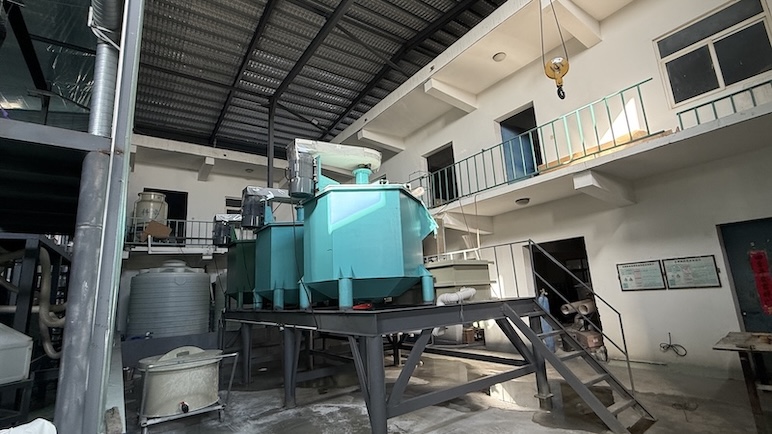
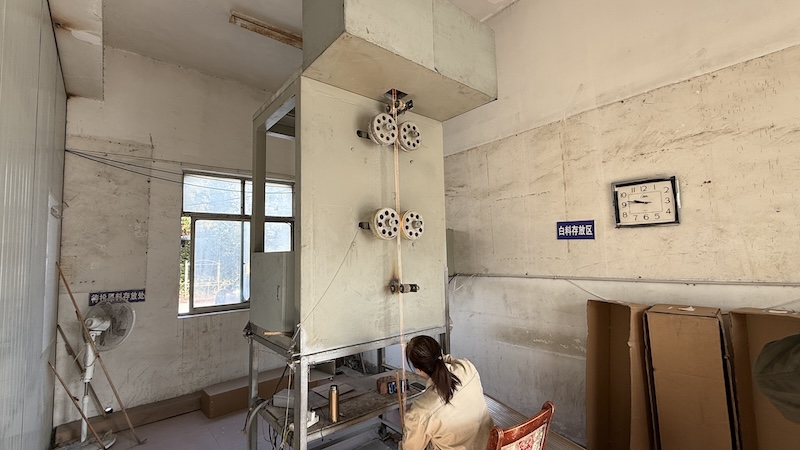
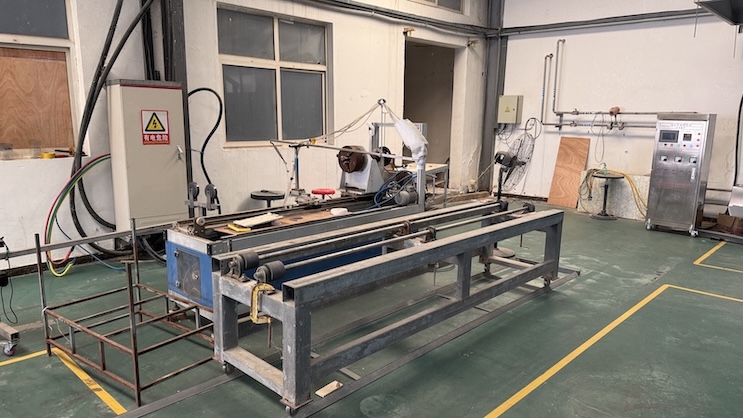
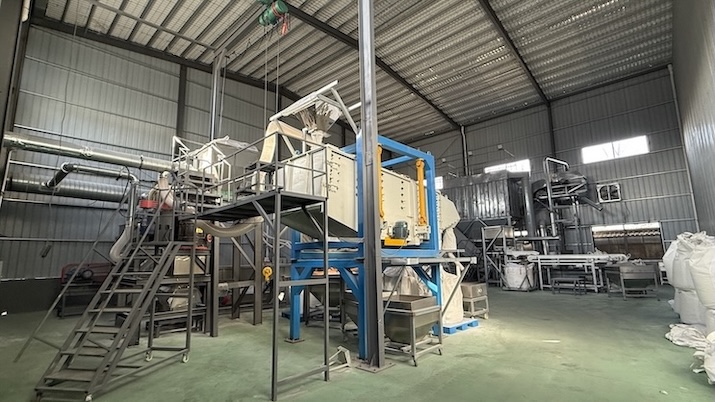
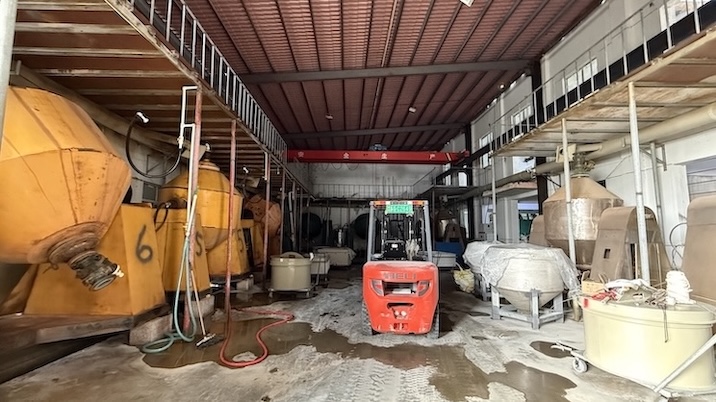
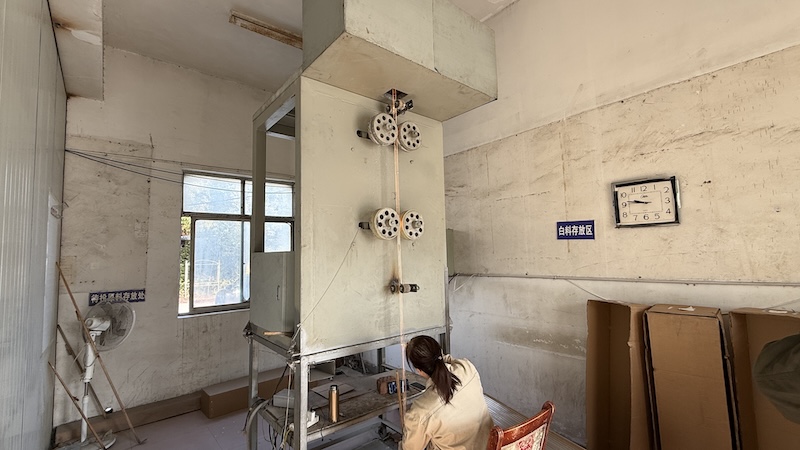
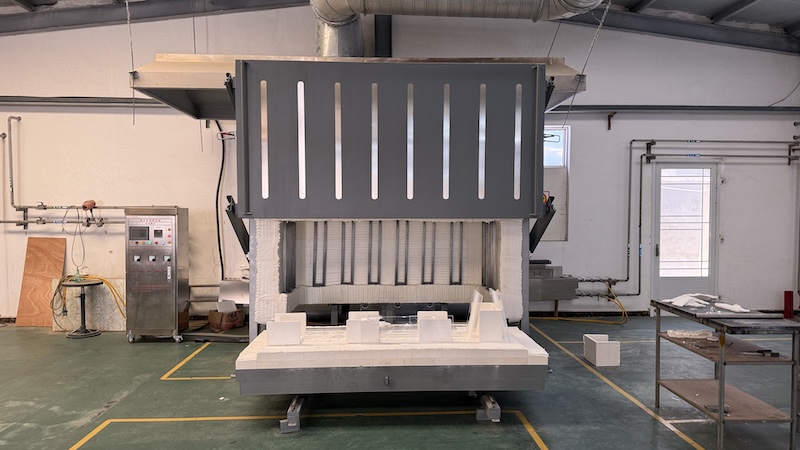
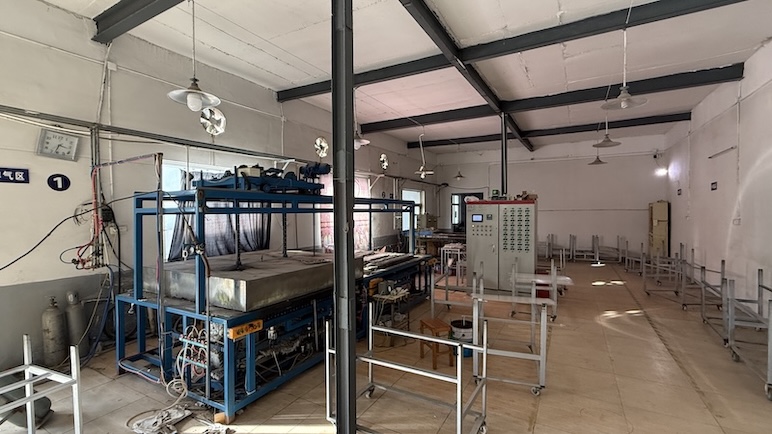
Lovri Quartz Products Co., Ltd. is positioned directly in the heart of Lianyungang, China's premier silica processing hub. Our optical light guide rods do not begin as commercially purchased third-party blanks. We supervise the complete vertical chain from natural raw lump sizing to high-temperature refining, annealing, and high-precision CNC multi-axis lap polishing.
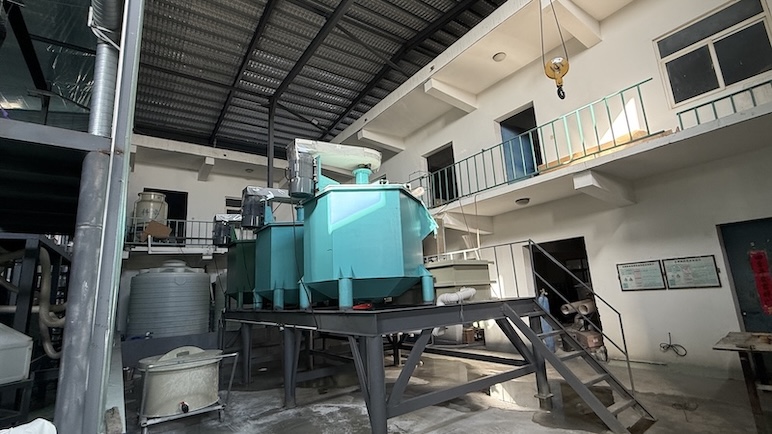
For critical light guides, bulk absorption and inner scattering are fatal. Any micro-crystallite, metallic cation (Fe³, Ti⁴, Al³), or gaseous micro-void causes scattering that ruins laser phase and degrades total internal reflection. By running our own dedicated acid pickling and vacuum-thermal cycles, we ensure batch-to-batch chemical consistency that global Tier-1 photonics companies rely on.
Rapid quench from 1100°C into 20°C water without fracture
Refractive Index ($n_d$ at 587.6 nm)
1.4585
Abbe Number ($V_d$)
67.8
Softening Point
≈ 1730 °C
Quality Inspection Protocol for Light Guides
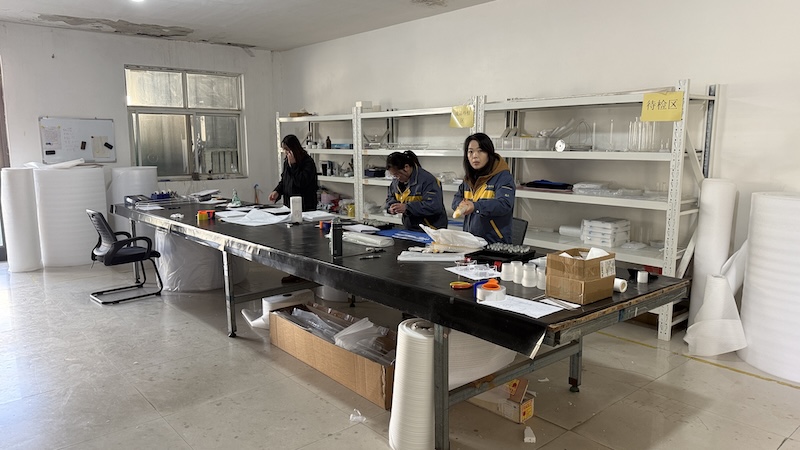
At Lovri Quartz Products Co., Ltd., optical light guide rods pass through rigorous quality stages:
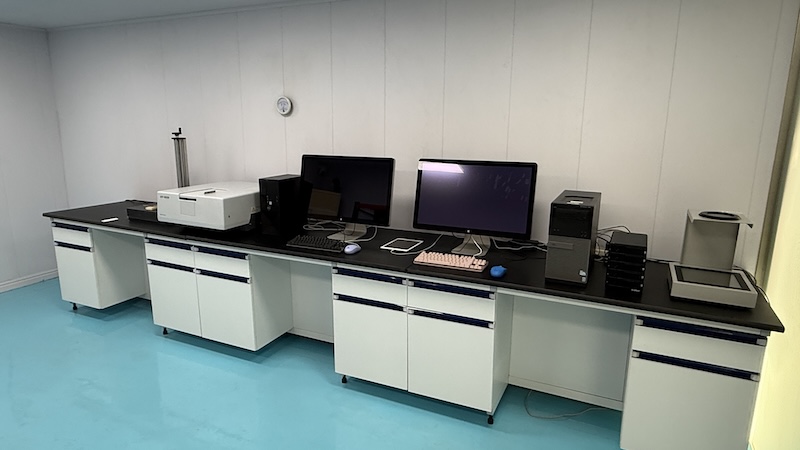
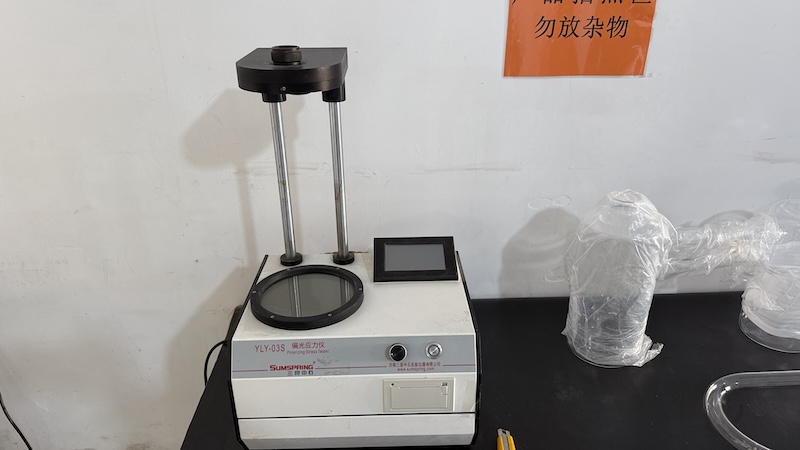
Birefringence Control: 100% analyzed via our polarization stress tester to avoid beam wavefront distortion.
End-Face Flatness: Verified by laser interferometer (standard $\lambda/4$, high-precision $\lambda/10$).
Surface Roughness ($R_a$): End faces mechanical-chemically polished to $R_a < 0.5\text{ nm}$; barrel fire-polished or optically ground for zero evanescent loss.
Practical explanations addressing the most common technical inquiries submitted by optical engineers and procurement specialists.
1. How does light transmission work inside a bare fused quartz rod without cladding?
A fused quartz rod acts as an unclad optical waveguide that confines light via Total Internal Reflection (TIR). Because the refractive index of fused quartz ($n_1 \approx 1.458$) is higher than air ($n_2 \approx 1.000$), light striking the side wall at an angle greater than the critical angle ($\theta_c = \arcsin(1/1.458) \approx 43.3^\circ$) is reflected with near 100% theoretical efficiency. To preserve this reflection, the outer diameter of the rod must be exceptionally clean, smooth ($R_a < 1\text{ nm}$), and isolated from absorbing potting compounds or greasy contaminants that disrupt the evanescent wave.
2. Why are square or hexagonal quartz light guides preferred over round rods for light mixing?
Circular light guides preserve skew rays along helical paths, often creating ring-like or non-uniform circular patterns at the output. Polygonal rods (square, rectangular, or hexagonal) break rotational symmetry. Each internal reflection folds and remixes different sections of the beam across straight orthogonal or hexagonal facets. This creates exceptional spatial homogenization (frequently achieving >95% top-hat uniformity), essential for semiconductor inspection, digital projection engines, and forensic UV light emitters.
3. What causes a fused quartz light guide to crack or melt under high-power lasers?
Optical failures under high laser fluence stem from three primary origins: (1) Residual Birefringence/Stress: Incompletely annealed quartz concentrates localized thermal strain, leading to thermo-mechanical cracking. Lovri solves this by 100% polarimeter stress inspection. (2) Sub-Surface Damage (SSD): Aggressive mechanical grinding creates micro-cracks beneath the polished face that absorb laser pulses. Lovri uses gradual fine-diamond slurry and chemical-mechanical polishing (CMP) to eliminate SSD. (3) Hydroxyl (OH-) Absorption: In infrared lasers (such as 1064 nm or 2.1 µm), high OH- content induces strong vibrational absorption and localized overheating. Using low-OH quartz (JGS3 or low-OH JGS1) prevents thermal runaway.
4. Can you apply anti-reflective (AR) coatings to the entrance and exit faces?
Yes. While the unclad sides rely on bare air-glass TIR, the flat entrance and exit faces naturally lose about 3.5% per surface due to Fresnel reflection ($R = [(n-1)/(n+1)]^2$). Lovri Quartz provides single-band, dual-band, and broadband Anti-Reflective (BBAR) coatings (e.g., 248 nm, 355 nm, 532 nm, 1064 nm, or 400–700 nm) to boost overall through-rod transmission to over 98.5%.
5. What are the standard manufacturing tolerances and lengths Lovri can supply?
We support diameters or cross-sections from 1.0 mm capillary light guides up to 150 mm large optical homogenization blocks, with lengths up to 2000 mm. Dimensional tolerances can be held to ±0.02 mm, end parallelism within 30 arcseconds, and surface scratch-dig to 20/10 for demanding laser-cavity applications. Prototype quantities from 1 piece are welcome.
Enterprise Reliability
Why Tier-1 Optics Buyers Partner with Lovri Quartz
Experience, technical authority, verifiable traceability, and direct factory pricing without international broker markups.
SGS Onsite-Verified Facility
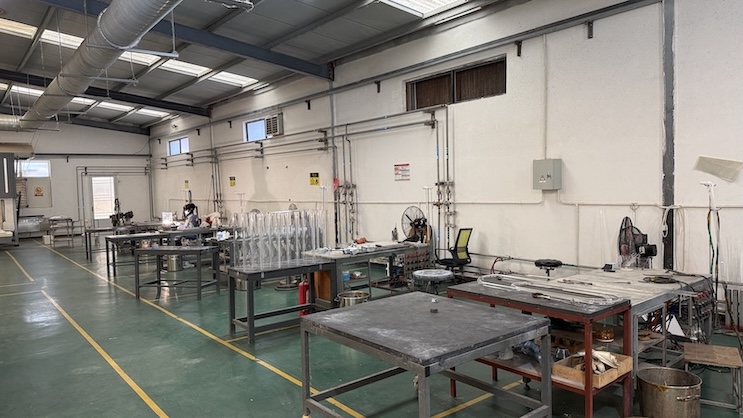
Our 14,271 m² production facility in Lianyungang, Jiangsu has undergone rigorous on-site audit by SGS Group, verifying production machinery, laboratory calibration, and operational legitimacy.
Complete Purity Control
From crushing high-grade silica sand, acid pickling out heavy metals, to automatic drawing lines, our raw purity reaches 99.99% SiO₂ with complete material mill test certificates (MTC).
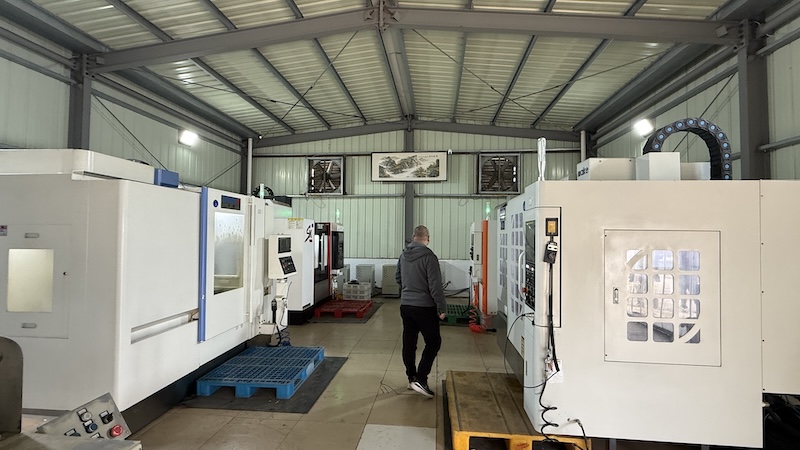
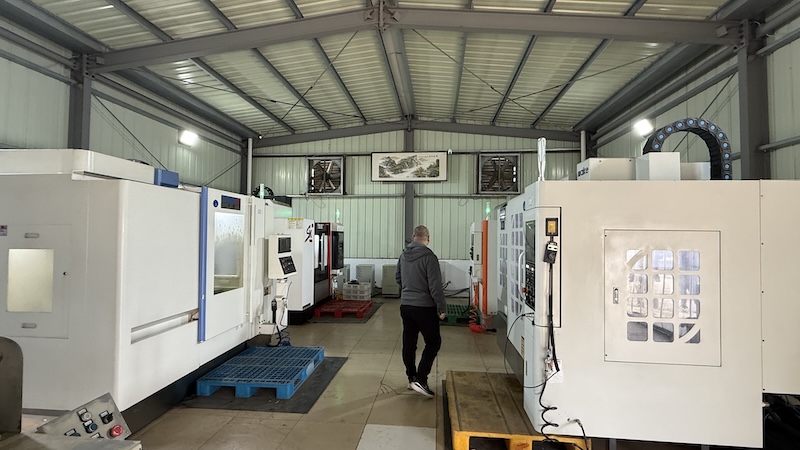
Multi-Axis Optical CNC Center
Equipped with specialized high-speed glass machining centers, ultrasonic drilling, laser facet profiling, and flame-polishing equipment to produce complex polygonal and tapered geometries.