Precision Fused Quartz Products Serving Technical Buyers
Manufactured from ultra-pure natural quartz crystal sand (≥99.99% SiO₂), thermally stabilized up to 1200°C continuous operation, and fabricated to tight ISO tolerance standards.
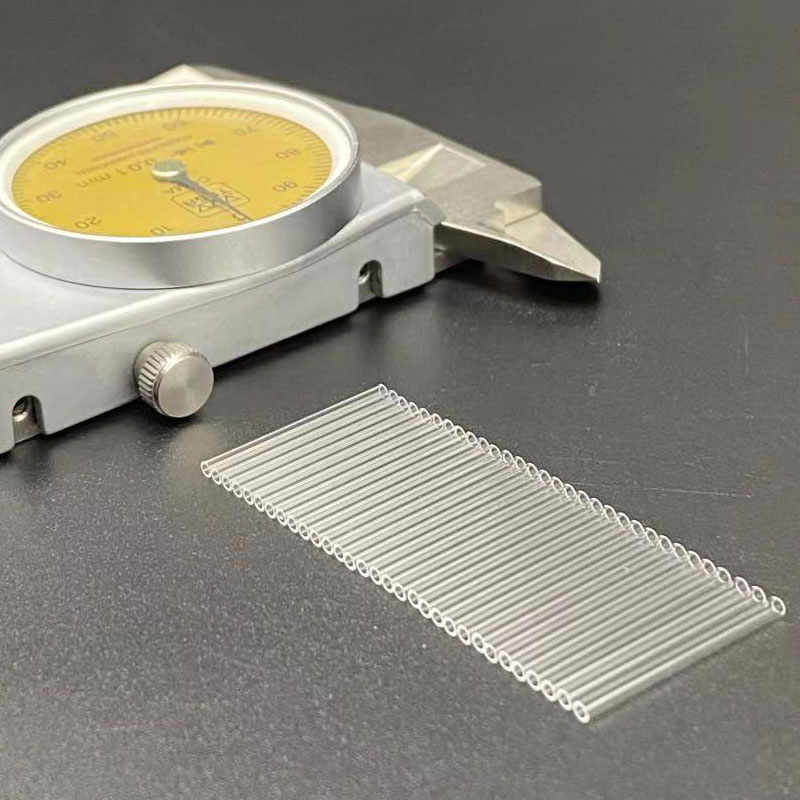
BAO RAN 419 Quartz Sheet 0.1-0.5mm 99.99% SiO₂
- 200 Mesh Refined Silica Sand
- RoHS Certified Optical Substrate
- Deep-UV Laser Windows
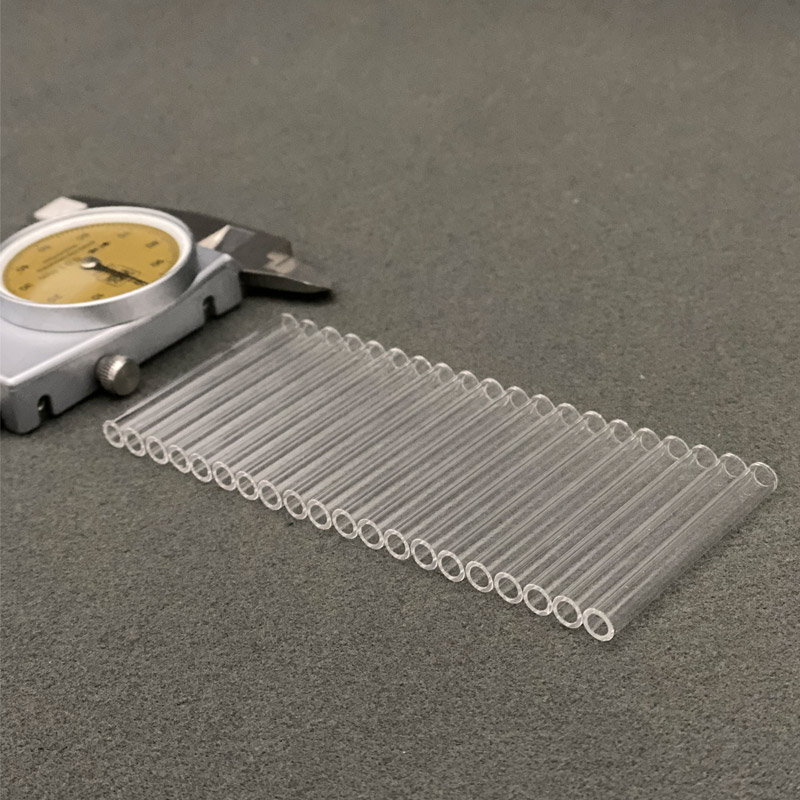
BAO RAN 419 Fused Quartz Capillary Tube 75m
- Annealed at 1200°C Relief Cycle
- Precision Bore Concentricity
- Laser & Fluidic Machinery
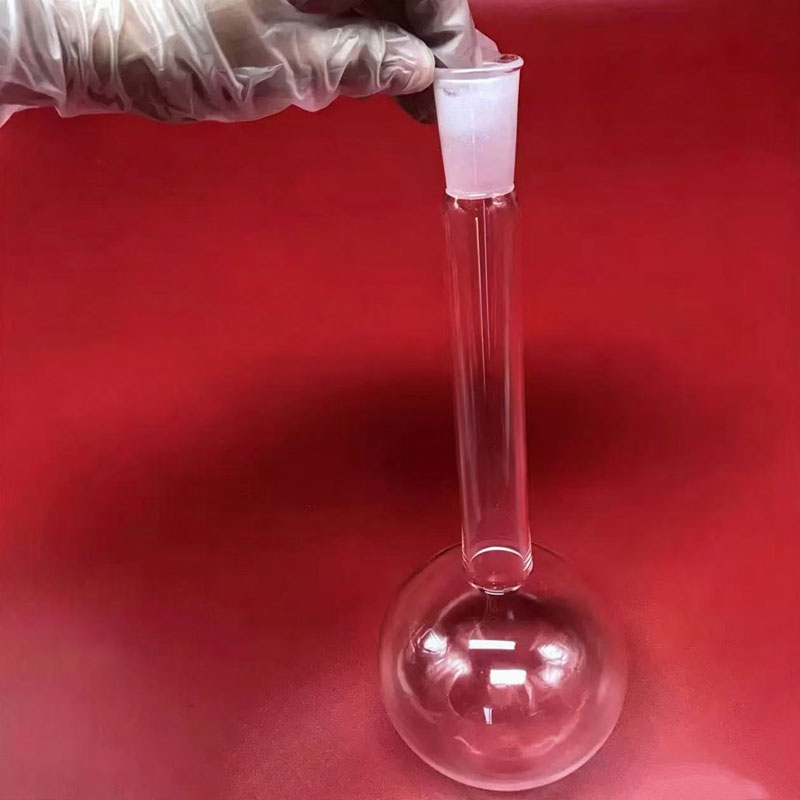
High-Purity Quartz Glass Long-Neck Boiling Flask
- 1200°C Thermal Shock Survival
- Corrosion Resistant Acid Vessel
- Pyrochemical Digestion Ready
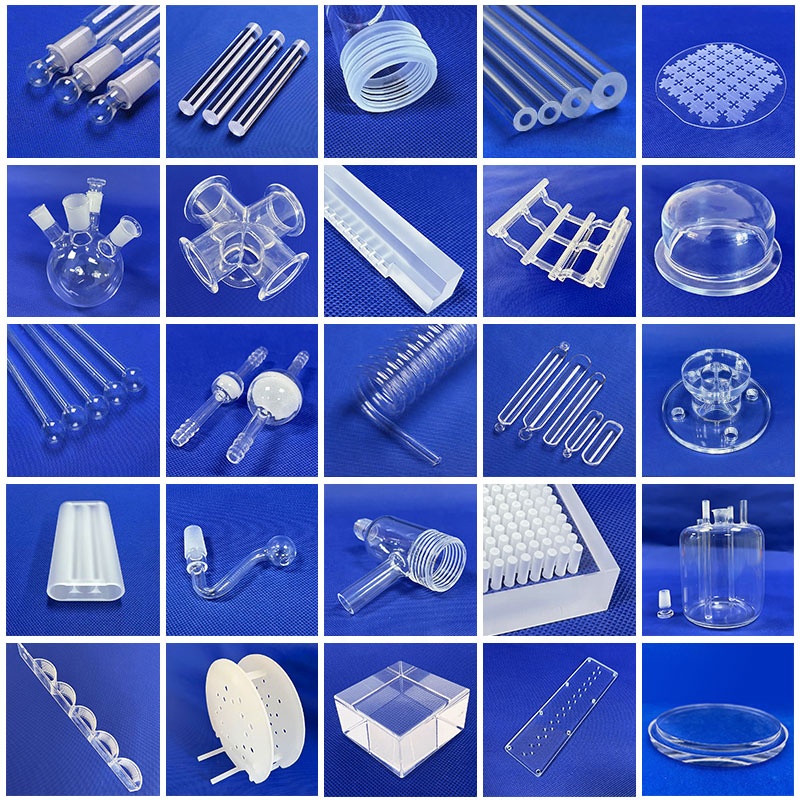
BAO RAN 419 Double-Sided Polished Quartz Plate
- >92% Optical Transmittance
- White Rim Precision Edge Ground
- Acid, Alkali, and Aqua Regia Inert
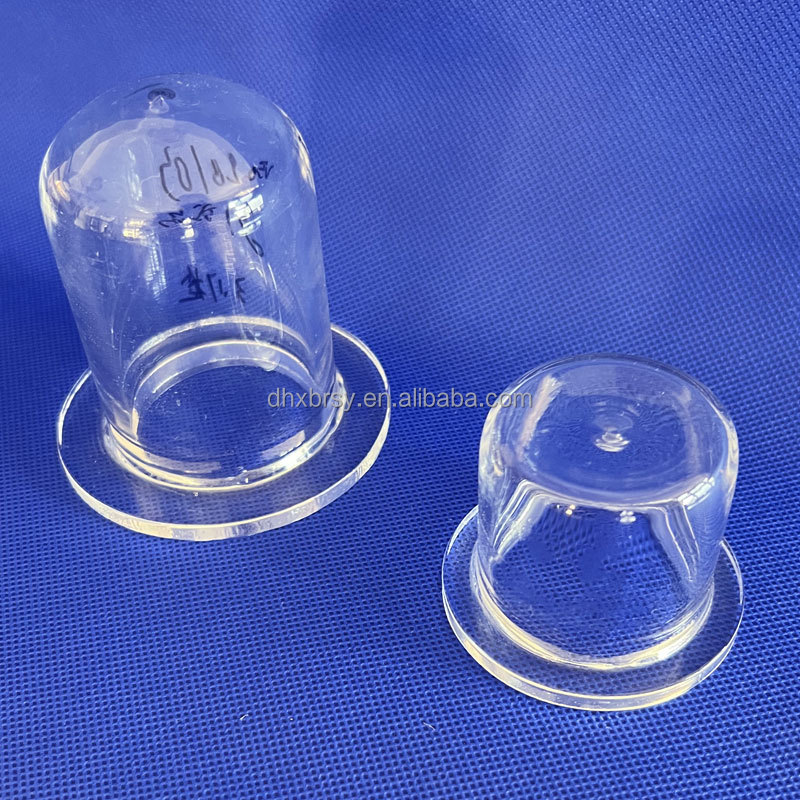
518 Fused Quartz Photovoltaic Sintering Tube
- 99.99% SiO₂ High Transmittance
- Continuous Duty up to 1150°C
- RoHS Verified Solar Grade
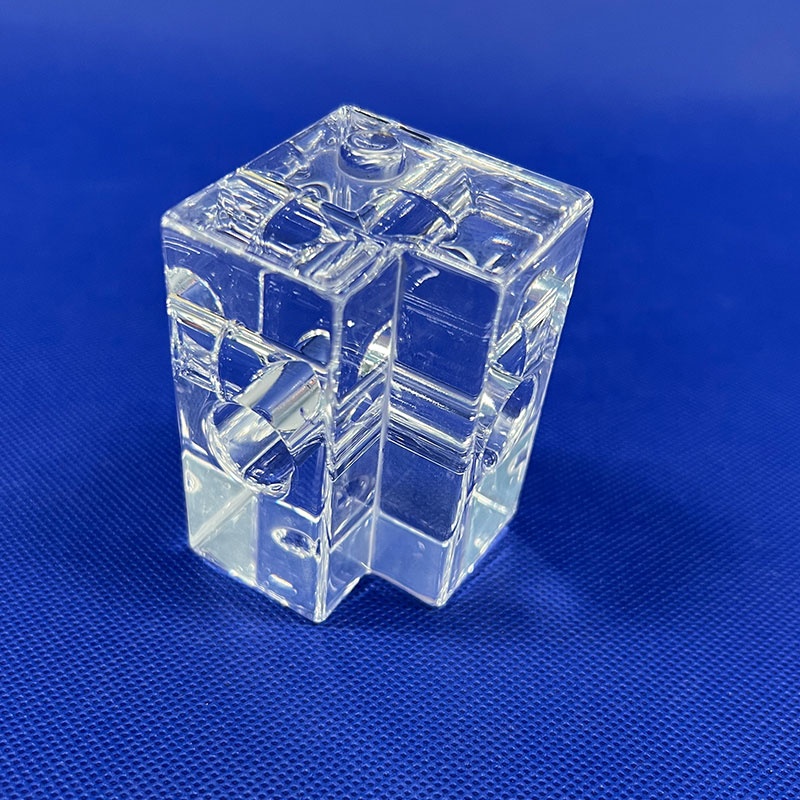
420 BAO RAN Custom Annealed Fluidic Quartz
- 200 Mesh Acid-Treated Base
- Zero Internal Birefringence
- Micro-Channel Tolerance ±0.02mm
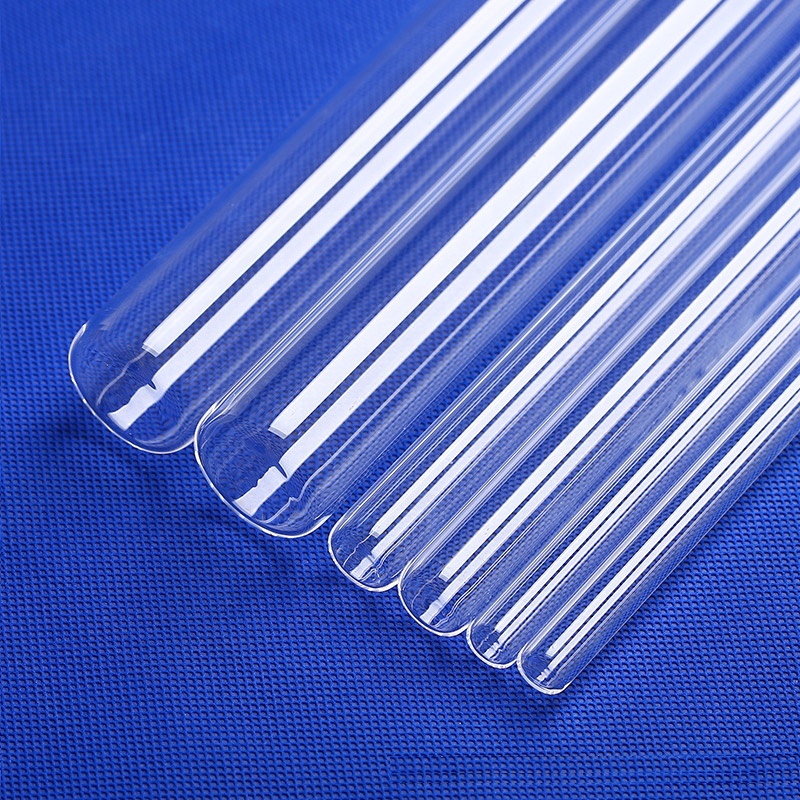
Clear Fused Silica Quartz Test Tube Closed End
- Hemispherical or Flat Base Closure
- Thermal Shock 1100°C to Water
- Semiconductor & Lab Digestion
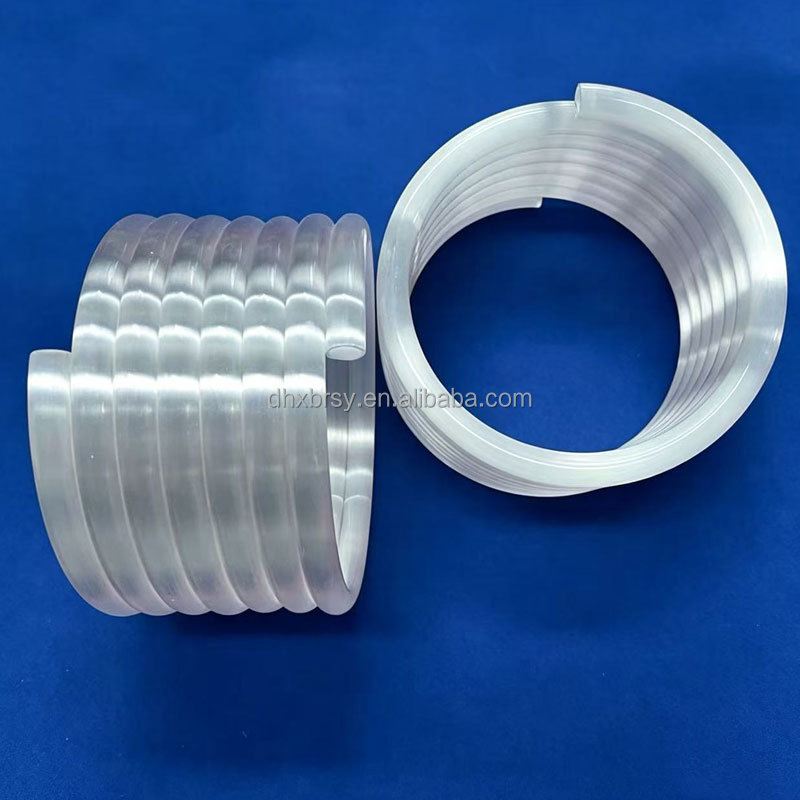
Milky-White Opaque Quartz Helix Spiral Coil
- Diffuse Infrared Thermal Shield
- Uniform Heat Dispersion Core
- Industrial Furnace & Desiccation
Thermodynamic Integrity & Material Science of Fused Quartz Test Tubes
A rigorous engineering analysis on why fused silica (SiO₂ ≥ 99.99%) outperforms borosilicate 3.3 in extreme pyrochemical digestion, high-temperature furnace insertion, and spectral analysis.
The Structural Physics of Non-Crystalline Fused Silica
Standard laboratory glassware, such as borosilicate glass 3.3, incorporates substantial concentrations of boron trioxide (B₂O₃ ≈ 13%) and alkali fluxes (Na₂O, Al₂O₃) to depress melting points during furnace processing. While adequate for routine wet-chemistry boiling below 450°C, borosilicate suffers structural relaxation, devitrification, and severe leaching under strong acid digestion or rapid thermal cycling beyond 500°C.
Our fused quartz test tubes and reaction vessels are manufactured directly from high-purity natural silica sand refined down to <20 ppm total metallic impurities. With a pure tetrahedral silicon-oxygen lattice structure without network-modifying flux cations, fused quartz exhibits an exceptionally low coefficient of thermal expansion (α ≈ 5.5 × 10⁻⁷ /°C from 20°C to 300°C)—less than one-sixth that of high-grade borosilicate. This confers unmatched thermal-shock tolerance, permitting red-hot test tubes at 1100°C to be quenched directly into ice-cold water without micro-fracturing or catastrophic spalling.
- Thermal Strain Point: 1120°C with annealing equilibrium at 1215°C and softening at 1730°C.
- Spectral Broadband Transmission: Transmission bandwidth extends from Deep UV (185nm for JGS1) through NIR (3500nm).
- Chemical Inertness: Complete resistance to concentrated H₂SO₄, HNO₃, HCl, and aqua regia at boiling regimes.
| Physical / Chemical Property | High-Purity Fused Quartz (Our Standard) | Borosilicate Glass 3.3 (Commercial Grade) | Operational Significance for Pyongyang Labs |
|---|---|---|---|
| SiO₂ Purity Content | ≥ 99.99% | 80.5% (contains B₂O₃, Na₂O, Al₂O₃) | Prevents elemental sample contamination during micro-analysis |
| Continuous Max Operating Temp | 1150°C (short excursions to 1350°C) | 490°C (softens rapidly at 560°C) | Supports direct ash calcination, metallurgical smelting assays |
| Thermal Expansion (20-300°C) | 5.5 × 10⁻⁷ K⁻¹ | 33.0 × 10⁻⁷ K⁻¹ | Zero breakage during rapid furnace withdrawal and water quenching |
| Refractive Index (nD 589.3nm) | 1.4585 | 1.4730 | Minimal optical distortion for spectroscopic cuvettes & flow cells |
| Hydrofluoric Acid Resistance | Attacked slowly by HF; inert to all others | Attacked by HF and hot concentrated alkalis | Allows prolonged holding of boiling mineral acids without corrosion |
High-Purity Quartz Glass in Pyongyang’s Strategic Scientific Sector
Tailored supply solutions addressing the rigorous technical mandates of industrial hubs, metallurgical processing centers, academic institutions, and medical diagnostics in Pyongyang.
Academy of Sciences & Chemistry Institutes
Scientific faculties and state chemistry laboratories across Pyongyang require quartz test tubes with round or flat-bottom geometries to perform high-vacuum pyrolysis, organic hydrothermal syntheses, and catalytic cracking. Quartz test tubes serve as reaction chambers that withstand sustained 1000°C heating without silica dissolution into reaction compounds.
Rare Earth & Non-Ferrous Smelting Assays
Mineral characterization across domestic extraction operations relies on rigorous aqua-regia digestion tubes and sample combustion boats. Standard glassware rapidly deteriorates under fluorinated and nitric acid mixtures at elevated temperatures; our 99.99% SiO₂ tubes ensure consistent chemical inertness during continuous acid digestion cycles.
Clinical Pathology & Diagnostic Centers
Medical test installations and central hospital laboratories in Pyongyang utilize optical quartz spectrophotometer cuvettes, reaction capillaries, and quartz digestion vessels. The zero-fluorescence backdrop and superior transmission down to 190nm in the ultraviolet band ensure clinical assay precision.
Semiconductor & Polysilicon Research
Pyongyang electronics development facilities operating micro-fabrication, thin-film annealing, and chemical vapor deposition (CVD) equipment utilize our one-end closed quartz furnace process tubes and quartz wafer carriers to isolate silicon substrates from ambient atmospheric contaminants.
Industrial Infrared Heating & Drying
High-capacity manufacturing and food-processing drying ovens implement our opaque quartz spiral heating tubes and clear quartz thermowells. The high thermal resistance protects heating elements while emitting balanced mid-to-far infrared wavelengths for accelerated dehydration processes.
Environmental Water Quality Monitoring
Wastewater management and water filtration plants across the Taedong River basin incorporate heavy-duty quartz immersion sleeves and photochemical digest tubes for total organic carbon (TOC) and chemical oxygen demand (COD) digestions under intense UV radiation.
Procurement Dynamics & Freight Optimization Serving Pyongyang
Key economic and technical factors influencing international procurement, regulatory compliance, and cross-border transport routing from China's primary silica base to the Pyongyang metropolis.
Shift from Borosilicate to Durable Silica
Institutional buyers serving Pyongyang increasingly avoid lower-tier borosilicate laboratory tubes due to high cyclical replacement frequencies caused by thermal cracking. Investing in 99.99% fused quartz delivers a 5-to-1 operational lifecycle advantage, reducing logistical customs clearance burdens and overall total cost of ownership (TCO).
Custom Dimensional Standardization
Procurement manifests consistently demand custom dimensional profiles: wall thicknesses ranging from heavy-duty 2.0–3.5mm for pressurized autoclave synthesis, alongside standard 1.0–1.2mm for rapid heat-transfer analytical procedures. Our facility manufactures tubes to specific length (10mm to 2000mm) and rim-finish configurations (flanged, straight, or threaded).
Cross-Border Transit Hardening
Logistical routing from Lianyungang, Jiangsu to Pyongyang via direct rail freight and cross-border corridors through Dandong/Sinuiju demands rigorous vibration protection. Lovri Quartz employs custom-molded high-density EPE foam cavities, vacuum-sealed polywrap, shock-indicating markers, and ISPM-15 compliant export timber crating to achieve zero-breakage delivery.
Why Institutional Buyers Rely on Lovri Quartz
Operating from Lianyungang, China's premier silica capital, our fully integrated manufacturing infrastructure delivers full traceability from quartz crystal refining to CNC cold-working.
14,271 m² Factory
Independently assessed onsite by SGS Group, housing multi-position electric vacuum furnaces, hydrogen-oxygen drawing towers, and automated glassblowing lathes.
In-House Purity Control
Raw silica lump crushing, 200-mesh sand pulverization, and proprietary multi-stage acid leaching are performed in-house, securing certified 99.99% SiO₂ baseline purity.
CNC Machining
Full 5-axis CNC ultrasonic glass machining: laser-drilled micro-orifices, flat optical ground windows, threading, ground glass joints, and double-flanged junctions.
Stress Polarization
100% of annealed tubes undergo optical polarization inspection. Annealing at 1215°C followed by controlled cooling completely relieves internal stress, eliminating latent cracking.
Frequently Asked Questions by Technical Buyers Serving Pyongyang
Comprehensive engineering insights addressing material specifications, testing standards, custom drawings, and delivery timelines.
What is the decisive difference between fused silica and transparent fused quartz?
Both materials share ≥99.9% SiO₂ chemistry. Transparent fused quartz is produced by melting naturally occurring high-purity quartz crystal sand in high-temperature furnaces, offering exceptional mechanical rigidity and thermal durability up to 1200°C. Fused silica is synthesized chemically from silicon tetrachloride vapor, providing zero bubble inclusions and superior Deep UV optical transmission down to 185nm (JGS1 grade). We manufacture both variants based on your analytical requirements.
Can you produce quartz test tubes according to custom engineering blueprints?
Yes. Our engineering division processes CAD drawings supplied in PDF, DWG, DXF, or STEP formats. We routinely fabricate one-end closed test tubes with custom wall thicknesses (from 0.8mm to 5.0mm), reinforced fire-polished beaded rims, standard taper ground joints (14/20, 19/22, 24/40), GL-thread screw caps with PTFE septa, side branches, and vacuum stopcocks.
How does your factory ensure zero breakage during cross-border transit to Pyongyang?
Quartz glass is inherently brittle. Our specialized export packing protocol involves individual shrink-wrapping of each tube in anti-static film, suspended nested placement inside custom-molded high-density expanded polyethylene (EPE) foam trays, double-walled corrugated inner cartons, and final encasement in reinforced fumigated wooden crates secured with steel bands and external drop/tilt impact monitors.
What is the minimum order quantity (MOQ) and production turnaround for custom batches?
For standard diameter quartz test tubes (OD 10mm–30mm), our MOQ is flexible, starting from 10 to 50 pieces to accommodate laboratory validation runs. For fully customized apparatus requiring custom graphite molds or CNC programming, trial runs can begin at 5 to 10 pieces. Standard lead times range from 7 to 15 business days depending on geometric complexity.
How do fused quartz test tubes behave under repeated acid digestion?
Fused silica is completely inert to hydrochloric, nitric, sulfuric, perchloric, and acetic acids, as well as aqua regia, at boiling temperatures. The only chemical agents that attack fused quartz are hydrofluoric acid (HF) and concentrated phosphoric acid (H₃PO₄) above 150°C. For trace elemental sample digestion, our quartz tubes guarantee zero metal cation leaching into the matrix solution.
What quality documentation and mill certificates accompany export shipments?
Every commercial consignment includes a comprehensive Certificate of Analysis (COA) specifying SiO₂ purity and trace metal ICP-MS impurity levels, dimension verification reports confirming wall thickness and outer diameter tolerances, optical transmittance test curves upon request, RoHS conformity declarations, and proof of SGS factory assessment.
Connect with Our Engineering Desk for Pyongyang Inquiries
Submit your target dimensions, tube closure styles (round/flat), operating temperatures, or project blueprints. Our senior technical glass consultants will reply with a detailed feasibility review and competitive direct-factory pricing.