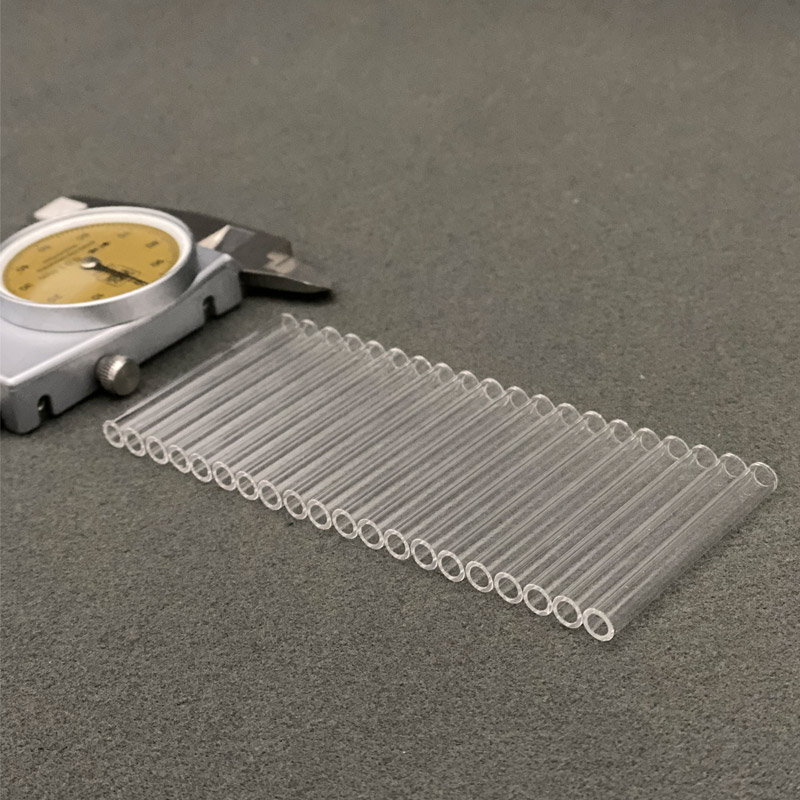
Featured High-Precision Components
Engineered Fused Quartz & Crucible Product Matrix
Precision-drawn fused silica crucibles, reaction vessels, high-pressure tubes, and optical assemblies built to rigorous ISO and ASTM tolerances.
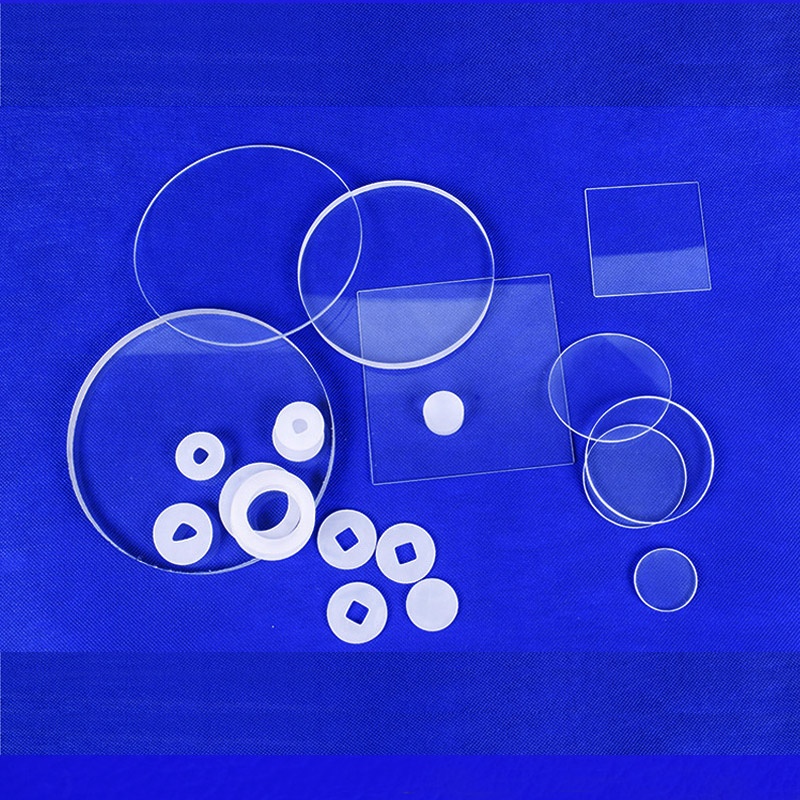
Technical Whitepaper & Market Intelligence
The State of Fused Quartz Crucible Manufacturing for Canadian Industry
Analyzing thermal stability, devitrification mitigation, and precision vessel requirements across clean technology corridors.
The demand for ultra-high-purity quartz glass crucibles within Canada has undergone an unprecedented evolution over the past decade. Traditionally confined to specialized mineralogical assay laboratories in Sudbury and Val-d'Or, the strategic diversification of the Canadian industrial landscape—catalyzed by the Canadian Critical Minerals Strategy, advanced compound semiconductor fabrication in Ontario, and zero-carbon photovoltaic ingot research along the Saint Lawrence corridor—has repositioned fused silica crucibles as a critical structural component of Canada's advanced thermal manufacturing supply chain.
A fused quartz crucible is far more than an inert industrial container; it operates as an active, thermally resilient containment system engineered to survive temperatures surpassing 1450°C while maintaining exceptional mechanical rigidity, optical clarity, and near-zero chemical leaching. In applications such as the Czochralski (CZ) pulling of monocrystalline silicon, the pyrometallurgical digestion of precious metals, and high-vacuum induction melting (VIM) of aerospace alloys, the chemical integrity of the crucible surface dictates final product yield. Even sub-part-per-million contaminations of alkali metals (Li, Na, K) or transition elements (Fe, Cu, Ni) trigger rapid catastrophic devitrification into cristobalite, leading to vessel warping, thermal cracking, and batch contamination.
Critical Material Science Insight: Devitrification Kinetics in Fused Silica
Fused silica exists in a metastable, vitreous amorphous state at ambient room temperatures. When exposed to operational temperatures above 1150°C, thermodynamic driving forces promote nucleation and grain growth into crystalline cristobalite. The presence of surface micro-imperfections, unpolished micro-cracks, or airborne particulate contaminants acts as heterogeneous nucleation sites, accelerating phase transformation. Our direct manufacturing process integrates rigorous multi-stage hydrofluoric and hydrochloric acid pickling followed by high-temperature vacuum annealing to completely eliminate latent surface impurities and reduce internal stress to below 5 nm/cm.
99.99%
Minimum SiO₂ Purity
1730°C
Softening Point
5.5×10⁻⁷
Thermal Expansion (/°C)
< 15 ppm
Low Hydroxyl [OH⁻]
Component Classification
Specialized Crucible Formats Tailored for Extreme Environments
From arc-fused outer thermal barriers to laser-grade transparent synthetic inner linings, each configuration fulfills specific thermodynamic criteria.
Arc-Fused Opaque Outer Layer Crucibles
Engineered for high-volume CZ crystal growth and bulk polysilicon melting. Features an opaque, micro-bubble enriched outer layer that serves as a radiative thermal insulator, ensuring uniform heat distribution from graphite heaters while minimizing localized hotspots that cause crystallization.
Clear Fused Silica Flat & Round Bottom Crucibles
Fabricated from electrically or flame-fused quartz crystalline sand, achieving crystal-clear transparency across both visual and infrared spectra. Ideal for Canadian chemical synthesis, vacuum induction furnaces, and high-temperature laser spectrometry where optical reaction tracking is necessary.
Synthetic JGS1-Lined Ultra-Purity Crucibles
Designed for next-generation gallium arsenide (GaAs), indium phosphide (InP), and compound semiconductor synthesis. The inner bubble-free vitreous lining features total metallic impurities below 0.5 ppm, preventing molten element wetting and ensuring clean ingot release without residue.
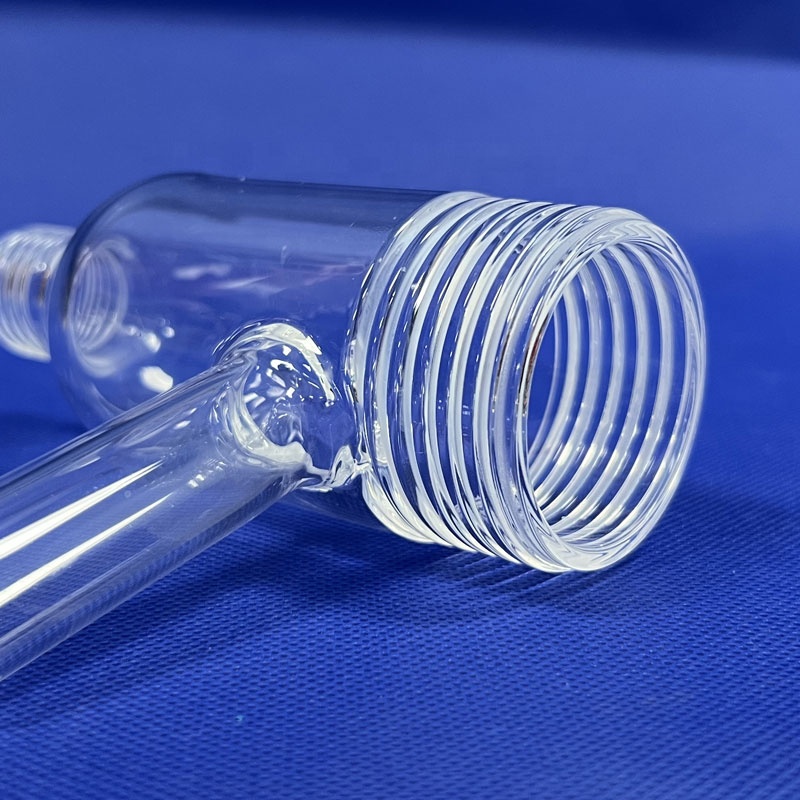
Canadian research facilities and production lines require customized vessel geometries to mate with specialized chamber configurations. Whether specifying flat bottoms for resistance heating plates, spherical radiused profiles for tilt-pour induction systems, or multi-port threaded containment heads for inert gas backfilling, direct factory coordination allows precision control over geometric tolerances, wall thickness profiles, and edge-fire polishing.
Empirical Data & Standards
Material Property Matrix: Fused Quartz vs. Alternative Refractories
A side-by-side engineering evaluation demonstrating why fused silica crucibles outmatch alumina, graphite, and borosilicate in purity-sensitive pyrochemical processes.
| Material Parameter | High-Purity Fused Quartz (Lovri) | Alumina Ceramic (Al₂O₃ 99.7%) | Iso-Molded High-Purity Graphite | High-Temp Borosilicate 3.3 |
|---|---|---|---|---|
| Purity Level (Main Oxide) | ≥ 99.99% SiO₂ | 99.7% Al₂O₃ | 99.9% Carbon | ≈ 81% SiO₂ (Contains B₂O₃, Na₂O) |
| Coefficient of Thermal Expansion (CTE) | 5.5 × 10⁻⁷ /°C (Near-Zero) | 8.0 × 10⁻⁶ /°C | 4.5 × 10⁻⁶ /°C | 3.3 × 10⁻⁶ /°C |
| Thermal Shock Threshold (ΔT Air Quench) | > 1100°C to Cold Water Drop | ≈ 180°C - 220°C (Cracks easily) | Excellent (Subject to oxidation) | ≈ 150°C - 180°C |
| Maximum Working Temp (Continuous) | 1100°C (Peak 1350°C short-term) | 1600°C | Up to 2500°C (Inert Gas only) | 490°C (Softens at 820°C) |
| Chemical Inertness | Immune to HNO₃, HCl, H₂SO₄, Aqua Regia | Attacked by hot acidic/alkaline melts | Reacts with oxidizing acids/air > 450°C | Alkali leaching issues at high temps |
| Dielectric Constant (1 MHz) | 3.75 (Low dielectric loss for RF/Induction) | 9.8 | N/A (Conductor) | 4.6 |
Localized Canadian Context
Application Scenarios across Canada’s Industrial Core
Addressing the stringent thermodynamic and contamination tolerances demanded by Canadian high-tech, academic, and extractive enterprises.
Ontario’s Semiconductor Corridor & Photonics Labs
Across the Greater Toronto Area, Waterloo, and Ottawa, compound semiconductor foundries and research institutes leverage high-purity fused quartz crucibles and diffusion tubes for epitaxy, phosphorus doping, and optoelectronic chip manufacturing. The absence of alkali metallic impurities ensures ultra-clean wafer surface preservation during 1200°C furnace runs.
Quebec Clean-Tech & Battery Mineral Refining
Quebec’s low-cost hydroelectric grid powers major lithium hydroxide, cobalt, and rare-earth smelting pilot initiatives along the Bécancour and Montreal industrial zones. Fused silica crucibles and calcination vessels resist extreme acid digestion vapors and thermal gradients during critical mineral solvent extraction and calcination testing.
Western Canadian Mining & Fire Assay Labs
Extensive precious metal exploration in British Columbia, Alberta, and the Yukon relies on heavy-duty fused quartz crucibles for fire assays, platinum-group element (PGE) cupellation, and high-temp borax flux melts. Fused silica's shock resistance allows direct transference from 1050°C muffle furnaces into cold room air without shattering.
Macro Economic Intelligence
Emerging Trends Shaping Canada's Quartz Procurement
How domestic policy shifts, critical mineral self-reliance, and nearshoring affect procurement engineers from Vancouver to Halifax.
1. Shift Toward Domestic EV Battery Material Verification: Under the federal Critical Minerals Strategy, Canadian labs are scaling up thermal testing of synthetic graphite, nickel anodes, and high-purity silicon powders. Fused quartz crucibles are indispensable for high-temperature calcination and carbothermic reduction tests where carbon cross-contamination or heavy metal inclusion must be zero.
2. Increased Focus on Extended Thermal Cycle Lifetime: Canadian thermal processing operators face elevated energy costs and freight overheads. Procurement teams are moving away from single-use cheap quartzware in favor of thicker-walled, polarization-stress-relieved crucibles capable of sustaining multiple thermal cycles (10 to 30 runs depending on melt chemistry), drastically driving down total lifecycle cost per melt.
3. Direct-from-Source Factory Partnerships: Due to inventory rationalization across Canadian distributors, industrial engineers are increasingly bypassing high-markup middlemen and engaging directly with ISO-certified source manufacturing plants capable of rapid drawing-to-part production, direct export crating, and reliable air freight clearance straight to Pearson (YYZ), Montreal-Trudeau (YUL), or Vancouver (YVR).
Verified Manufacturing Excellence
Why Tier-1 Engineers Partner with Our Factory
Combining primary raw-material refining with high-precision hot glassblowing and CNC cold-machining in a vertically integrated 14,271 m² ecosystem.
14,271 m² Dedicated Facility
SGS onsite-audited manufacturing infrastructure located in Lianyungang, housing continuous tube-drawing lines, automated electric arc furnaces, and high-temperature vacuum annealing chambers.
Complete Raw Material Purity Control
We process natural quartz lumps through in-house crushing, magnetic screening, and multi-acid pickling, guaranteeing ≥ 99.99% SiO₂ baseline purity before thermal shaping begins.
Polarization Stress & CNC Accuracy
Every batch undergoes quantitative polariscope stress testing. In-house 5-axis CNC machines deliver slotting, edge chamfering, internal threading, and ground-lip tolerances down to ±0.05 mm.
Zero-Breakage Export Packaging
Custom-molded closed-cell polyethylene foam, vacuum internal wrapping, and reinforced non-coniferous timber crates certified for trans-Pacific express, air, and ocean delivery across Canada.
Procurement & Technical Support
Frequently Asked Questions by Canadian Buyers
Practical answers addressing customs tariffs, ASTM testing criteria, custom drawing submissions, and thermal handling best practices.
1. What custom documentation and Harmonized Tariff Schedule (HS) codes apply when importing quartz crucibles into Canada?
Quartz glass crucibles and fused silica laboratory/industrial wares are primarily classified under HS Code 7017.10 (Laboratory, hygienic or pharmaceutical glassware, of fused quartz or other fused silica) or 6903.10 / 7020.00 depending on the exact vessel dimensions and furnace attachment types. Shipments imported into provinces such as Ontario, Quebec, or Alberta require standard commercial invoices, packing lists with net/gross weights, certificates of origin, and material purity analysis sheets. Canadian buyers possessing a valid Business Number (BN) can clear customs swiftly through local CBSA clearance points with applicable GST/HST.
2. How does your factory prevent thermal shock cracking during rapid cooling cycles?
Fused quartz boasts an exceptionally low coefficient of thermal expansion (5.5 × 10⁻⁷ /°C), which inherently provides outstanding thermal shock resistance compared to alumina or borosilicate. To maximize this property, every crucible produced undergoes fine annealing in a computerized electric annealing furnace at 1215°C followed by a strictly controlled cool-down schedule. We inspect 100% of finished parts under a crossed-polaroid strain viewing system to guarantee the elimination of frozen-in stress concentrations that would otherwise cause spontaneous failure when transitioning between 1200°C and ambient temperatures.
3. Can we order customized crucible geometries based on our internal CAD / STEP files?
Yes. Our internal engineering department works directly with drawings provided in PDF, DWG, DXF, or STEP/IGES formats. Whether your process demands specialized pouring spouts, ground flanges for vacuum-tight O-ring sealing, stepped wall thicknesses, or welded multi-port quartz covers, we execute high-tolerance glass-forming and CNC machining to achieve your exact tolerances (typically down to ±0.1 mm for standard profiles and ±0.05 mm for critical CNC machined faces).
4. What is the difference between transparent quartz crucibles and milky-white opaque fused silica crucibles?
Transparent crucibles are fabricated from completely melted, bubble-free fused silica, providing maximum optical transmission, superior mechanical strength at the melting point, and ease of visual inspection for molten baths. Milky-white opaque crucibles are produced with a uniform microscopic dispersion of gaseous bubbles within the silica matrix. This structure acts as a diffuse reflector of infrared radiation, providing superior thermal insulation and heat uniformity—critical for large silicon ingot pullers where localized thermal convection currents must be suppressed.
5. What Minimum Order Quantities (MOQ) and lead times apply for shipments destined for Canada?
To support Canadian universities, pilot development programs, and R&D centers, standard and semi-custom prototype crucibles can be ordered with an MOQ as low as 1 to 5 pieces. Production lead times for custom tooling and fabrication generally span 7 to 15 business days. We partner with air express carriers (DHL, FedEx, UPS) for time-critical deliveries reaching Canadian facilities within 4 to 6 business days from dispatch, as well as Consolidated Container (LCL/FCL) ocean freight arriving at Vancouver or Montreal ports for bulk commercial operations.
6. How can Canadian process engineers minimize crucible devitrification and extend campaign life?
To prevent premature crystallization into cristobalite, operators should adhere to three primary handling rules: First, never touch crucible surfaces with bare hands; finger oils contain trace sodium and potassium salts that act as immediate catalytic nucleation sites for devitrification at temperatures above 1000°C. Second, ensure furnace atmospheres are free of alkali-rich dust or hydrocarbon residues. Third, when possible, passivate the crucible prior to use by cleaning with a 5% high-purity hydrofluoric acid solution followed by deionized water rinsing and thorough drying.