SGS Onsite-Verified Fused Quartz Manufacturer [email protected]

Top China Fused Quartz 96 Well Microplate Exporter & Exporters Serving Greece

Engineered for Deep-UV High-Throughput Screening, Hellenic Biophysical Research & Precision Spectroscopy across Athens, Thessaloniki, and Crete

99.99%
Synthetic SiO₂ Optical Purity
>85%
Deep-UV Transmittance @ 200nm
14,271m²
SGS-Assessed Manufacturing Plant
±0.05mm
CNC Well-Center Pitch Precision
Export Matrix & Precision Catalog

Featured Fused Silica & Microplate Laboratory Solutions

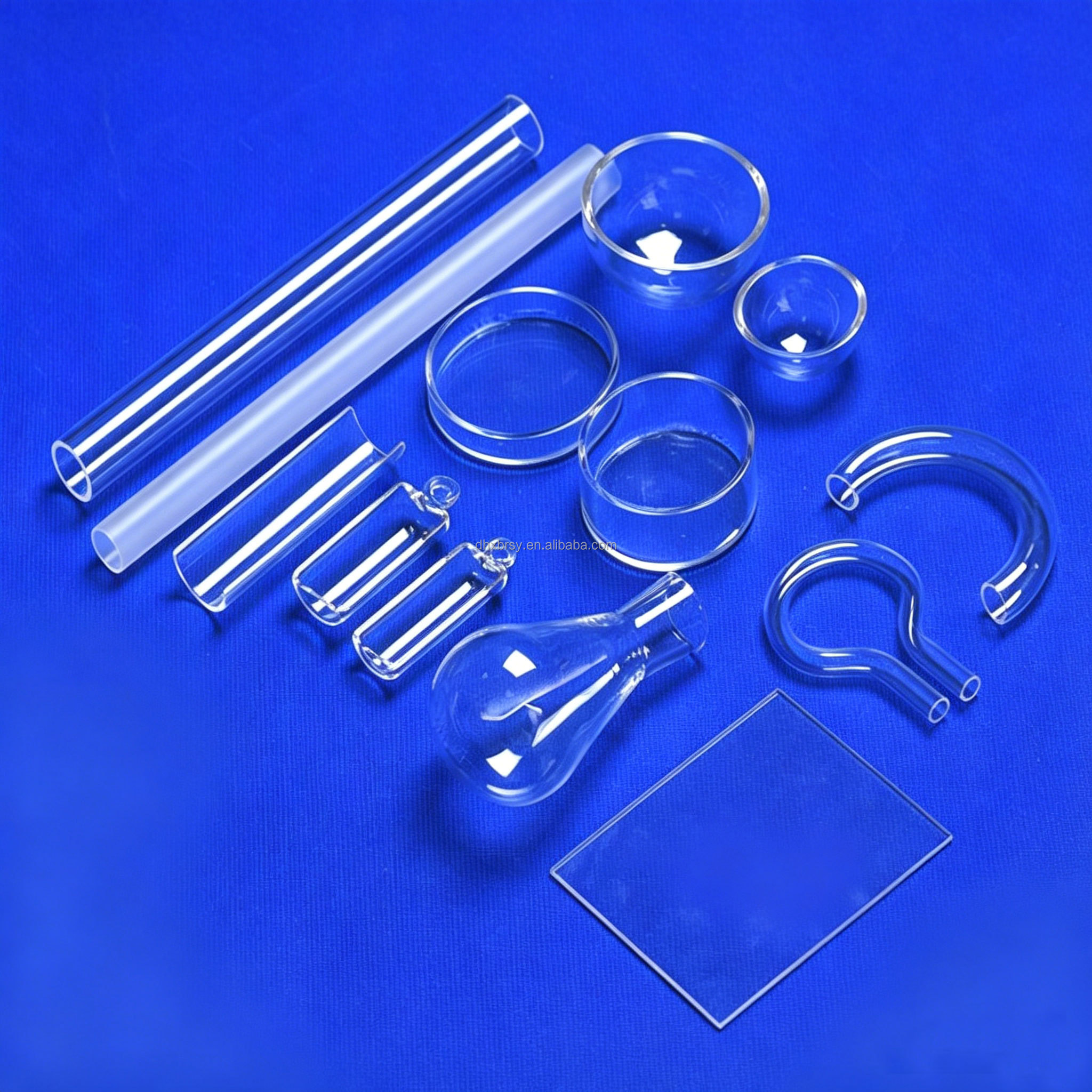
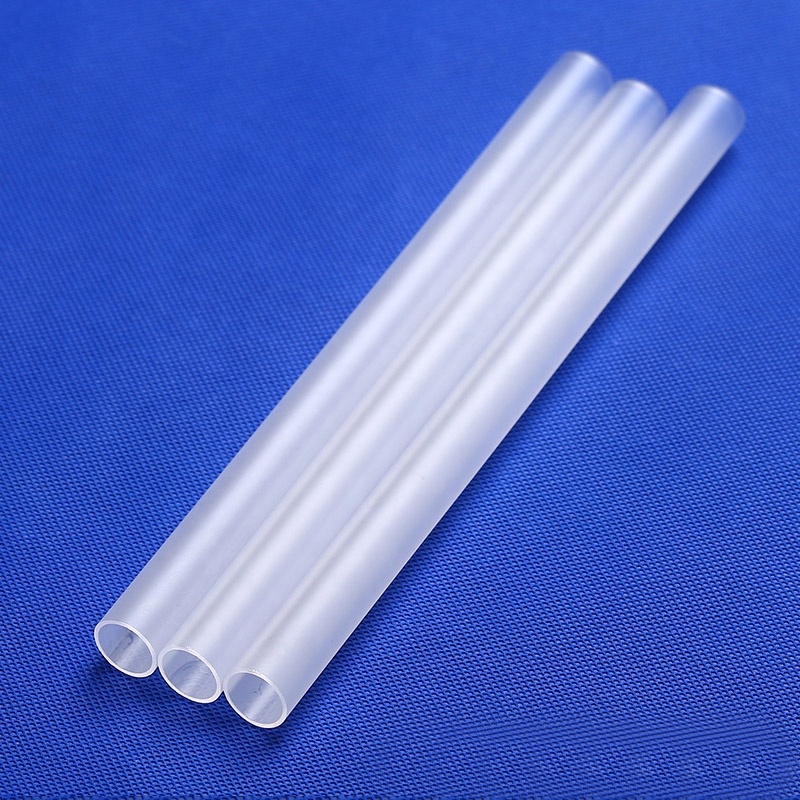
Our precision fabrication shop in Lianyungang exports specialized quartz apparatus tailored for the rigorous demands of pharmaceutical R&D laboratories, university institutes, and clinical diagnostic facilities throughout Greece and the Mediterranean.

Deep Technical Engineering

Why Synthetic Fused Silica (JGS1) Defines Next-Generation 96-Well Microplates

Evaluating optical transmittance, low autofluorescence, and mechanical planar stability for high-throughput screening across Greek academic and pharmaceutical hubs.

In high-throughput screening (HTS), biophysical crystallography, and modern pharmacological kinetics, standard polystyrene (PS) or cyclic olefin copolymer (COC) microplates exhibit severe physical limitations. When operating within the deep ultraviolet (DUV) range below 300 nm—critical for intrinsic tryptophan fluorescence, nucleic acid quantitation (A260/A280), and peptide bond absorption (214 nm)—polymeric labware causes severe autofluorescence, Rayleigh scattering, and excessive photon absorption. Borosilicate glass microplates mitigate chemical erosion but suffer from high intrinsic cutoff wavelengths near 310 nm.

As a leading Chinese custom fused quartz manufacturer located in the Tuofeng Industrial Park in Lianyungang, Lovri Quartz manufactures synthetic fused quartz 96-well microplates engineered to ANSI/SLAS 1-2004 through 4-2004 standards. Machined from solid, monolithic optical-grade synthetic fused silica blocks (JGS1) or built using proprietary high-temperature thermal fusion techniques without toxic adhesive matrices, our microplates provide an uncompromising solution for researchers at the National and Kapodistrian University of Athens (NKUA), the Foundation for Research and Technology - Hellas (FORTH) in Heraklion, and the Aristotle University of Thessaloniki (AUTH).

Marine Natural Product Discovery (Crete)

Extracts sourced from Aegean and Ionian marine biotas require non-destructive spectrophotometric analysis. Lovri's 96-well quartz microplates allow Hellenic researchers to execute broad UV-Vis absorption profiling (190 nm to 1100 nm) with negligible optical background distortion.

Pharma Synthesis & QC (Attica Basin)

Greece's leading pharmaceutical formulation plants around Koropi, Pallini, and Peania employ high-solvent reactions involving DMSO, chloroform, and aromatic hydrocarbons. Unlike resin plates that swell or leach plasticizers, fused silica provides absolute chemical inertness.

Solar Light Harvesting (Patras Innovation)

The University of Patras and Hellenic technology parks focus extensively on perovskite and quantum-dot solar cell development. Fused quartz multi-well microplates act as non-reactive reaction scaffolds under intense simulated solar irradiation without thermal lensing.

Agrigenomics & Olive Oil Traceability

Laboratories verifying Protected Designation of Origin (PDO) certifications across Kalamata, Peloponnese, and Larissa require high-throughput fluorescence assays to analyze polyphenols, squalene oxidation, and DNA adulteration patterns with zero plasticizer interference.
Comparative Material Engineering

Fused Quartz vs Alternative Substrates in Microplate Optics

A rigorous physical evaluation demonstrating the performance differential between Lovri JGS1 Synthetic Fused Silica and conventional microtiter labware materials.

Physical & Optical Parameter Lovri JGS1 Fused Silica Microplate Standard Polystyrene (PS / COC) Precision Borosilicate Glass
UV Cutoff Wavelength (T < 50%) < 185 nm (Deep UV-Transparent) 280 nm - 300 nm (Severe DUV Blindness) 310 nm - 325 nm (UV-B Restricted)
Internal Autofluorescence (350nm Ex) Virtually Undetectable (< 0.05 a.u.) Moderate to Severe (12.4 - 45.0 a.u.) Low to Moderate (1.8 - 4.2 a.u.)
Thermal Expansion Coeff. (α) 5.5 × 10⁻⁷ / °C (Zero Warp) 60 - 80 × 10⁻⁶ / °C (Severe Risk) 33 × 10⁻⁷ / °C (Moderate)
Thermal Shock Tolerance (ΔT) > 1100 °C (Liquid N₂ to Direct Flame) Deforms > 85 °C (Non-Autoclavable) ≈ 150 °C Differential Limit
Organic Solvent Resistance Complete (Inert to DMSO, Acetone, DCM) Dissolves, Swells, or Cracks Rapidly Resistant (Sensitive to Concentrated Alkaline)
Surface Bottom Flatness Tolerance ± 0.005 mm (Laser Interferometry Graded) ± 0.080 mm - ± 0.150 mm (Meniscus Curve) ± 0.025 mm
Well Cleanability & Reusability 100% Reusable via Piranha/Acid Digestion Single-Use Plastic Waste Only Reusable (Prone to Clouding)
Mediterranean Strategic Drivers

Greece Biotechnology & Laboratory Procurement Trends

Three macro-level structural shifts accelerating the shift from single-use plastics to ultra-pure fused quartz microplates across the Hellenic Republic.

01

Horizon Europe & Hellenic R&D Surges

With the expansion of Horizon Europe frameworks and Greek National Recovery and Resilience Plan (Greece 2.0) funding, biomedical laboratories across Athens, Patras, and Ioannina are rapidly upgrading analytical instrumentation to sub-microplate automated liquid handlers and robotic readers (Tecan, PerkinElmer, BioTek) requiring tight dimensional adherence to SLAS tolerances.

02

Decarbonization & Circular Labware Initiatives

EU Single-Use Plastics directives and green laboratory certification programs (such as My Green Lab) are pushing research directors at FORTH and the Biomedical Sciences Research Center "Alexander Fleming" (BSRC Fleming) to eliminate single-use plastic multi-well plates in favor of autoclavable, reusable high-purity quartz plates that endure thousands of acid-cleaning wash cycles.

03

Direct China-to-Piraeus Maritime Logistics

The strategic development of the Port of Piraeus as COSCO's flagship European maritime gateway enables Greek analytical instrument distributors to secure ocean freight shipments from Shanghai or Qingdao within 22–26 transit days, eliminating European distributor markups and reducing supply chain risk.

Enterprise Manufacturing Superiority

Full-Chain Manufacturing from Raw Silica to Finished Microplate

How Lovri Quartz's integrated 14,271 m² production facility in Jiangsu guarantees pristine optical microplates without batch-to-batch inconsistency.

Source-Controlled Raw Materials & Annealing

Unlike secondary trading companies who assemble parts from unknown third-party glass workshops, Lovri Quartz controls the raw silica pipeline directly in Lianyungang. Natural quartz rocks undergo specialized crushing, 200-mesh pulverization, rigorous multi-stage acid pickling to eliminate trace Fe, Ti, and Al contaminants, and high-frequency electric/hydrogen-oxygen fusion.

Our in-house 1200°C computer-controlled annealing lehrs systematically eliminate residual thermal stress, verified via inline polarization cross-Nicol stress analyzers to prevent plate warping and stress-induced optical birefringence.

Verified Quality & Precision Machining Highlights

  • SGS Onsite Verified: Production lines, engineering staffing, and physical factory facilities assessed and certified by SGS Group (Assessment Date: 2025.12.28).
  • Sub-Micron CNC Centers: High-speed 5-axis ultrasonic CNC diamond drilling centers mill perfectly perpendicular well walls with zero micro-chipping or subsurface micro-fissures.
  • Double-Sided Optical Polishing: Bottom well windows polished to surface roughness Ra < 0.5 nm, guaranteeing laser confocal imaging without astigmatism.
  • RoHS & CE Compliant: Toxic-free materials safe for cell culture, PCR, and delicate enzymatic incubation without trace metal elution.
Procurement & Logistics Clarity

Frequently Asked Questions by Greek Laboratory Buyers

Clear, actionable answers addressing shipping routes, EU customs clearance, sample validation, and chemical care protocols.

What are the standard shipping transit times and logistics routes from China to Greece?
For urgent laboratory testing, prototype validation, or small batch orders (1 to 20 microplates), we provide international express air couriers (DHL Express, FedEx Priority, and UPS) flying directly from Shanghai Pudong (PVG) or Beijing (PEK) into Athens International Airport (ATH) in 4 to 6 business days. For volume bulk distribution shipments across Greece, containerized ocean freight routes load from Qingdao or Shanghai port directly into Piraeus Port with sea transit times typically between 22 and 26 days.
How do you handle Hellenic Customs clearance, VAT, and TARIC import documentation?
We provide complete Greek-compliant documentation packages including formal Commercial Invoices, Packing Lists with precise Net/Gross weights, Certificates of Origin (CO), RoHS compliance declarations, and material test certificates detailing 99.99% SiO₂ chemical purity. Fused quartz 96-well microplates are exported under HS / TARIC Code 7017.10.00 (Laboratory glassware of fused quartz or other fused silica), attracting zero or minimal duty under common EU tariffs, along with standard Greek VAT (24%) processing via your registered EORI number. DDP (Delivered Duty Paid) shipping can be arranged upon request.
Are Lovri 96-well quartz microplates compatible with automated readers like Tecan, PerkinElmer, and Molecular Devices?
Yes. Every plate is CNC milled to ANSI/SLAS 1-2004 footprint dimensions (127.76 mm length × 85.48 mm width) with 9.00 mm well-to-well spacing and 14.35 mm skirt heights. This guarantees seamless fit within automated microplate stackers, multichannel liquid handlers, and readers including Tecan Spark, BioTek Synergy Neo2, Molecular Devices SpectraMax, and BMG LABTECH CLARIOstar without physical jamming or optical alignment errors.
How are fragile optical microplates packaged to prevent breakage during Mediterranean transit?
Every 96-well microplate undergoes individual vacuum encapsulation in dust-free antistatic cleanroom sleeves, encased within custom-molded high-density polyethylene (EPE) shock-absorbent foam cradles. Multiple units are nested inside reinforced multi-ply export cartons and ultimately anchored within fumigated, impact-resistant plywood wooden crates. Our international glass packaging breakage rate remains below 0.1%, with full transit insurance coverage included.
Can researchers request custom well configurations, such as 384-well plates or bottom-only quartz fusion?
Absolutely. Beyond standard monolithic clear 96-well microplates (flat bottom, round bottom, or V-bottom), our factory produces solid black-walled fused quartz plates for minimal well-to-well crosstalk in fluorescence assays, white-walled plates for luminescence, 384-well microplates, custom strip-plates, and composite microplates where JGS1 quartz base windows are molecularly fused to opaque silica bodies. Custom CAD drawings (STEP, DWG, DXF) are typically reviewed and quoted within 12 business hours.
What are the recommended cleaning and sterilization protocols for long-term lab reuse?
Due to the chemical resilience of synthetic SiO₂, our microplates can be repeatedly cleaned in hot nitric acid, aqua regia, piranha solution (H₂SO₄ + H₂O₂), or laboratory-grade enzymatic detergents without fogging or chemical leaching. For sterilization, plates can be subjected to standard autoclave steam sterilization (121°C or 134°C), dry-heat baking in ovens up to 600°C to pyrolyze trace organic contaminants, or direct UV-C surface irradiation.

Upgrade Your Hellenic Lab with Precision Fused Quartz Microplates

Direct from China's leading SGS-verified manufacturer. Get custom dimensions, competitive volume export pricing, and responsive engineering support for your high-throughput assays.