Tube & Rod
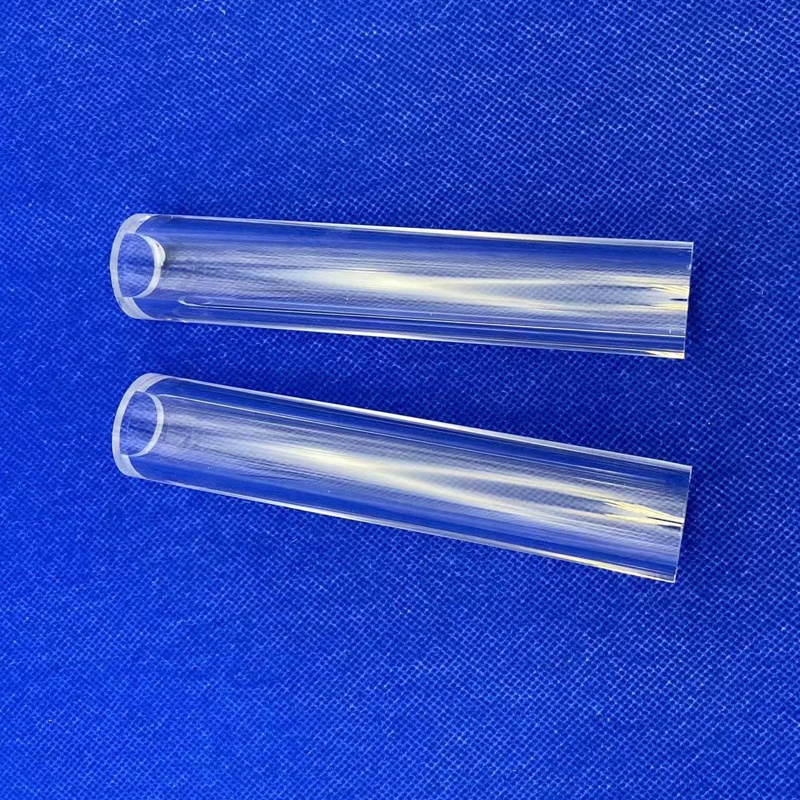
High Precision Clear Quartz Glass Tube
Clear fused silica tube configured for precision bending, hot welding, ozone generators, and far-infrared emitters.
Fabricated from 99.99% pure silica feedstock, our redrawn rods, precision-machined tubes, and optical flats feature near-zero thermal expansion and superior optical transmission.
Clear fused silica tube configured for precision bending, hot welding, ozone generators, and far-infrared emitters.

99.99% SiO2 UV-transparent optical window plate. Fine-annealed for high-energy ultraviolet laser cavities.
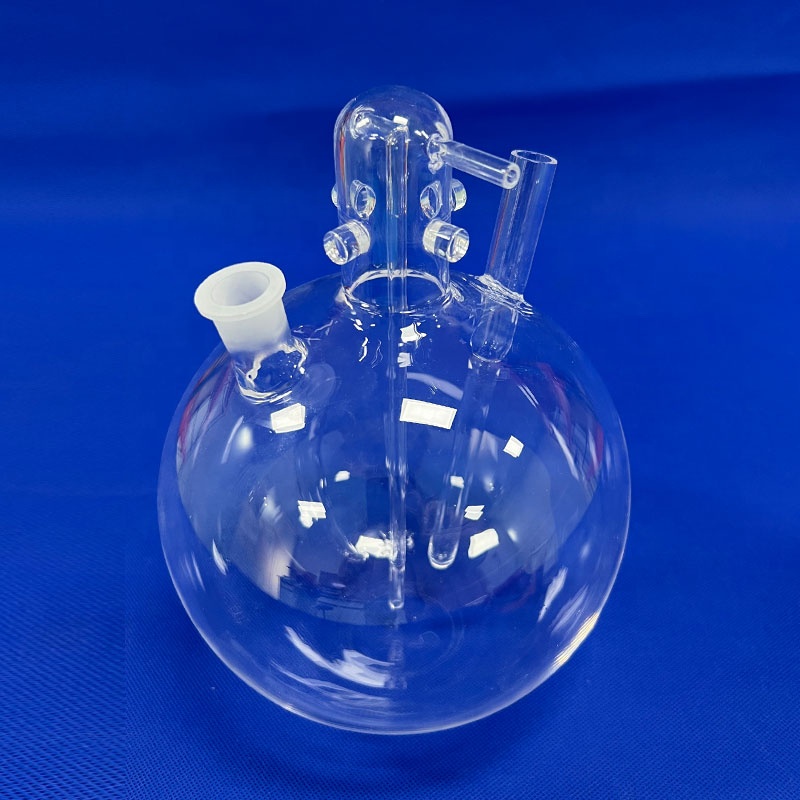
Custom machined reaction vessel with diamond-turned quartz rods and welded joint couplings for laser process machines.
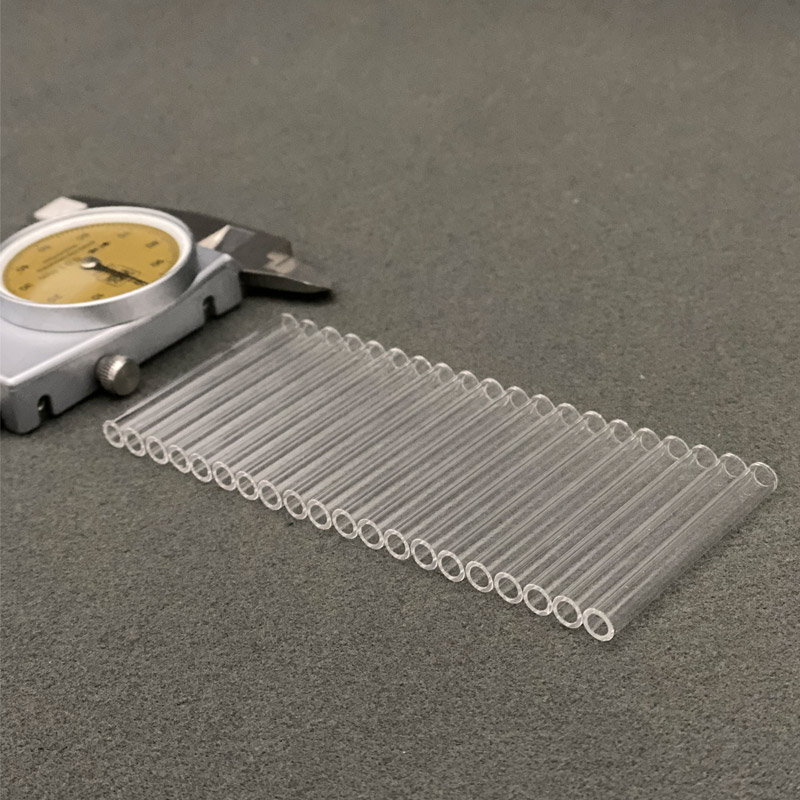
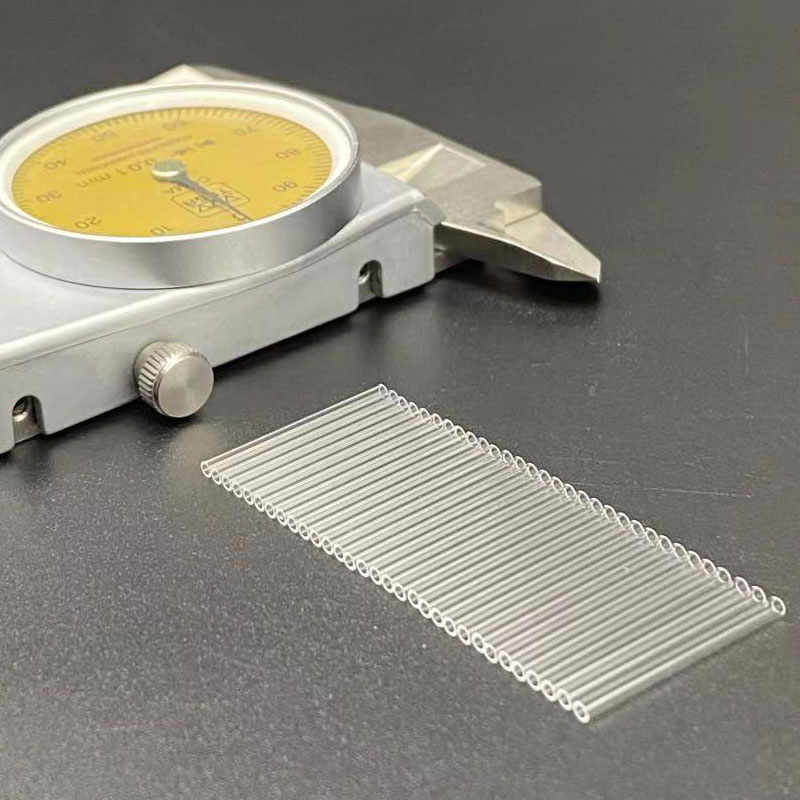
Ultra-fine bore annealed capillary drawing. 1200°C rating, RoHS certified, engineered for microfluidic and medical systems.
Mirror-polished ultra-thin silica wafers with high chemical inertness and low birefringence for optical micro-sensors.
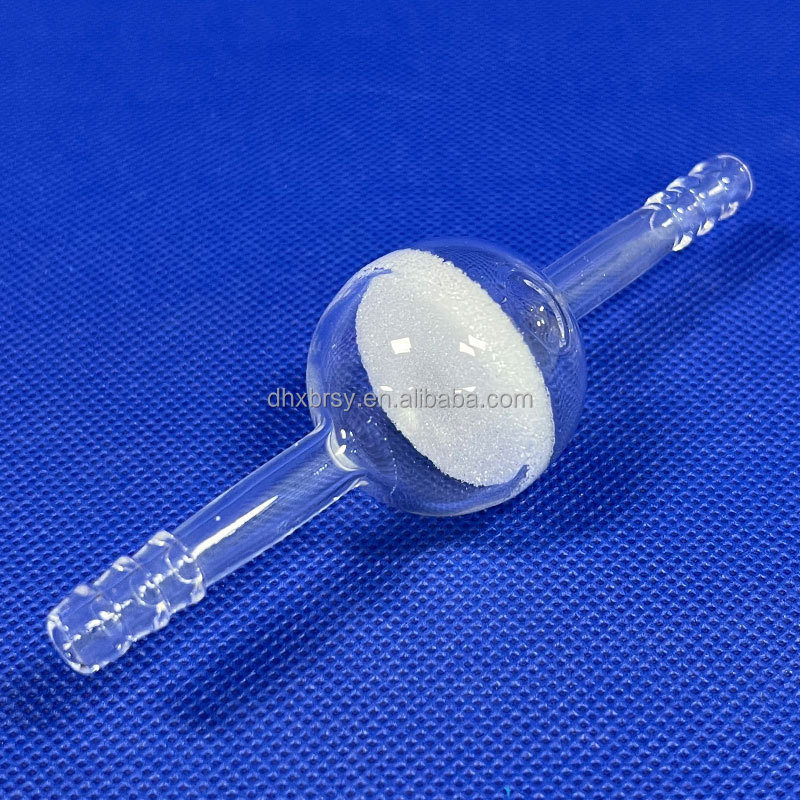
Chemical-grade heavy-wall transparent fused quartz vessels built for microwave digestion and trace metals distillation.
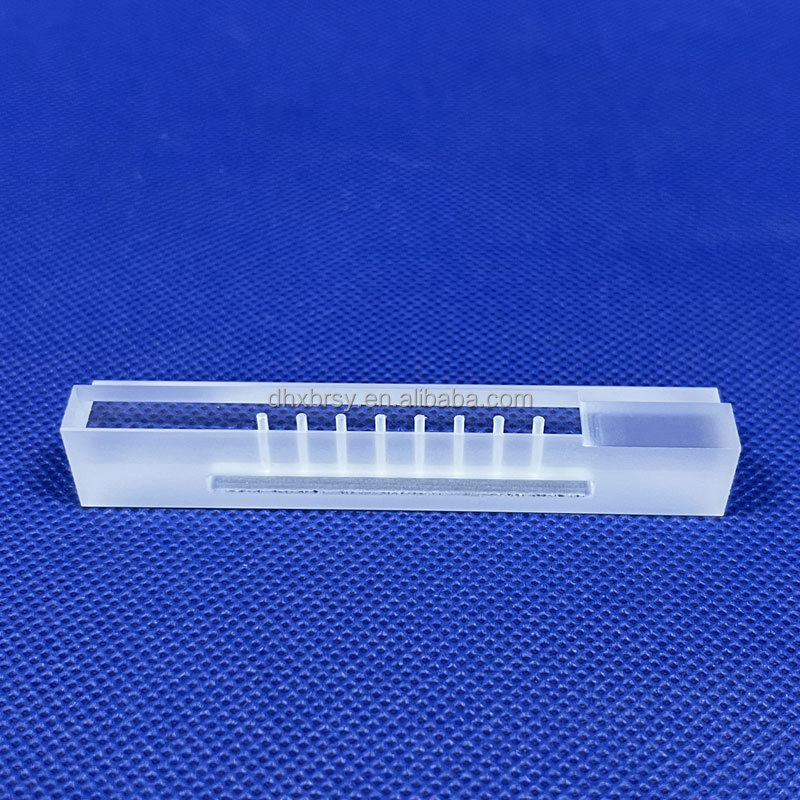
Sub-micron diamond machined quartz substrate and alignment rods for optical communications and fiber array bonding.
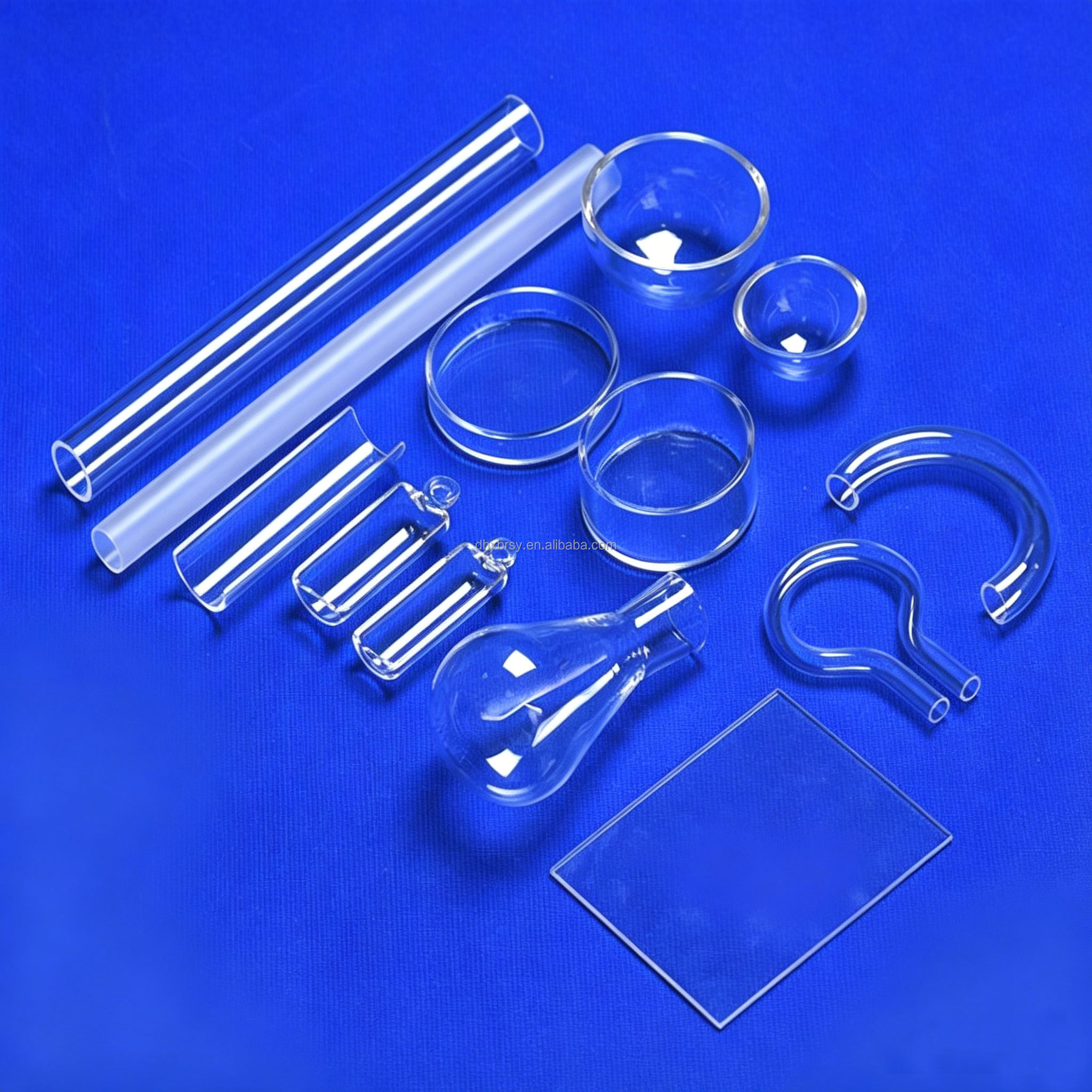
Surface-parallel polished quartz plate engineered for laser optics, heat insulating windows, and precision lab instruments.
Fused quartz rods (also designated as vitreous silica or fused silica ingots/cylinders) represent an indispensable structural and optical baseline across the semiconductor wafer manufacturing, photovoltaic monocrystalline puller, high-energy laser transmission, and advanced analytical instrumentation sectors. While ordinary silicate glasses suffer structural collapse, phase segregation, and catastrophic thermal shock beyond 500°C, fused quartz maintains outstanding dimensional integrity under extreme temperature gradients due to its single-component amorphous network composed entirely of covalently bonded Silicon-Oxygen ($SiO_4$) tetrahedra.
When selecting a high-tier fused quartz rod supplier from China, tier-1 procurement teams evaluate far more than dimensional outer diameter (OD). The critical operational longevity of quartz rods in quartz diffusion wafer carriers, semiconductor etch handles, torch burners, and optical light guides depends entirely upon chemical impurity segregation, residual internal stress birefringence, hydroxyl concentration ([OH⁻]), and camber runout tolerance.
In the Chinese industrial standard for vitreous silica (GB/T 3284-2015) and international equivalents (ISO 12123 / ASTM C693), fused quartz and fused silica rods are divided into distinct metallurgical groups based on synthesis mechanism and spectral band transparency:
| Grade Designation | Feedstock / Synthesis Route | Transmission Band | Typical [OH⁻] Content | Prime Industrial Application |
|---|---|---|---|---|
| JGS1 (Synthetic Silica) | Chemical Vapor Deposition ($SiCl_4$ flame hydrolysis) | 185 nm – 2500 nm (Deep UV) | High (> 800–1200 ppm) or Dry (< 5 ppm) | Excimer laser delivery, lithography optics, UV-C sterilizers |
| JGS2 (Optical Quartz) | Oxy-hydrogen flame fused natural quartz crystal | 220 nm – 2500 nm (Near UV - Vis) | Medium (150 – 200 ppm) | Semiconductor furnace jigs, sight glasses, optical rods |
| JGS3 (Infrared Quartz) | Vacuum electric-arc fused natural crystal sand | 260 nm – 3500 nm (Full IR) | Ultra-Low (< 2 – 5 ppm) | Infrared heating, pyrometry viewports, laser diode bars |
| Semiconductor Clear | Multi-stage acid-leached 200-mesh Iota-level sand | Broad spectrum transparency | ≤ 30 ppm | Wafer carrier boats, paddle supports, thermal thermocouple sheaths |
Transparent fused quartz exhibits a volumetric thermal expansion coefficient of approximately $\alpha = 5.5 \times 10^{-7} \text{ K}^{-1}$ across the 20°C to 300°C range. This exceptionally low value is roughly one-tenth that of borosilicate 3.3 and one-thirtieth that of standard soda-lime float glass. Consequently, a solid 25mm diameter redrawn quartz rod can be heated to 1150°C and plunged directly into 20°C water without macro-cleaving, spalling, or micro-crack nucleation.
However, long-term thermomechanical resilience is dictated by annealing quality. When hot-worked during flame redrawing or torch lathe bending, intense localized thermal gradients generate severe frozen-in stresses. If these stresses exceed 10 MPa, structural failure occurs under cycling heating. At our Lianyungang manufacturing center, all transparent quartz rods and machined quartz assemblies undergo full-cycle electric annealing at 1215°C followed by a program-controlled cool-down curve. Finished stock is 100% verified using cross-polarized optical polarimeters to guarantee residual optical path retardation $\le 5 \text{ nm/cm}$, compliant with ISO 10110-10 standards.
Located in Lianyungang, Jiangsu—the epicentre of China's quartz processing industry—we combine raw material purification, drawing furnaces, and cleanroom CNC machining under one roof.
Unlike secondary re-sellers, we maintain in-house raw silica sand crushing, magnetic separation, and proprietary HF/HCl pickling tanks. This allows us to deliver certified SiO₂ purity reaching 99.995%, with alkali metal impurities ($Na, K, Li$) strictly capped below 1.2 ppm total.
Equipped with ultrasonic milling machines, optical centerless grinders, and custom CNC glass lathes, we grind, thread, slot, and polish quartz rods to drawing specifications with diametrical tolerances held within $\pm 0.01 \text{ mm}$ and surface roughness down to $Ra < 0.2 \text{ nm}$.
Our 14,271 m² production facility has undergone complete on-site inspection and validation by SGS Group. Every quartz batch includes full ICP-MS trace elemental spectrometry records, polarization stress certifications, and RoHS/REACH compliance documentation.
Fragile quartz rods and optical guide cylinders demand specialized logistics handling. We deploy multi-layer custom-molded polyethylene foam casing, individual vacuum moisture sealing, and reinforced plywood crates tested to ISTA-3A drop test criteria.
As semiconductor wafer sizes, high-power industrial lasers, and clean energy systems evolve, engineering procurement managers must navigate five emerging shifts in fused silica material acquisition.
With 3nm and 2nm node semiconductor fabs entering high-volume manufacturing, standard 99.99% purity is no longer sufficient for wafer-contact rods. Tier-1 buyers now mandate total trace metals < 5 ppm, specifically requiring copper, iron, and sodium below 0.1 ppm to prevent metallic contamination during atomic layer deposition (ALD) and furnace diffusion.
In kW-class fiber laser combiners and infrared light guide arrays, conventional hydroxyl levels ([OH⁻] 100-200 ppm) cause heavy absorption peaks at 1380 nm and 2730 nm, leading to thermal lensing, wavefront distortion, and catastrophic photothermal fracture. Procurement is accelerating rapidly toward gas-phase dehydrated synthetic quartz rods with [OH⁻] < 2 ppm.
Procuring raw cylindrical quartz rods and shipping them to local machine shops for slotting and micro-hole drilling increases breakage scrap rates by up to 22%. Global procurement directors now source fully finished, fire-polished, and CNC-grooved quartz rods directly from the primary Chinese drawing mill to cut landed component costs.
The manufacturing technology of fused quartz rods is transitioning from manual, labor-intensive flame redrawing to highly automated, computerized continuous electrical redraw systems. Below are three key vectors shaping production engineering:
Historically, quartz rods with diameters from 2mm to 40mm were drawn by skilled torch glassworkers using manual mechanical pullers. This method led to diameter ripple ($\pm 0.3 \text{ mm}$) and localized thermal bow. Today, modern Lianyungang redraw lines utilize vertical servo-driven draw towers equipped with dual-axis laser micrometer gauges that provide closed-loop PID control over draw speed and feed heating. This yields an outer diameter consistency within $\pm 0.05 \text{ mm}$ across continuous 3000mm rod lengths.
When quartz glass rods are exposed to temperatures exceeding 1150°C, thermodynamic phase instability induces devitrification—the precipitation of high-temperature cristobalite crystals on the surface. Because cristobalite undergoes a sudden 2.8% volume change upon cooling through 270°C ($\beta \rightarrow \alpha$ transformation), devitrified surfaces exhibit micro-cracking and white hazing. Cutting-edge manufacturing now integrates high-purity hydrofluoric chemical etching followed by flame fire-polishing to remove all micro-scratches and residual alkali surface nucleation sites, increasing continuous service lifespan in semiconductor furnaces by more than 300%.
In beam steering, collimating rod lenses, and fiber preform sleeves, wave aberrations must be minimized. Advances in high-temperature rotary electrical homogenization furnaces allow Chinese manufacturers to eliminate internal refractive index gradients ($\Delta n \le 1 \times 10^{-6}$), ensuring the complete absence of optical striae in all viewing planes according to ISO 10110-4 bubble and inclusion class 0.
Clear, definitive technical answers to assist global quality assurance engineers, purchasing agents, and project managers during quote evaluation.
Submit your CAD drawings, dimensional specifications, or target purity requirements. Our materials engineering team will review your application and respond with a comprehensive DFM evaluation and quote.
Inquire Now