ROHS Certified
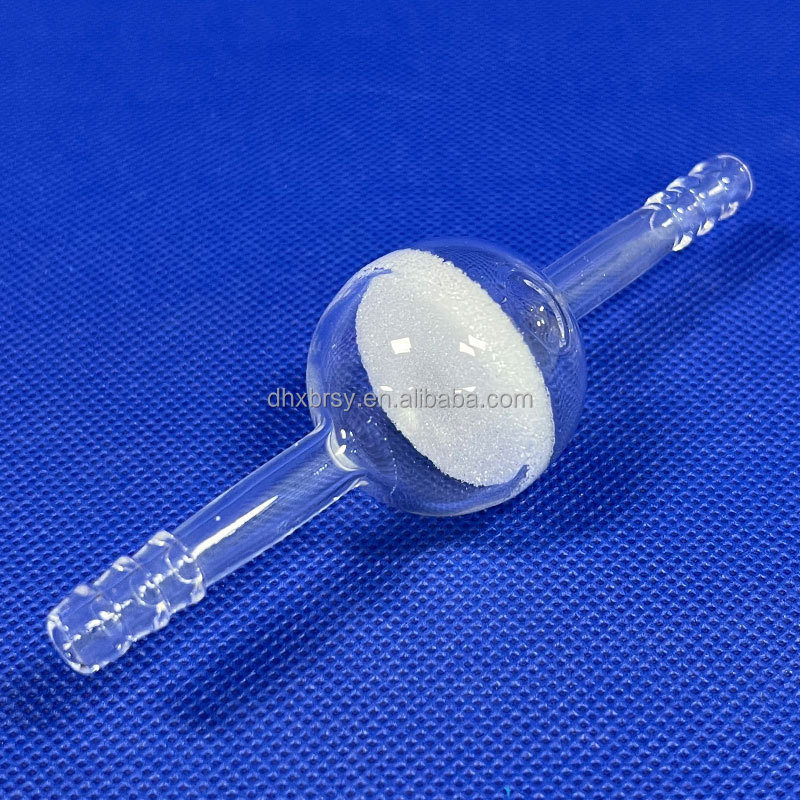
Direct from our Lianyungang manufacturing hub: strict dimensional calibration, zero geometric distortion, and certified RoHS-compliant quartz glass configurations.
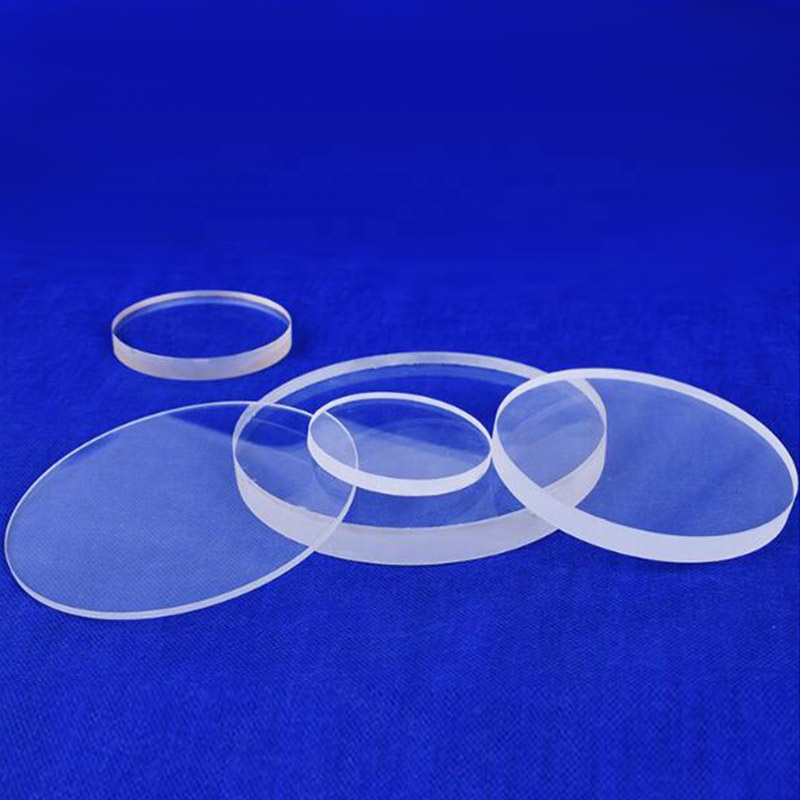
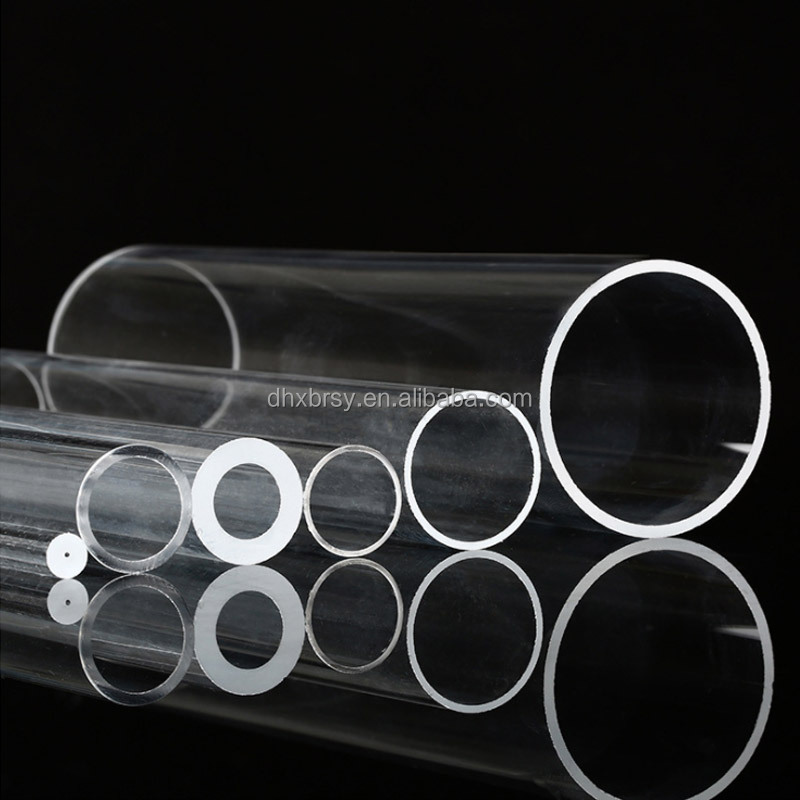
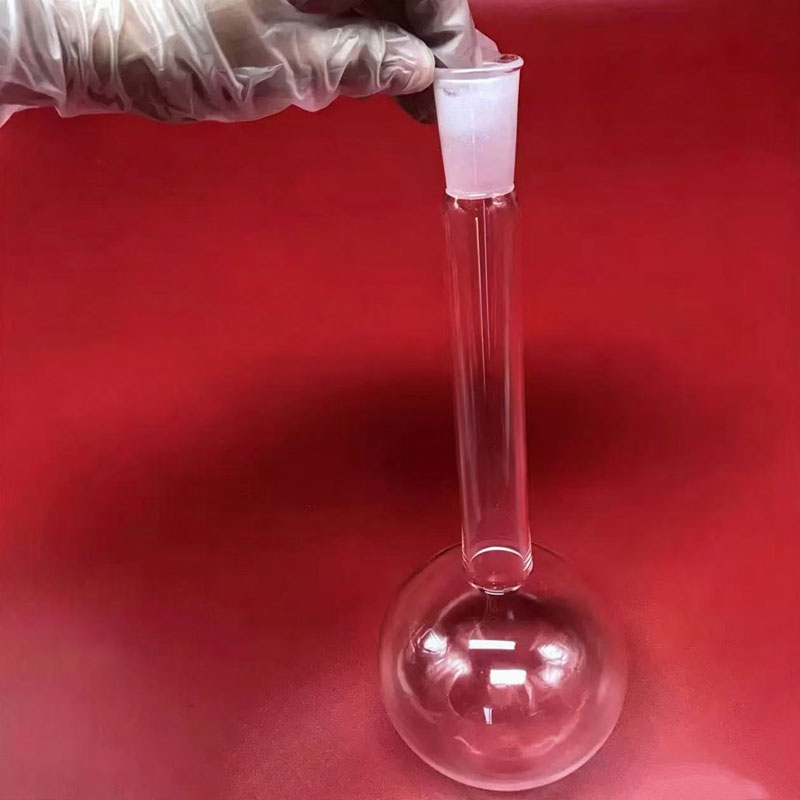
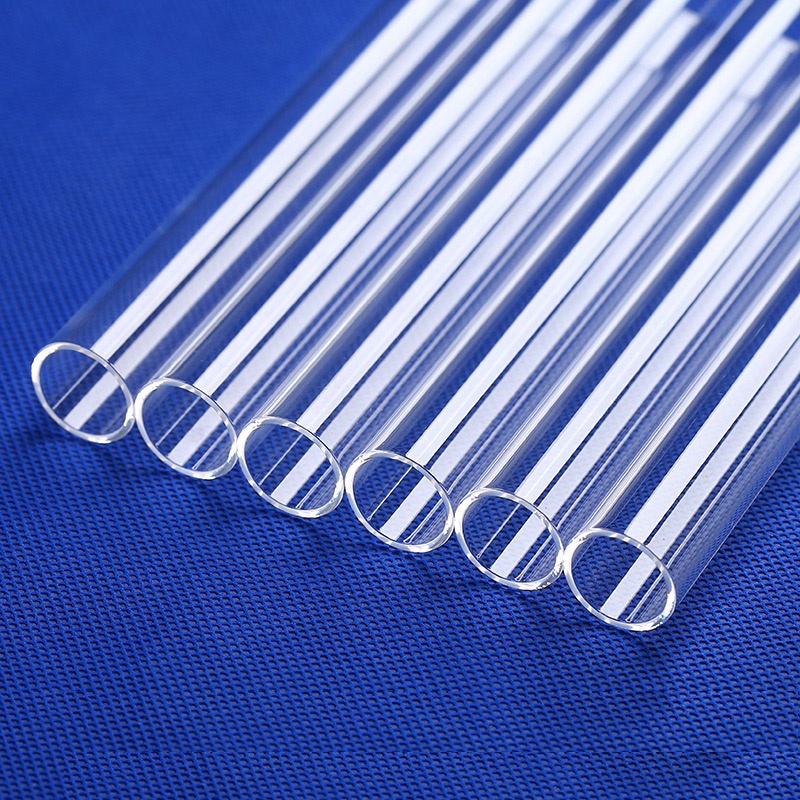
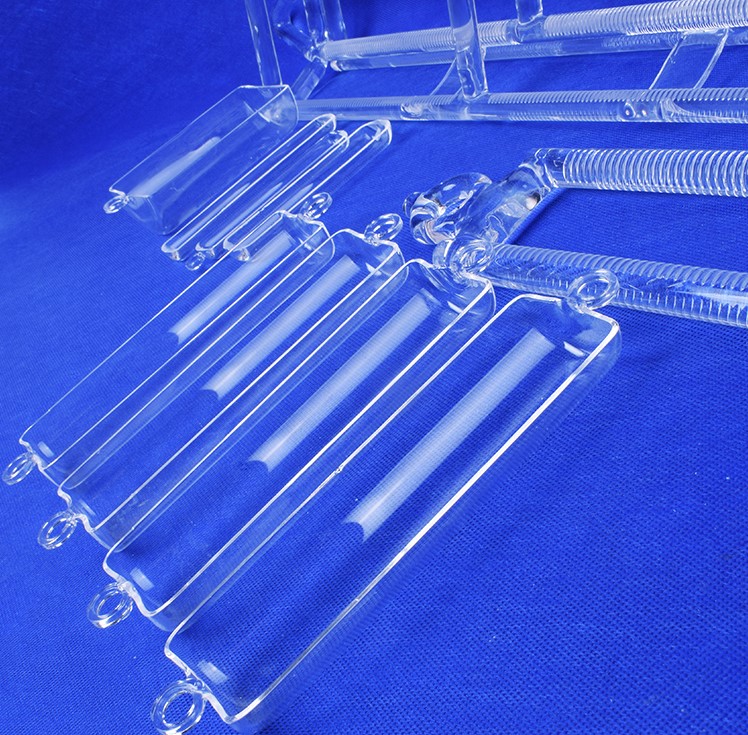
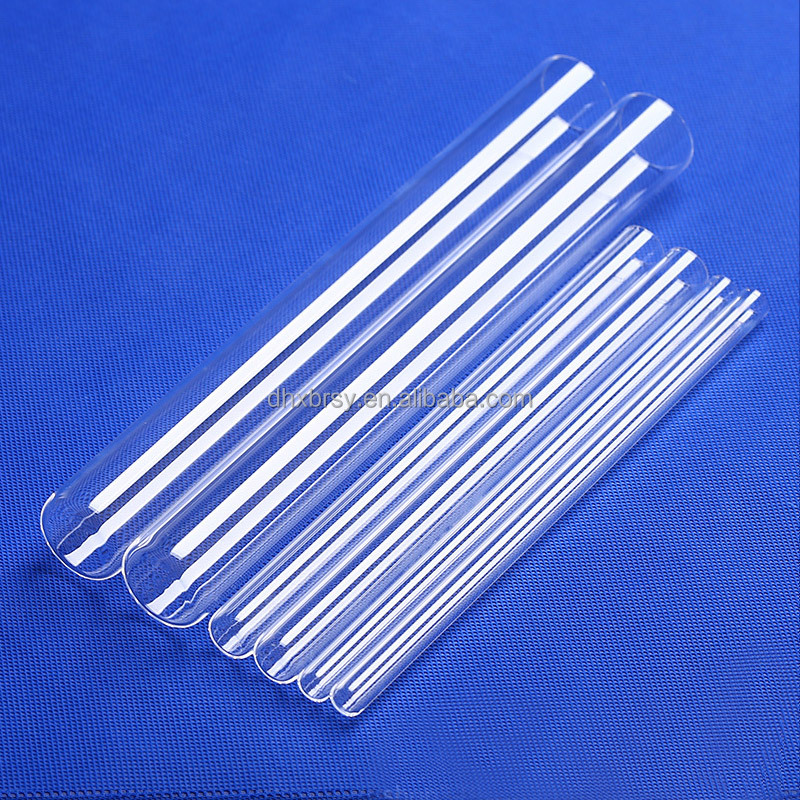
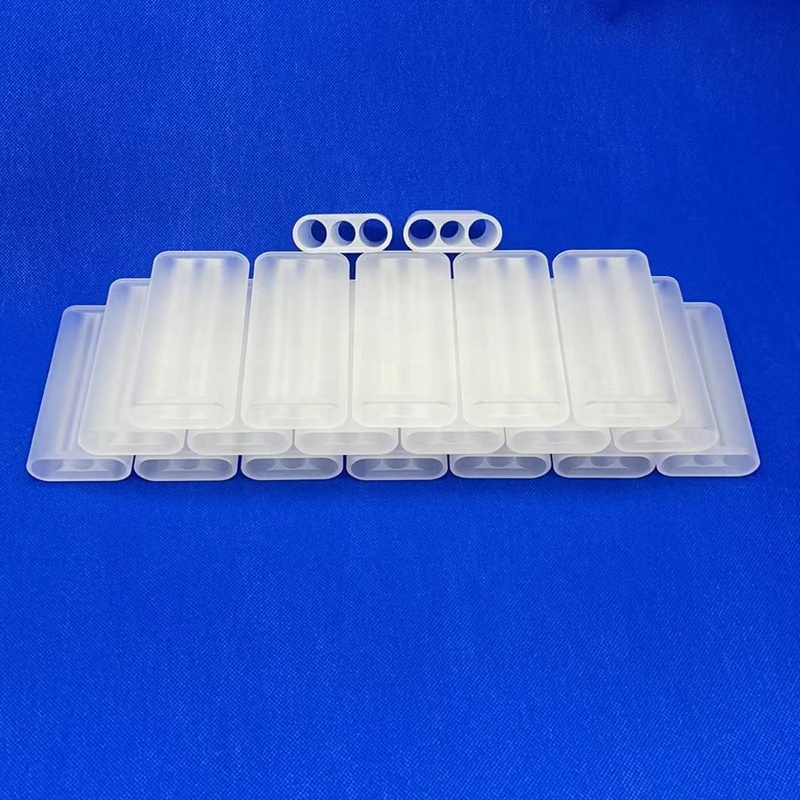
Why modern semiconductor fabrication, advanced photonics, and green energy infrastructures rely on synthetically treated and natural fused silica tubing.
Transparent fused quartz exhibits an exceptionally low coefficient of thermal expansion (5.5 × 10⁻⁷ /°C between 20°C and 320°C). This allows tubing heated to 1100°C to be instantaneously quenched in cold water without structural fracturing or micro-fissuring.
In vertical and horizontal diffusion furnaces, this parameter minimizes warping and ensures repeatable thermal process windows during high-throughput wafer batches.
Engineered quartz materials offer unparalleled spectral transmission. Ranging from synthetic JGS1 (transmitting down to 185 nm) to natural flame-melted JGS2 and electrically fused JGS3 (extending up to 3500 nm), the material eliminates chromatic aberrations.
This wide optical window makes our quartz tubes indispensable for excimer laser guidance, UV disinfection sleeves, and high-energy analytical cuvettes.
With silica purity maintained strictly above 99.99% SiO₂, our tubing exhibits total resistance to all standard industrial acids (including aqua regia, hydrochloric, and nitric acids) at elevated temperatures, with the sole exceptions of hydrofluoric and hot phosphoric acid.
Trace metal contamination (Fe, Cu, Ni, Na, K) is actively sequestered to parts-per-billion (ppb) thresholds, protecting sensitive semiconductor wafers.
| Material Parameter | Synthetic Fused Silica (JGS1) | Optical Fused Quartz (JGS2) | Thermal/Infrared Quartz (JGS3) |
|---|---|---|---|
| Primary Application | Excimer Laser, Deep UV Optics | Diffusion Tubes, Sight Windows | Infrared Heaters, Furnace Chambers |
| Transmission Range | 185 nm – 2500 nm | 220 nm – 2500 nm | 260 nm – 3500 nm |
| SiO₂ Purity Ratio | ≥ 99.999% | ≥ 99.99% | ≥ 99.98% |
| Hydroxyl (OH⁻) Content | < 5 ppm (Dry) / 1200 ppm (Wet) | < 30 ppm | < 5 ppm |
| Softening Point | 1730 °C | 1680 °C | 1710 °C |
| Continuous Max Temp | 1150 °C | 1100 °C | 1100 °C |
How shifting semiconductor nodes, larger photovoltaic wafers, and sustainable supply chains are reshaping transparent quartz glass specifications worldwide.
The industry migration to oversized semiconductor furnaces and G12/TOPCon solar processing requires continuous-drawn transparent quartz tubes with outer diameters exceeding 300 mm to 650 mm. Sourcing teams prioritize vendors capable of single-draw consistency without wall-thickness variance.
With semiconductor sub-3nm node production expanding, trace alkali metals such as Sodium (Na) and Potassium (K) must stay under 0.1 ppm. Future-proof procurement requires direct auditability of raw quartz pickling and acid purification at the source supplier.
Standard quartz tube profiles are no longer sufficient. Industrial demand has shifted dramatically toward complex monolithic fabrications: integrating laser drilling, multi-bore internal channels, precision slotting for wafer carriers, and fire-polished sealing flanges into unified modules.
Procurement directors are actively securing dual-source manufacturing channels outside single European or US monopolies. Fully integrated Chinese manufacturers with internal lump-to-tube infrastructure offer lower MOQ barriers, faster tooling cycles, and predictable delivery windows.
Combining primary geological raw material advantages with in-house thermo-mechanical processing to deliver end-to-end quality assurance.
Our facility spans 14,271 m² in Tuofeng Industrial Park, Lianyungang—China's primary quartz ecosystem. By controlling raw lump crushing, sorting, high-purity acid pickling, and electric tube drawing on-site, we remove intermediate markups and ensure raw material authenticity.
Residual stress remains the primary hidden driver of catastrophic quartz thermal fracture. Every tube, flange weld, and machined assembly undergoes strict polarization stress inspection in our quality control lab, accompanied by dimensional coordinate checks before packaging.
Serving over 30 countries across North America, Europe, and Asia-Pacific. We employ multi-layer PE shock-absorbing foam, vacuum sealed internal packaging, and heavy-duty reinforced wooden crates engineered to absorb severe handling shocks during air and sea transit.
Direct technical answers addressing engineering challenges, material selection, custom fabrication, and international delivery protocols.
While borosilicate glass softens around 820°C and has a thermal expansion of ~3.3 × 10⁻⁶ /°C, transparent fused quartz withstands continuous operation at 1100°C (with peaks up to 1300°C–1400°C) with a thermal expansion coefficient of 5.5 × 10⁻⁷ /°C. Quartz also provides optical transmission deep into the ultraviolet range down to 185 nm, whereas borosilicate blocks UV below 300 nm.
For standard drawn transparent tubing, outer diameter (OD) and wall thickness tolerances are typically maintained within ±0.1 mm to ±0.2 mm. For precision ground, polished, or 5-axis CNC-machined quartz tubes and flow cells, we routinely maintain tight geometric tolerances down to ±0.02 mm.
Yes. Our in-house glassblowers and CNC centers execute custom end-closures (flat, hemispherical, or test-tube bottom), flared joints, ground taper joints, quartz-to-metal seals, threaded connections, and multi-bore capillary cross-sections from customer CAD files in PDF, DWG, DXF, or STEP formats.
To support R&D initiatives, pilot runs, and specialized academic research, our minimum order quantity begins at just 1 to 5 pieces for custom tubing prototypes. Bulk volume tier pricing applies to full batch production schedules.
Devitrification into cristobalite occurs when quartz is subjected to temperatures exceeding 1000°C in the presence of surface surface contaminants, particularly alkali metal ions (fingerprints, dust, water vapor). We advise thorough alcohol cleaning prior to heating and supply high-purity, fully acid-etched quartz to ensure maximum thermal lifetime.
Every fragile tube and apparatus is individually encapsulated in form-fitting high-density foam, secured within high-crush-resistance interior cartons, and enclosed inside moisture-proof, shock-isolated fumigated wooden cases compliant with ISPM 15 standards.
Consult with our engineering department to validate material grades, optimize component tolerances, and receive a competitive manufacturing quotation within 24 hours.
Inquire Now