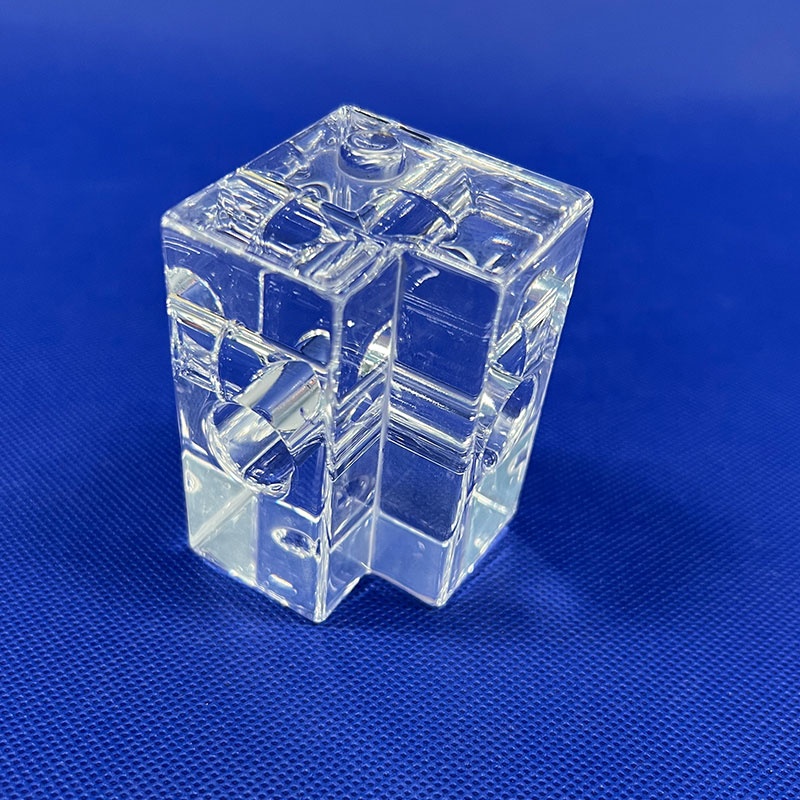
420 BAO RAN Custom Fused Quartz 99.99% Annealed 1200C Tube
High-temperature fluidic tube annealed at 1200°C for exceptional thermal shock immunity and minimal ionic contamination.
Precision-fabricated utilizing premier acid-washed silica feedstock, specialized continuous thermal redraw systems, and multi-axis CNC core-drilling. Every component is rigorously evaluated using polarimetric stress analysis to eliminate micro-structural fracture points.
High-temperature fluidic tube annealed at 1200°C for exceptional thermal shock immunity and minimal ionic contamination.

Optical-grade deep ultraviolet transmission window (185–2500nm) engineered for high-power laser chambers and lithography.
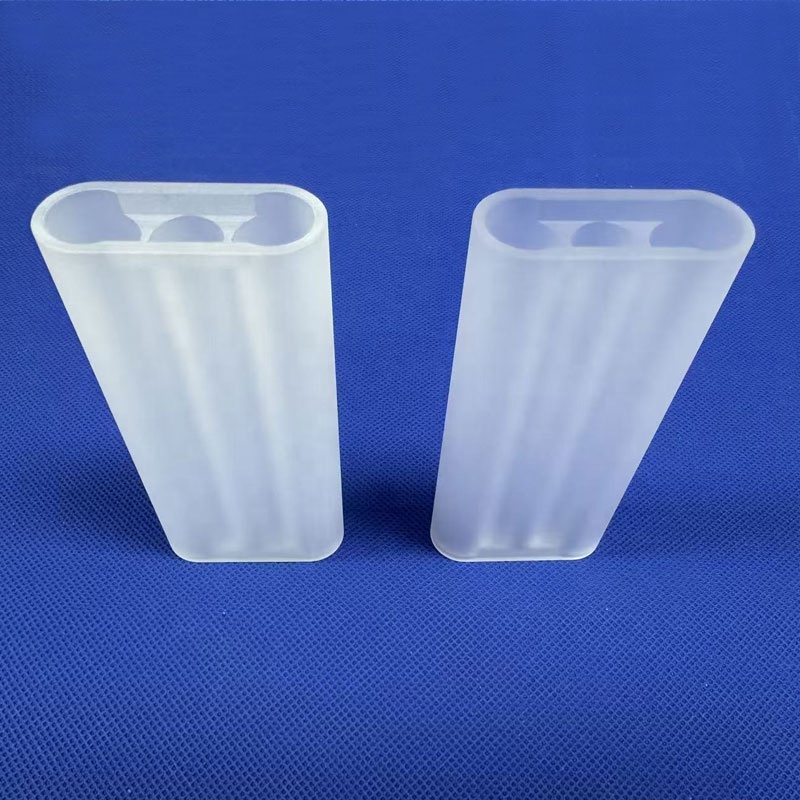
Specialized multi-bore coolant flow tube for Nd:YAG medical and aesthetic cosmetic laser systems (GentleYag/GentleMax).
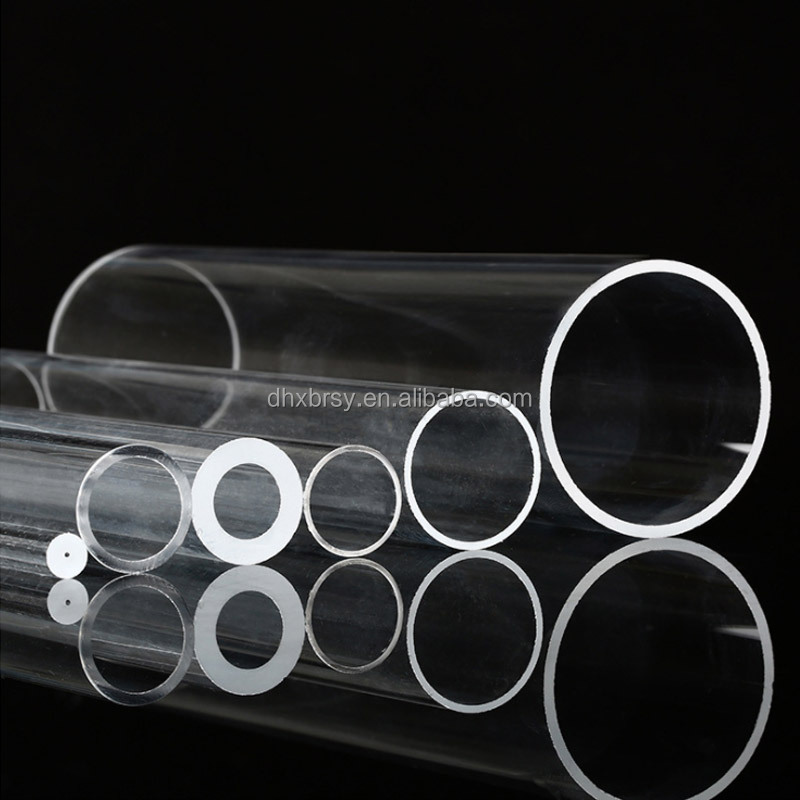
Infrared emitter silica envelope for drying systems, disinfection chambers, commercial boilers, and sterilization cavities.
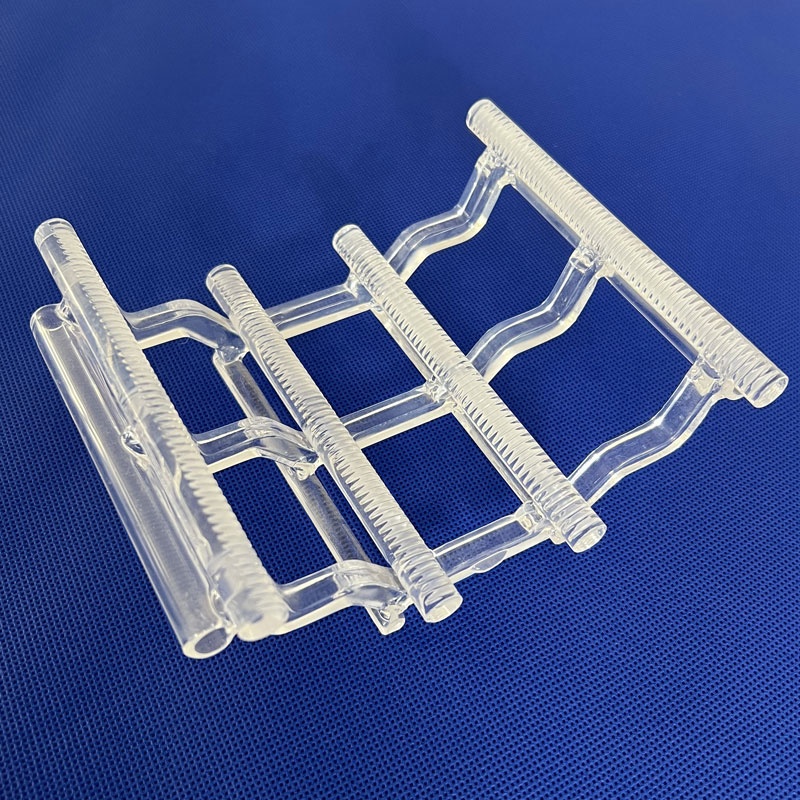
Precision micro-slotted wafer holder for high-temperature semiconductor thermal diffusion and batch oxidation furnaces.
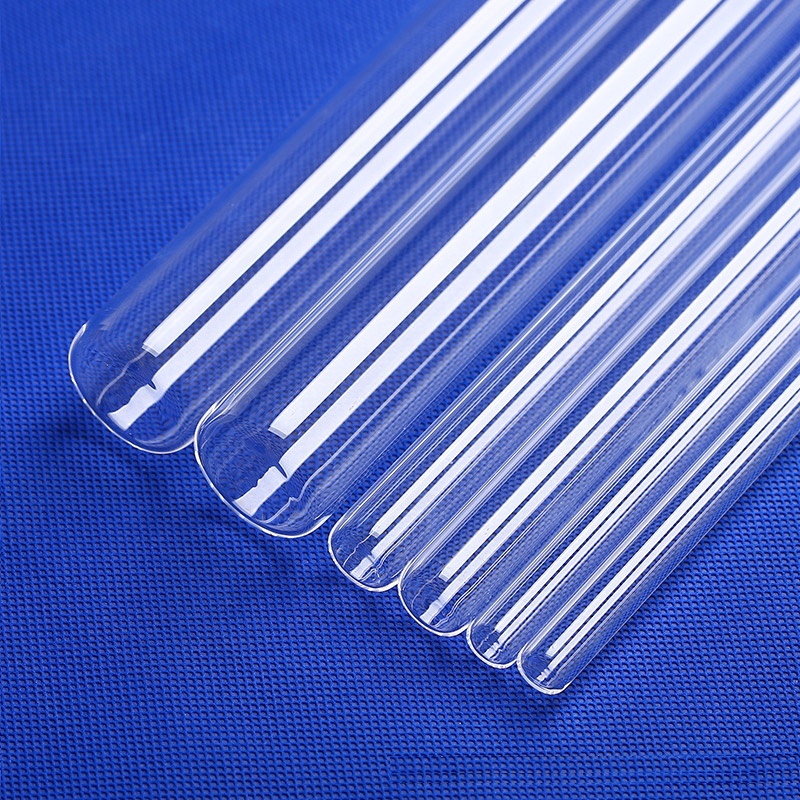
Heavy-wall, flame-sealed domed or flat bottom tubes ideal for vacuum pyrolysis, thermocouple shielding, and CVD testing.
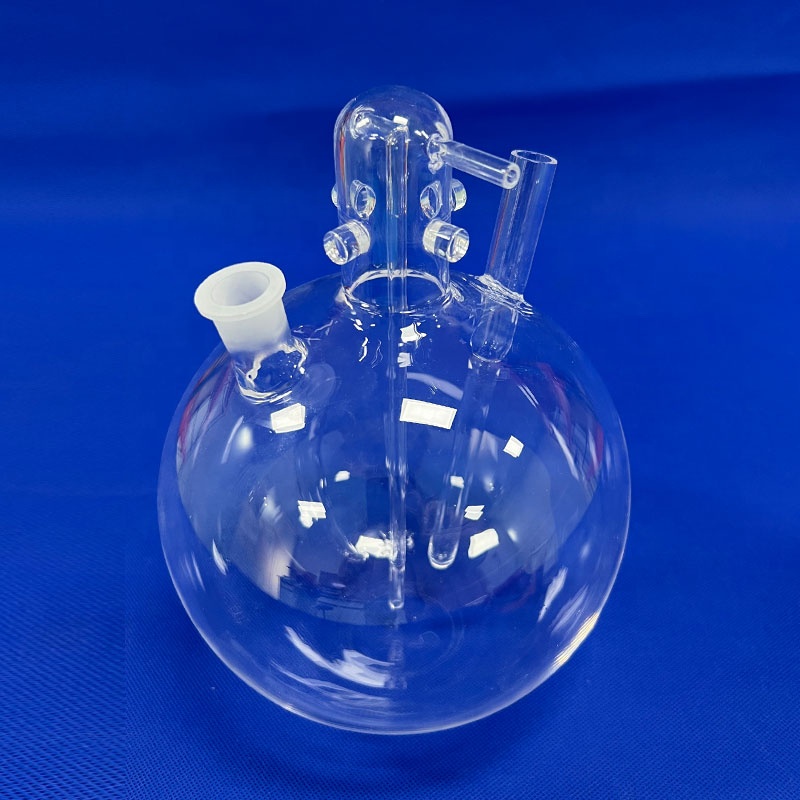
Integrated fused quartz chemical reactors and specialized laser conduits designed for extreme corrosive environments.
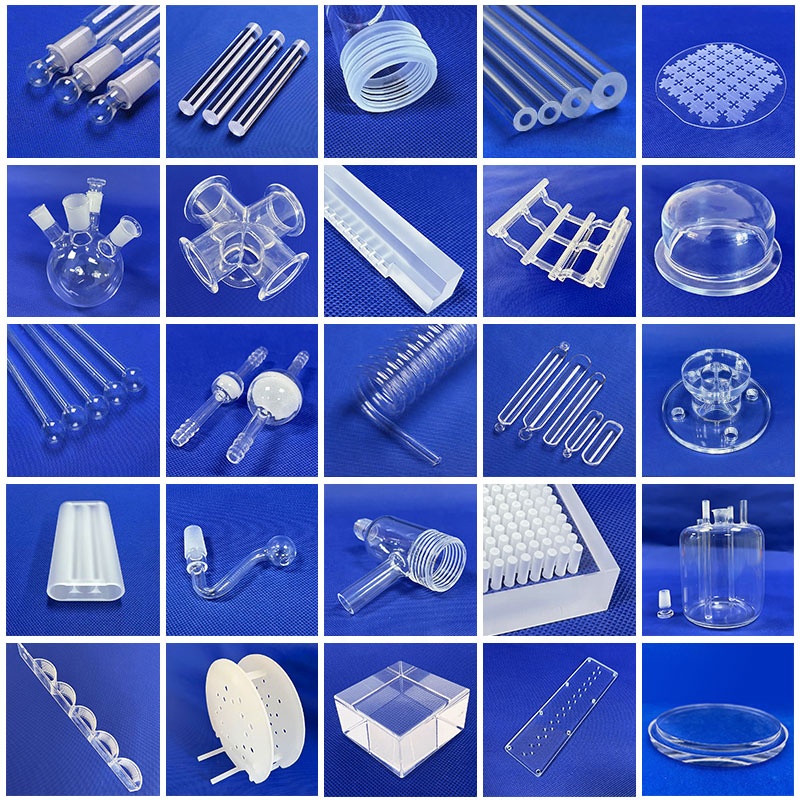
Sub-nanometer Ra surface roughness, parallel flat optics with white fire-polished rim for superior chemical sight glasses.
Headquartered in Tuofeng Industrial Park, Lianyungang—China's primary epicenter for high-purity crystalline quartz—our vertically integrated facility spans 14,271 m² of advanced fabrication capacity. From native ore beneficiation to computer-numeric polishing, we preserve material traceability at every phase.
Direct sorting, mechanical crushing (200 mesh/75µm), and ultra-pure hot chemical acid pickling eliminate transition metallic impurities (Fe < 0.2ppm, Cu < 0.05ppm, Al < 14ppm).
Every furnace tube and thick-walled cylinder passes continuous programmable thermal soaking at 1,215°C, monitored via crossed polariscopes to relieve destructive internal tensile stress.
Equipped with ultrasonic-assisted diamond-tooled milling, fine slotting for wafer carriers, circular drilling, precision lathe end-flanging, and sub-micron lapping configurations.
Operating under stringent ISO9001 and SGS onsite-audited manufacturing protocols. RoHS and CE compliance certificates accompany batch metallurgical spectroscopic testing.
Procuring engineering quartz tubes requires navigating thermal shock thresholds, continuous working temperatures, hydroxyl (OH-) radical concentrations, and transmission spectrum curves. The matrix below defines essential material baselines.
| Material Standard | Manufacturing Technology | Spectral Bandwidth | Hydroxyl Content (OH-) | Primary Industrial Use-Cases |
|---|---|---|---|---|
| JGS1 (Synthetic Silica) | Chemical Vapor Deposition (SiCl4) | 185 nm – 2,500 nm (Deep UV) | < 5 ppm (Optional < 1ppm) | Excimer laser windows, DUV optics, photolithography reaction cells. |
| JGS2 (Optical Quartz) | Hydrogen-Oxygen Flame Fusion | 220 nm – 2,500 nm (Near UV / Vis) | < 30 ppm | UV curing sleeves, analytical sight windows, medium-pressure lamp envelopes. |
| JGS3 (Infrared Quartz) | Vacuum Electric Arc Fusion | 260 nm – 3,500 nm (Full Infrared) | < 5 ppm (Dehydroxylated) | High-temperature IR heating radiators, CVD chamber viewports, thermocouple shields. |
| Opaque / Milky Silica | Porous Thermal Sintering | Diffused Scattering / Thermal Barrier | Variable | End-flange thermal isolators, spiral diffusion coils, solar sintering heat shields. |
The accelerating transition across advanced sub-3nm node semiconductor fabrication, multi-junction photovoltaic cells, and next-generation green hydrogen catalysis is fundamentally reshaping the fused quartz procurement landscape.
As atomic layer deposition (ALD) and plasma-enhanced chemical vapor deposition (PECVD) adopt harsher organometallic precursors, trace elements such as Alkali metals (Na, K, Li) in furnace tubes induce severe electrical degradation. Global buyers are migrating entirely toward multi-step acid-pickled synthetic glass with impurity thresholds under 0.1 ppm total metals.
Traditional multi-component manual hand-welding introduces micro-crevices vulnerable to devitrification at temperatures above 1,150°C. Sourcing trends prioritize monolithic automated redraw processes and robotic machine-sealed dome closures to deliver uniform thermal expansion coefficients along high-pressure vertical furnaces.
Engineering departments require agile development cycles. B2B enterprise procurement teams are bypassing broker channels to partner directly with source plants capable of providing rapid-turnaround prototyping (1–5 units) combined with full CAD/STEP CAM integration, lowering lifetime validation overheads by up to 35%.
Engineered to address critical vendor validation, mechanical limits, quality verification, and international packaging parameters for engineering and procurement executives.
Our transparent fused quartz maintains a softening point of 1,730°C and an annealing threshold of 1,215°C. It functions continuously at up to 1,100°C and tolerates short excursions to 1,300°C. Devitrification (crystallization to cristobalite) is prevented through strict hot acid chemical pickling that eliminates catalytic alkali surface impurities.
Hydroxyl ions create specific infrared absorption bands, most noticeably around 2.73 µm. JGS1 features controlled OH concentrations for pure UV clarity; JGS2 serves broader optical requirements; and JGS3 undergoes rigorous electrical vacuum fusion to remove OH below 5 ppm, maximizing transmission for infrared heating and gas analysis equipment.
On custom wafer boats, multi-bore capillary tubes, and flanged reaction vessels, our CNC center delivers outer diameter (OD) and inner diameter (ID) tolerances down to ±0.02 mm, wall-thickness uniformity within ±0.03 mm, and optical face polishing achieving sub-nanometer surface roughness (Ra < 0.5 nm) with parallelism < 30 arc seconds.
Quartz is mechanically brittle under flexural impact. Our comprehensive export protocol packages components individually in static-dissipative polyethylene, surrounded by custom-molded high-density closed-cell polyethylene foam, encased inside multi-layer corrugated boxes and rigid ISPM-15 export-compliant heat-treated wooden crates.
Yes. Our engineering division processes 2D PDF blueprints, DXF/DWG vector plans, and full 3D STEP/IGES solid geometries. Our application engineers conduct Design-for-Manufacturability (DFM) reviews to ensure edge radii, thermal fusion transitions, and wall thicknesses are fully optimized for manufacturability.
Rapid prototype orders (1–5 pieces) generally complete machining, stress-relief annealing, and dimensional inspection within 5 to 7 business days. Full industrial container-scale production runs are typically dispatched within 15 to 25 business days, backed by complete mill inspection sheets and RoHS compliance documentation.
Whether you require standard 1,200°C furnace tubes, customized laser cooling jackets, or high-purity semiconductor wafer carriers, our engineering team is ready to analyze your technical specifications and deliver competitive, factory-direct manufacturing quotes.