SGS Onsite-Verified Fused Quartz Manufacturer [email protected]
Direct Factory Whitepaper & Technical Procurement Guide

Custom OEM Quartz Stirring Rod Manufacturers & Supplier

Engineered high-purity (≥99.99% SiO₂) fused quartz agitation systems, heavy-duty paddle rods, and precision semiconductor fluidic components manufactured to tight tolerances.

Precision Portfolio

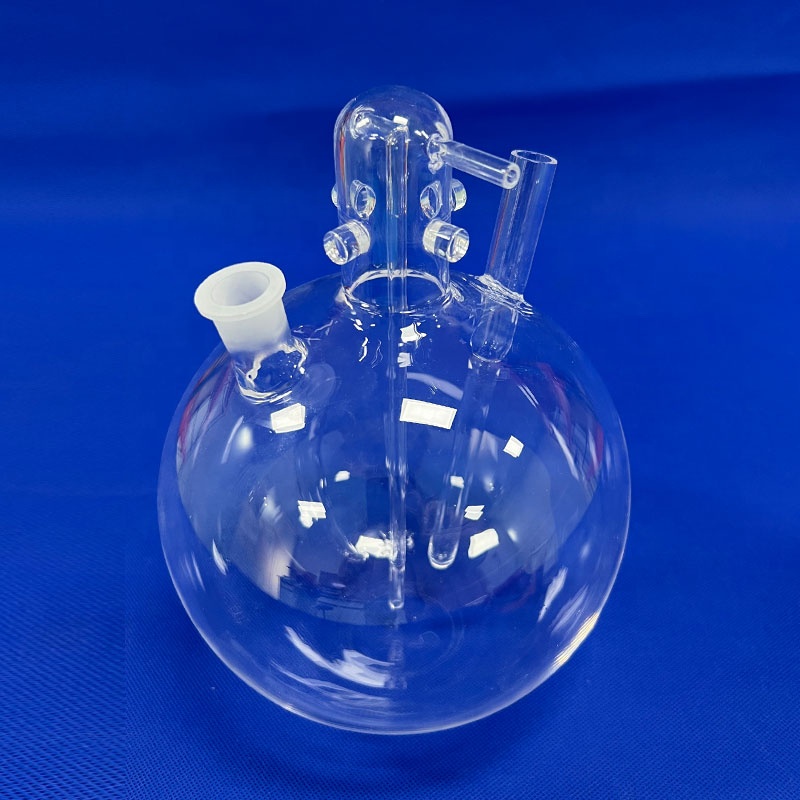
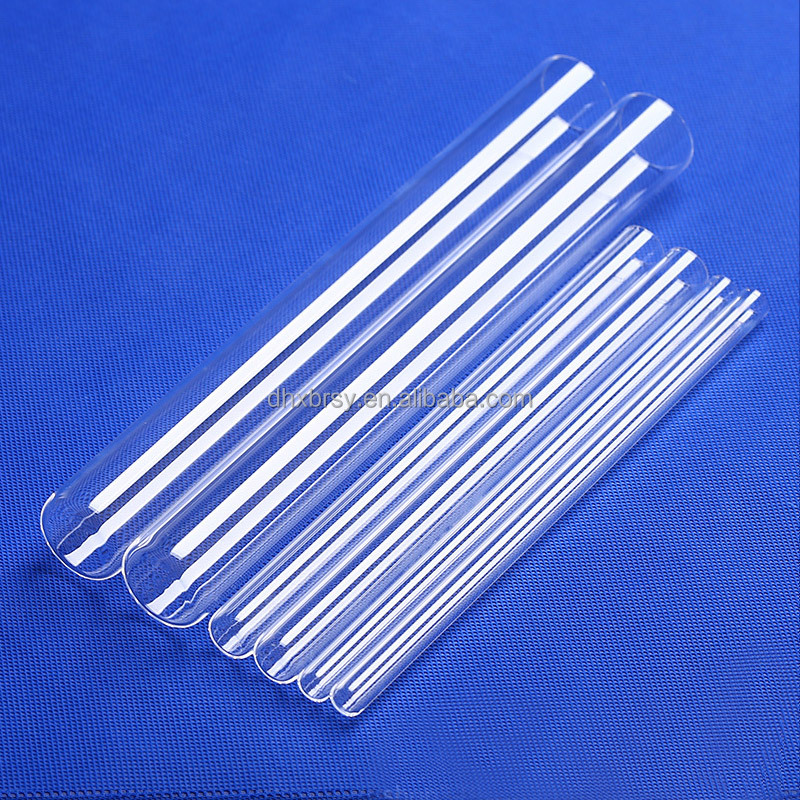
Precision Fused Quartz & Fluidic Stirring Equipment Matrix

Directly drawn, CNC milled, and flame-polished fused silica components designed for trace-metal-free semiconductor processing, laser chambers, and harsh chemical agitation.

14,271 m²
SGS-Assessed Plant Scale
≥99.99%
SiO₂ Elemental Purity
1,100 °C
Continuous Working Limit
±0.02 mm
CNC Machining Tolerance

Engineering Overview: High-Purity Fused Quartz Agitation Systems

In analytical chemistry, semiconductor wafer wet benches, pharmaceutical synthesis, and advanced photovoltaic manufacturing, fluid agitation components face intense chemical erosion and thermal gradients. Conventional borosilicate stirring apparatus, standard metallic impellers, and fluoropolymer-coated rods frequently fall short when exposed to boiling mineral acids, aggressive solvents, and operating temperatures exceeding 500 °C. The industrial demand for Custom OEM Quartz Stirring Rods stems from the extraordinary thermodynamic, mechanical, and dielectric stability inherent to vitreous silicon dioxide (SiO₂).

Unlike conventional soda-lime or laboratory borosilicate glass (which incorporates significant percentages of boron trioxide, sodium oxide, and aluminum oxide), fused quartz is synthesized from purified natural quartz crystals or flame-hydrolyzed silicon tetrachloride. The resulting non-crystalline, amorphous material provides an exceptionally low coefficient of thermal expansion (α ≈ 5.5 × 10⁻⁷ /°C from 20 °C to 300 °C), delivering virtually zero thermal shock susceptibility. A quartz stirring rod heated to 1,100 °C can be quenched directly into ice water without structural fracturing, making it indispensable in high-temperature exothermic synthesis and rapid-quench chemical baths.

Key Engineering Fact: The trace metal impurity profile of synthetic fused silica stirring apparatus (JGS1) maintains total metallic impurities below 1.0 ppm, eliminating ionic contamination risks in trace-element analytical digestion, inductively coupled plasma mass spectrometry (ICP-MS) preparation, and sub-10nm semiconductor wafer etching.

Material Degradation Mechanisms: Why Vitreous Quartz Outperforms Alternatives

Mechanical stirring rods in modern wet chemical systems encounter three primary wear mechanisms: chemical dissolution, mechanical flexural fatigue, and devitrification. Fused quartz stands inert against all standard organic solvents, halogens, aqua regia, and concentrated nitric, sulfuric, and hydrochloric acids at boiling temperatures. The only chemical compounds capable of attacking the quartz matrix are hydrofluoric acid (HF), concentrated phosphoric acid (H₃PO₄) sustained above 150 °C, and active alkaline hydroxide solutions maintained at elevated temperatures.

Furthermore, Lovri Quartz employs specialized optical-stress annealing cycles reaching 1,215 °C. This internal relaxation process eliminates frozen-in cooling stresses caused during drawing, CNC slotting, and flame shaping, preventing stress-corrosion cracking (SCC) along the paddle joints and driving shafts during prolonged, high-viscosity vortex agitation.

Material Benchmark: Fused Silica vs. Alternative Agitation Substrates

Process engineers face critical tradeoffs between chemical inertness, structural rigidity, maximum allowable operating temperature, and non-contaminating properties. Below is an engineering evaluation comparing JGS1/JGS2 Fused Quartz against standard Borosilicate Glass 3.3, PTFE-encapsulated steel, and Polycrystalline Alumina (Al₂O₃).

Physical / Chemical Parameter Fused Quartz (Lovri JGS1/JGS2) Borosilicate Glass 3.3 PTFE-Coated Steel Alumina Ceramic (99.5%)
SiO₂ / Base Purity ≥ 99.99% SiO₂ ~81% SiO₂, 13% B₂O₃, 4% Na₂O Polytetrafluoroethylene 99.5% Al₂O₃
Max Continuous Temperature 1,100 °C (1,300 °C short-term) 450 °C (500 °C short-term) 260 °C 1,600 °C
Coefficient of Thermal Expansion 5.5 × 10⁻⁷ /°C 33 × 10⁻⁷ /°C 100–150 × 10⁻⁶ /°C 80 × 10⁻⁷ /°C
Thermal Shock Resistance (ΔT) > 1,000 °C instantaneous ≈ 150 °C safe limit Moderate (liner delamination) ≈ 200 °C
Trace Metal Leaching Risk Near Zero (< 0.1 ppb ionic leach) Moderate (B, Na, Al leaching) Low (risk of micro-plastics) Trace metal contamination
Flexural Rigidity at High RPM High (Young's Modulus ~72 GPa) Moderate (Young's Modulus ~64 GPa) Flexible (liner deformation) Very High (stiff, brittle)
Optical Transparency (UV-Vis) > 90% (JGS1 UV down to 185 nm) UV cut-off at ≈ 310 nm Completely Opaque Completely Opaque
Sterilization Suitability Autoclave, Dry Heat, Radiation, Flame Autoclave, Moderate Dry Heat Autoclave only (< 260 °C) Autoclave, High Heat
Application-Specific Engineering

Custom OEM Quartz Stirring Rod Form Factors & Design Geometries

Every chemical reaction, precipitation process, and wet-bench bath presents unique hydrodynamic challenges. Lovri Quartz configures stirring rods with tailored geometrical profiles to maximize mass transfer while preventing rotational shear failure.

Dual-Paddle & Anchor Impeller Rods

Designed for viscous chemical synthesis, polymerization reactors, and crystallization tanks. Precision flat-ground quartz plates are fire-welded at 90° or 180° offsets, providing high axial thrust and preventing laminar dead zones along reaction vessel walls.

Centrifugal & Collapsible Pitch Blades

Engineered for narrow-neck laboratory glassware and distillation flasks. Retractable quartz blades fold parallel to the solid drive shaft during insertion and expand under centrifugal force, enabling dynamic high-volume mixing without compromising flask integrity.

Ground-Joint Sealed Stirring Shafts

Featuring precision-ground standard taper cones (ST 19/26, 24/40, 29/32) or NS glass sleeves with fine-polished runout tolerances under 0.03 mm. Ensures absolute airtight sealability for vacuum distillation and air-sensitive inert gas synthesis.

Solid vs. Hollow Capillary Drive Shafts

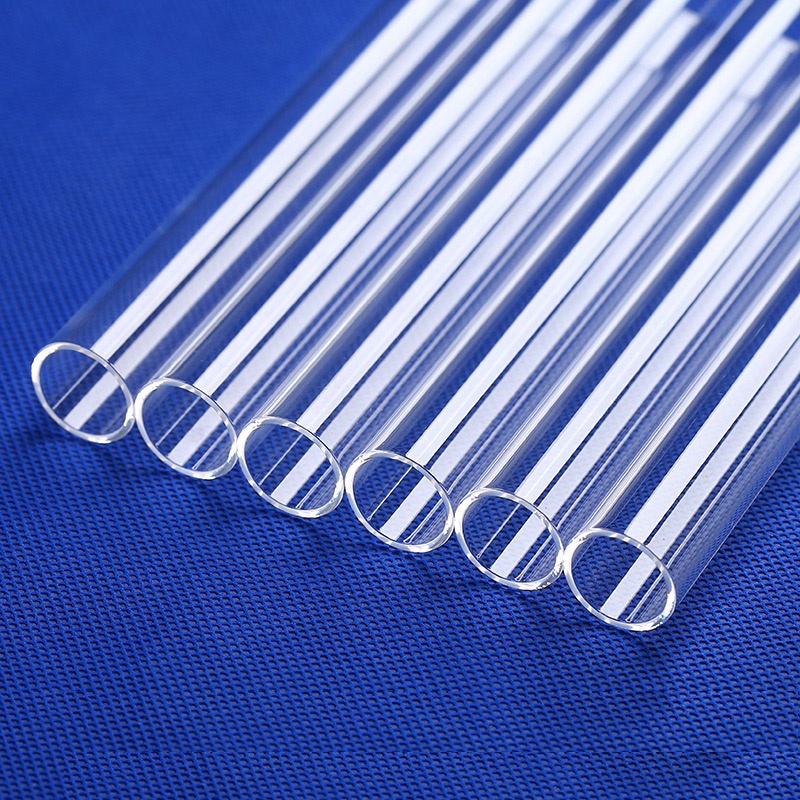
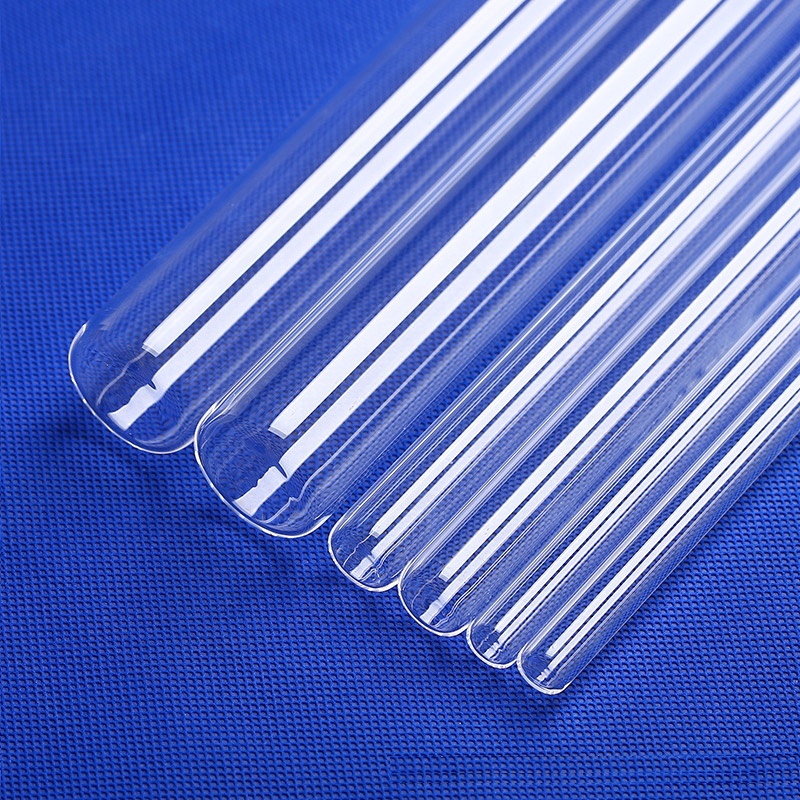
Customized based on torque load dynamics. Heavy-duty 10mm–30mm solid rods provide massive torsional resistance for high-shear shearing, while precision thin-wall capillary shafts reduce inertia in high-RPM analytical instruments.

Encapsulated Magnetic Retrievable Stirrers

Constructed by hermetically vacuum-sealing rare-earth neodymium (NdFeB) magnetic cores within a 99.99% SiO₂ casing. Eliminates polymer swelling, PTFE shredding, and leaching across aggressive acidic solvents and boiling reagents.

Photochemical & UV-Transparent Shafts

Fabricated using optical-grade JGS1 synthetic silica, providing >85% deep-UV internal transmission at 254 nm. Functions simultaneously as an agitation mechanism and a high-efficiency UV light guide for photochemical reactors and photocatalytic degradation.

Future Procurement Trends in Industrial Quartz Agitation (2025–2030)

B2B procurement executives and engineering directors within top-tier semiconductor fabs, pharmaceutical labs, and solar gigafactories are recalibrating their supply chain metrics. The historical approach of treating quartz rods as generic consumables is rapidly evolving into a performance-driven sourcing model focused on life-cycle longevity, automation readiness, and ultra-low defect densities.

Automated Wet-Bench & Robotic Integration

Modern semiconductor fabs operate fully automated chemical wet benches where mechanical handling robots clamp quartz stirrers at repeatable gripping coordinates. Procurement contracts now demand rigorous geometric runout (≤ 0.05 mm over 500 mm length) and standardized CNC chucking grooves to prevent dynamic vibration in robotic arms.

Sub-ppb Metal Leaching Standards

As semiconductor lithography nodes scale past 3nm and 2nm gate-all-around (GAA) architectures, allowable metal contamination in cleaning wet chemistries (SC-1, SC-2, Piranha solution) has dropped into parts-per-trillion (ppt) thresholds. Quartz stirring rods must feature verified ICP-MS material certifications with elemental Fe, Cu, Ni, and Cr concentrations suppressed below 0.1 ppm.

Consolidation & Direct-from-Source OEM Supply

Procurement teams are cutting intermediary distributors to minimize supply chain latency and prevent shipping damage. Partnering directly with integrated manufacturers like Lovri Quartz—who operate proprietary crushing, acid leaching, tube drawing, and precision CNC grinding under one roof—ensures batch-to-batch consistency and competitive pricing.

Technological Manufacturing Evolution: Precision Processing Advances

The manufacturing methodology for custom quartz rods has progressed far beyond artisanal glass-blowing. High-stress industrial agitation requires sophisticated CNC machining, automated laser fire-polishing, and advanced stress polariscopy to prevent micro-fissure propagation under cyclic load.

5-Axis CNC Diamond Tooling & Ultrasonic Milling

Fabrication of intricate hydrofoil contours, rounded chamfers, and precise counterweights directly from solid quartz stock. Diamond-impregnated rotary cutters operating under flooded sub-micron filtered coolant eliminate micro-chipping along the critical root radii of stirring paddles.

Laser Fire Polishing & Ra Surface Passivation

Hydrogen-oxygen flame and CO₂ laser polishing remove subsurface micro-cracks induced during CNC grinding. Transforming the quartz surface into a pristine vitreous glaze achieves an arithmetic roughness average (Ra) below 0.2 μm, minimizing particle entrapment and biological biofilm adhesion.

Polariscope Stress Mapping & Annealing

Every Lovri quartz stirring rod undergoes secondary electric annealing at 1,215 °C with controlled deceleration through the transformation zone. Post-process quantitative polariscope verification guarantees zero internal stress birefringence (≤ 5 nm/cm path length), preventing thermal breakage.
Enterprise Manufacturing Excellence

Why Global Tier-1 Buyers Partner with Lovri Quartz

Situated in Lianyungang, the geographic epicenter of China's high-purity silica industry, Lovri Quartz delivers vertically integrated production, verified certification, and world-class packaging reliability.

14,271 m² Dedicated Facility

SGS on-site assessed production lines equipped with automated continuous tube drawing towers, dedicated cleanroom finishing rooms, and multiple high-temperature annealing furnaces ensuring high monthly throughput.

Source Material Control

We do not procure speculative intermediate rods. Lovri controls raw crystal selection, automated pulverizing, and multi-stage acid pickling in-house, certifying 99.99% SiO₂ content from the very start of production.

Drawing-to-Part Rapid Prototyping

Our application engineering team supports CAD/STEP, DWG, and PDF technical drawings. Flexible tooling and CNC routing permit rapid prototype production (MOQ as low as 1 piece) before high-volume production scale-up.

Zero-Breakage Export Packaging

Quartz rods are precision components prone to shock damage. We utilize custom high-density EPE foam suspension, moisture-barrier vacuum packaging, and reinforced wooden crates engineered to survive international air, sea, and courier transit.

Technical Sourcing Support

Frequently Asked Questions for Quartz Stirrer Procurement

Direct answers to the most common engineering and sourcing challenges faced by quality assurance, chemical operations, and global procurement departments.

What specific chemical environments will damage or etch a quartz stirring rod?
While fused quartz is chemically inert to virtually all acids (including boiling HCl, HNO₃, H₂SO₄, and aqua regia), it is vulnerable to hydrofluoric acid (HF) at any concentration and temperature, which dissolves SiO₂ to form silicon tetrafluoride (SiF₄) or fluorosilicic acid. Additionally, concentrated phosphoric acid (H₃PO₄) attacks quartz when operated continuously above 150 °C, and strong basic caustic solutions (such as concentrated NaOH or KOH solutions above 80 °C) can induce superficial surface devitrification and haze over prolonged exposures.
What is the maximum rotational speed (RPM) a quartz stirring rod can safely tolerate?
Operating RPM depends on shaft diameter, total rod length, impeller paddle mass, fluid viscosity, and mechanical chuck runout. For standard solid shafts (10 mm to 15 mm diameter) immersed in low-viscosity aqueous solutions (under 50 cP) with overall lengths below 600 mm, rotational speeds up to 1,200–1,500 RPM are standard. For longer cantilevered shafts (exceeding 800 mm) or high-viscosity slurries, maximum RPM should be limited to 400–600 RPM to avoid critical harmonics that generate harmonic deflection and bending fractures.
How does JGS1 synthetic silica differ from JGS2 and JGS3 quartz in stirring applications?
JGS1 is a high-purity synthetic fused silica synthesized from vapor-phase silicon chemicals; it possesses essentially zero bubble/inclusion density, total metallic impurities below 1.0 ppm, and superior transmission across the deep-UV spectrum (185 nm to 2,500 nm). It is preferred for semiconductor wet benches, trace-metal analytical digestions, and UV-assisted photochemical reactions. JGS2 is produced by flame-fusing natural quartz sand; it delivers excellent physical, mechanical, and thermal properties with trace metals under 20 ppm, representing the most cost-effective choice for general chemical agitation and high-temperature furnace vessels. JGS3 is electrically melted quartz optimized for deep infrared transmission up to 3,500 nm.
Can Lovri Quartz manufacture stirring rods from customer-supplied CAD drawings?
Yes. Over 75% of our fused quartz components are produced to custom OEM specifications. We accept engineering drawings in STEP, IGES, DXF, DWG, and dimensioned PDF formats. Our engineering team reviews critical tolerances, thermal expansion margins, paddle weld fillets, and drive-end ground chucking surfaces before issuing a formal manufacturability evaluation.
What dimensional tolerances can your CNC quartz machining facility hold?
For raw drawn rod diameters, standard precision extrusion holds outer diameter (OD) within ±0.10 mm to ±0.20 mm. For precision centerless ground shafts, we achieve OD tolerances down to ±0.01 mm to ±0.02 mm. Shaft total runout (TIR) across a 500 mm span can be held within 0.05 mm. Paddle thickness, blade angles, and hole drilling centers are routinely maintained to DIN ISO 2768-m (fine) standards.
Why do stirring rods sometimes crack at the weld joint between the shaft and the paddle?
Joint fractures are almost exclusively caused by residual thermal stress induced during manual torch welding, combined with mechanical stress concentrations at sharp 90-degree internal fillet corners. When the paddle experiences drag in a fluid, cyclic torque focuses at this un-annealed seam. Lovri Quartz resolves this issue by integrating continuous torch fillet transitions and subjecting every completed welded assembly to comprehensive electric furnace annealing at 1,215 °C, followed by polarization stress inspection to guarantee uniform stress dissipation.
What are the standard cleaning and maintenance protocols for quartz stirring rods?
Standard laboratory cleaning involves soaking the quartz rod in a 10%–20% nitric acid bath or hot piranha solution (H₂SO₄/H₂O₂) to remove all organic and metal residues, followed by an ultrapure deionized water (18.2 MΩ·cm) rinse and filtered nitrogen air drying. Avoid cleaning quartz with abrasive diamond pads or steel wool, which introduce micro-scratches that degrade mechanical tensile strength. Never touch high-temperature quartz with bare hands, as sodium and potassium salts from human skin promote high-temperature surface devitrification (cristobalite crystal growth) above 1,000 °C.
What are your typical prototype and production lead times, and how is shipment handled?
Custom prototypes and drawing review samples are typically manufactured and dispatched within 7 to 12 business days. Standard volume OEM orders require 3 to 4 weeks depending on batch volume, CNC complexity, and optical inspection requirements. Expedited air transit via DHL, FedEx, or air freight delivers worldwide in 3 to 6 days, protected in certified multi-layer drop-tested export packaging.

Request an Engineering Review & OEM Quotation

Submit your component drawings, CAD geometries, or application parameters. Our specialized technical staff will verify chemical compatibility, provide tolerance advice, and issue factory-direct volume pricing within 24 hours.