SGS Onsite-Verified Fused Quartz Manufacturer [email protected]

OEM/ODM Opaque Quartz Tube Exporter & Exporters

Precision Thermal Management Solutions, Micro-Porosity Structural Engineering, and High-Purity Fused Silica Export Standards for Global Semiconductor, Photovoltaic, and Industrial Metallurgy Applications

99.99% SiO₂ High-Purity Chemical Yield
14,271m² SGS Verified Production Facility
1100°C Continuous Thermal Threshold
±0.05mm Ultra-Precision Machining Tolerance
Export-Grade Portfolio

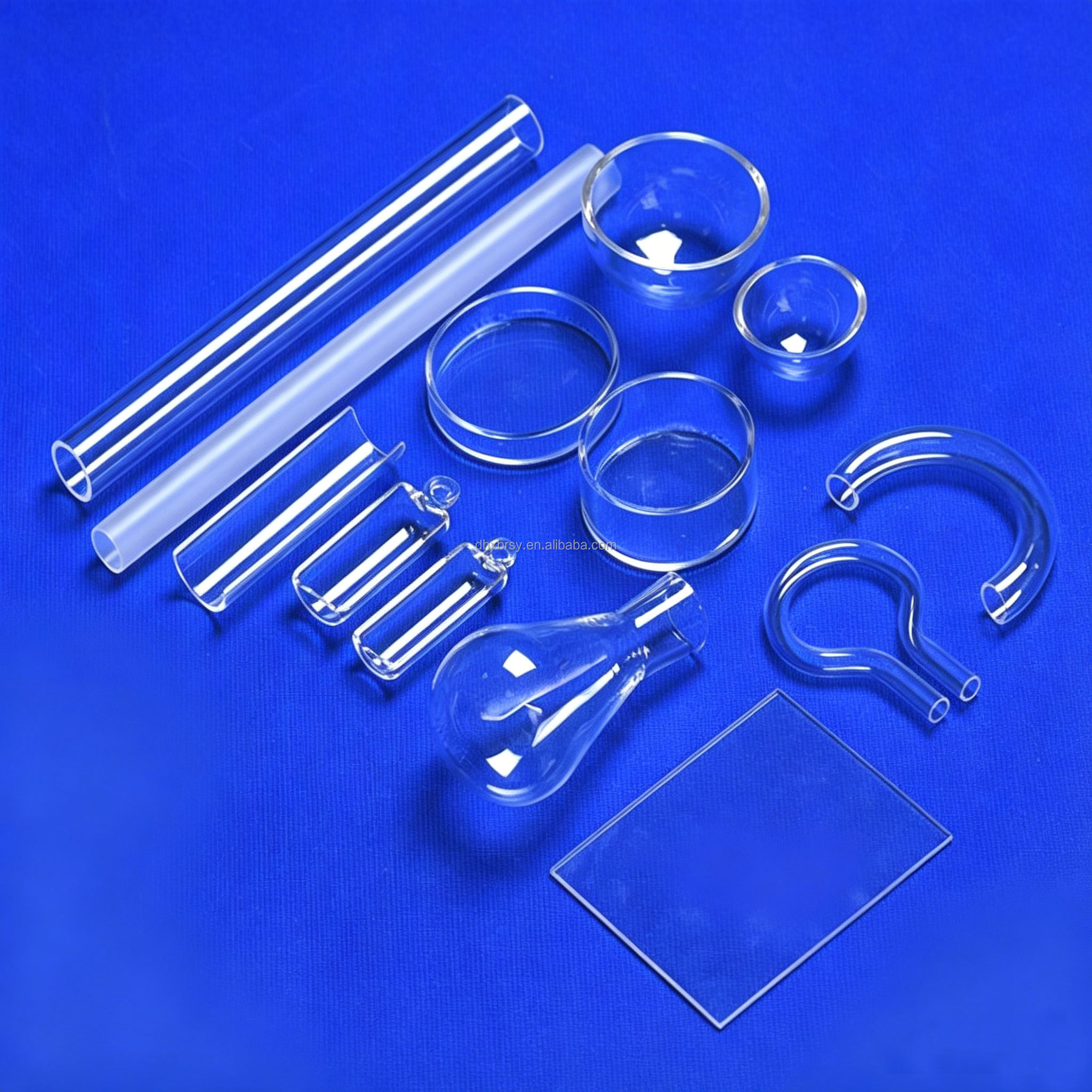
Precision Fused Quartz & Opaque Silica Components

Engineered for thermal uniformity, exceptional thermal shock survival, dielectric insulation, and corrosion resistance under aggressive process chemistries.

Engineering Principles of Opaque Fused Silica Tubes: The Physics of Thermal Scattering

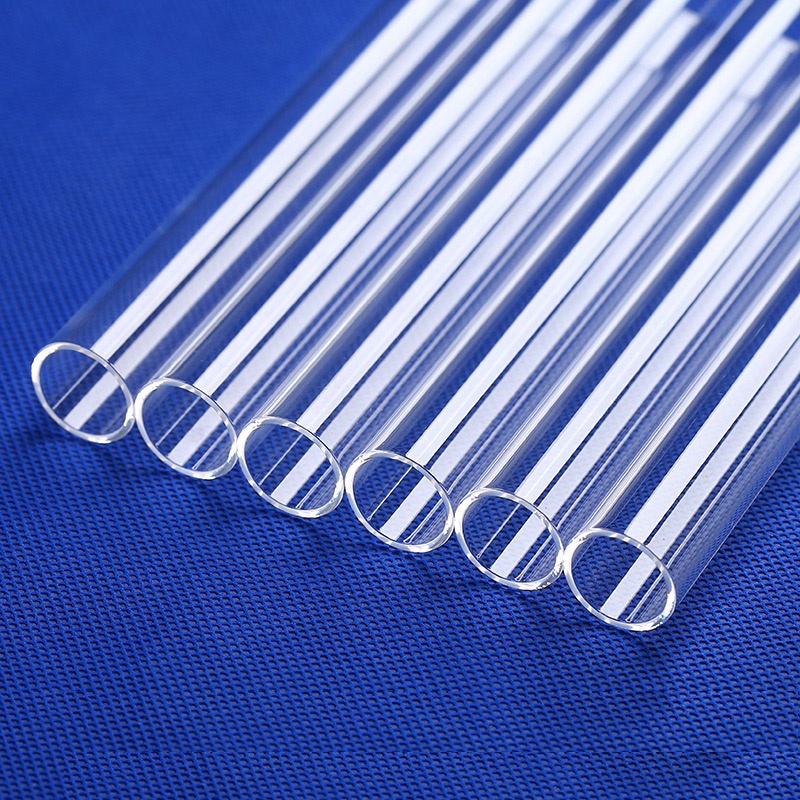
In modern industrial high-temperature processes, clear fused quartz is celebrated for its direct optical transmission across UV to near-IR wavelengths. However, when thermal isolation, diffuse infrared radiation, and non-directional radiant energy containment are vital, opaque quartz tubes (often referred to as milky-white fused silica tubing) provide superior thermodynamic performance. As a dedicated OEM/ODM opaque quartz tube exporter, we formulate these specialized components to serve where standard transparent glass tubes fail due to uncontrolled thermal focusing or radiant heat escape.

The opacity of milky-white quartz is not achieved through chemical opacifiers or color dopants that compromise chemical inertness. Instead, it is generated via a controlled gaseous bubble matrix introduced during the high-purity electrical fusion process. Millions of microscopic bubbles, precisely distributed between 5 and 50 microns in diameter, scatter traversing electromagnetic radiation according to Mie scattering dynamics. This internal morphology produces a diffuse barrier that blocks direct path infrared rays while converting thermal energy into a soft, homogeneous infrared emission, eliminating localized hotspots in critical thermal treatments.

Technical Insight: Opaque quartz tubing demonstrates an emissivity rating approaching 0.90 to 0.93 in the medium-to-far infrared waveband (2.5 μm to 8 μm), compared to just 0.65 to 0.75 for clear quartz. This translates to an energy conservation efficiency improvement of 18% to 27% in industrial furnace linings, chemical pyrolysis heaters, and rapid thermal processing (RTP) chambers.

Chemical High-Purity Integrity (99.99% SiO₂) Under Severe Thermal Regimes

A primary criterion for international procurement engineers choosing an opaque quartz tube exporter is contamination prevention. In semiconductor diffusion, atomic layer deposition (ALD), and silicon ingot metallurgy, even fractional parts-per-million (ppm) metallic impurities can migrate through furnace atmospheres, causing catastrophic wafer defects or lattice displacement.

Our OEM/ODM manufacturing protocols employ pure crystalline quartz sands sourced from verified mineral reserves in Lianyungang, Jiangsu. By subjecting the raw sand to specialized multi-stage hydrochloric and hydrofluoric acid pickling, electromagnetic separation, and deionized ultrasonic washing, trace elements such as Iron (Fe), Copper (Cu), Sodium (Na), Potassium (K), and Lithium (Li) are suppressed down to trace thresholds. The resulting fused material maintains structural rigidity at continuous operating conditions up to 1100°C, and can withstand transient exposure to 1300°C without devitrification into cristobalite.
Property Parameter Opaque Fused Silica (Milky White) Transparent Fused Quartz (Clear) Test Standard / Notes
SiO₂ Purity Ratio ≥ 99.98% – 99.99% ≥ 99.99% – 99.999% ICP-OES Chemical Assayed
Volumetric Bulk Density 2.05 – 2.15 g/cm³ 2.20 g/cm³ ASTM C693 Micro-Void Displacement
Mean Bubble Diameter 10 – 35 μm (Homogeneous) Bubble-free / Class 0–1 Optical Micro-Interferometry
Coefficient of Thermal Expansion (CTE) 5.4 × 10⁻⁷ /°C (20°C – 320°C) 5.5 × 10⁻⁷ /°C (20°C – 320°C) Zero Thermal Shock Fracture Risk
Max Operating Temperature (Continuous) 1050°C – 1100°C 1100°C – 1150°C Resistance to sagging over 2000 hrs
Infrared Emissivity (λ = 2.5–10 μm) 0.90 – 0.94 0.65 – 0.78 Spectrophotometric IR Evaluation
Hydrolytic / Acid Resistance Class Class 1 / Class S1 Class 1 / Class S1 DIN 12111 / ISO 719 Resistance

Future Procurement Trends in the High-Purity Opaque Quartz Market

Global supply chain directors and procurement professionals face shifting industry parameters driven by net-zero manufacturing mandates, third-generation semiconductor developments (SiC and GaN), and large-format solar photovoltaic wafers (TOPCon and HJT architectures). Reviewing market dynamics across key manufacturing corridors reveals several defining procurement trends:

1. Transition to Large-Bore Diameters & Tight Ovality Envelopes

As semiconductor wafer fabrication transitions toward advanced node geometries and larger furnace capacities, demand for large-diameter opaque quartz tubes (outer diameters ranging from 200mm up to 450mm) has grown by over 34% year-over-year. Buyers no longer accept basic dimensional tolerances; supply contracts require tightly bounded ovality (out-of-roundness < 1.0%), uniform wall thickness down to ±0.2mm, and completely camber-free profiles over lengths exceeding 2500mm to guarantee automated robotics docking.

2. Integration of Combined Clear-Opaque Hybrid Architectures

A prominent engineering trend is the hybrid fusion of opaque quartz and transparent quartz within a singular monolithic component. For example, a diffusion furnace process tube may require an opaque sleeve body for thermal buffering and heat insulation, welded seamlessly to a transparent optical window at the flange end for pyrometric temperature monitoring. Global exporters capable of executing flawless glass-lathe thermal joining without stress fractures gain an immediate competitive advantage.

3. Supply Chain Decarbonization and Recyclability Verification

Tier-1 procurement organizations in North America and Western Europe are demanding Environmental Product Declarations (EPDs) and ESG alignment from Chinese manufacturers. Plasma fusion furnaces powered by renewable green electricity and circular quartz cullet recycling protocols are rapidly emerging as formal qualification criteria in international supplier audits.

Technology & Material Development Roadmap: The Next Era of Fused Quartz

The manufacturing landscape of fused silica glass is evolving past standard thermal flame drawing methods. To meet tolerances for 2nm process nodes, extreme aerospace environments, and high-energy laser containment, our engineering center focuses on three cutting-edge development vectors:

  • Computer-Controlled Continuous Electric Arc Fusion: By migrating from traditional intermittent graphite pot melting to continuous electric arc drawing equipped with real-time laser ultrasonic thickness monitoring, wall thickness variations are reduced by 60%, drastically cutting down on devitrification nucleation sites.
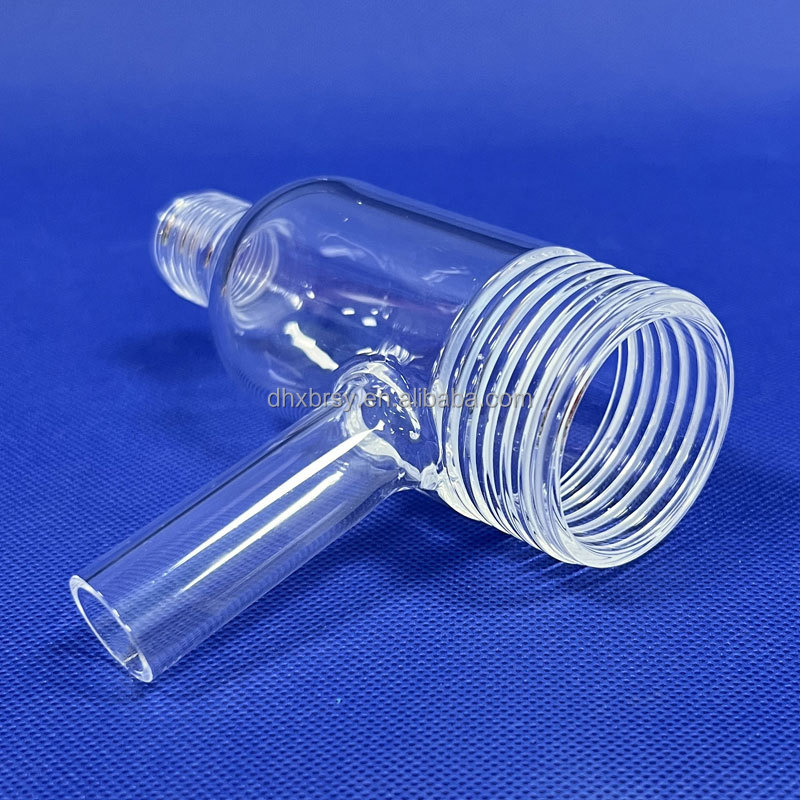
  • Laser-Assisted Micro-Machining and Threading: Traditional diamond wheel grinding creates microscopic micro-cracks on quartz surfaces that propagate into brittle failures during cyclic thermal ramping. Modern manufacturing employs picosecond laser ablation and ultrasonic-assisted milling to cut complex male/female threads, slotted ports, and precision gas inlets with surface roughness Ra < 0.2 μm, completely eliminating post-machining residual stresses.
  • Advanced Surface De-Hydroxylation Processes: Hydroxyl radicals (OH content) embedded within the silica network reduce quartz's viscosity and lower the transition temperature, accelerating sagging at temperatures above 1000°C. Modern development incorporates high-temperature vacuum de-hydroxylation baking, reducing OH content below 15 ppm for ultra-high-temperature dimensional stability.
Enterprise Strengths

Why Tier-1 Buyers Choose Our Quartz Manufacturing Hub

Operating from Lianyungang, China's premier fused silica industrial center, we provide fully verified supply continuity, custom fabrication, and direct factory pricing.

SGS Onsite-Assessed Facility

Our 14,271 m² production facility has undergone independent onsite audit by SGS Group, verifying legal compliance, complete production machinery, and strict operating hygiene.

Full In-House Supply Integration

From initial lump crushing, chemical acid pickling, and tube drawing to CNC slotting, fire polishing, and annealing, 100% of processing remains in-house for complete quality control.

Strict Annealing & Stress Testing

Internal material stress is the hidden killer of quartz glassware. Every batch is systematically treated in programmable annealing ovens and 100% tested via polarimetric stress gauges.

Custom Export-Grade Packaging

Zero transit breakage guarantee: customized EPE foam cradles, vapor-barrier vacuum seals, and fumigated multi-layered wooden cases engineered for worldwide air and sea shipping.

Procurement Knowledge Base

Frequently Asked Questions on Opaque Quartz Tubes

Straightforward answers addressing material chemistry, customization tolerances, thermal limits, and logistics protocols.

What is the key functional difference between opaque and transparent quartz tubes?
Transparent quartz permits high transmission of UV, visible, and infrared light (up to 90%+), making it ideal for optical windows, lamp jackets, and visual reaction chambers. Opaque quartz contains an engineered micro-bubble structure that diffuses radiation, providing higher infrared emissivity (0.90+) and superior thermal insulation, eliminating hot spots and reducing energy consumption in industrial heaters and furnaces.
Can opaque quartz tubes be custom machined, welded, or flanged according to technical drawings?
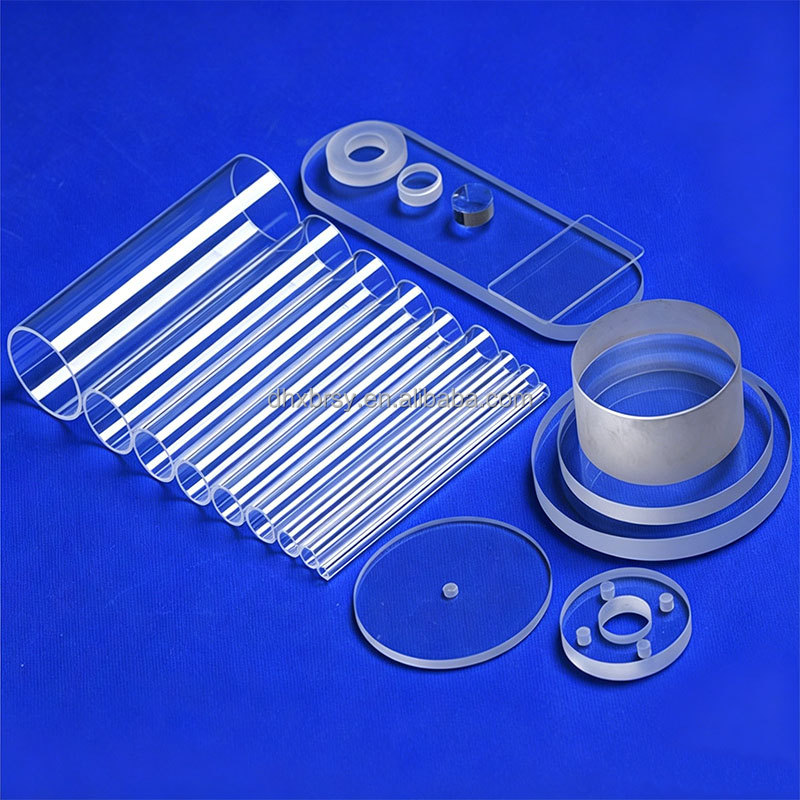
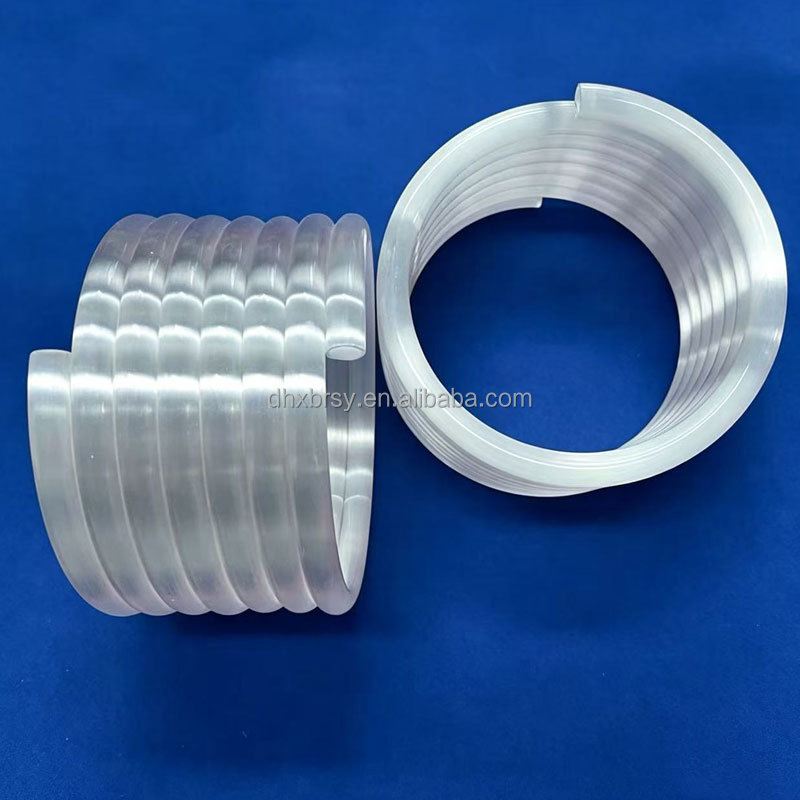
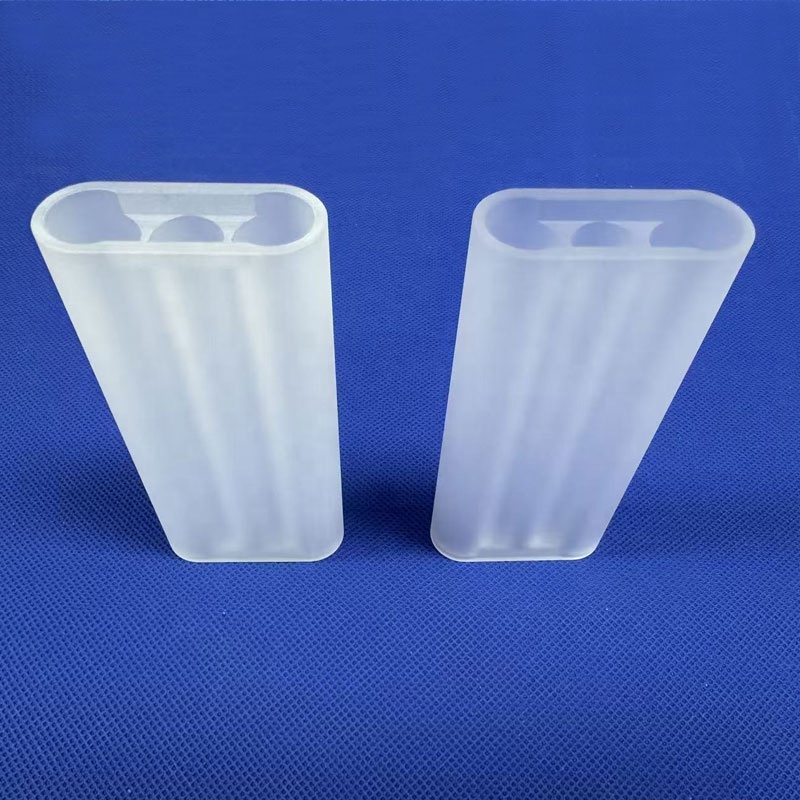
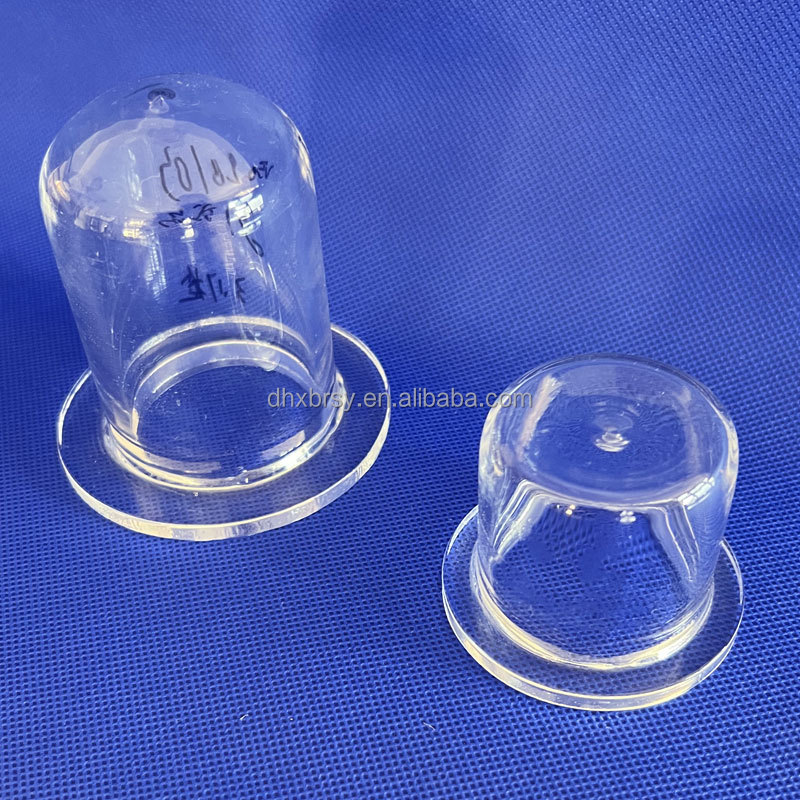
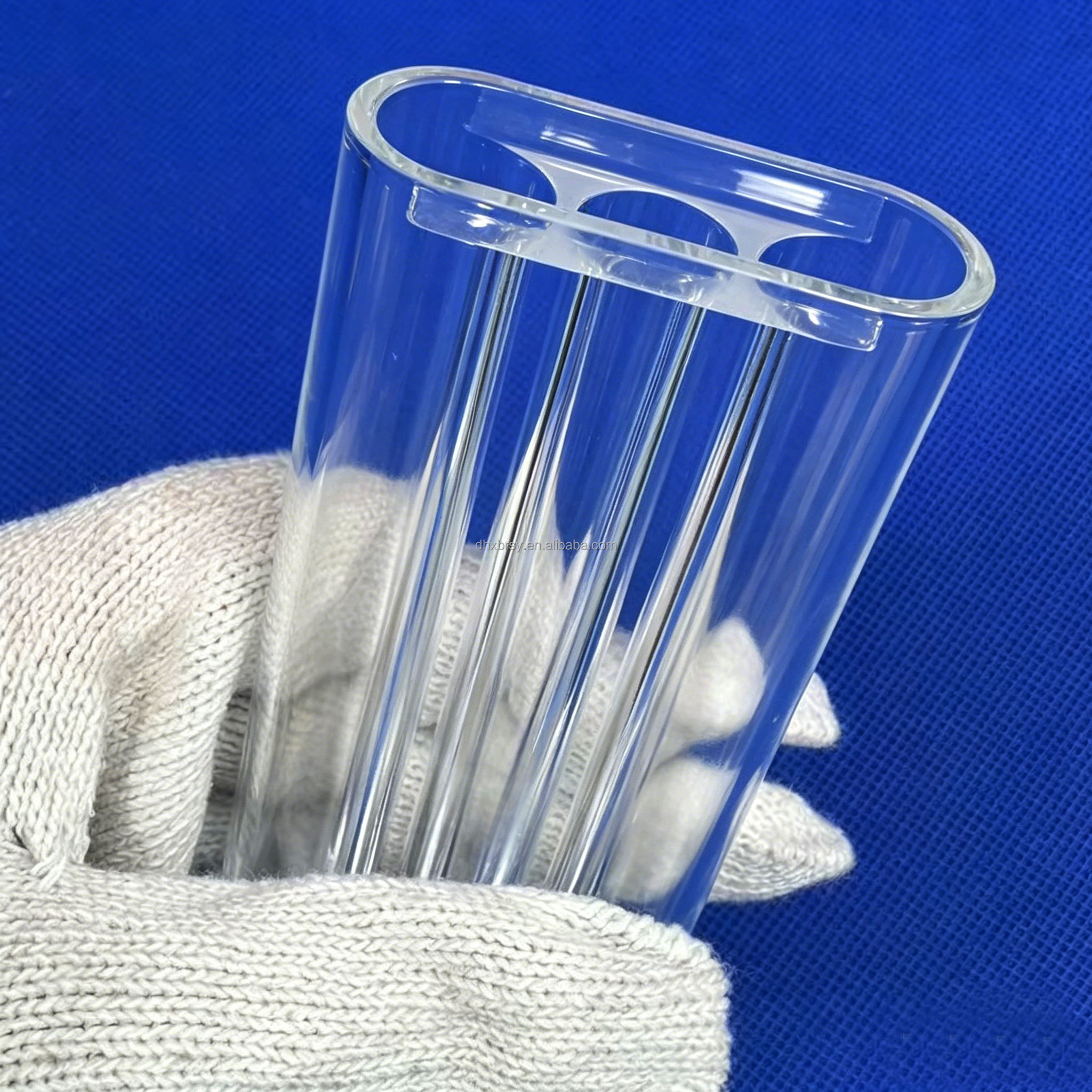
Yes. As an OEM/ODM specialist, we handle full secondary machining. We process PDF, DWG, DXF, and STEP files to cut to precision lengths, grind optical flats, machine male/female threads, bevel edges, drill holes, and flame-fuse custom flanges, ground joints, or multi-bore branches with tight mechanical tolerances (±0.05 mm to ±0.2 mm).
What maximum operating temperatures can opaque fused silica sustain without failure?
Opaque fused quartz performs reliably under continuous exposure up to 1050°C – 1100°C. For short durations, it can withstand temperatures up to 1300°C. The material's near-zero coefficient of thermal expansion (5.4 × 10⁻⁷ /°C) gives it remarkable thermal shock resistance; it can be heated to 1000°C and plunged directly into cold water without cracking.
How do you guarantee that metallic impurities will not cross-contaminate semiconductor furnaces?
Our factory operates an in-house chemical refining process including multistage acid leaching and deionized water rinsing to guarantee a 99.99% SiO₂ baseline. Every production lot undergoes spectrometer ICP-OES validation, with total alkali metals (Na, K, Li) kept strictly below 5 ppm and transition metals (Fe, Cu, Ni) below 2 ppm. RoHS and material analysis certificates are supplied with every order.
What is the standard Minimum Order Quantity (MOQ) and production turnaround?
To support prototyping, research initiatives, and replacement requirements, our MOQ starts at just 1 to 5 pieces for standard and custom sizes. Sample prototypes are typically turned around in 5 to 7 business days, while volume container orders are completed in 15 to 25 business days, backed by our extensive stock of drawn tube stock.
How are fragile, large-diameter quartz tubes protected against impact during international transit?
Export shipments are packed following strict protective packaging protocols: individual components are sealed in dust-free PE bags, wrapped with thick protective bubble sheeting, and cradled within high-density pre-formed EPE foam molds. The cargo is then boxed inside reinforced double-wall corrugated cartons and anchored into bespoke ISPM-15 fumigated plywood crates with drop-test safety certification.

Have an OEM/ODM Quartz Engineering Drawing or RFQ?

Consult with our fused silica materials engineers today. Receive rapid manufacturability feedback, accurate dimensional tolerance confirmation, and factory-direct export quotations within 12 hours.