Optical / Fixture
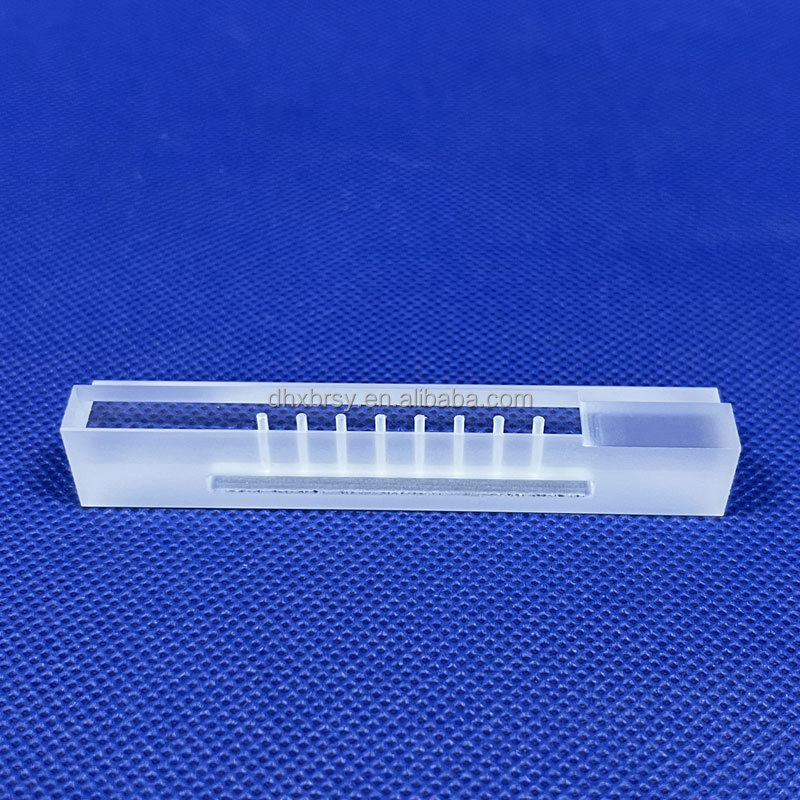
Precision Fused Quartz V-Groove Fiber Array Holder (99.99% Silica)
Sub-micron pitch tolerance for optical laser coupling, photonic packaging, and telecom array alignment.
Fabricated from optical and semiconductor-grade fused silica, each piece features minimal thermal drift, zero devitrification seeds, and rigorous surface polishing.
Sub-micron pitch tolerance for optical laser coupling, photonic packaging, and telecom array alignment.
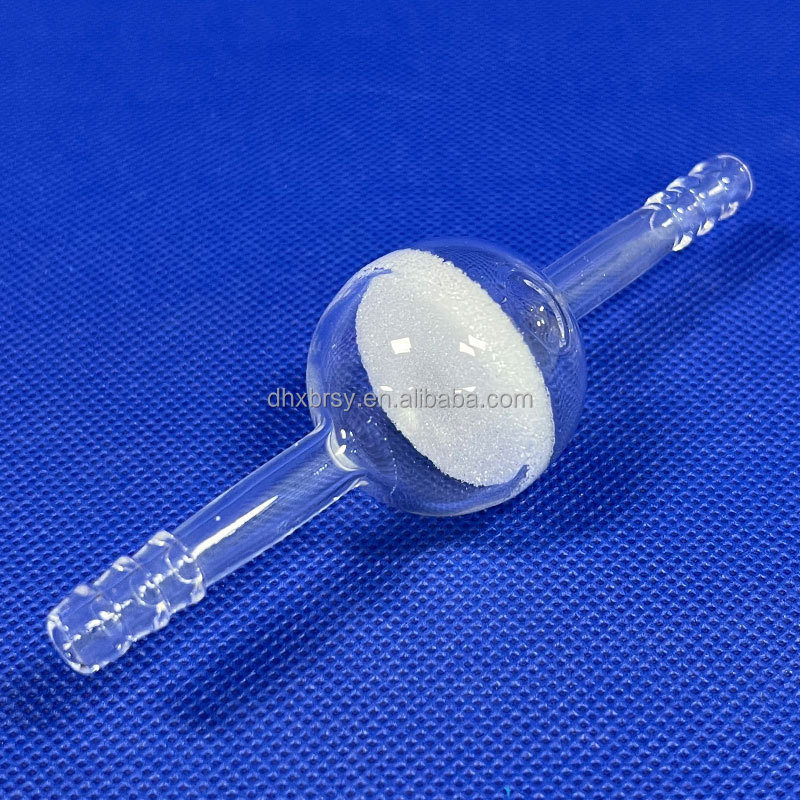
Extreme corrosion resistance, certified under RoHS standards for laboratory microwave acid decomposition.
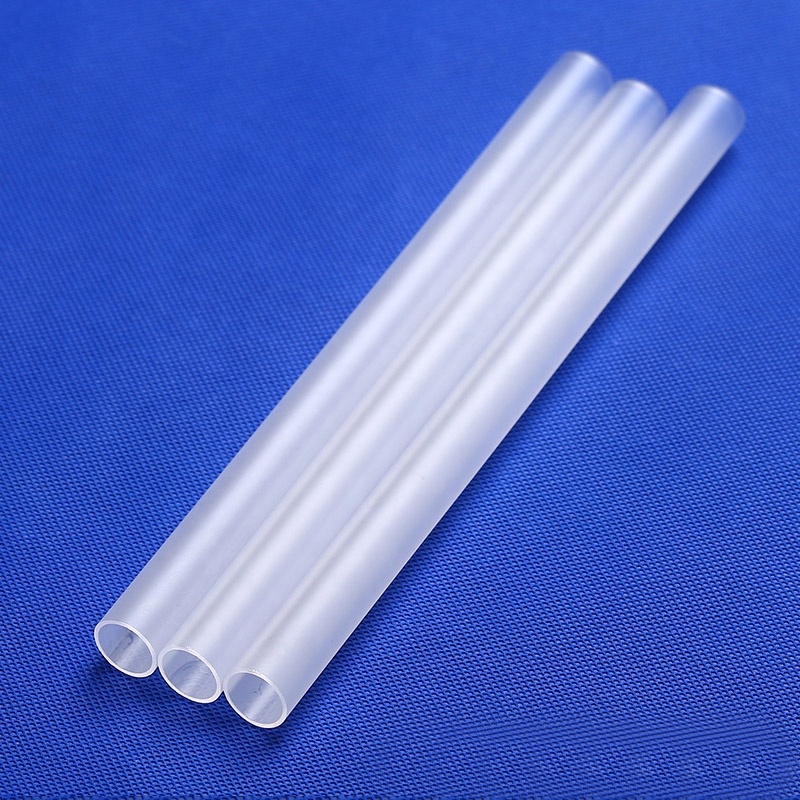
Optimized spectral cut-off characteristics for high-efficiency vacuum ultraviolet radiation and heating.
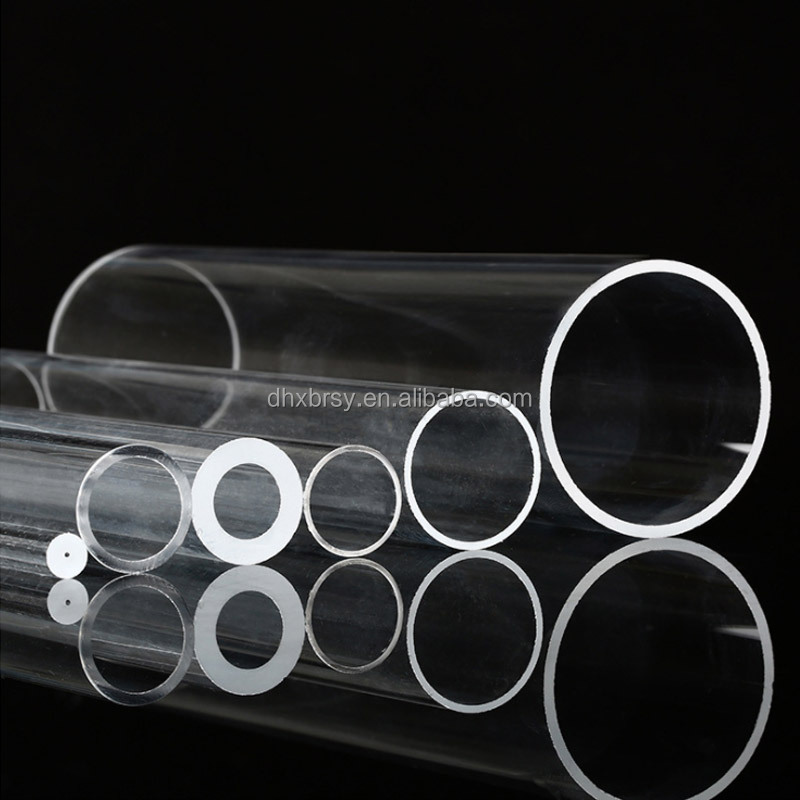
Thermal shock resistance up to 1100°C, optimized for fast-heating industrial ovens and appliances.
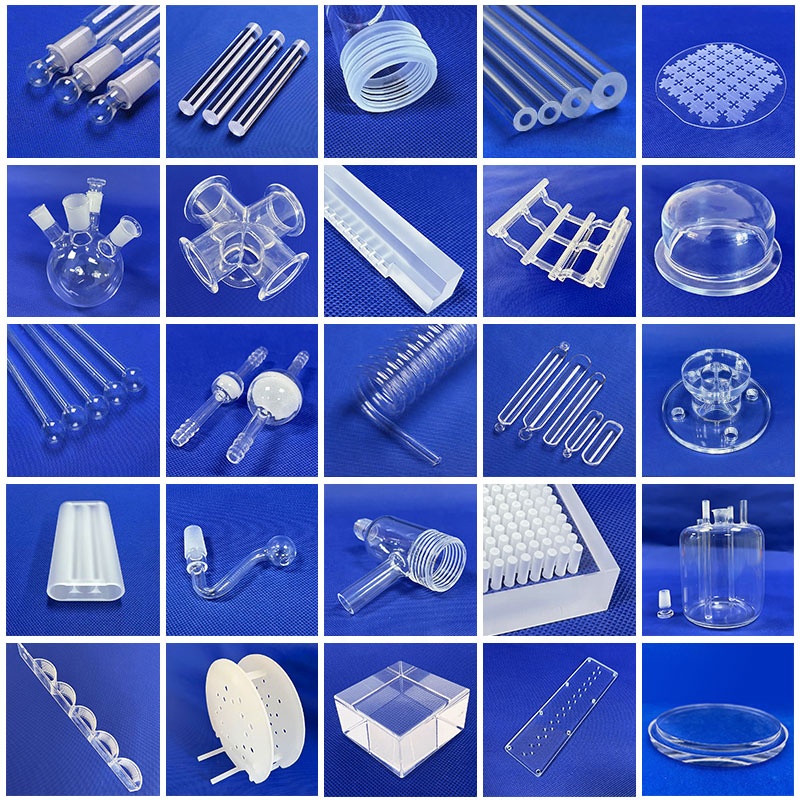
Optical mirror finish with >92% visible-light transmission, chemical-resistant white rim border.
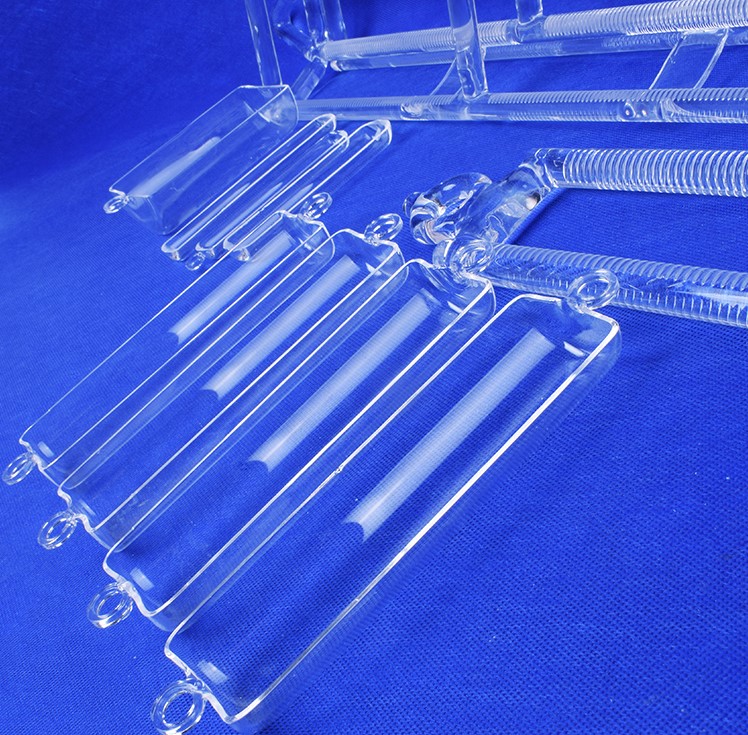
Thermal carrier for LPCVD, PECVD, and solar wafer diffusion processes, built to strict pitch drawings.
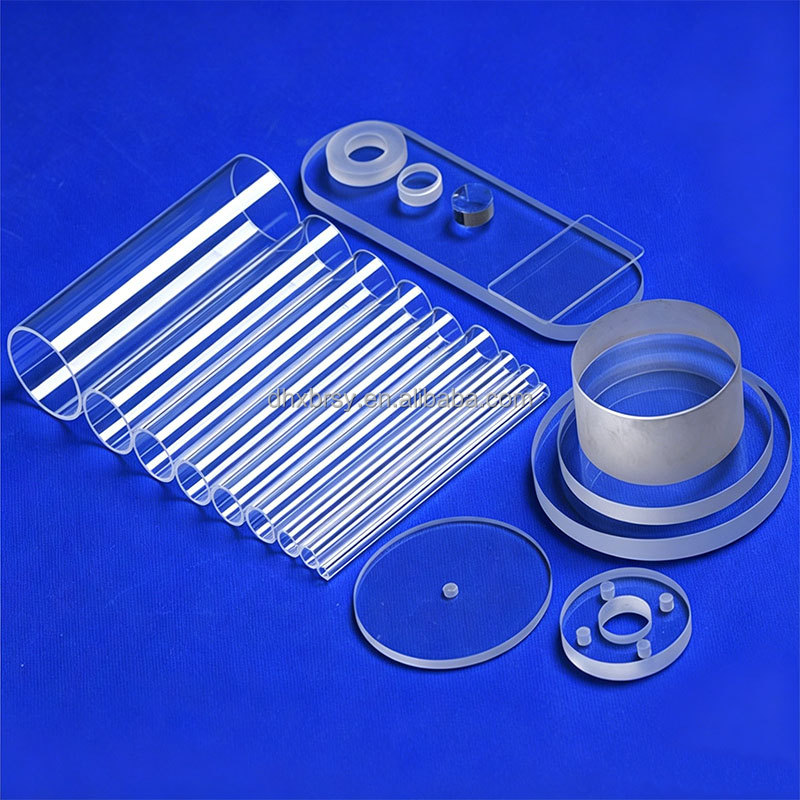
Transmission bands from 185nm to 2500nm. Precision laser polished for semiconductor lithography tools.
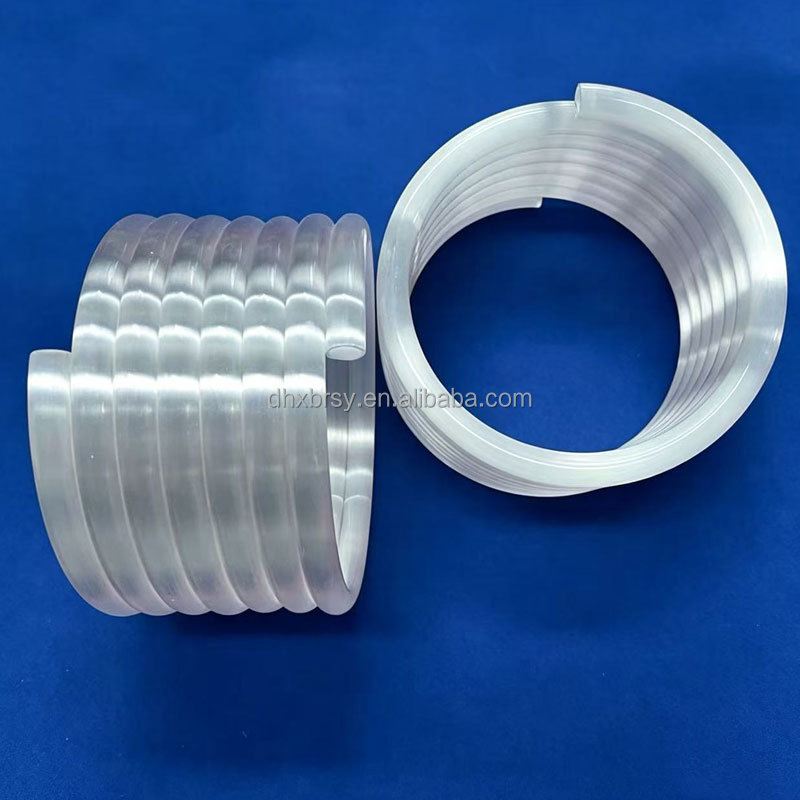
High thermal reflection for concentrated infrared heating furnaces, customized spiral pitch and turns.
Clear fused quartz tubes serve as mission-critical envelopes in microelectronics manufacturing, semiconductor dry etching, photochemical synthesis, and high-temperature furnace liners. Understanding raw material purity classifications (JGS1, JGS2, JGS3), hydroxyl (OH⁻) content, and structural tolerance metrics is essential for optimizing procurement lifecycles.
| Manufacturer / Exporter | Core Origin | Primary Grade Specialization | Key Production Strengths | Typical Target Industry |
|---|---|---|---|---|
| Lovri Quartz (BAO RAN) | Lianyungang, China | JGS1, JGS2, 99.99% SiO₂ Tubes & CNC Parts | In-House Raw Sand Pickling, Custom EDM/CNC, SGS Audited | Semiconductor, PV, Laser Flow Tubes, Water Disinfection |
| Heraeus Conamic | Germany / Global | Synthetic Silica, HSQ 100/300/400 | Zero-bubble standard, high structural integrity under plasma | Sub-5nm Semiconductor Fabrication, High-End Optics |
| Momentive Technologies | USA / Global | Fused Quartz Tubing (GE 214) | Ultra-low OH content, high devitrification resistance | Photovoltaic Diffusion, Silicon Ingot Growing |
| Tosoh Quartz | Japan | Ultra-Purity Synthetic Fused Silica | High hydroxyl control, superior deep ultraviolet transparency | Extreme UV Lithography, Precision Glass Shells |
| QDM Inc. | USA | Fabricated Fused Silica Assemblies | Tight-tolerance machining, thermal torch lathe welding | Defense, Aerospace, Plasma Etch Chambers |
| Shin-Etsu Quartz | Japan / Global | High-Purity Ingot-Drawn Tubes | Large diameter capability (OD > 450mm), low iron impurity | 300mm Silicon Wafer Processing |
| Saint-Gobain Quartz | France | Quartzel® & Specialized Tubing | Fused silica fiber structures and high mechanical stability | Aerospace Radar Radomes, Chemical Refining |
| Technical Glass Products (TGP) | USA | Distributor & Custom Fabricator | Rapid prototyping, complex scientific apparatus sealing | Academic Research, Analytical Instruments |
| Pacific Quartz | China | Solar & Semiconductor Quartz Sand/Tubes | High-volume ingot drawing, competitive raw quartz reserves | Photovoltaic Sintering, Standard Lighting |
| QSIL SE | Germany | Electric & Gas Fused Silica Tubes | High mechanical precision, long-arc discharge lamps | Industrial Curing, Special UV Lamp Envelope |
Driven by the proliferation of third-generation semiconductors (SiC, GaN), modern solar cell architectures (TOPCon, HJT), and high-power excimer laser systems, quartz tube procurement is shifting from generic commodity sourcing toward custom-engineered, application-specific formulations.
Thermal stability at temperatures exceeding 1150°C requires extremely low OH levels (<5 ppm) to prevent bubble expansion and sag. Conversely, optical laser flow components benefit from controlled OH levels to eliminate infrared absorption peaks.
Next-generation semiconductor furnaces demand tube outer diameters exceeding 350mm to 500mm with wall thickness uniformity under ±0.2mm to guarantee uniform thermal gradients during batch wafer baking.
Procurement teams increasingly require verified direct-from-source quartz powder refining (acid leaching, magnetic purification) to ensure baseline elements (Fe, Cu, Al, Na) do not leach into CVD processes.
A primary failure mode in high-temperature systems is selecting an improper grade of fused silica. The chemical production route determines spectral transmission curves and thermo-mechanical reliability:
| Classification | Synthesis Process | Spectral Transmission | Typical OH Content | Critical Sourcing Applications |
|---|---|---|---|---|
| JGS1 (Synthetic Silica) | SiCl₄ flame hydrolysis vapor deposition | 185 nm – 2500 nm (Deep UV Transparent) | > 800 – 1200 ppm | Excimer laser optics, semiconductor photolithography, UV disinfection tubes |
| JGS2 (Fused Natural Quartz) | Gas-oxygen flame fusion of purified crystal | 220 nm – 2500 nm (Optical Standard) | ≈ 30 – 100 ppm | Furnace process tubes, observation windows, solar cell diffusion liners |
| JGS3 (Electrically Fused) | Vacuum electric melting of quartz crystal | 260 nm – 3500 nm (Broadband & IR) | < 5 ppm | High-temp heating furnace liners (prevents devitrification above 1200°C) |
Headquartered in Lianyungang, China—the world's most concentrated cluster for quartz reserves and fabrication—Lovri Quartz operates a vertically integrated facility covering raw lump crushing, acid pickling, drawing, and precision CNC fabrication.
Our expansive industrial complex features fully controlled clean-finishing rooms, electric melting drawing lines, and specialized hydrogen-oxygen torch lathes. Certified by third-party onsite assessment to ISO and RoHS criteria.
Unlike secondary fabricators who purchase pre-made tubes, we crush, rescreen, and acid-pickle native silica sand in-house to achieve 99.99% SiO₂ baseline purity, eliminating batch variance in heavy metals.
Equipped with specialized ultrasonic glass-milling and diamond CNC centers, we execute complex multi-bore profiles, V-groove arrays, internal helical spiraling, and wafer slots within ±0.02mm drawing tolerances.
Every tube and component undergoes controlled cooling cycles in our annealing furnaces followed by 100% polarization stress testing to prevent thermal shock cracking during client high-vacuum cycles.
Answers to common structural, thermal, and logistics questions encountered by engineering teams when evaluating fused quartz tube shipments.
Send your custom drawings, required quartz grades (JGS1, JGS2, JGS3), operating temperature profiles, and dimension specifications for prompt factory-direct quotation and manufacturability review.
Contact Us