Featured High-Purity Fused Quartz & Optical Assemblies
Direct OEM/ODM production for semiconductor inspection, UV cross-linking, photolithography, and industrial high-temperature optics in the Luxembourg market.
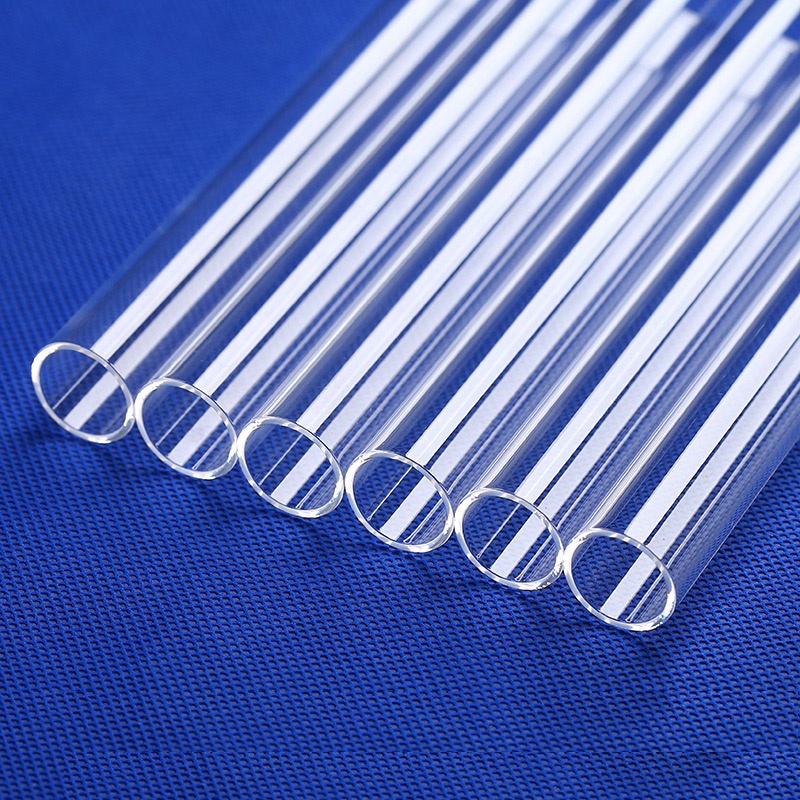
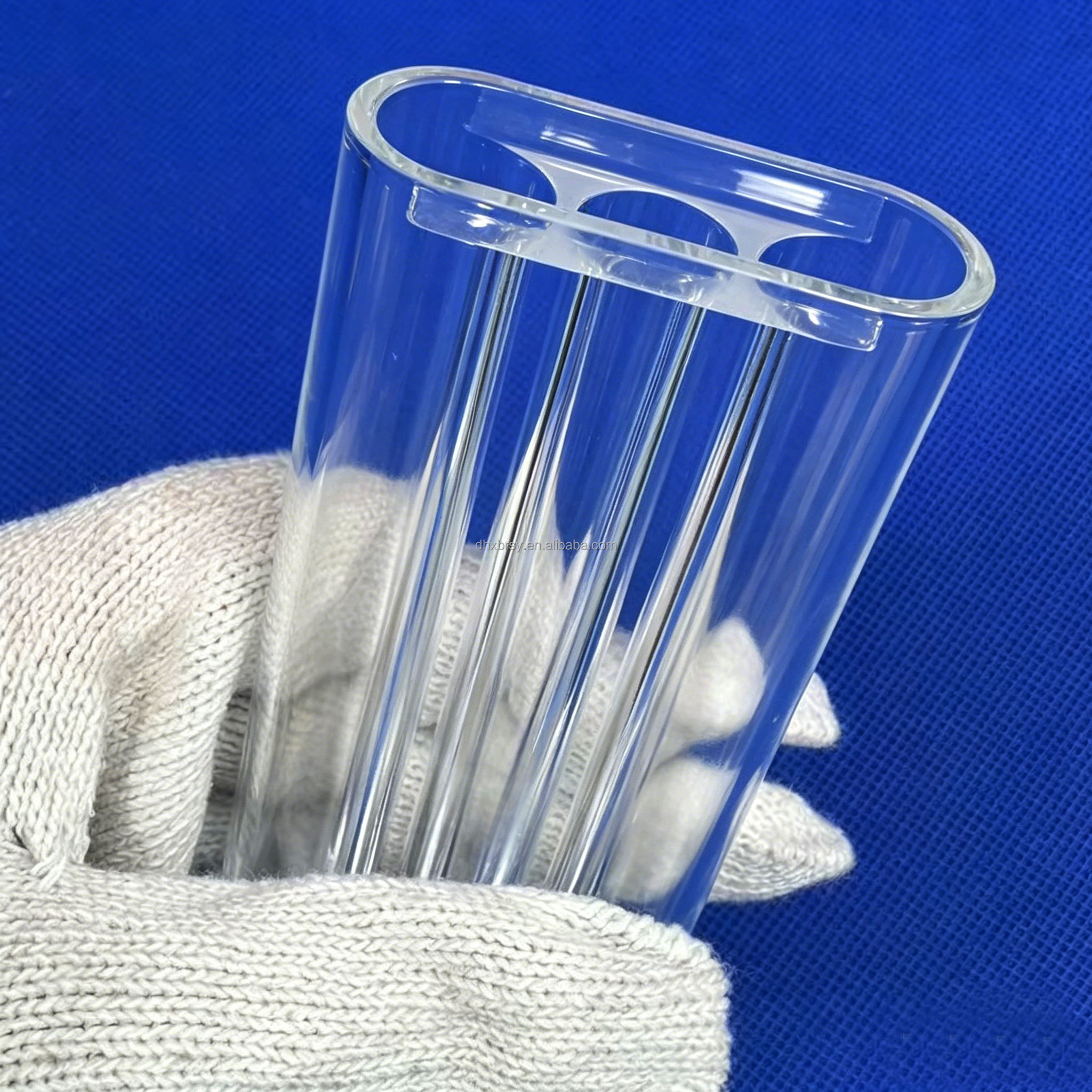
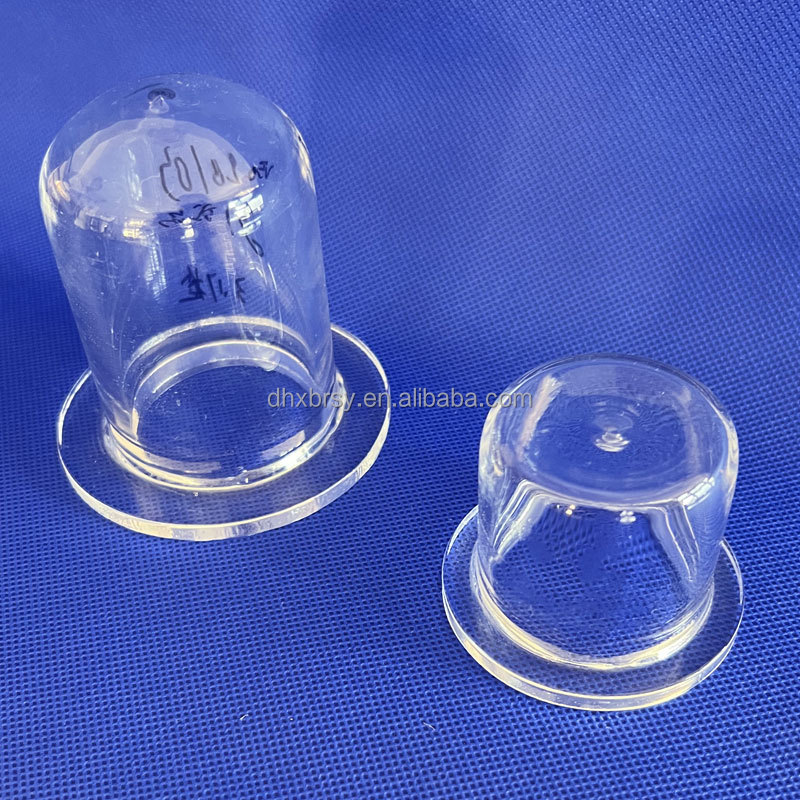
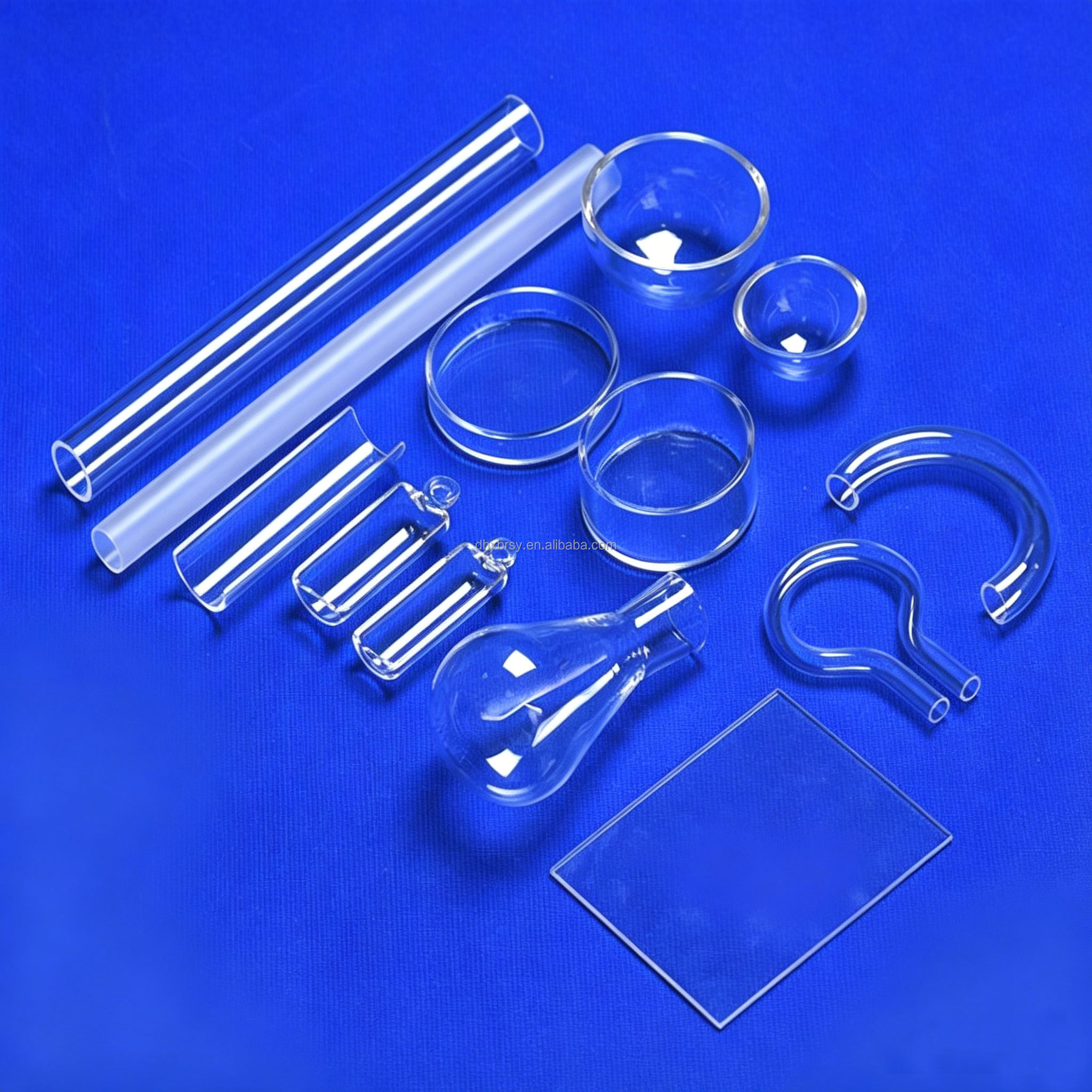
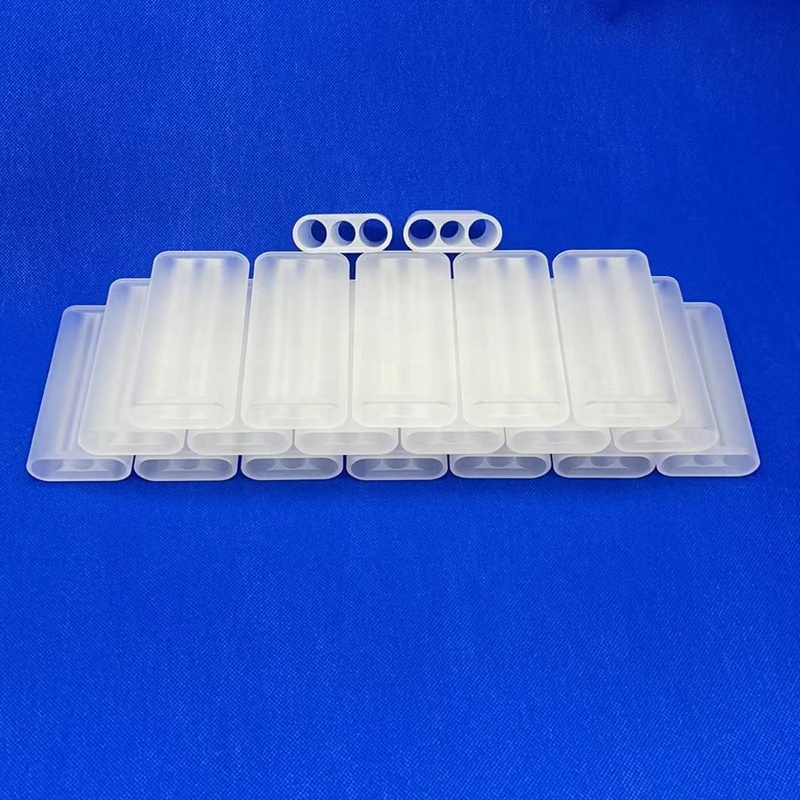
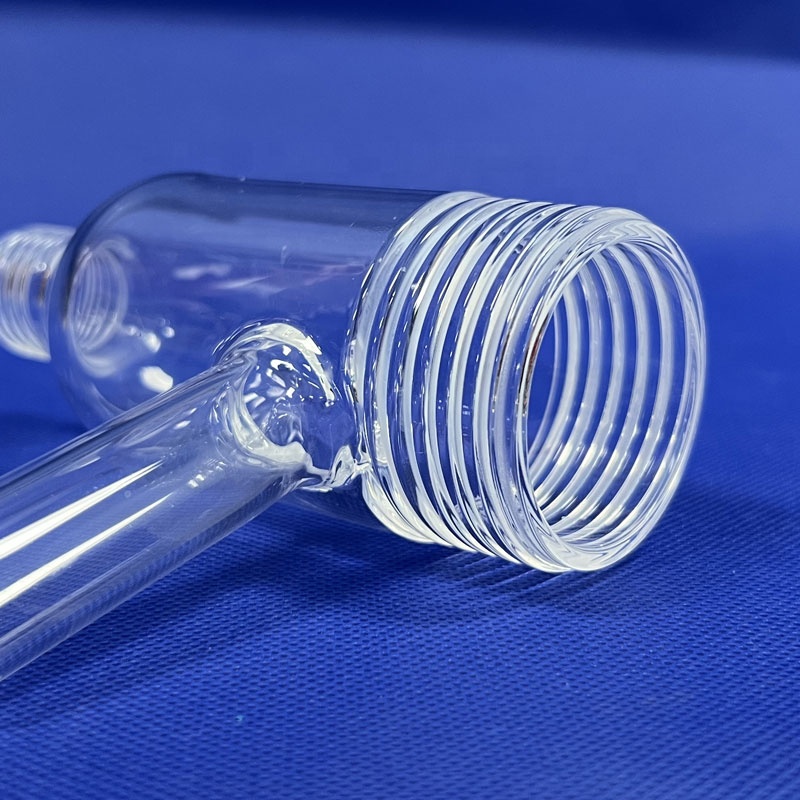
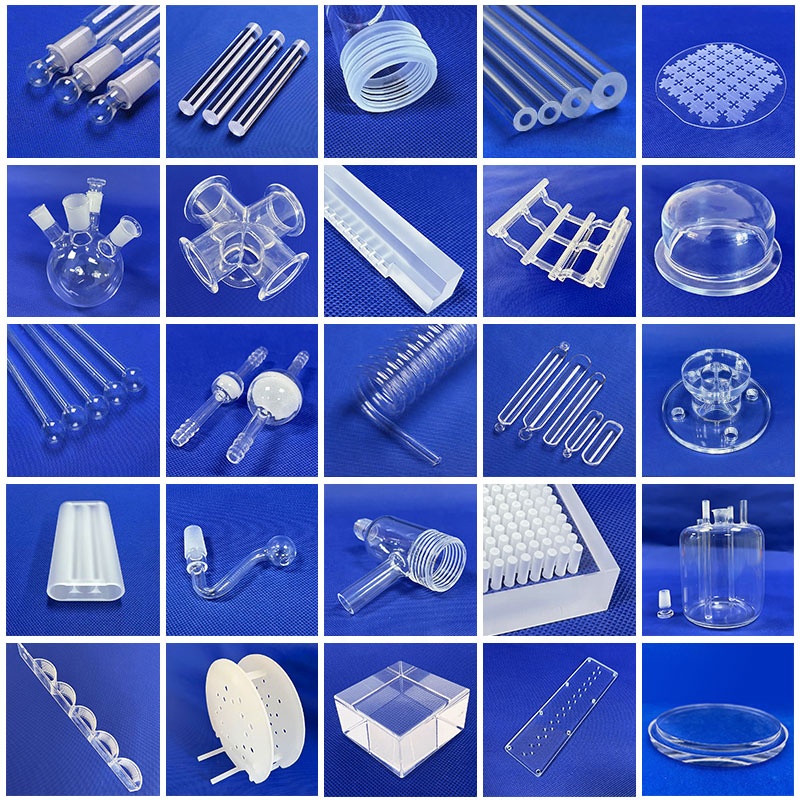
Precision Quartz Light Guide Rods: Principles of Total Internal Reflection (TIR) & Optical Homogenization
A comprehensive engineering guide on material synthesis, boundary dispersion, and chromatic transmission across deep UV, visible, and infrared spectra.
In modern optoelectronics, optical waveguiding, and photothermal processing, fused quartz light guide rods (also referred to as fused silica homogenizing rods or light pipes) function as foundational components for delivering, mixing, and shaping uncollimated radiant energy. Unlike standard multi-component optical glasses such as borosilicate or soda-lime, high-purity synthetic and flame-fused quartz offers an extraordinarily wide transmission range extending from the deep ultraviolet (DUV ∼ 185 nm) through the visible spectrum into the near-to-mid-infrared (∼ 3500 nm). For engineering procurement teams and optical physicists operating within Luxembourg and the wider Greater Region (comprising Wallonia, Saarland, and Lorraine), selecting the appropriate quartz material tier is paramount to avoiding solarization, photochemical aging, and beam attenuation.
The operational physics of quartz light guide rods rely fundamentally on Total Internal Reflection (TIR). When light enters the input aperture within the acceptance angle defined by the numerical aperture \(NA = \sqrt{n_{\text{core}}^2 - n_{\text{cladding}}^2}\) (where unclad rods utilize air with \(n \approx 1.00\) as the dielectric cladding), light propagates along the rod length through multiple boundary reflections. The precision of the lateral cylindrical or polygonal surface polishing determines the loss per bounce. At Lovri Quartz, our proprietary chemical-mechanical polishing (CMP) and flame fire-polishing yield an optical surface roughness of \(Ra < 0.5\,\text{nm}\) with scratch-dig specifications reaching 20-10 or 10-5 per DIN ISO 10110 standards, practically eliminating non-specular scattering and boundary leakage.
Beyond simple beam delivery, specialized geometries—such as hexagonal, octagonal, and rectangular cross-section homogenizers—leverage geometric folding of the wavefront to convert Gaussian or non-uniform multi-emitter spatial profiles into ultra-flat, top-hat distributions with uniformity exceeding 98%. This spatial coherence scrambler functionality is vital for Luxembourgish high-precision laser welding systems, automated optical inspection (AOI) stages, and UV curing systems where thermal hot-spots must be completely eliminated.
JGS1: Synthetic Fused Silica
Synthesized via chemical vapor deposition of silicon tetrachloride (SiCl₄). Free of metallic impurities with trace bubbles absent (Grade 0). Outstanding deep-UV transmittance down to 185 nm, zero fluorescence, and exceptional resistance to high-energy excimer laser radiation (193 nm, 248 nm, 266 nm, and 355 nm harmonics).
JGS2: Optical Fused Quartz
Manufactured by high-temperature flame fusion of high-purity natural silica sand. Offers continuous optical transparency from 220 nm to 2500 nm with excellent mechanical rigidity and high thermal resistance up to 1100°C continuous operation. The most cost-effective solution for UV lamps, sight windows, and high-intensity discharge light pipes.
JGS3: Infrared Electrically Fused
Vacuum electrically fused quartz engineered for negligible hydroxyl ion content ([OH−] < 5 ppm). Completely eliminates the prominent water absorption band around 2730 nm, permitting superior infrared radiant transmission up to 3500 nm for analytical spectroscopy, pyrometry light guides, and industrial thermal process control.
High-Purity Quartz Rod Applications in Luxembourg's Advanced Industries
How the Grand Duchy's unique convergence of automotive Tier-1s, satellite communications, cleanroom materials research, and specialized manufacturing drives optical demand.
The industrial landscape of the Grand Duchy of Luxembourg represents one of Europe's most concentrated, high-value technical ecosystems. Strategically centered within the European Union, Luxembourg has evolved far beyond its historical steel heritage into a cutting-edge hub for space systems, automotive sensing innovation, advanced polymer engineering, and biomedical research. For precision optical components like fused quartz light guide rods and reaction pipelines, Luxembourg's demand profiles reflect severe operating constraints: zero-tolerance for mechanical vibration failure, strict outgassing thresholds under high vacuum, and prolonged resistance to corrosive atmospheres.
China's leading fused quartz manufacturing sector—anchored by Lovri Quartz's complete supply chain in Lianyungang—serves as a vital supply bridge for Luxembourgish original equipment manufacturers (OEMs), engineering consultants, and contract research institutes. By providing direct-from-factory customization backed by international quality certifications, Chinese quartz manufacturers deliver rapid turnarounds on non-standard optical assemblies that would otherwise incur prohibitive lead times and costs within Western Europe.
Automotive Sensing & LiDAR
Luxembourg hosts premier Tier-1 suppliers specializing in vehicle occupancy detection, hands-off detection, and advanced driver assistance systems (ADAS). Fused quartz light guides provide high-efficiency photon transmission for laser-diode collimation, optical sensor calibration rigs, and automotive optical transceiver assemblies unaffected by engine-bay thermal swings (-40°C to +125°C).
Space & Satellite Payloads
Through the Luxembourg Space Agency (LSA) and operators like SES in Betzdorf, local aerospace engineering demands radiation-hardened materials. Lovri's high-purity JGS1 quartz rods display exceptional dimensional stability under high vacuum and cosmic radiation, serving as solar sensor wave pipes, star-tracker optical conduits, and laser inter-satellite link components.
Biotech & Spectroscopic Flow Analysis
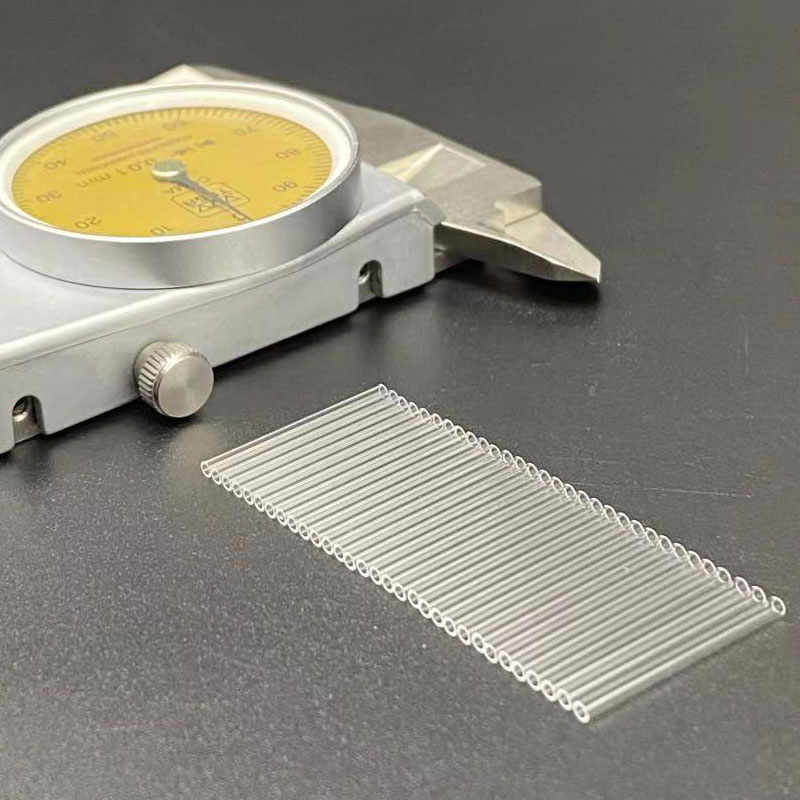
In bio-laboratories across Luxembourg-Kirchberg and the Belval scientific campus, our precision-drilled capillary quartz rods, triple-bore laser flow tubes, and 96-well quartz plates enable deep-UV fluorescence analysis, high-throughput DNA sequencing, and real-time photochemical reaction monitoring without optical contamination or autofluorescence interference.
Industrial Laser & Cleanroom Lithography
From modern sheet-metal laser processing around Dudelange to cleanroom micro-optics, quartz homogenizing rods mix multi-mode fiber outputs into uniform energy spots for defect-free laser surface claddings, precision plastic welding, and localized UV curing of optical adhesives without edge thermal distortion.
Macro Trends Transforming Quartz Optics Procurement in Benelux (2025–2030)
A strategic overview of environmental mandates, supply chain resilience, and extreme-spec precision fabrication across the European optical sector.
The procurement of fused quartz components across Benelux is currently undergoing a structural transformation driven by three core macro-economic and technological trends:
1. The EU Chips Act & Cross-Border Photonic Integration: With billions invested in European semiconductor manufacturing and advanced packaging—spilling over from Eindhoven (ASML ecosystem) to Leuven (imec) and specialized testing laboratories in Luxembourg—the demand for ultra-pure optical quartz has reached historic highs. Quartz parts must meet strict sub-nanometer surface roughness criteria, total internal bubble absence (DIN ISO 10110 Class 0), and trace-metal impurity budgets below 1 part per billion (ppb). Sub-standard glass that outgasses under high-vacuum EUV or laser lithography conditions is strictly rejected.
2. Decarbonization & High-Efficiency Thermal Engineering: Luxembourg's commitment to industrial decarbonization is pushing manufacturers to replace natural gas-fired furnaces with electric infrared radiation drying and microwave-assisted sintering. Clear and opaque fused silica quartz tubes, spiral heating coils, and light-reflecting guide assemblies are replacing metals in chemical reactors due to their unmatched emissivity, thermal shock resistance (\(\Delta T > 1100^\circ\text{C}\) water quench survivability), and electrical insulating strength.
3. Resilient Direct-to-Factory Procurement via Luxembourg Findel Logistics Hub: European technical buyers are systematically phasing out intermediate optical trading distributors in favor of direct engineering partnerships with verified source manufacturers. Utilizing Luxembourg Findel Airport—one of Europe's largest all-cargo transit hubs—and the CFL Bettembourg Multimodal Rail Platform, procurement managers achieve 5-to-7 day expedited air-freight fulfillment directly from Lianyungang, ensuring batch-to-batch traceability while capturing substantial cost efficiencies.
Micron-Scale CNC Customization
Rapid shift from catalog-only standard rods to custom-designed compound geometries: tapered light pipes, faceted compound parabolic concentrators (CPCs), beveled ends, and multi-bore integrated fluidic flow guides configured from customer STEP or DWG files.
Certified Environmental Compliance
Stringent enforcement of EU REACH, RoHS 2.0 (Directive 2011/65/EU and 2015/863), and CE compliance across all imported quartz products. Lovri Quartz delivers full lot-specific chemical analysis and heavy-metal screening reports verifying zero lead, cadmium, mercury, or hexavalent chromium.
High Laser Damage Thresholds (LDT)
Escalating demand for high-power industrial laser delivery (>10 kW CW lasers and picosecond/femtosecond pulses). Annealed fused silica rods with verified low residual birefringence prevent internal thermal fracturing under severe optical fluences (>15 J/cm² at 1064 nm, 20 ns pulse).
Why Lovri Quartz is China's Preeminent Partner for the Luxembourg Market
Combining raw silica resource dominance in Lianyungang with German-grade CNC optical finishing, SGS verification, and transparent quality control.
Headquartered in Tuofeng Industrial Park, Lianyungang, Jiangsu Province, Lovri Quartz Products Co., Ltd. operates at the epicenter of China's most renowned high-purity quartz manufacturing cluster. This strategic geographic proximity gives us immediate access to premium natural crystalline quartz reserves and specialized glassworking infrastructure that cannot be replicated elsewhere. Our integrated production model spans raw quartz ore selection, mechanical pulverizing, hydrofluoric acid pickling, automatic horizontal/vertical tube drawing, fire-polishing, CNC 5-axis ultrasonic machining, and stress annealing—ensuring complete quality governance from raw sand to crated export.
For demanding procurement professionals in Luxembourg and across Europe, Lovri Quartz eliminates supply-chain risks through rigorous, verifiable manufacturing protocols:
SGS Onsite Factory Verification
Our 14,271 m² production facility has undergone exhaustive onsite physical assessment by SGS Group (Assessment Date: 2025.12.28). Buyers receive independently certified production capacity data, equipment audit logs, and workforce verification.
Full In-House Chemical Refinement
By conducting quartz lump crushing, magnetic rescreening, and four-stage acid washings in our own chemical plant, we guarantee consistent SiO₂ concentration ≥ 99.99% while holding metallic impurities (Fe, Al, Ti, Ca, Mg) under aggregate limits of <20 ppm.
Polarization Stress Analysis
Internal thermal stress is the primary cause of optical distortion and catastrophic field fracturing in high-temperature quartz. 100% of our light guides, tubes, and furnace windows undergo automated polarization stress testing after annealing at 1215°C.
Export-Grade Heavy Packaging
Fragile optical rods and CNC assemblies are individually vacuum-sealed with dust-free polyethylene film, encased in high-density customized EPE foam cradles, and shipped in multi-ply plywood crates tested to ISTA-3A drop standards.
Fused Silica Engineering Data & Optical Reference Values
Essential physical, mechanical, thermal, and dielectric specifications required for CAD modelling and finite element analysis (FEA).
| Property / Characteristic | Reference Value (SI Units) | Material Grade Specifics | Engineering Practical Relevance |
|---|---|---|---|
| SiO₂ Chemical Purity | ≥ 99.99% (Optical Grade) | JGS1 / JGS2 | Prevents optical absorption centers and laser-induced breakdown |
| Density (\(\rho\)) | 2.20 g/cm³ @ 20°C | All Fused Quartz Series | Lightweight structural optical payloads for aerospace systems |
| Thermal Expansion Coefficient (\(\alpha\)) | 5.5 × 10⁻⁷ / °C (20°C – 320°C) | JGS1, JGS2, JGS3 | Near-zero expansion eliminates thermal shock cracking (ΔT > 1100°C) |
| Continuous Service Temperature | 1100°C (Short term up to 1300°C) | Semiconductor Furnace Spec | Withstands rapid thermal annealing (RTA) and CVD deposition cycles |
| Refractive Index (\(n_d\)) | 1.4585 @ 589.3 nm (Helium d) | JGS1 Optical Standard | High accuracy calculation of critical angle \(\theta_c\) for TIR waveguiding |
| Abbe Dispersion Number (\(V_d\)) | 67.8 | JGS1 Synthetic Silica | Very low chromatic dispersion across broad spectrum applications |
| Laser Damage Threshold (LDT) | > 15 J/cm² @ 1064 nm, 20 ns, 20 Hz | JGS1 Polished Light Guide | Permits coupling with multi-kilowatt fiber and solid-state laser heads |
| Young's Modulus of Elasticity (\(E\)) | 7.2 × 10⁴ MPa | Standard Mechanical Test | High mechanical stiffness under high-pressure pneumatic/vacuum seals |
* Certified individual spectroscopic batch inspection certificates (transmittance curves from 190 nm to 3200 nm) provided upon drawing confirmation.
Frequently Asked Questions: Sourcing Quartz Optics in Luxembourg
Direct answers addressing import protocols, EU customs clearance, precision tolerances, and quality verification for local buyers.
What is the typical shipping lead time from Lianyungang to Luxembourg?
For standard prototyping quantities (1 to 10 pcs), production takes 5 to 8 working days. Air courier shipping via DHL/FedEx Express arriving directly at Luxembourg Findel Airport (LUX) typically requires 4 to 6 business days. For volume manufacturing involving heavy crates (furnace tubes, palletized light guide rods), consolidated air cargo or sea freight to Antwerp/Rotterdam followed by multimodal road freight to Luxembourg takes approximately 25 to 30 days door-to-door.
What customs duties and import documentation apply when importing to Luxembourg?
Quartz light guide rods, fused silica tubes, and machined optical plates are classified under EU TARIC code 7002.31.00.00 (Tubes of fused quartz or other fused silica) or 9001.90.00 (Optical elements unmounted). The standard third-country customs duty rate into the EU is typically between 0% and 3% depending on the specific optical finishing. Shipments entering Luxembourg are subject to Luxembourg's standard VAT (Taxe sur la Valeur Ajoutée - TVA) rate of 17%, which is fully reclaimable for registered commercial businesses through the Administration de l'Enregistrement, des Domaines et de la TVA (AED).
How do you guarantee that light guides arrive without micro-cracks or chipped edges?
Optical quartz is brittle and sensitive to point impacts. Lovri Quartz employs a 3-layer export packaging protocol: 1) Precision fire-polishing of all bevels (0.2 mm × 45° standard safety chamfer) to eliminate stress risers; 2) Individual hermetic wrapping in dust-free antistatic sleeves cushioned within custom die-cut EPE foam pockets; 3) Double-wall outer export cartons packed inside reinforced IPPC-stamped fumigated wooden crates with internal shock indicators.
What dimensional and optical tolerances can Lovri Quartz achieve on CNC rods?
Our 5-axis CNC ultrasonic glass machining and double-sided planetary polishing centers routinely achieve diameter tolerances of ±0.01 mm, length tolerances of ±0.05 mm, end-face parallelism < 30 arcseconds, and end-face perpendicularity < 10 arcminutes. End-face surface figure can be specified to λ/4 or λ/10 @ 632.8 nm with surface scratch-dig ratings conforming to DIN ISO 10110 (20-10 or 10-5 available upon request).
Can you provide inspection certificates and spectrometer curves for each batch?
Yes. Every export shipment destined for European research and industrial buyers includes a complete Quality Inspection Dossier: an EN 10204 3.1 Material Certificate, spectrophotometer UV-VIS-NIR spectral transmission curves, a polariscopic residual stress analysis report, and a 3D coordinate measuring machine (CMM) dimensional inspection record confirming all drawing callouts.
Can Lovri fabricate customized prototype light guides from engineering CAD drawings?
Absolutely. Over 65% of our production volume consists of custom-engineered parts built strictly to customer CAD files (STEP, IGES, DXF, DWG, or PDF drawings). We maintain a low Minimum Order Quantity (MOQ from 1 piece for prototype validation) allowing Luxembourgish engineering teams to test novel optical concepts before scaling into full production batches.