Specialized Fused Quartz Glass Products & Apparatus
Engineered to international ASTM E438 Type I Class A and ISO standards, our fused quartz solutions combine ultra-high chemical resistance with near-zero thermal expansion for high-intensity lab environments.
Engineering Superiority of Fused Quartz Beakers in High-Stress Laboratories
A rigorous examination of crystalline transformation, thermal expansion kinetics, and chemical inertia comparing synthetic silica to conventional lab borosilicate glassware.
In modern industrial chemistry, mineralogical extraction, and analytical spectroscopy, equipment failure often originates from material fatigue at the molecular level. Standard borosilicate 3.3 glassware, while cost-effective for general volumetric work, fails catastrophically when subjected to sustained temperatures above 450°C or sudden thermal excursions exceeding 150°C. For Albanian testing centers handling demanding ores from the Mirdita ophiolite zone or heavy crude digests from the Patos-Marinza fields, fused silica quartz beakers provide an indispensable thermal and chemical safety envelope.
The fundamental advantage of fused quartz lies in its near-zero coefficient of linear thermal expansion (α ≈ 5.5 × 10⁻⁷ /°C between 20°C and 300°C). Compared to borosilicate glassware (α ≈ 33 × 10⁻⁷ /°C), fused quartz experiences one-sixth of the internal mechanical strain during rapid heating and water-quench cycles. A Lovri quartz beaker can be brought to 1,150°C in a muffle furnace and submerged directly into cold water without micro-fracturing or structural failure.
Thermodynamic State & Devitrification Control
Fused silica exists in a metastable amorphous state. At continuous operating temperatures exceeding 1,150°C, surface devitrification into high-temperature crystalline cristobalite can occur if alkali metal impurities (Na, K, Li) exceed 15 ppm. Our Lianyungang manufacturing process employs multiple stages of hot hydrochloric and hydrofluoric acid pickling to suppress alkali elements below 5 ppm total, drastically extending operational life cycles under prolonged calcination.
Chemical corrosion resistance is equally paramount. Fused quartz is completely inert to hydrochloric, nitric, sulfuric, and perchloric acids at all concentrations and temperatures up to boiling point. Only hydrofluoric acid (HF) and concentrated phosphoric acid above 150°C attack the silicon dioxide matrix. In heavy metal trace-element quantification using Inductively Coupled Plasma Mass Spectrometry (ICP-MS), quartz beakers eliminate boron, sodium, and aluminum leaching artifacts inherent to common laboratory glassware.
| Property Parameter | High Purity Fused Quartz (Lovri JGS2) | Synthetic Fused Silica (Lovri JGS1) | Standard Borosilicate 3.3 |
|---|---|---|---|
| SiO₂ Purity (%) | ≥ 99.99% | ≥ 99.999% | ≈ 80.5% (with B₂O₃, Al₂O₃, Na₂O) |
| Thermal Expansion (20–300°C) | 5.5 × 10⁻⁷ /°C | 5.2 × 10⁻⁷ /°C | 33.0 × 10⁻⁷ /°C |
| Continuous Safe Temp (°C) | 1,150 °C | 1,250 °C | 450 °C |
| Maximum Short-Term Temp (°C) | 1,300 °C | 1,450 °C | 520 °C |
| Annealing Point | 1,215 °C | 1,280 °C | 560 °C |
| UV-Vis Spectral Transmission | 220 nm – 2,500 nm (>90%) | 185 nm – 2,500 nm (>92%) | Significant UV cut-off below 330 nm |
| ICP-MS Leaching Artifacts | Near Zero (Except trace Si) | Absolute Zero Baseline | High B, Na, Al, Ca leaching risk |
Localized Industrial & Analytical Scenarios Across Albania
Customizing beaker geometries, wall thicknesses (2.0mm to 5.0mm heavy-wall), and spout profiles to serve Albania's core economic, mining, and institutional pillars.
Chromium & Nickel Assays in Bulqizë
Albania represents one of Europe's major chromite extraction corridors. Mining laboratories in Bulqizë, Batra, and Kukës utilize our flat-bottom fused quartz beakers for sodium peroxide fusion and hot perchloric-nitric acid digestions, dissolving chrome-spinel matrixes at temperatures where borosilicate vessels dissolve or explode.
Petrochemical Testing in Fier & Ballsh
Refineries and oilfield exploration teams in Patos-Marinza require rigorous hydrocarbon ash determination, sulfur analysis, and sediment extraction. Our reinforced rim quartz beakers endure sustained direct-flame calcination, eliminating sample contamination from sodium or heavy metal fluxes.
University of Tirana Academic Research
The Faculty of Natural Sciences (FSHN) and the Polytechnic University of Tirana (UPT) conduct advanced research in organometallic chemistry, environmental toxicology, and sol-gel synthesis. Our optical-grade transparent beakers allow unrestricted UV-visible photolysis monitoring during in-situ synthesis reactions.
Elbasan Metallurgy & Steel Quality Control
In Elbasan's heavy industrial zone, steel mills and ferrochrome smelters require rapid quality control of molten slags and scrap impurities. Lovri thick-walled Griffin quartz beakers support aggressive dissolution with boiling aqua regia without wall thinning or silica leaching.
Adriatic & Ionian Environmental Monitoring
Regional environmental agencies in Vlorë, Durrës, and Shkodër monitoring marine and freshwater watersheds deploy quartz digestion vessels to prepare ultra-trace samples for heavy metals (lead, mercury, cadmium) testing, fulfilling EU Water Framework Directive guidelines.
Agrifood Export & Olive Oil Traceability
Albania's surging agricultural export industry requires strict conformity to EU phytosanitary standards. Laboratories analyzing trace pesticides, volatile polyphenols, and soil minerals rely on quartz beakers to prevent false positives caused by laboratory glassware ion exchange.
Albania Market Trends: Laboratory Modernization & Direct Sourcing
How European integration, mining modernization, and direct factory procurement models are redefining laboratory equipment purchasing in the Western Balkans.
1. EU Acquis Communautaire (Chapter 27 Alignment): As Albania accelerates its European Union accession negotiations, laboratory accreditation under ISO/IEC 17025 has transitioned from a competitive advantage to a legal prerequisite. Laboratories must demonstrate verifiable calibration, equipment purity, and zero sample cross-contamination, fueling replacement of obsolete Soviet-era or low-specification glass with Certified Fused Quartz.
2. Direct Sourcing Over Middlemen: Historically, Albanian purchasing managers procured Chinese-manufactured labware through regional trading companies in Italy, Greece, or Germany, incurring 40% to 75% distribution markups and protracted lead times. Direct factory contracting through our Lianyungang export hub via the Port of Durrës ensures genuine Tier-1 factory pricing, direct drawing customization, and full batch traceability.
3. Heavy-Wall Customization Trends: Standard European labware catalogs provide thin-walled beakers prone to mechanical failure in rough industrial testing. Albanian mining and metallurgical labs are increasingly specifying 2.5mm to 3.5mm custom heavy-wall fused quartz beakers with reinforced fire-polished rims to extend service longevity in rotary hot plates and microwave digestors.
Why Albanian Buyers Partner Directly with Lovri Quartz
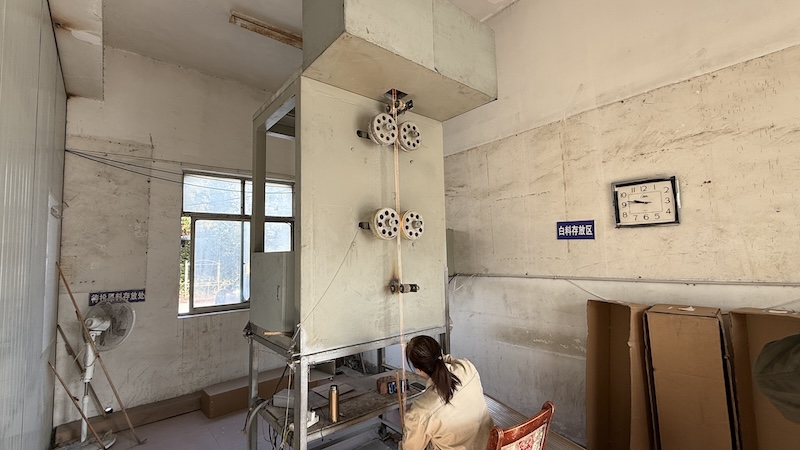
Operating from China's primary silica hub with complete vertical integration: from high-purity natural silica sand to automated annealing and polarization stress testing.
-
SGS Onsite-Assessed 14,271 m² Facility: Fully verified workshop capacity in Lianyungang, Jiangsu, integrating 12 automated and artisan fabrication lines under ISO 9001:2015 quality oversight.
-
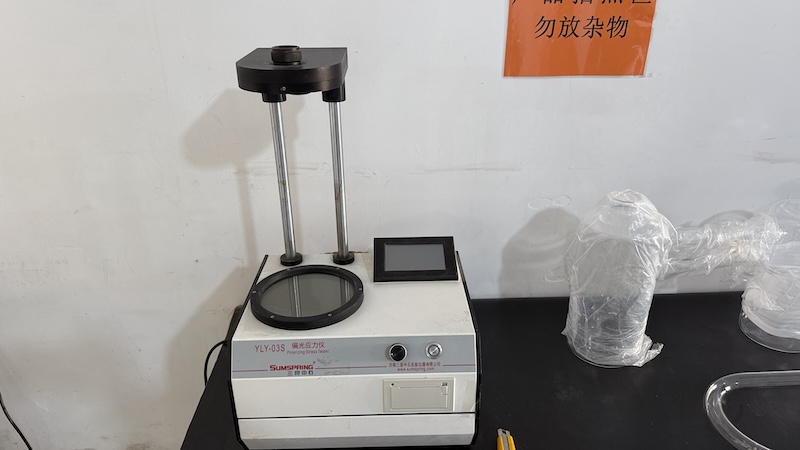
Polarization Stress Release Inspection: Residual micro-stress is the single largest contributor to quartz cracking during rapid heating. Every beaker undergoes optical birefringence stress verification prior to packaging.
-
Vertical Chemical Leaching: We crush, screen, and acid-pickle raw quartz crystal internally, guaranteeing an elemental SiO₂ concentration ≥99.99% and zero heavy metal matrix impurities.
-
Engineered Export Packaging: Individually wrapped in high-density EPE pearl foam, suspended inside double-walled corrugated cartons, and crated in fumigated ISPM-15 plywood boxes engineered for maritime and air turbulence.
Frequently Asked Questions for Albanian Importers
Clear, direct answers regarding customs clearance in Durrës, freight routing, material certifications, and order specifications.
How do we handle customs clearance and documentation at the Port of Durrës?
We provide complete export documentation tailored to Albanian customs (Drejtoria e Përgjithshme e Doganave) and EU standards. This includes Commercial Invoices, Packing Lists with HS Code 7017.10 (Laboratory Glassware of Fused Quartz), Certificate of Origin (CO), and RoHS/SGS chemical compliance documentation. Shipments are handled under CIF Durrës or CIP Tirana terms.
What is your transit breakage policy for fragile quartz glassware?
We maintain a Zero-Loss Breakage Guarantee. Thanks to our multi-layer suspended packaging (individual vacuum bag + custom-cut pearl cotton + reinforced outer wood crating), our international transit damage rate is strictly below 0.2%. In the rare event of transit damage, any documented broken unit is re-manufactured and dispatched immediately via express air freight at our expense.
Can you fabricate quartz beakers according to custom technical drawings or capacities?
Yes. Beyond standard Griffin (low-form) and Berzelius (tall-form) sizes (10ml, 50ml, 100ml, 250ml, 500ml, 1000ml, 2000ml, 5000ml), we routinely manufacture custom diameters, heavy wall thicknesses (up to 5mm for mechanical durability), custom pouring spouts, laser-etched permanent volume calibrations, and ground joint adapters (e.g., standard taper joints 24/40, 29/32) based on PDF, DWG, or STEP files.
What is the minimum order quantity (MOQ) and lead time for shipments to Albania?
To support academic research institutions and pilot laboratories in Tirana, our MOQ is as flexible as 1 to 5 pieces for standard catalog sizes. For custom CNC machined or non-standard welded apparatus, prototype batches start at 5 pieces. Typical production lead time is 7 to 12 working days, with air freight via DHL/FedEx to Tirana taking 5 to 7 days, or sea freight to Durrës requiring approximately 28 to 35 days.
Equip Your Laboratory with China's Premier Fused Quartz Glassware
Connect directly with our senior quartz engineering team in Lianyungang. Send us your dimensional drawings, target capacity requirements, or operational thermal parameters for an immediate technical assessment and transparent factory-direct quotation.
Get a Quote