Engineered Quartz Products Portfolio
High-purity fused silica (99.99% SiO₂) tubes, vessels, boats, and apparatus designed for continuous thermal stress up to 1100°C and short-peak thermal surges of 1300°C–1400°C.
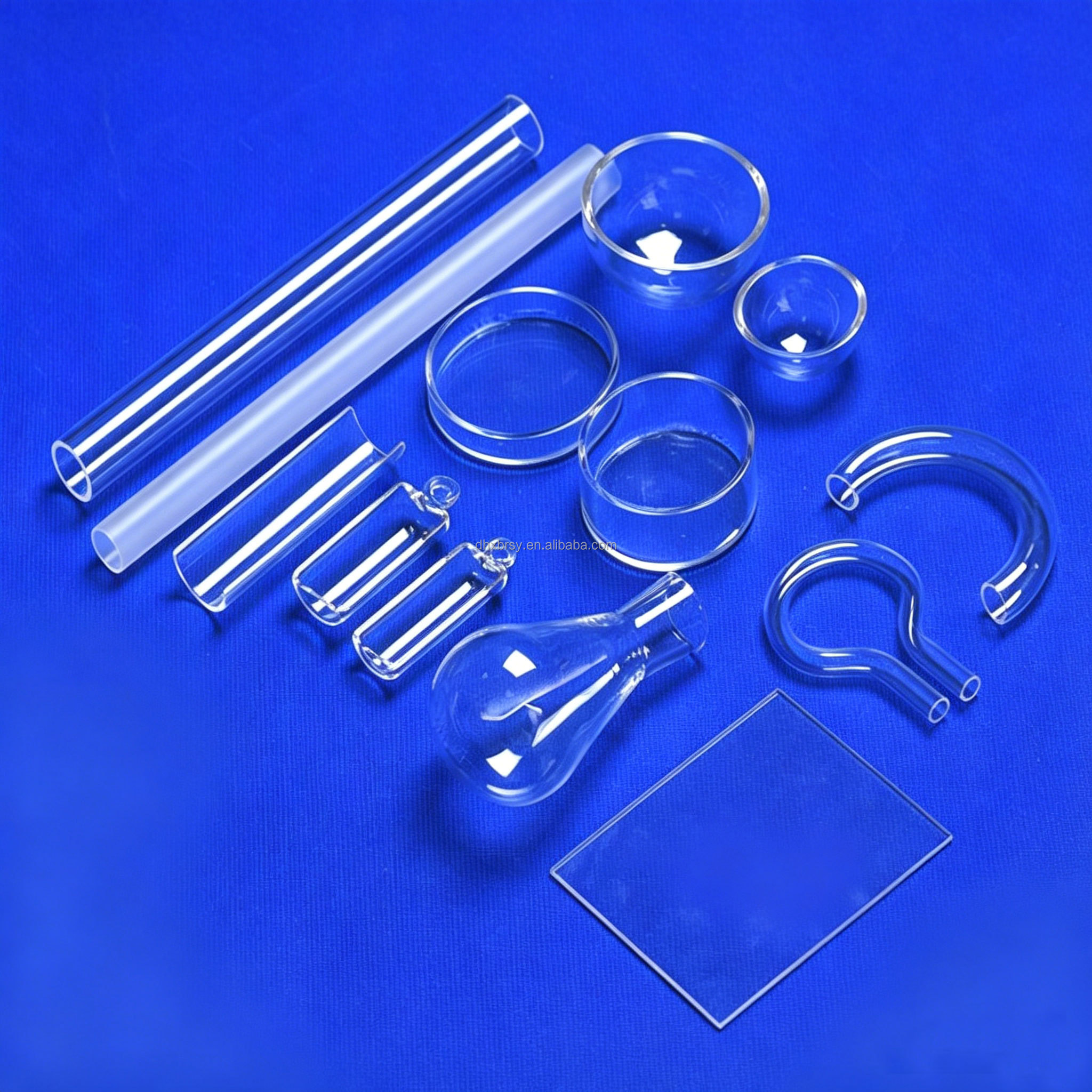
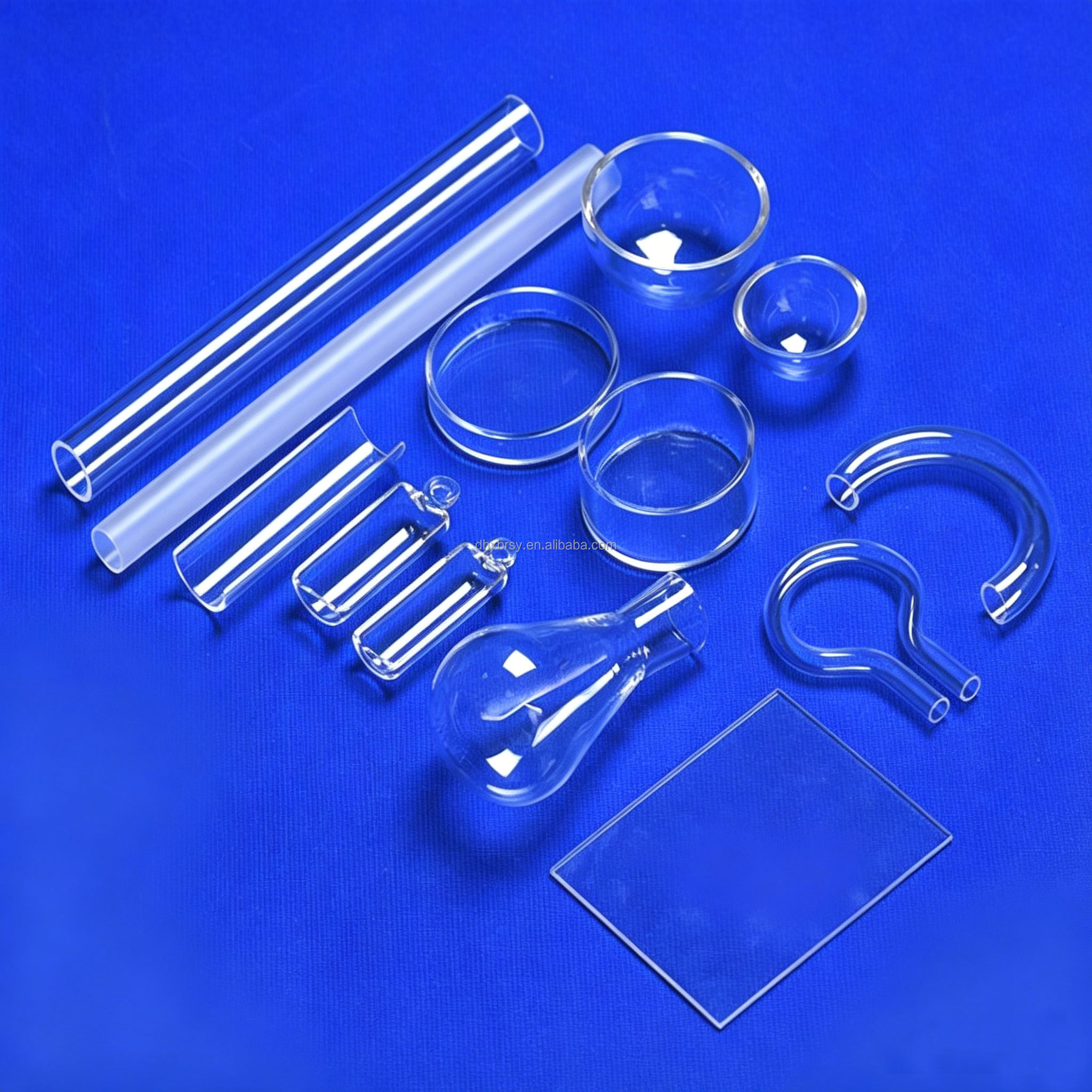
Custom Lab Quartz Glass Apparatus High Purity 99.99% Silica Content ROHS Certified Semiconductor Manufacturing OEM ODM
Ultra-low bubble coefficient labware fabricated from vacuum-melted silica. Resists harsh acid digestion (HF excluded) and severe thermal cycling across smelting assay laboratories.
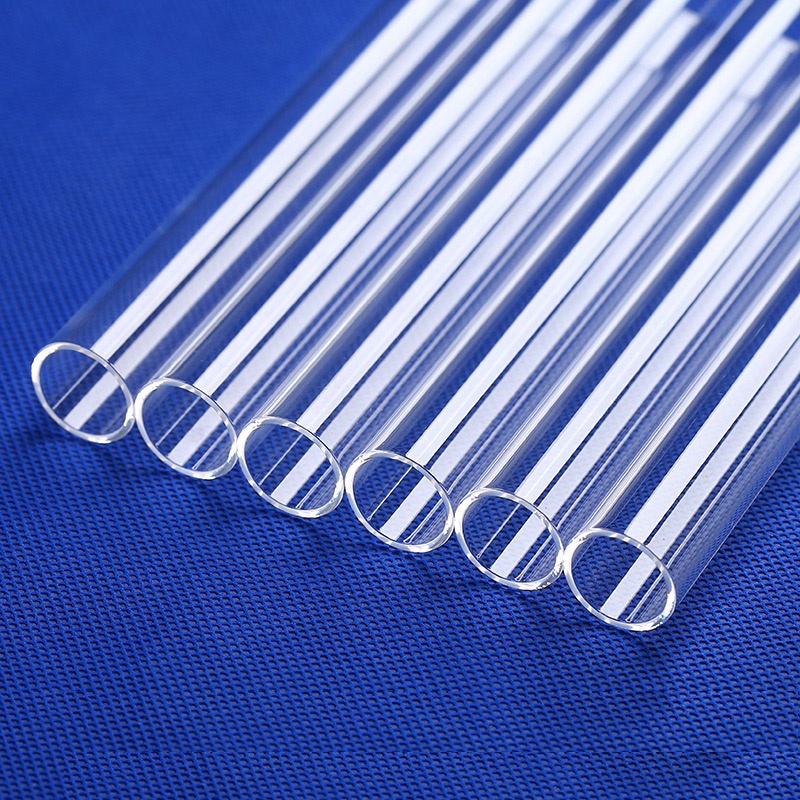
High Precision Clear Quartz Glass Tubing OD 10mm/14mm/20mm Heat Resistant Semiconductor Cleaning Pipeline Welding Bending
Micro-tolerance continuous drawn fused silica tubing. Excellent near-zero coefficient of thermal expansion (5.5 × 10⁻⁷ /°C) designed for molten gas extraction, pyrometry, and heating furnace liners.
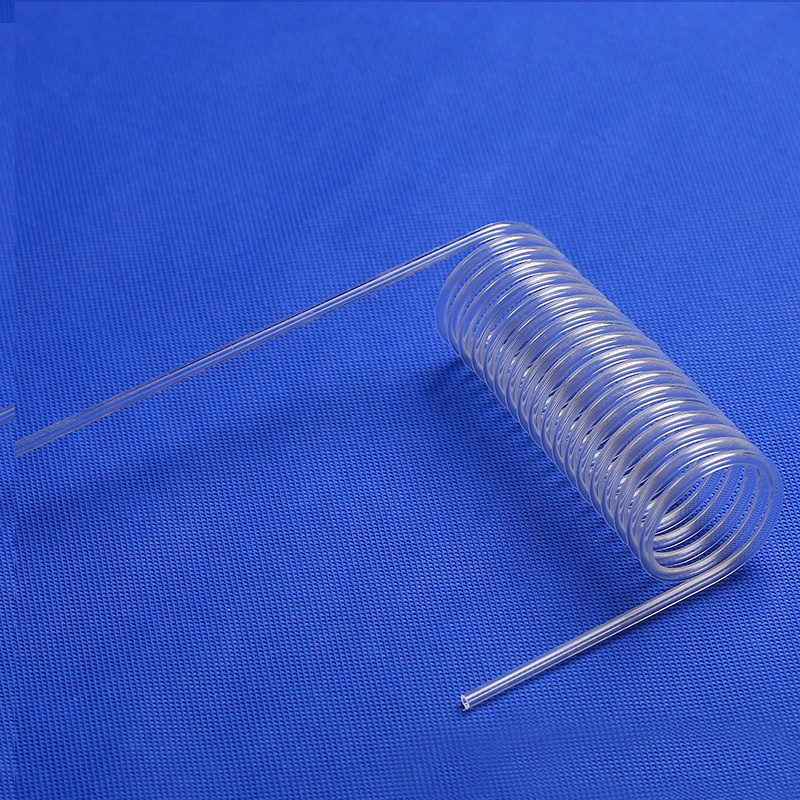
Yellow Clear High Purity Fused Quartz Spiral Tube for Laser Beauty Equipment Bending/Welding/Cutting Services ROHS Certified
Titanium/cerium-doped fused quartz tube designed to filter ultraviolet bands and avoid unwanted photolysis while maintaining high mechanical strength under plasma discharge stress.
BAO RAN 99.99% SiO2 Content Transparent Fused Quartz Sheet Optical Laser Machinery Insulated Precision Instrument ROHS 200 Mesh
Double-side optical pitch-polished quartz plate transmitting from 185 nm to 2500 nm. Tailored for blast furnace sight windows, UV photolithography chambers, and high-temp vacuum inspection ports.
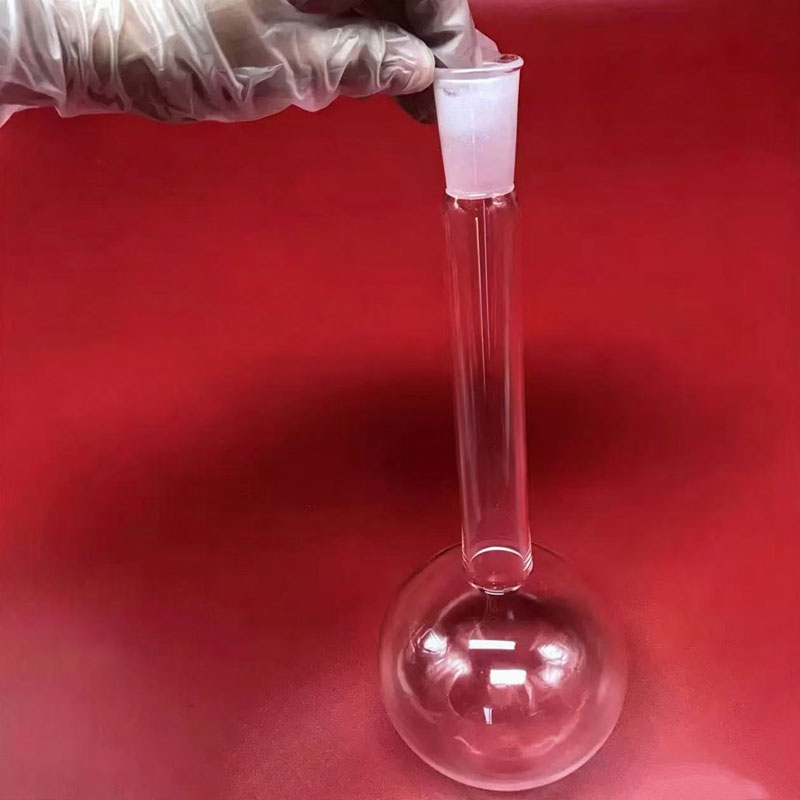
99.99% High-purity SiO2 High-temperature Resistant 1200-degree Corrosion-resistant ROHS Certified Quartz Glass Long-neck Flask
Hand-blown and machine-annealed heavy-wall quartz flask designed for acid distillation, volatile precious metal refining, and boiling aggressive reagents without alkali leaching.
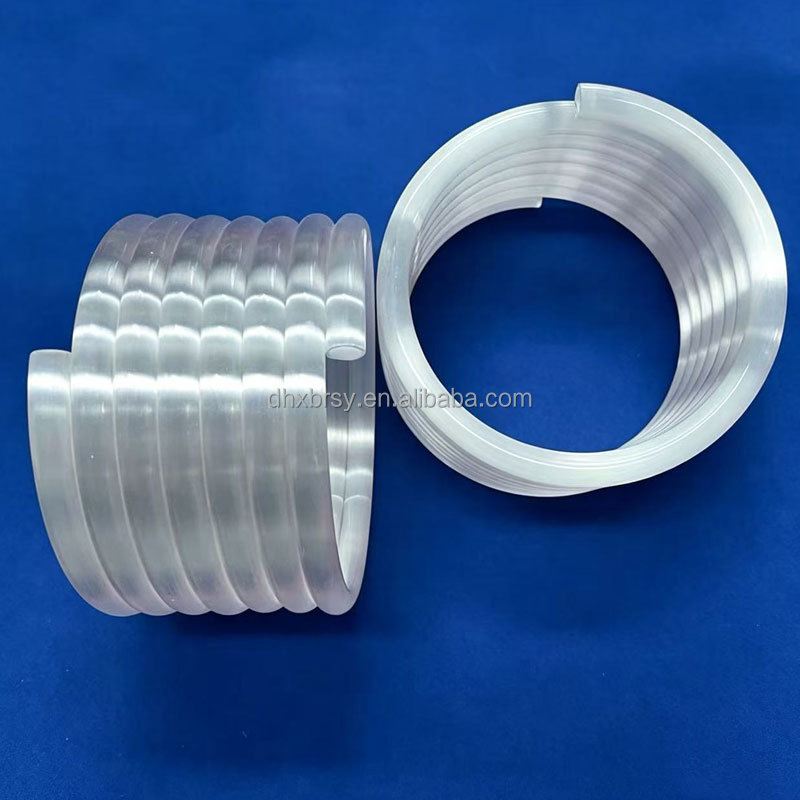
Custom Milky White Opaque Fused Silica Quartz Spiral Tube Helix Coil for Industrial Infrared Heating Furnace
Micro-porous opaque fused quartz maximizing infrared diffuse reflection and thermal barrier efficiency. Heavily implemented in induction pre-heating and foundry ladle warming stations.
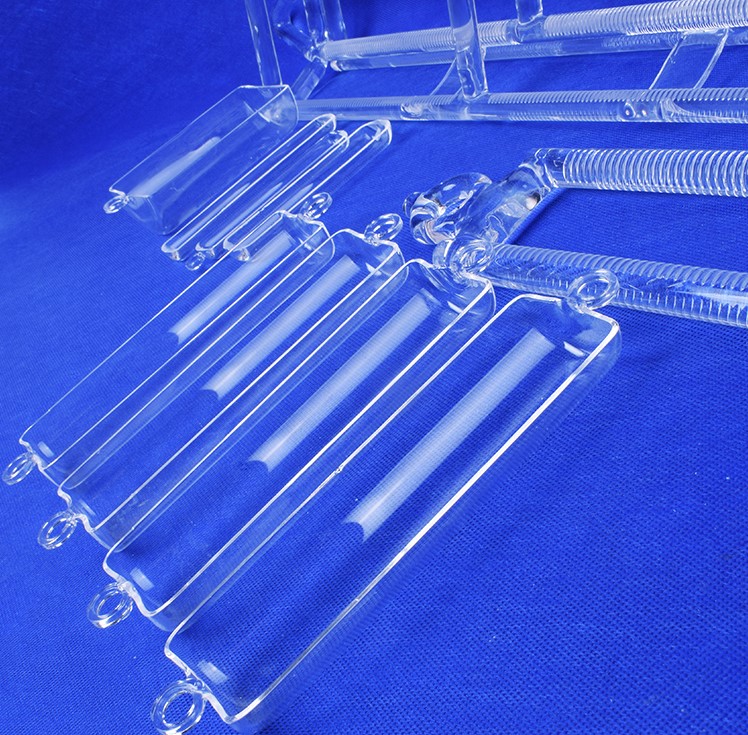
Fused Quartz Boats (SiO2 99.99%) for Chemical Industry & Photovoltaics Customizable Sizes
Ultra-pure slotted quartz carriers designed for solar cell wafer diffusion, powder calcination, and high-purity alloy thermal evaporation. Available in multi-slot precision pitch layouts.
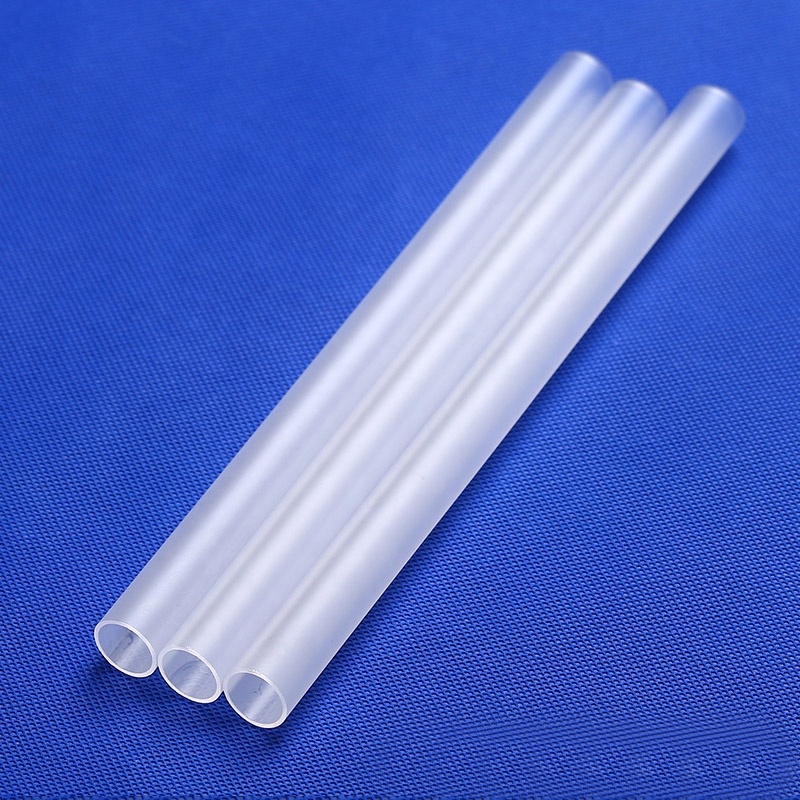
High Purity Translucent Polished Quartz Glass Tube Welding Bending Cutting High Ozone Ozone Generator Lab Infrared Heating UV
Precision flame-polished translucent quartz body supporting extreme dielectric breakdown voltages. Widely utilized in corona discharge ozone synthesis and wastewater treatment systems.
High-Purity Fused Quartz Crucibles in the Mostar Industrial Corridor: A Materials Engineering White Paper
Mostar and the wider Herzegovina-Neretva basin represent the historic center of non-ferrous metallurgy, high-voltage electro-thermal smelting, and precision casting within Bosnia and Herzegovina. The regional presence of major industrial titans—epitomized by the primary and secondary aluminum smelting infrastructure around Aluminij Mostar and adjacent downstream casting operations—has cemented the Neretva valley as a strategic Balkan metallurgical hub. However, modern metallurgical standards demand more than just raw thermal resistance; they require uncompromising chemical inertness, near-zero thermal expansion, and structural immunity against molten metal adhesion and slag attack.
Fused quartz crucibles, vessels, and refractory tubes manufactured from 99.99% high-purity silicon dioxide (SiO₂) serve as the baseline containment medium for mission-critical metallurgical and scientific tasks across Mostar. In applications involving aluminum-lithium alloys, master alloy doping, precious metal (gold and silver) fire assaying, and crystal growth for emerging photovoltaic silicon ventures, standard graphite or ceramic alumina crucibles frequently introduce harmful contamination. Molten reactive alloys aggressively reduce alumina or pull carbon from graphite, creating crystalline defects and interstitial inclusions that severely compromise ingot tensile strength and conductivity.
By switching to high-purity fused silica (both transparent amorphous vitreous silica and slip-cast opaque fused silica), Mostar's metallurgists and process engineers eliminate exogenous contamination. Operating with a melting point above 1710°C, a softening point around 1730°C, and an exceptionally low linear coefficient of thermal expansion (5.5 × 10⁻⁷ /°C between 20°C and 300°C), our crucibles and thermal hardware allow rapid induction ramping without premature thermal shock fracture, guaranteeing unyielding process control and superior ingot yields.
| Property Parameter | High-Purity Fused Quartz (Lovri) | Alumina Ceramic (Al₂O₃ 99.5%) | Fine Grain Graphite | Silicon Carbide (SiC) |
|---|---|---|---|---|
| SiO₂ / Base Chemical Purity | ≥ 99.99% SiO₂ | 99.5% Al₂O₃ | 99.8% C | SiC + Nitride Bond |
| Coefficient of Thermal Expansion (CTE) | 5.5 × 10⁻⁷ /°C (Virtually Zero) | 8.0 × 10⁻⁶ /°C | 4.5 × 10⁻⁶ /°C | 4.0 × 10⁻⁶ /°C |
| Continuous Maximum Operating Temp | 1100°C – 1150°C | 1600°C | 1800°C (Inert Atm only) | 1350°C (Oxidizing) |
| Short-Term Peak Thermal Surge | 1300°C – 1400°C | 1700°C | 2500°C (Inert Atm only) | 1600°C |
| Thermal Shock Resistance | Supreme (1100°C into ice water) | Poor to Moderate | High (Risk of Rapid Oxidation) | Moderate |
| Melt Contamination Risk (Non-Ferrous) | Negligible (< 5 ppm Fe/Al/Ti) | High Al/Si slag reaction | Carbon dissolution in melts | Silicon/Carbon picking |
| Electrical Insulation / Induction Coupling | Dielectric (Transparent to RF/Induction) | Dielectric | Highly Conductive (Shields melt) | Semiconductive / Susceptor |
Industrial Application Scenarios Across Herzegovina
Tailoring OEM/ODM quartz crucible and furnace geometries to the operational realities of Mostar’s primary metallurgy, specialized tooling, and advanced materials engineering sectors.
1. High-Grade Aluminum Degassing & Master Alloy Smelting
In Mostar's aluminum casting hubs, formulating master alloys (such as Al-Ti-B grain refiners, Al-Zr, and Al-Sc alloys) requires high-temperature crucible containment that resists violent wetting. Fused quartz crucibles and pyrometer protection sheaths deliver an inert barrier that stops molten aluminum reduction, preventing melt pick-up of iron, titanium, and alkali contaminants during induction and vacuum arc remelting.
2. Precious Metal Fire Assaying & Metallurgical Cupellation
Herzegovina's commercial testing laboratories, regional university research institutes (University of Mostar / Džemal Bijedić University metallurgical engineering faculties), and private assay services use Lovri’s 99.99% SiO₂ crucibles for lead-fusion cupellation and precious metals digestion. The absence of trace base metals prevents analytical baseline drift in ICP-OES and XRF spectrometry.
3. Photovoltaic Crystal Growth & Solar Silicon Sintering
With Herzegovina leading the Western Balkans in solar irradiance and rapidly expanding commercial solar installations, R&D efforts are accelerating toward regional solar component assembly and silicon purification. Our fused silica crucibles and quartz boats provide the structural foundation for polysilicon directional solidification and solar ingot Czochralski (CZ) pulling.
4. Industrial Vacuum Furnaces & Heat-Treating Tubes
Aerospace sub-tier machining shops and automotive die-casting toolmakers across Mostar utilize high-temperature quartz furnace liner tubes and viewports to monitor atmospheric annealing. Transparent JGS2 and JGS1 grade quartz allow flawless optical pyrometry reading while sustaining intense vacuum conditions up to 10⁻⁵ mbar without structural outgassing.
5. Chemical Digestion & Environmental Water Monitoring
Monitoring the pristine aquatic ecosystem of the Neretva River basin requires ppb-level heavy metal quantification. Mostar environmental monitoring stations utilize our custom quartz digestors, long-neck boiling flasks, and flow-through quartz cuvettes to process trace effluents without reagent background interference or borosilicate silicate leach.
6. Dielectric Barrier Discharge & Industrial Ozone Generation
Water treatment stations and food-processing beverage plants in southern Bosnia depend on dielectric fused quartz tubes for corona discharge ozone synthesis. Lovri’s precision wall-thickness tolerances (±0.05 mm) ensure uniform electrical breakdown field strength, maximizing ozone generation efficiency while eliminating dielectric puncture failures.
Emerging Technological & Procurement Trends in Mostar
The industrial landscape in Bosnia and Herzegovina is experiencing a major transformation driven by European decarbonization mandates, the EU Carbon Border Adjustment Mechanism (CBAM), and nearshoring supply chain initiatives across the Western Balkans. Mostar’s heavy industries are shifting from legacy, energy-intensive open casting toward high-efficiency vacuum induction melting (VIM), precision additive manufacturing powder production, and automated continuous casting lines. This transition directly impacts consumable refractory procurement:
1. Demand for Low-Inclusion Master Alloys: Export-oriented automotive and aeronautical casting suppliers in the Neretva region can no longer tolerate high refractory inclusion rates. Traditional fireclay and standard alumina crucibles are rapidly being phased out in favor of high-purity fused silica (SiO₂ > 99.99%). This shift reduces non-metallic dross inclusions in finished castings, helping Mostar suppliers meet stringent German, Austrian, and Italian OEM audit standards.
2. Rapid Growth of Solar Infrastructure: The wider Herzegovina region boasts over 2,300 hours of annual sunshine, attracting hundreds of millions of Euros in utility-scale solar PV investments. As domestic regional assembly and testing facilities for PV cells emerge, the demand for semiconductor-grade quartz wafer boats, LPCVD diffusion tubes, and high-purity sintering crucibles continues to climb steadily.
3. Transition to Nearshore OEM/ODM Supply Chains: Mostar’s supply chain directors are increasingly diversifying their sourcing to bypass expensive European trading middlemen. Direct partnerships with certified source manufacturers like Lovri Quartz—combining in-house raw silica acid pickling with direct multi-modal freight via the Port of Ploče (Croatia)—provide Mostar plants with 30% to 45% cost savings and guaranteed dimensional repeatability.
SGS Onsite Audited
Certified 14,271 m² production facility with verified mechanical tolerances, dimensional scanning, and ISO9001 quality management compliance.
Polarization Stress Relief
100% of quartz crucible blanks undergo optical polariscope stress inspection after annealing to eliminate catastrophic cleavage failures during heating cycles.
Direct CAD/STEP Prototyping
CNC diamond ultrasonic core drilling, multi-axis profile milling, and customized flange fusing directly from customer drawings (DWG, STEP, PDF).
Optimized Balkan Shipping
Secure export-grade crating with shock-watch monitors, delivered through the Port of Ploče or direct bonded air freight to Sarajevo/Mostar International Airport.
Why Mostar Industrialists Source from Lovri Quartz
Unlike regional brokers, Lovri Quartz controls the complete manufacturing chain—from mining raw quartz lump, pulverizing, and acid washing to CNC laser finishing and vacuum flame polishing.
Frequently Asked Questions for Mostar Buyers
Everything procurement managers, foundry engineers, and lab technicians in Mostar and Bosnia and Herzegovina need to know about fused quartz crucibles.
What is the practical temperature limit for fused quartz crucibles in Mostar foundries?
Transparent high-purity fused quartz operates continuously at temperatures up to 1100°C–1150°C. For short-term metallurgical cycles (such as rapid induction smelting of gold, silver, or specific copper-nickel master alloys), it safely withstands peaks up to 1300°C–1400°C. Its annealing point is approximately 1215°C and softening point reaches 1730°C. Above 1150°C, continuous exposure in oxidizing atmospheres may initiate slow surface devitrification into cristobalite, which is mitigated through vacuum operations or rapid thermal cycling.
How does fused quartz avoid thermal shock compared to alumina or ceramic crucibles?
Fused quartz possesses an exceptionally low coefficient of thermal expansion (5.5 × 10⁻⁷ /°C), which is nearly fifteen times lower than dense alumina (8.0 × 10⁻⁶ /°C). This allows red-hot quartz crucibles at 1100°C to be quenched directly into ambient water without catastrophic cracking. For Mostar casting facilities using intermittent batch induction cycles, quartz crucibles eliminate the lengthy pre-heating ramps required by ceramic crucibles.
What is the difference between transparent fused quartz and opaque fused silica crucibles?
Transparent fused quartz is made by melting high-purity natural silica sand in an electric vacuum or oxyhydrogen flame, yielding a fully dense, transparent glass with 99.99% SiO₂ and zero open porosity—ideal for optical windows, spectroscopy, and high-purity chemical reactions. Opaque fused silica is slip-cast and sintered from microporous fused silica grains, creating a dense milky structure with micro-air bubbles. Opaque crucibles provide enhanced thermal insulation and superior thermal shock resistance in larger foundry melting pots.
Can you customize crucibles, boats, and apparatus to our technical drawings?
Yes. We provide complete OEM/ODM manufacturing based on your CAD files (DWG, DXF, STEP, PDF). Our capabilities include multi-axis CNC milling, precision ultrasonic slotting, customized crucible wall thicknesses (from 1.0 mm up to 15.0 mm), pouring spouts, flange collars, and welded bottom support rings. Prototype orders can be manufactured with a minimum order quantity of just 1 piece.
What customs, transit times, and logistics apply for deliveries to Mostar?
We provide full export documentation for Bosnia and Herzegovina customs clearance, including Commercial Invoices, Packing Lists with HS Code classifications (typically 7017.10 for fused quartz laboratory and industrial glassware), Certificates of Origin, and SGS material test certificates. Shipments reach Mostar either via sea freight container directly to the Port of Ploče (Croatia, located just 65 km from Mostar) or via expedited DHL/FedEx air freight to Sarajevo/Mostar airports in 4–7 business days.
How do you protect fragile quartz crucibles against transit breakage?
All quartz crucibles and glass apparatus are packaged according to international optical glass export protocols. Each unit is wrapped in multi-layer PE electrostatic film, vacuum-cushioned inside high-density custom-cut EPE foam molds, and sealed inside reinforced double-wall corrugated cartons or fumigated wooden crates. Multi-axis shock-watch and tilt indicator labels are affixed to the exterior to ensure careful handling by freight forwarders.
Optimize Your Foundry & Laboratory Crucible Supply in Mostar
Whether you need custom-dimensioned fused silica crucibles, JGS1 sight windows, or precision furnace quartz tubes, Lovri Quartz delivers verified 99.99% SiO₂ performance with direct manufacturer pricing and comprehensive batch testing documentation.