CLEAN PIPELINE
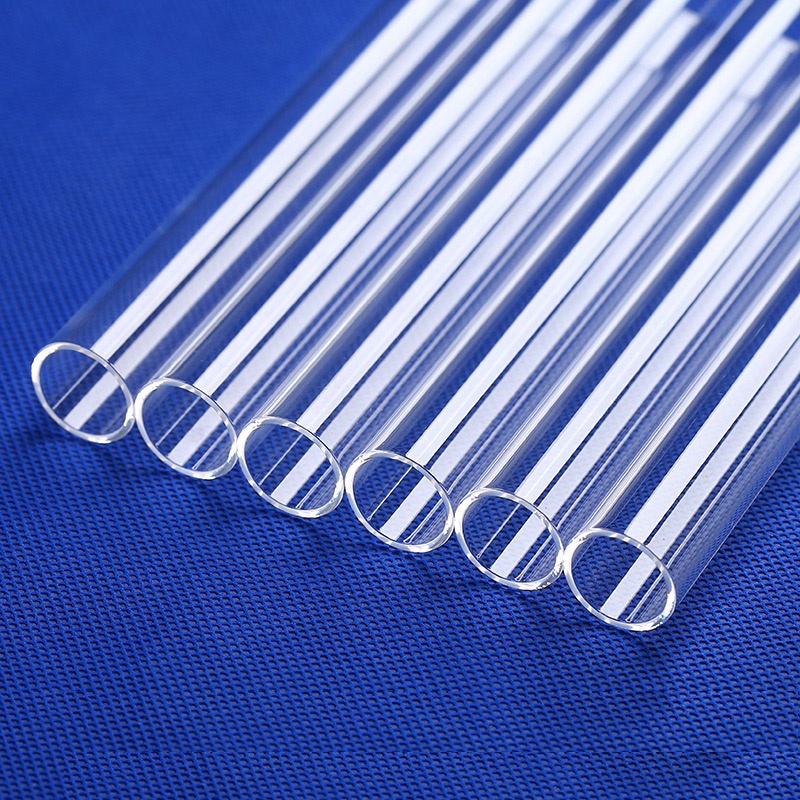
Clear Quartz Glass Tubing OD 10/14/20mm
Optimized for semiconductor cleaning pipelines, high-temperature fluid handling, and tight-radius glass bending operations.
Explore our SGS onsite-verified lineup of clear quartz tubing, multi-bore laser conduits, thin-film substrates, and custom sealed-bottom glass vessels fabricated directly from Lianyungang natural silica clusters.
Optimized for semiconductor cleaning pipelines, high-temperature fluid handling, and tight-radius glass bending operations.
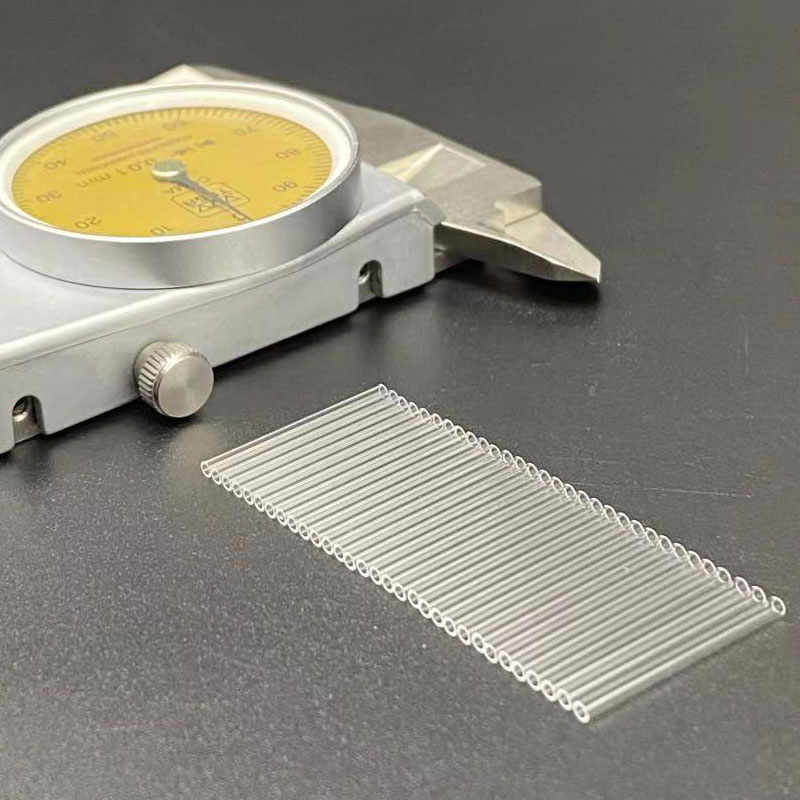
Ultra-thin, 200 Mesh ROHS-certified precision fused silica substrates designed for deep ultraviolet optics and high-energy laser windows.
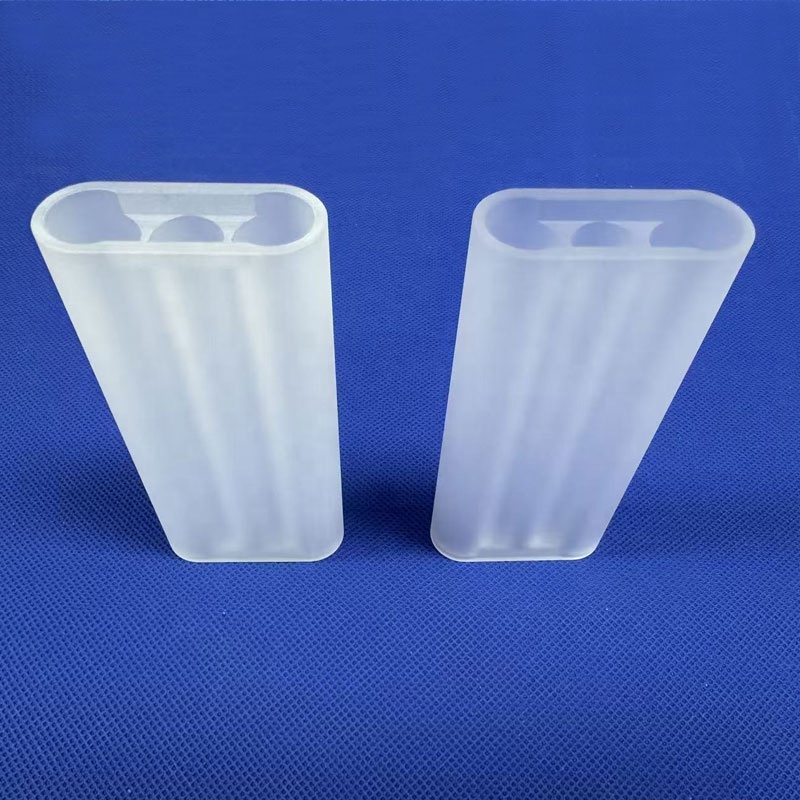
Custom-machined multi-bore flow tube calibrated for GentleYag and GentleMax medical hair removal systems requiring strict cooling fluid channels.
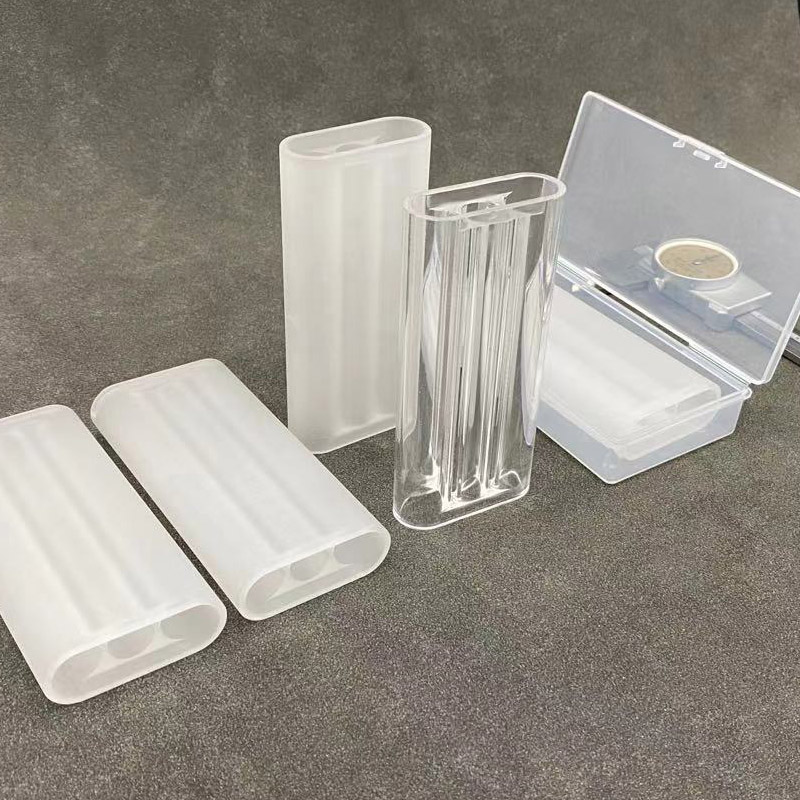
99.98% purity silica tubing manufactured with customizable chamber dimensions, supporting precision thermal welding and optical flame-bending.
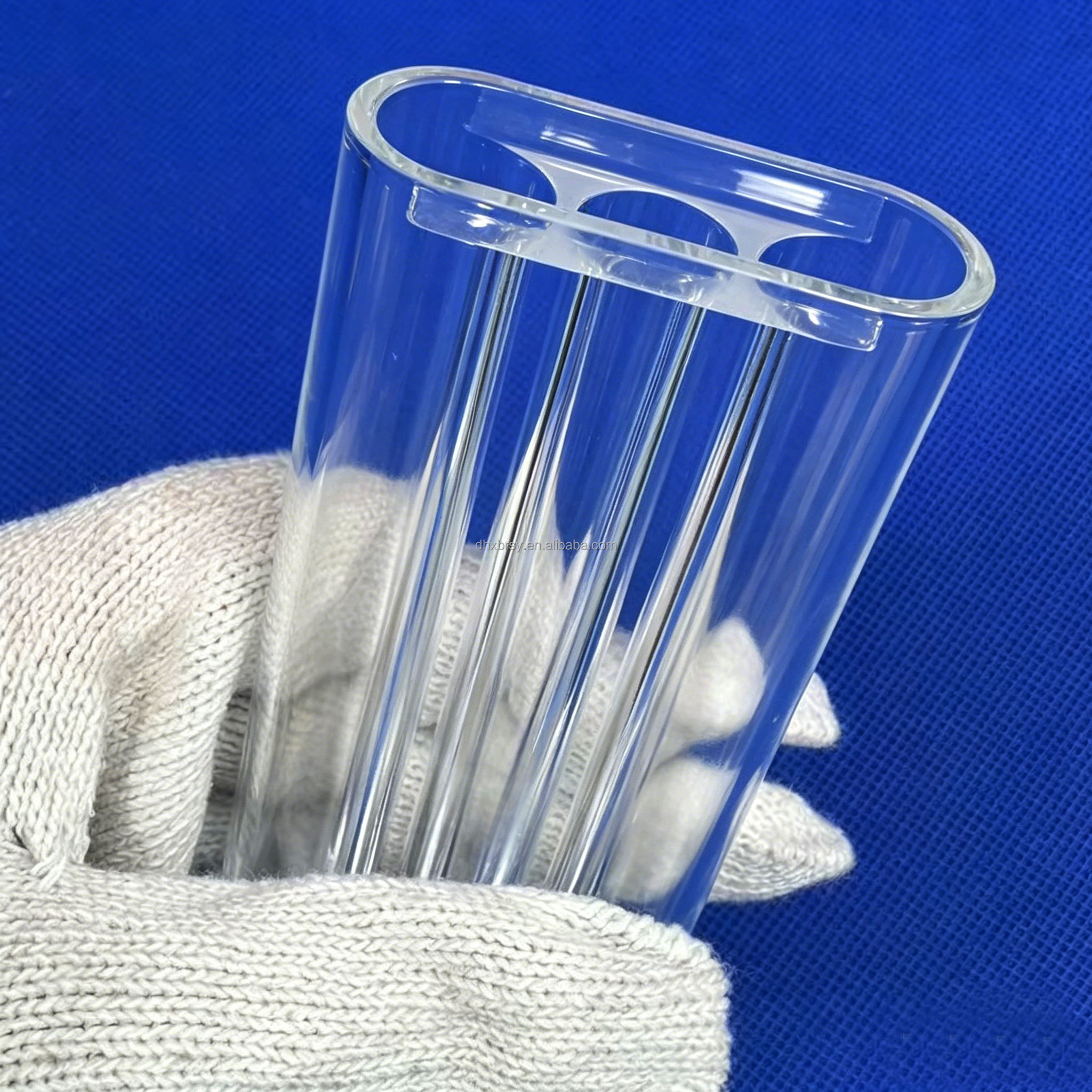
Heavy-wall quartz furnace chambers engineered for laboratory sintering, horizontal tube furnaces, and CVD semiconductor deposition chambers.
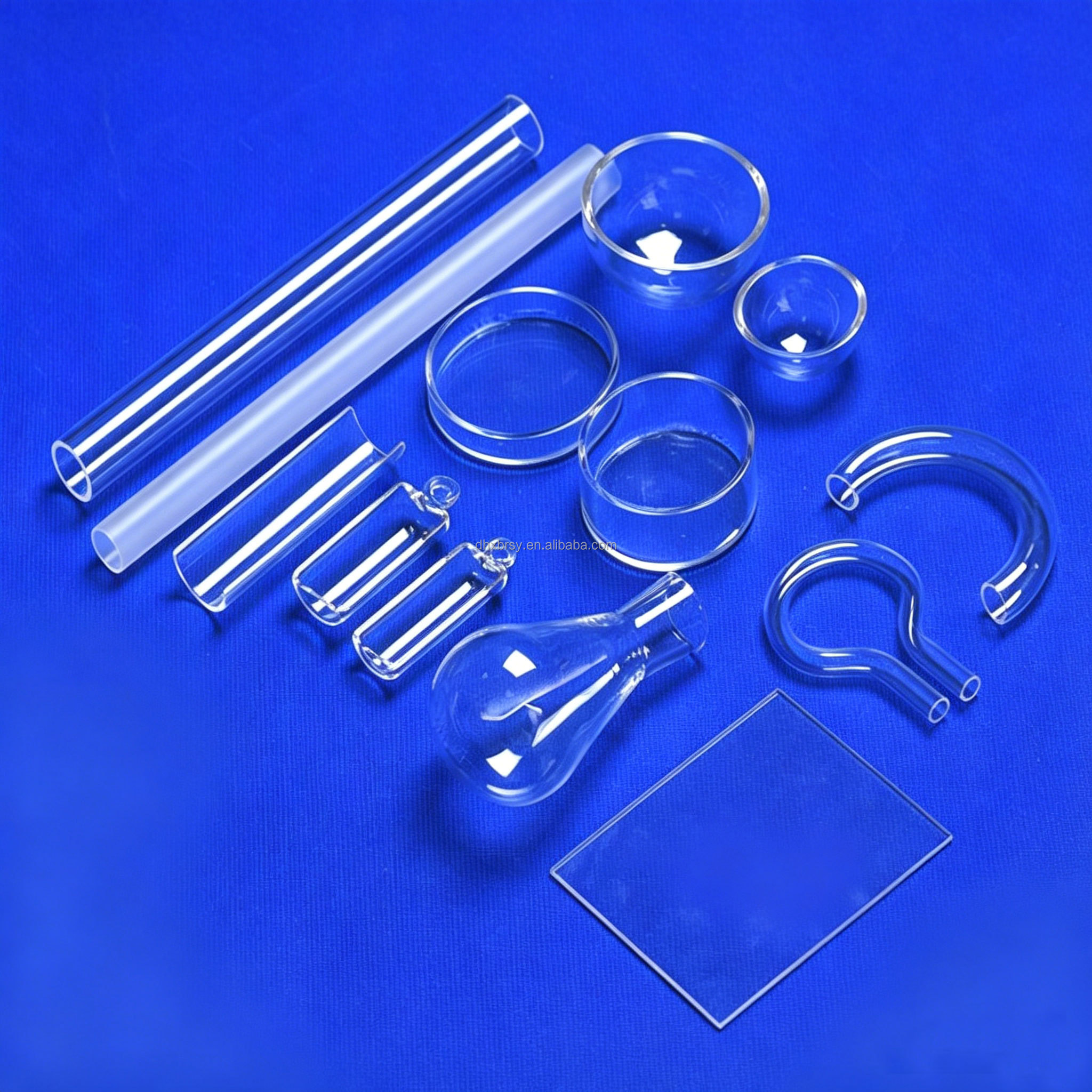
Special-geometry reaction vessels, custom flanges, and multi-neck flasks engineered for acid-leaching, high-vacuum systems, and wafer processing.
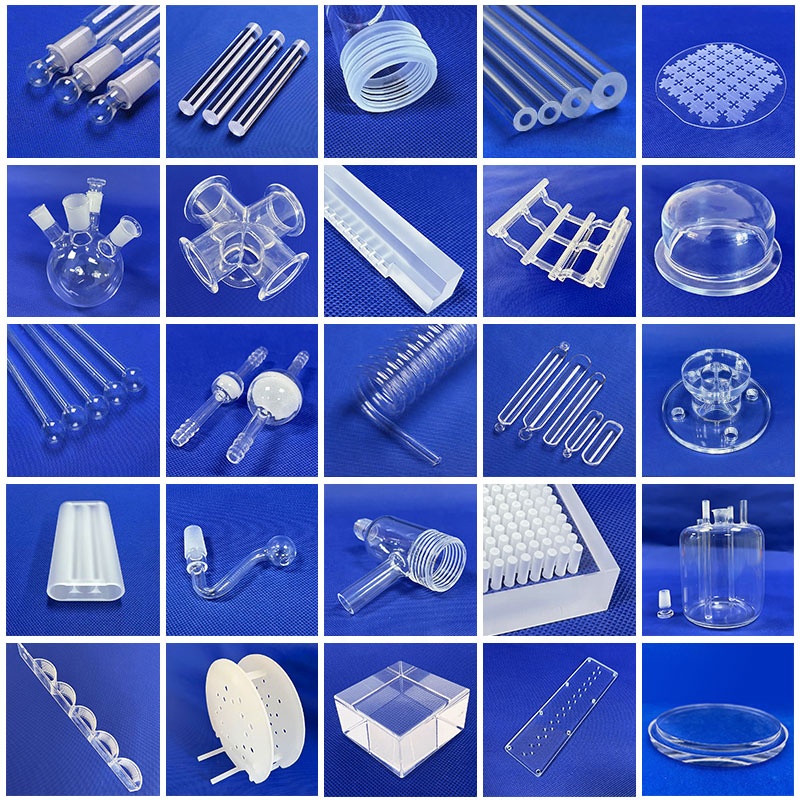
Flame-polished white rim fused quartz plates offering over 90% optical transparency across deep UV to near-infrared spectrum ranges.
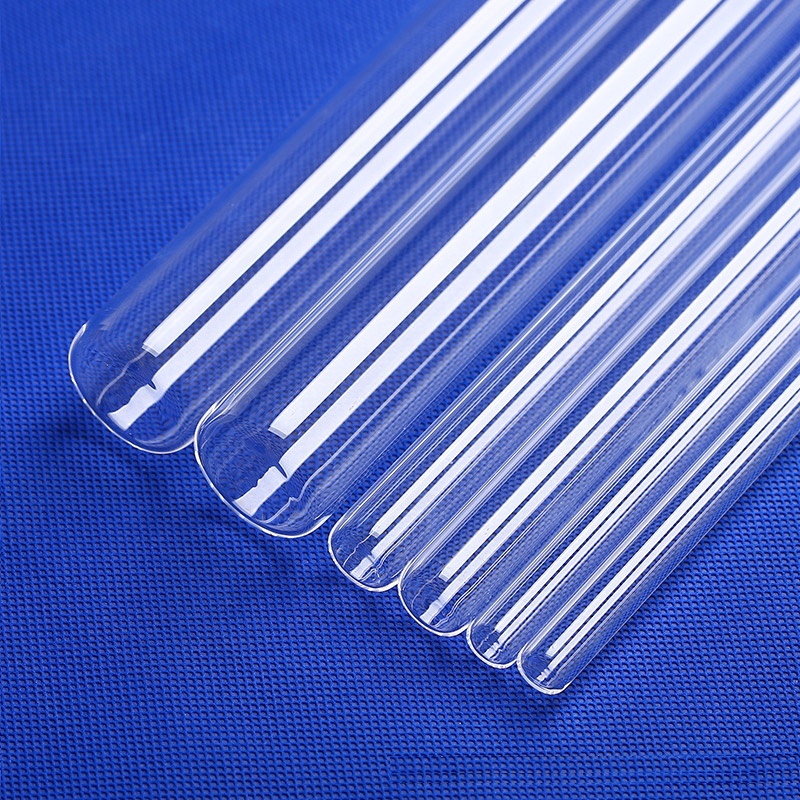
Precision round or flat sealed bottom geometry designed specifically for thermocouple sheaths, bender manipulation, and vacuum induction cells.
In high-temperature thermal forming, pyrometry protection, and semiconductor etch manifolds, the One End Closed Quartz Tube functions as a primary protective barrier and structural vessel. Fabricating a closed-end profile—whether spherical domed, hemispherical, or optically flat—requires absolute control over the temperature gradient. At temperatures above 1730 °C, fused silica transitions beyond its softening point, presenting distinct non-Newtonian flow characteristics. For glass benders and automated multi-axis bending apparatus, dimensional consistency across the outer diameter (OD) and wall thickness concentricity is essential to prevent micro-wrinkling or thinning during secondary heating.
A persistent mechanical risk during localized tube bending is thermal stress memory. If the source material retains localized residual stresses from extrusion or incomplete furnace annealing, exposure to secondary hydrogen-oxygen flames on a pipe bender can trigger structural deflection or spontaneous micro-cracking. Lovri Quartz resolves this issue by subjecting 100% of our drawn and sealed tubes to our proprietary 1215 °C multi-hour controlled ramp-down annealing schedule, completely extinguishing birefringence under cross-polarization inspection.
From primary silica beneficiation to five-axis CNC cold diamond machining, we operate an integrated supply chain that bypasses material brokers to deliver verifiable precision.
We process natural quartz stone in-house via jaw crushing, air-classifying pulverizers, and multi-stage acid leaching, ensuring guaranteed raw silica purity of 99.99% SiO₂ with total metallic trace elements below 15 ppm.
Every closed tube, bend blank, and multi-bore cavity undergoes extended furnace soaking at 1215 °C. Polariscopic stress inspection verifies uniform internal molecular order, eliminating work-piece failure during secondary flame manipulation.
Equipped with ultrasonic CNC milling machinery, four-axis laser profile cutters, and optical lapping tables capable of holding bore dimensional limits within ±0.02 mm and Ra surface finishes finer than 0.2 μm.
Our 14,271 m² production facility in Tuofeng Industrial Park holds complete third-party SGS onsite verification, CE compliance, and RoHS certifications with robust vacuum shock-absorbing export packaging.
Reference physical, optical, and thermal metrics for transparent fused quartz glass tubes formulated for high-stress mechanical bending and atmospheric isolation.
| Physical / Chemical Metric | Certified Standard Range | Practical Engineering Significance for Benders & Fabricators |
|---|---|---|
| Silica Purity (SiO₂) | ≥ 99.99% (Trace Fe ≤ 0.8 ppm, Al ≤ 12 ppm) | Prevents high-temperature devitrification into cristobalite during oxy-hydrogen flame heating. |
| Softening Point | ≈ 1730 °C | Provides the plastic working temperature window necessary for tight-radius pipe bending apparatus. |
| Continuous Service Temperature | 1100 °C | Maintains mechanical stability inside semiconductor diffusion chambers and vacuum furnace zones. |
| Short-Term Max Exposure | 1300 °C to 1400 °C | Allows thermal spike tolerance without tube sag or atmospheric gas infiltration. |
| Coefficient of Thermal Expansion (CTE) | 5.5 × 10⁻⁷ /°C (20 °C – 320 °C) | Near-zero thermal shock expansion; handles rapid immersion from 1100 °C directly into room-temperature water. |
| Bottom Wall Thickness Tolerance | Configurable 1.0mm – 6.0mm (±0.05mm) | Consistent heat transfer rates across thermocouple tips and sensor wells. |
Serving specialized manufacturing ecosystems across North America, Europe, East Asia, and emerging domestic technological hubs.
Installed as critical triple-bore cooling conduits and flashlamp flow sleeves in 755nm Alexandrite and 1064nm Nd:YAG laser systems manufactured across North America and Germany.
Utilized extensively in Taiwan, South Korea, and Silicon Valley semiconductor cleanrooms as sealed diffusion thermocouple sheaths, CVD process tubes, and ozone injection injectors.
Deployed throughout regional clean-energy hubs in solar cell metallization and contact firing furnaces where rapid thermal cycling and extreme transparency preserve clean radiant heat.
Supplied directly to scientific glassblowing studios and automated tube bending plants in Western Europe, requiring uniform-wall quartz tube stock that yields consistent radii under automated torch lines.
How the fused quartz landscape is shifting toward tighter trace-element thresholds and geometric consistency for automated equipment.
Across industrialized markets, the demand for precision quartz glass is accelerating, driven by two key manufacturing factors: the global expansion of sub-7nm chip fabrication lines and the broad deployment of high-power industrial laser cutting systems. Historically, purchasing managers ordered general commercial-grade fused quartz for protective thermowells. However, contemporary furnace operations demonstrate that minor hydroxyl (OH-) variations and alkali metal contamination directly accelerate cristobalite crystallization at temperatures above 1000 °C.
Concurrently, automated CNC glass bending systems are replacing conventional manual torch blowing in North America and Western Europe. Automated benders require zero wall-thickness eccentricity: if a quartz tube displays a variation exceeding ±0.08 mm between opposing walls, the thinner section softens prematurely under fixed heat inputs, resulting in ovality defects and structural deformation. Sourcing directly from an SGS onsite-inspected manufacturer with integrated draw towers and continuous polariscope inspections has become the baseline standard for tier-1 supply-chain validation.
Direct technical and logistical clarity for global sourcing managers and glass processing engineers.
Consult with our quartz engineering specialists in Lianyungang. Provide your technical drawings, operating temperatures, and dimensional tolerances for a prompt quotation.
Send an Inquiry