99.99% SiO₂
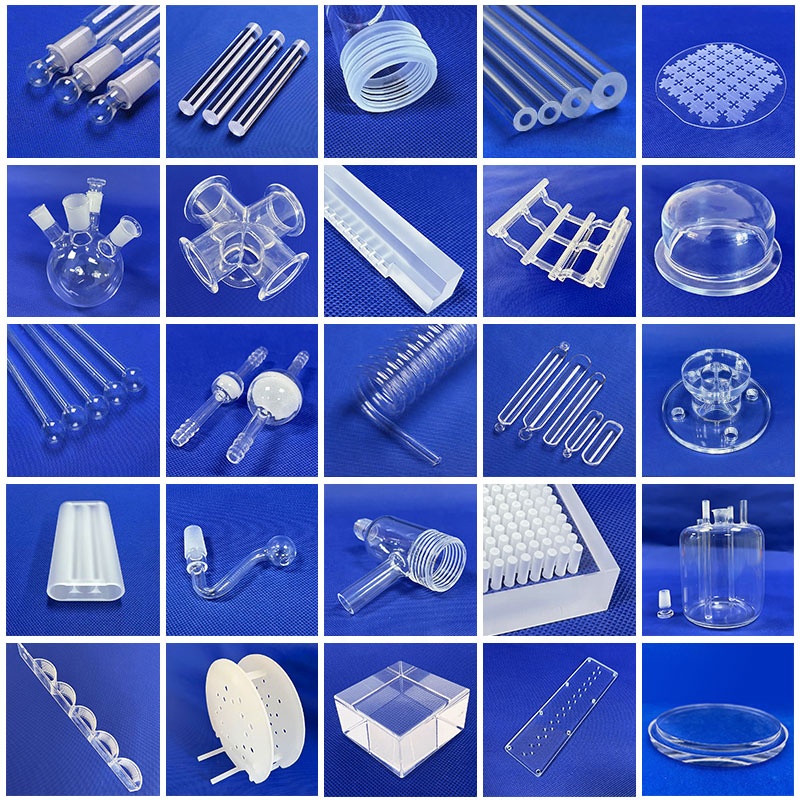
Engineered for continuous operation at 1,100 °C, exceptional chemical inertness against harsh acid digestions, and trace-element precision for Cambodia's rapidly developing industrial laboratory ecosystem.
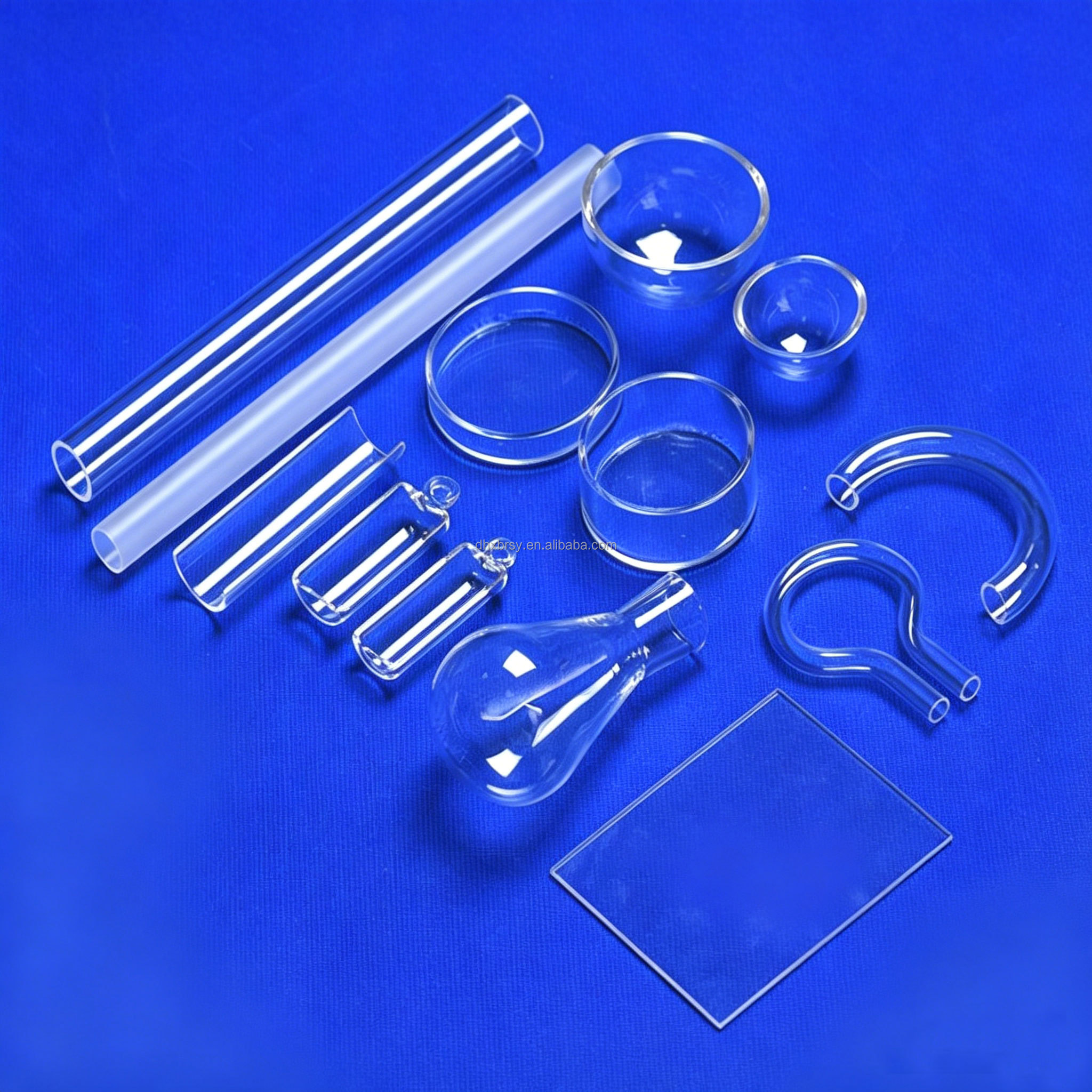
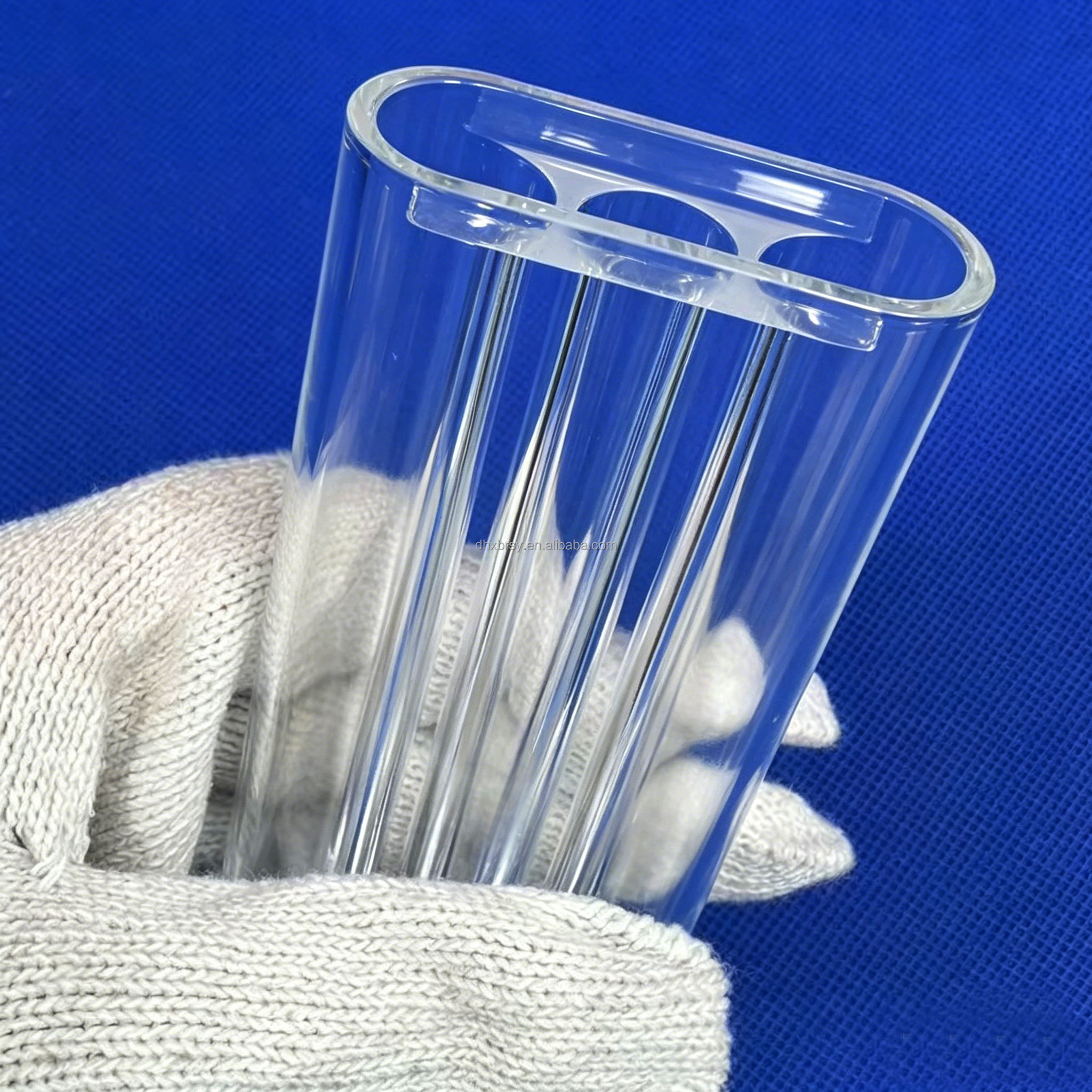
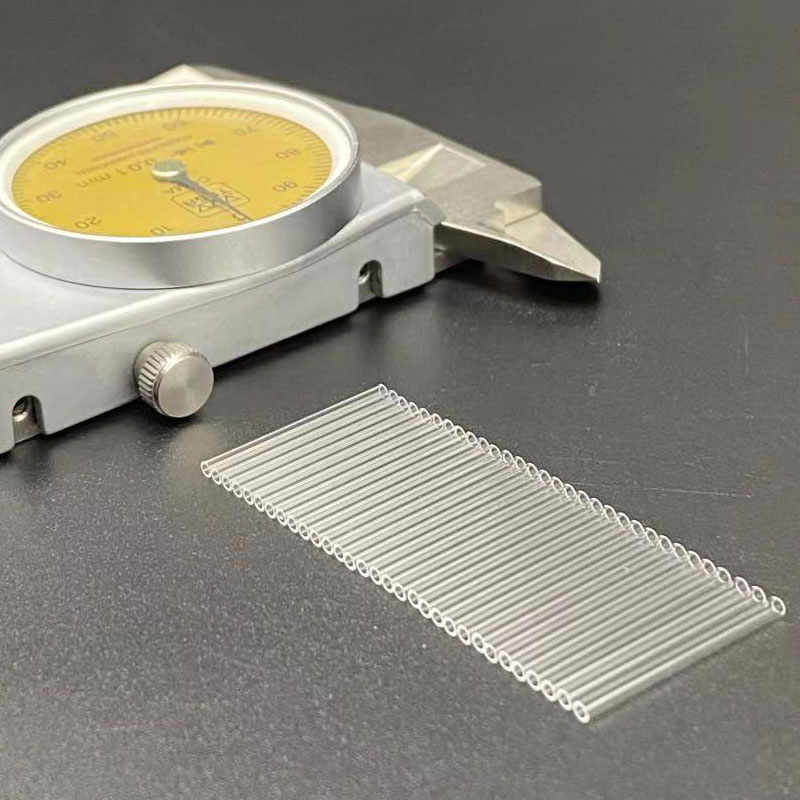
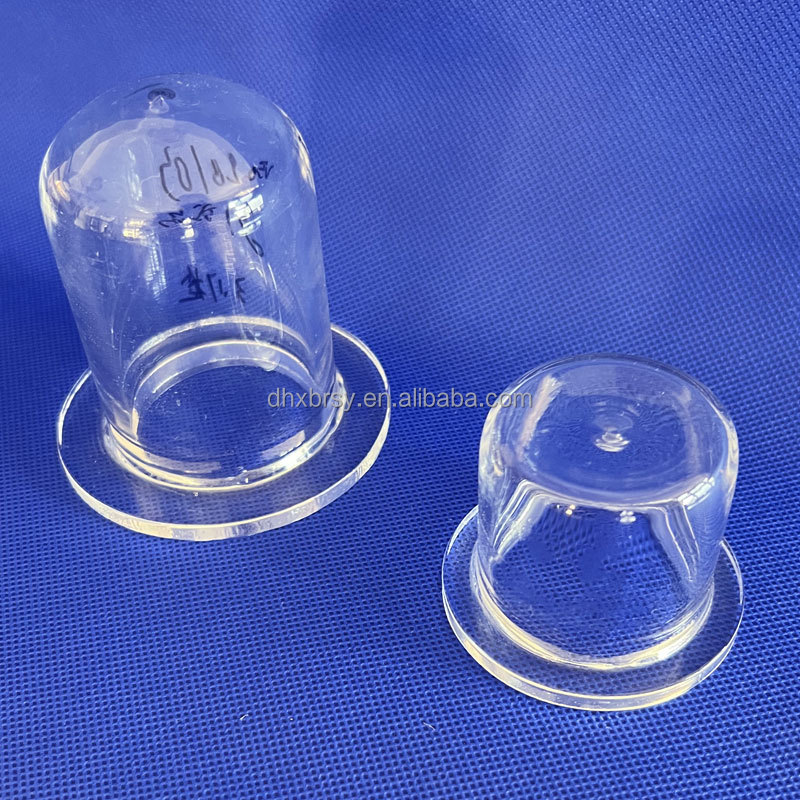
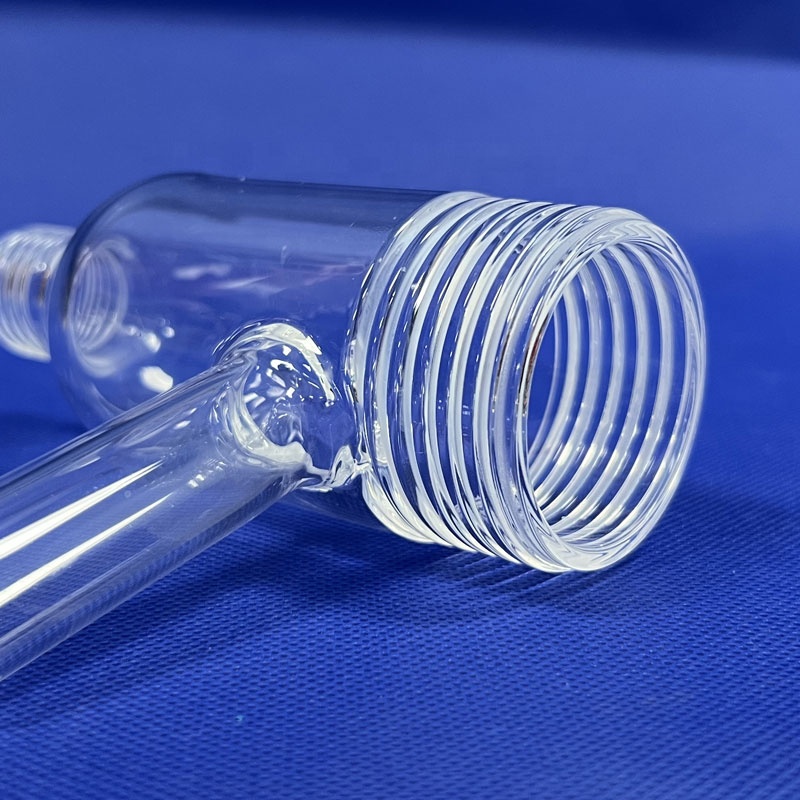
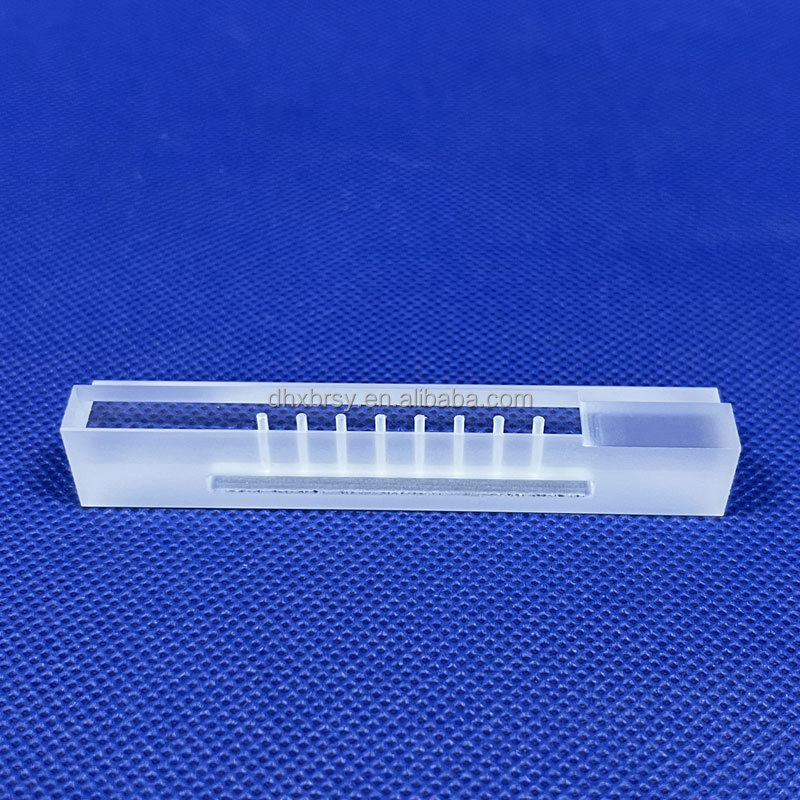
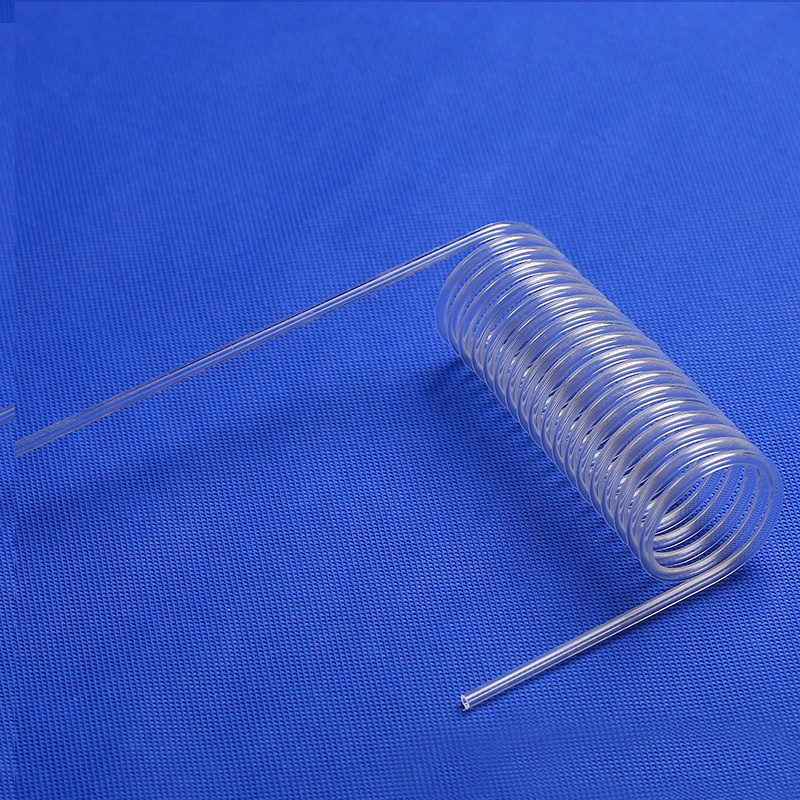
A rigorous examination of amorphous silicon dioxide (SiO₂) performance metrics under high-stress thermal ramping, acid digestion protocols, and optical metrology environments.
In high-throughput industrial and scientific laboratories, chemical vessels are subject to brutal thermomechanical cycles and corrosive aggressive media. While standard borosilicate 3.3 laboratory glassware satisfies routine aqueous tasks, its softening point (~820 °C), lower thermal shock resistance, and leaching of alkali metal cations (such as Na⁺, K⁺, and B³⁺) create catastrophic vulnerabilities in trace-element quantification and high-temperature syntheses. Fused quartz flasks represent an uncompromising material upgrade, synthesised through the electric fusion or oxyhydrogen flame refinement of crystalline silica to achieve an amorphous matrix devoid of network modifiers.
The defining metallurgical advantage of fused silica lies in its exceptionally low coefficient of thermal expansion (5.5 × 10⁻⁷ /°C between 20 °C and 320 °C). This microscopic lattice stability allows a quartz volumetric or round-bottom boiling flask heated above 1,000 °C to be instantaneously submerged in cold water without risk of brittle fractures or hoop-stress cracking. For precision volumetric flasks, thermal dimensional stability ensures that calibration standards (Class A tolerances under ISO 1042 / ASTM E288) remain uncompromised across radical temperature swings, eliminating meniscus distortion caused by thermal hystereses.
Furthermore, our manufacturing line integrates controlled-atmosphere electric annealing furnaces operating at 1,215 °C. By slowly ramping down through the strain point (1,120 °C), internal stresses created during neck fusing, lathe side-arm welding, and spherical bottom-forming are systematically evacuated. Each batch undergoes optical birefringence verification using a cross-polarization stress tester, guaranteeing that residual internal optical retardation does not exceed 5 nm/cm. This meticulous QA process protects technicians in Cambodian metallurgical, mining, and petrochemical facilities from explosive stress-relieving implosions during high-vacuum distillation or high-exotherm acid digestion.
| Physical / Chemical Parameter | High-Purity Fused Quartz (SiO₂) | Standard Borosilicate 3.3 Glass | Analytical Implication for Cambodian Labs |
|---|---|---|---|
| SiO₂ Purity Level | ≥ 99.99% (Trace impurities ≤ 20 ppm) | 80.5% ± 0.5% (Contains B₂O₃, Na₂O, Al₂O₃) | Zero alkali leaching; crucial for ICP-MS and AAS elemental profiling. |
| Continuous Operating Temp | 1,100 °C (Short excursion up to 1,300 °C) | 450 °C to 500 °C maximum | Withstands direct open flame, heating mantles, and molten flux fusion. |
| Softening Temperature | ≈ 1,730 °C | ≈ 820 °C | Prevents structural neck sagging during prolonged vacuum evacuations. |
| Thermal Shock Resistance (ΔT) | > 1,100 °C quench shock without failure | ≈ 150 °C to 180 °C differential limit | Enables instant ice-bath quenching straight from pyrolysis chambers. |
| Spectral Transmittance | Deep-UV to Mid-IR (185 nm – 3,500 nm) | Cut-off below 310 nm (Opaque in deep UV) | Direct photochemical syntheses and UV spectroscopic reactions inside the vessel. |
| Acid Resistance Profile | Inert to all mineral acids (Excl. HF & hot H₃PO₄) | Vulnerable to strong alkaline and acid attack | Enables prolonged boiling aqua-regia and nitric/perchloric digests. |
How our fused quartz flasks, reaction tubes, and apparatus solve complex technical hurdles across Special Economic Zones (SEZs), mineral extraction projects, and food testing networks.
Mining operations in Kratie, Mondulkiri, and Ratanakiri require aggressive acid digestion to extract trace gold, bauxite, and rare-earth components. Fused quartz Erlenmeyer and Kjeldahl flasks allow continuous boiling of concentrated aqua regia and hydrofluoric acid dilutions without glass etching, vessel clouding, or background silicon/boron contamination.
Within the Phnom Penh SEZ (PPSEZ) and Manhattan SEZ in Bavet, consumer safety testing labs enforce EU REACH and US CPSIA compliance. Lovri quartz distillation flasks facilitate high-temperature azo-dye cleavage and chlorophenol extractions, resisting chemical attack from organic extraction solvents and harsh alkaline hydrolyses.
As Chinese solar ingot, wafer, and module manufacturing plants expand throughout Sihanoukville SEZ (SSEZ) and Kandal Province, quartz boiling flasks, custom bubble saturators, and reaction vessels are imperative for wet-chemical cleaning, high-purity phosphoric acid doping, and wafer etching quality control.
Academic centers like the Royal University of Phnom Penh (RUPP) and the Institute of Technology of Cambodia (ITC) rely on our synthetic fused silica (JGS1) and clear fused quartz (JGS2) flasks for high-energy UV photolysis, supercritical chemical reactions, and polymer syntheses requiring wide-spectrum transparency down to 185 nm.
Under Cambodian agricultural quality export directives, testing labs in Battambang and Kampong Cham quantify pesticide residues, aflatoxins, and heavy metals in milled jasmine rice and cassava flour. Quartz volumetric flasks prevent trace-lead and cadmium ion adsorption, maintaining calibration integrity for export certification.
Environmental testing laboratories monitoring the Mekong River, Tonle Sap basin, and coastal discharge zones in Kep and Preah Sihanouk use high-purity quartz digestion flasks for Kjeldahl total nitrogen analysis, chemical oxygen demand (COD) digestions, and trace arsenic ICP-OES sample preparation.
Aligning procurement logistics with the Royal Government of Cambodia's Industrial Development Policy (IDP) and the Pentagonal Strategy Phase I.
Under the Royal Government of Cambodia's Pentagonal Strategy Phase I, national economic priority has pivoted toward diversification, industrial value-addition, and technical capacity-building. With the modernization of national testing facilities—such as the Industrial Laboratory Center of Cambodia (ILCC) under the Ministry of Industry, Science, Technology & Innovation (MISTI)—there is an aggressive migration toward ISO/IEC 17025 accredited workflows. Achieving international accreditation mandates zero analytical drift. Laboratories are abandoning generic borosilicate vessels in favor of fused quartz flasks to eliminate glass leaching, ensure micro-trace accuracy, and conform to stringent proficiency testing programs.
The geographical proliferation of Special Economic Zones (SEZs)—spanning the Phnom Penh corridor along National Road 4, the deep-sea coastal hub of Sihanoukville (SSEZ), and border-adjacent clusters in Bavet (Svay Rieng) and Poipet (Banteay Meanchey)—is attracting high-technology enterprises in electronics assembly, automotive harness fabrication, and solar PV cell manufacturing. These advanced sectors operate on-site QA/QC cleanrooms requiring specialty quartz glassware, quartz wafer boats, and high-temperature thermal tubes. Direct Chinese factory sourcing allows Cambodian subsidiaries to acquire customized quartz apparatus fabricated precisely to OEM engineering drawings without intermediary markup.
Cambodia's resource development sector has entered an advanced refining era. The commercialization of gold extraction in Kratie and Mondulkiri, alongside renewed bauxite, silica sand, and coal exploration, has created high local demand for heavy-duty assay laboratories. Fire assays, pyrometallurgical smelt testing, and microwave-assisted acid digestion necessitate vessels that withstand direct high-thermal flux without devitrifying. Our JGS2-grade fused quartz flasks ensure superior thermal resilience, reducing vessel replacement frequency by over 300% compared to conventional glassware in mineral testing.
With Cambodia entering comprehensive free trade agreements—including RCEP, the Cambodia-China Free Trade Agreement (CCFTA), and bilateral arrangements with South Korea and the UAE—sanitary and phytosanitary (SPS) standards have tightened drastically. Exporters of milled rice, cashew nuts, pepper, and rubber must provide verifiable trace contaminant reports. Analytical laboratories serving these export corridors rely heavily on high-purity quartz glassware for wet-ashing digestion, ensuring zero trace-metal background noise during heavy metal assays (Pb, Cd, Hg, As).
Located in Lianyungang, Jiangsu—the epicentre of China's quartz technology cluster—Lovri Quartz Products Co., Ltd. delivers direct factory engineering expertise, verified quality systems, and dedicated export logistics for Cambodia.
Our expansive 14,271 m² production facility has undergone independent onsite inspection and verification by SGS Group, confirming international production standards, cleanroom assembly lines, and calibrated testing instrumentation.
Unlike secondary assemblers, we pulverize, screen, and acid-pickle natural quartz rock in-house to reach 99.99% SiO₂ content. Controlling purity at the source ensures absolute batch-to-batch chemical stability with trace metal contaminants ≤ 20 ppm.
Residual micro-stress causes catastrophic shattering under heat. Every Lovri quartz flask, tube, and apparatus undergoes precise annealing in electric bell furnaces followed by individual optical polariscope stress inspection prior to dispatch.
Our master glassblowers and multi-axis CNC machines manufacture bespoke reaction flasks, ground joint necks (ST 14/23, 19/26, 24/29, 29/32), threaded ports, and multi-neck geometries directly from customer sketches, PDF, DWG, or STEP files.
Every quartz flask shipped to Phnom Penh or Sihanoukville navigates an unbroken chain of in-house quality engineering: Raw Material Lumping → Mechanical Pulverizing → Precision Rescreening → Multi-Stage Acid Pickling → Tube Drawing & Ingot Fusing → Electric Furnace Annealing → End Sealing & Neck Blowing → Oxyhydrogen Joint Sealing & Lathe Welding → Vacuum Degassing → CNC Grinding & Lapping → Optical Stress & Dimensional Inspection → Vacuum Sealed Export Packaging.
Practical procurement insights addressing shipping times, General Department of Customs and Excise (GDCE) clearance, break-free packaging, and local operation.
Shipments depart from Shanghai, Ningbo, or Lianyungang ports. Maritime cargo connects directly to Sihanoukville Autonomous Port (PAS) within 7–10 days, or via feeder barge to Phnom Penh Autonomous Port (PPAP) along the Mekong River. For urgent prototype or replacement requirements, air express courier (DHL, FedEx, SF International) reaches Phnom Penh International Airport (PNH) within 3–5 working days.
We supply complete commercial documentation—including Commercial Invoice, Detailed Packing List, Bill of Lading, Certificate of Origin (ACFTA Form E for duty exemptions), and RoHS/Material Test Reports—ensuring seamless clearance through the General Department of Customs and Excise of Cambodia (GDCE).
Exporting laboratory quartz requires specialized shock mitigation. Every quartz flask is individually dust-sealed, wrapped in high-density multi-layer EPE foam cushioning, and positioned within reinforced cellular cartons. Bulk consignments are crated in custom-built, fumigation-free ISPM-15 compliant plywood crates equipped with internal shock absorption pads, corner protectors, and exterior tilt/shock indicator labels.
We provide a 100% transit guarantee: In the unlikely event that any piece arrives fractured, we provide immediate no-charge priority air re-fabrication and dispatch upon photographic verification.
We fabricate flasks based on specific process requirements:
Yes. Our Lianyungang facility operates specialized glass-working lathes and 5-axis CNC ultrasonic milling tools. We manufacture single-neck, two-neck, and multi-neck round bottom flasks, flat bottom flasks, Kjeldahl vessels, and Schlenk reaction tubes. We precision-grind standard taper joints (Standard Taper 10/19, 14/23, 19/26, 24/29, 29/32, 45/40), spherical ball-and-socket joints (Socket S13, S19, S29, S35), and integrate GL-threaded screw caps with chemically inert PTFE liners.
Cambodia's tropical climate features relative humidity frequently exceeding 80%. Unlike standard soda-lime or soft glasses, high-purity fused silica does not contain alkaline fluxes (Na₂O, K₂O) that leach outward and react with airborne CO₂ to form surface carbonates or hazing ("glass weathering").
To avoid high-temperature devitrification (where amorphous quartz transitions to crystalline cristobalite above 1,150 °C), technicians must simply ensure the exterior surfaces remain free from finger grease, alkaline dust, or tap water residues before furnace heating. We provide detailed handling manuals and acid-washing SOPs with every delivery.
To support pilot R&D projects and equipment maintenance across Cambodian SEZ factories, our MOQ is just 1 piece for standard sizes and customized prototypes. For volume production, tiered wholesale discounts apply.
Payment terms include Wire Transfer (T/T), Letter of Credit (L/C) at sight for large institutional contracts, and secure international digital transfers. All quotes are delivered transparently under Incoterms 2020: EXW, FOB, CIF Sihanoukville / Phnom Penh, or DDU (Delivered Duty Unpaid) directly to your facility gate.
Partner directly with Lovri Quartz Products Co., Ltd. for your analytical glassware, furnace tubes, and custom CNC quartz components. Fast CAD review, SGS-certified fabrication, and secure export delivery directly into Cambodia.