LAB VESSEL
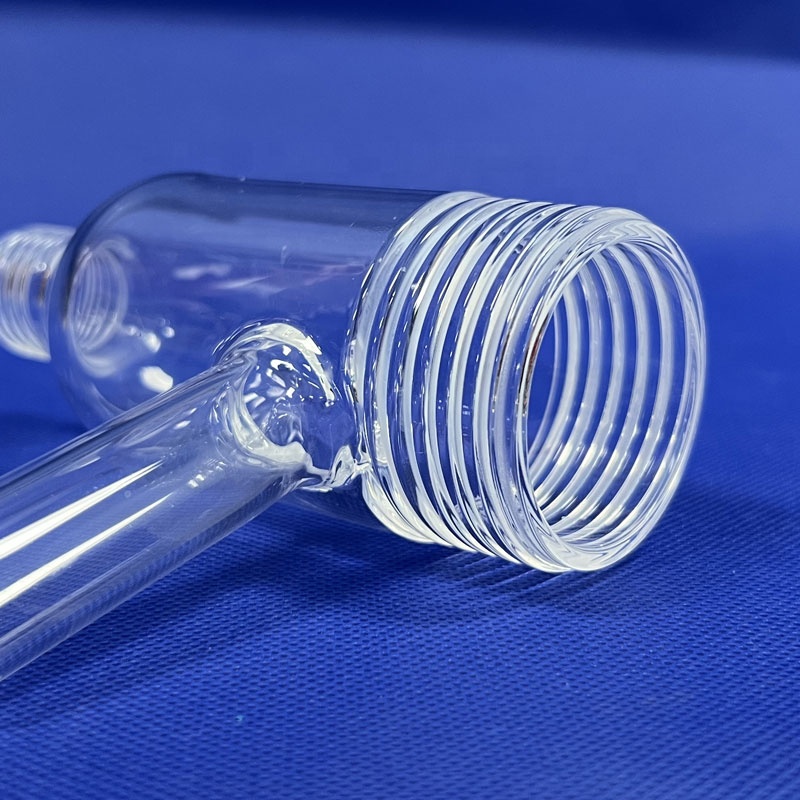
Certified high-transmission fused silica optical discs, ultra-flat windows, CNC-milled jigs, and thermal process assemblies designed to withstand ultra-high fluence laser ablation, vacuum chambers, and deep-UV spectroscopy.
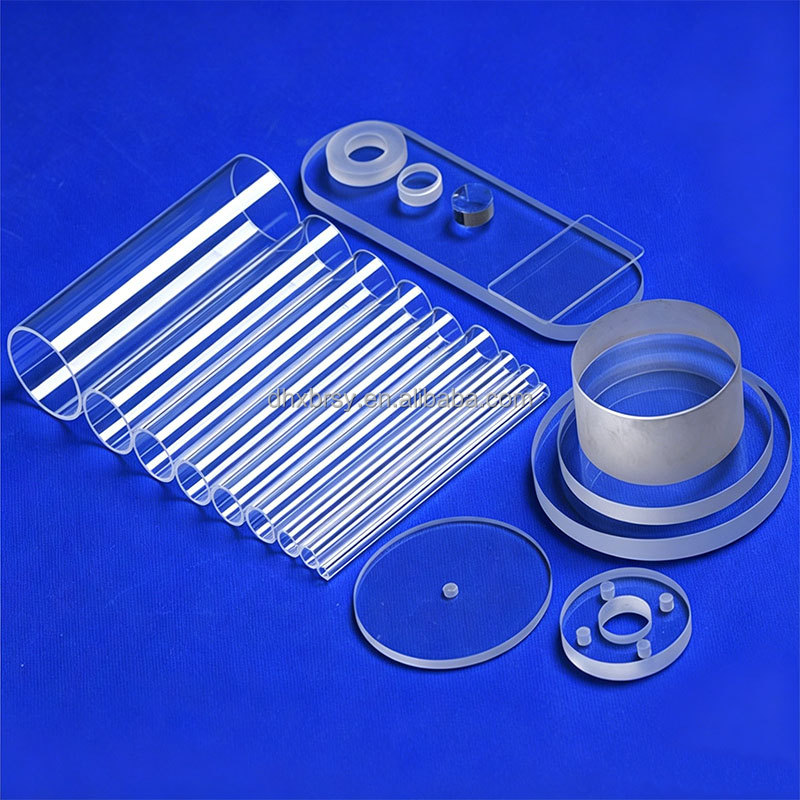
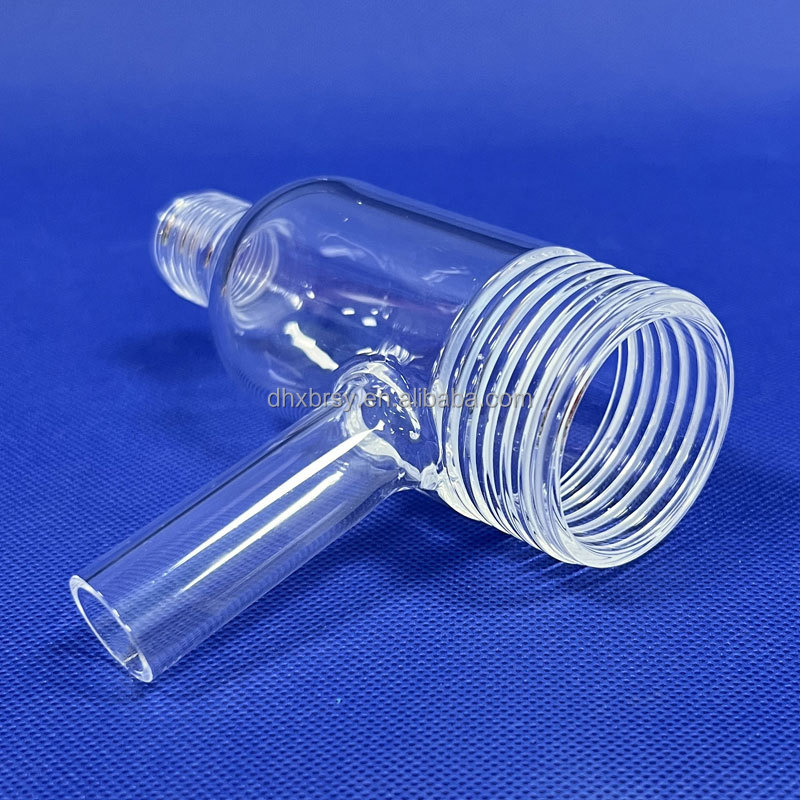
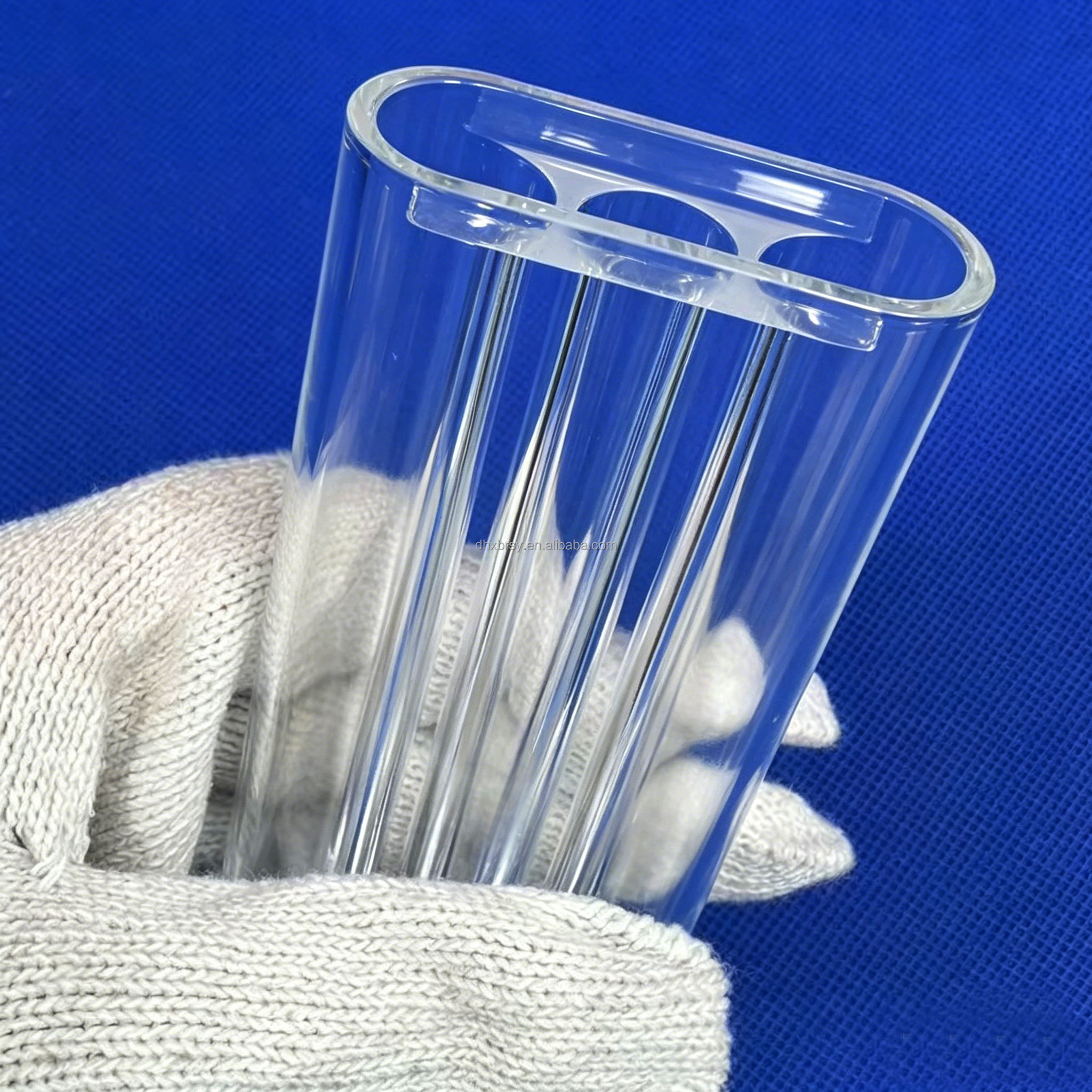
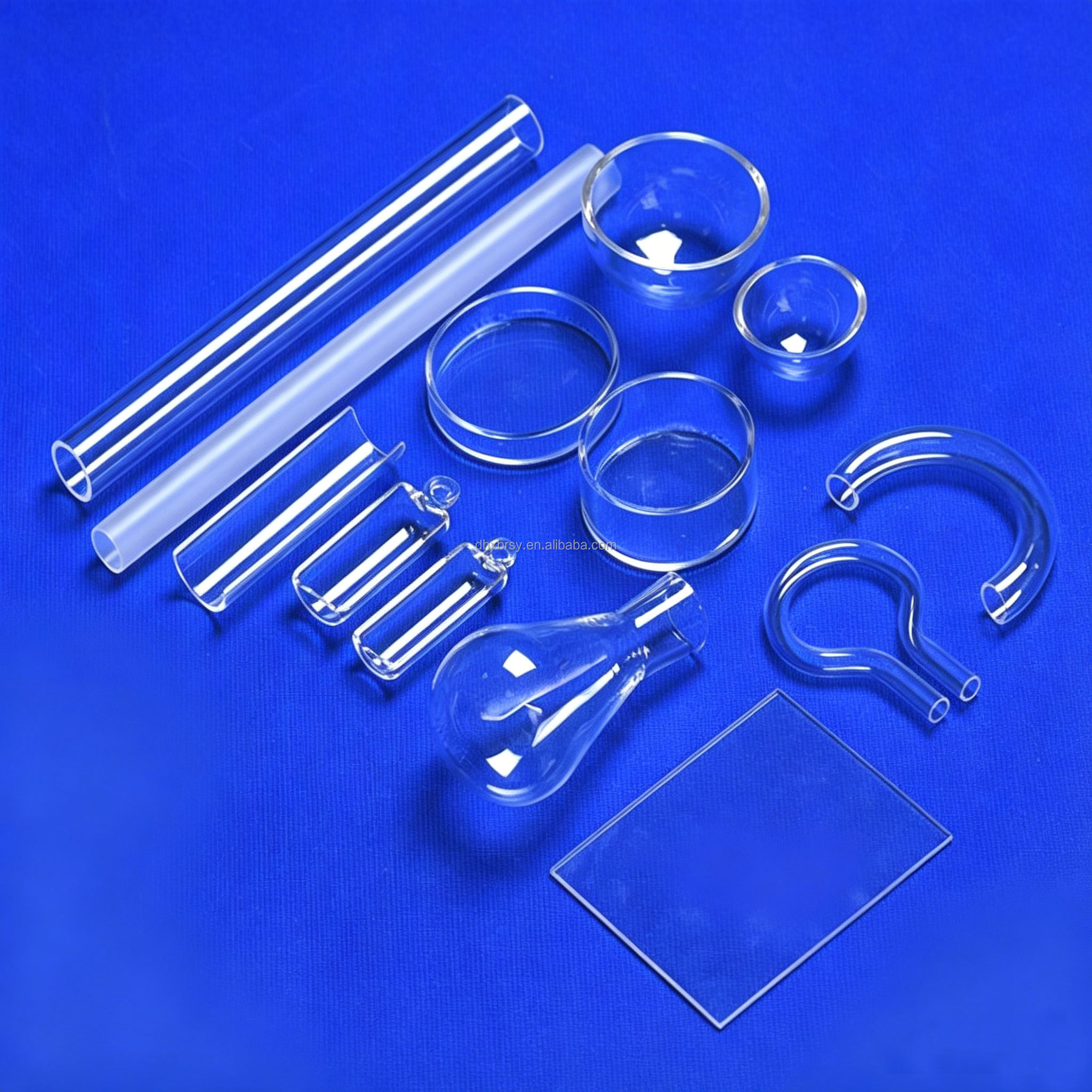
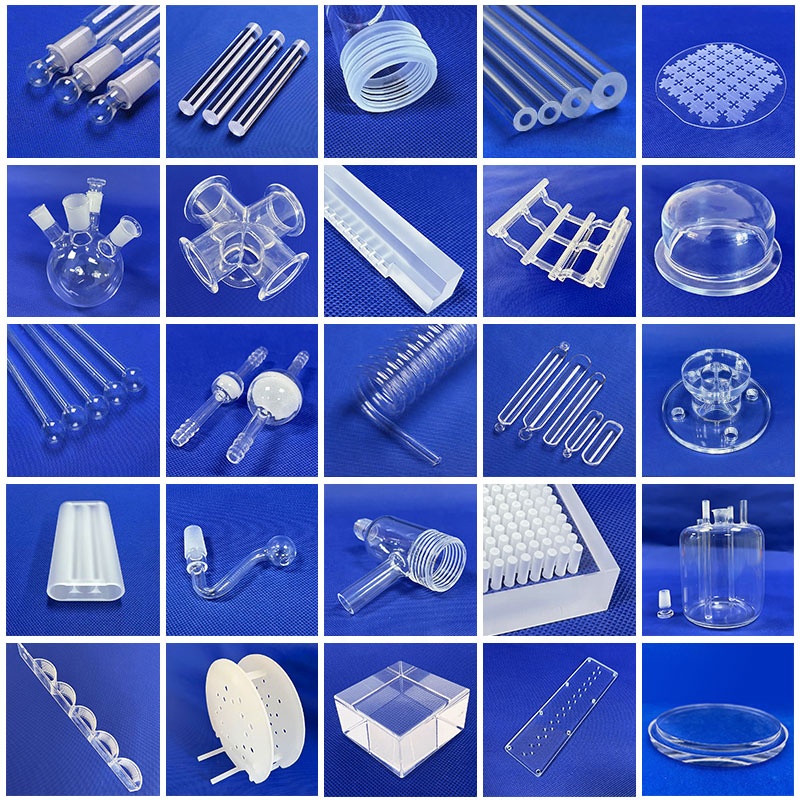
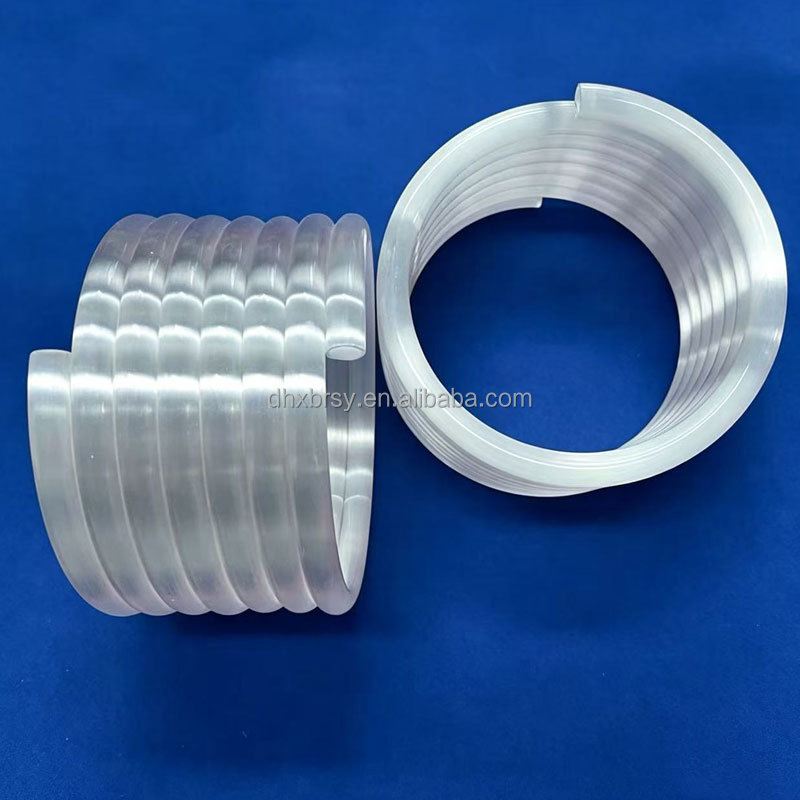
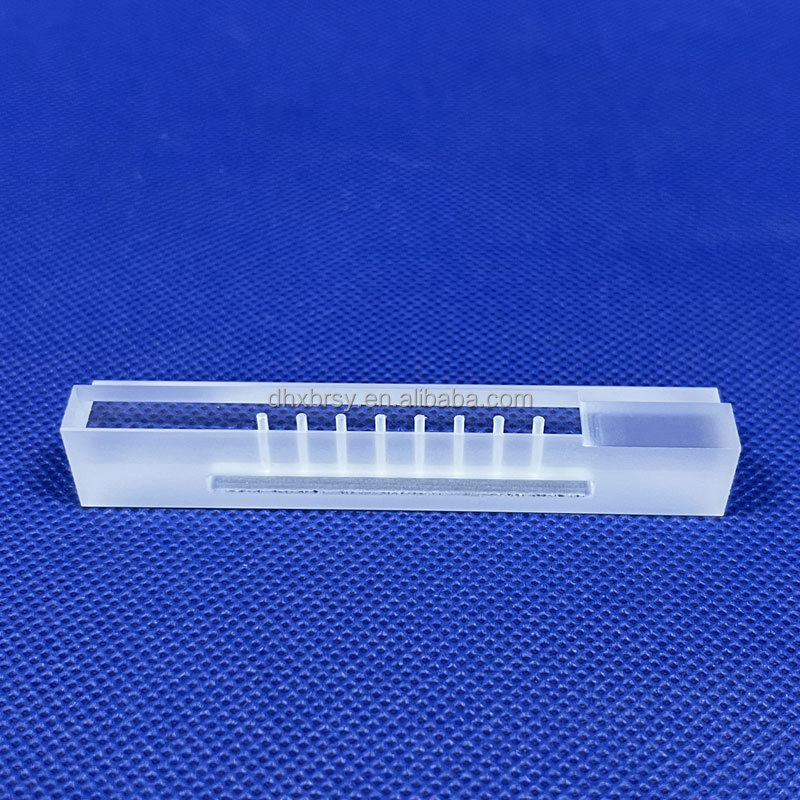
For optical engineers in London specifying optical discs, flats, and windows, understanding the atomic structure, OH-content (hydroxyl radical ppm), and internal homogeneity prevents thermal wavefront distortion and non-linear multi-photon absorption.
When selecting a quartz optical disc for high-power laser harmonics, quantum optical tweezers, or extreme UV beamlines (such as those deployed at Imperial College London or the Central Laser Facility in Harwell), the choice of silica synthesis determines failure thresholds:
JGS1 (Synthetic Fused Silica): Synthesized via chemical vapor deposition of silicon tetrachloride (SiCl4) in an oxygen-hydrogen flame. Characterized by negligible heavy-metal impurity levels (Fe, Al, Ti, Cr < 0.1 ppm total) and absence of macroscopic bubble inclusions (ISO 10110 Class 0). Its ultra-low fluorescence and continuous transmission down to 185 nm make it the premier choice for Deep-UV (DUV) lithography discs, femtosecond pulse compression, and 5D eternal optical data storage discs.
JGS2 (Optical Grade Fused Quartz): Smelted from natural high-purity crystalline quartz sand using oxy-hydrogen flame fusion. While containing typical trace aluminum impurities (10–20 ppm), it provides outstanding transmission across 220 nm to 2500 nm at an economical cost basis. Widely specified across Greater London cleanrooms for viewport windows, solar simulator filter discs, and plasma etching observation viewports.
| Physical & Optical Metric | JGS1 (Synthetic UV Quartz) | JGS2 (Standard Optical Quartz) | JGS3 (IR Grade Fused Quartz) | Verification Instrument / Standard |
|---|---|---|---|---|
| Spectral Transmission Range | 185 nm – 2,500 nm (T% > 90% @ 200nm) | 220 nm – 2,500 nm (T% > 85% @ 250nm) | 260 nm – 3,500 nm (Low OH < 5 ppm) | PerkinElmer Lambda 1050+ UV/Vis/NIR |
| Total Metallic Impurities (Fe, Ti, Cr, Cu) | < 1.0 ppm (Heavy Metals < 0.1 ppm) | < 15.0 ppm | < 20.0 ppm | ICP-MS (Inductively Coupled Plasma) |
| Coefficient of Thermal Expansion (CTE) | 0.54 × 10⁻⁶ / °C (20 °C to 320 °C) | 0.55 × 10⁻⁶ / °C (20 °C to 320 °C) | 0.55 × 10⁻⁶ / °C (20 °C to 320 °C) | Dilatometry (Netzsch DIL 402 Expedis) |
| Laser Induced Damage Threshold (LIDT) | > 15.0 J/cm² (@ 1064nm, 10ns, 20Hz) | > 7.5 J/cm² (@ 1064nm, 10ns, 20Hz) | > 5.0 J/cm² (@ 1064nm, 10ns, 20Hz) | ISO 21254 Standardized Pulsed Laser Test |
| Surface Roughness & Wavefront Error | Ra < 0.3 nm; Flatness λ/10 @ 632.8nm | Ra < 0.8 nm; Flatness λ/4 @ 632.8nm | Ra < 1.0 nm; Flatness λ/2 @ 632.8nm | Zygo Verifire Laser Interferometer |
| Residual Birefringence (Stress-Induced) | ≤ 2 nm/cm (Optical Class 1) | ≤ 5 nm/cm | ≤ 10 nm/cm | Polarization Stress Meter (Sénarmont) |
| Refractive Index Nd (587.6 nm) | 1.45846 (± 3 × 10⁻⁵) | 1.45850 | 1.45855 | V-Block Pulfrich Refractometer |
London is a global nerve center for advanced photonics, deep tech, and quantum computation. Our direct-export supply chain feeds precision quartz optical components straight to the benchtop of leading academic institutions, biomedical campuses, and commercial laser labs across the capital.
Serving London's premier research clusters in South Kensington and Bloomsbury. Our JGS1 synthetic optical discs serve as cold-atom vacuum cell windows, ion-trap optical viewports, and non-linear optical resonator discs requiring extinction ratios > 10,000:1 and λ/10 wavefront flatness.
With the UK leading the commercialization of femtosecond 5D optical data storage (nanostructured fused silica with billions of years thermal longevity), our custom-ground 120 mm and 50 mm quartz optical discs provide the ultra-pure, birefringence-free matrix necessary for voxel recording.
Supplying the White City Innovation District and King's Cross biotech corridor with ultra-thin (0.1 mm–0.5 mm) fused quartz cover slips, multi-well quartz discs, and laser flow-through cells for deep-UV fluorescence microscopy and real-time DNA sequencing with zero autofluorescence.
Situated within the orbital London aerospace corridor, space payload developers rely on our radiation-hardened synthetic fused silica solar simulator windows, satellite retroreflector discs, and thermal vacuum test chamber sight-glasses certified for outgassing (CVCM < 0.1%).
London’s high-frequency trading networks in Canary Wharf and carrier hotels in Telehouse Docklands require precision fused silica V-groove arrays, micro-capillary guide discs, and collimator lens substrates manufactured to sub-micron pitch accuracy (±0.5 µm).
Supplying precision optics to advanced manufacturing plants across West London and the Thames Valley. Applications include high-temperature pyrometer windows, UV curing discs for roll-to-roll aerospace composite manufacturing, and high-power fiber laser cutting head protective debris shields.
The UK photonics sector contributes over £15.2 billion to the economy, with London standing at the core of intellectual property creation and commercialization. Three dominant procurement trends dictate component sourcing today:
With the UK National Quantum Technologies Programme driving accelerated deployment of quantum key distribution (QKD) and atomic clocks, there is an urgent transition away from standard borosilicate glass to ultra-low birefringence fused silica discs. Optical engineers require components that minimize stress-induced polarization rotation to retain quantum state fidelity across optical pathways.
London university spin-outs and Tier-1 engineering firms are increasingly bypassing traditional UK optical catalogue resellers. By interfacing directly with verified source manufacturers like Lovri Quartz, procurement teams reduce component BOM expenses by 45–60% while achieving full customization of disc diameter, chamfer geometries, laser anti-reflective (AR) coatings, and step bores.
Post-Brexit regulatory regimes impose rigorous testing for all components entering UK free circulation. London buyers require comprehensive material test reports confirming 100% heavy-metal-free SiO2 composition, compliance with UK REACH regulations, and zero restricted phthalates or lead compounds under UK RoHS statutory instruments.
Headquartered in the world’s most concentrated quartz industrial ecosystem in Lianyungang, Jiangsu, Lovri Quartz operates an end-to-end 14,271 m² production facility verified onsite by SGS Group.
Production workshops, automated glass lathes, and inspection labs independently verified by SGS Group (Assessment date: 2025.12.28). Complete chain-of-custody traceability from silica lump down to the boxed optical disc.
We control every mechanical and chemical transformation: raw lump cutting, pulverizing, acid pickling to 99.99% purity, continuous drawing, computerized annealing, precision slicing, double-sided planetary lapping, and CNC contouring.
Residual mechanical stress induces unpredictable thermal expansion and catastrophic cracking under laser excitation. Every finished quartz optical disc undergoes transmission polarization polarimetry before export dispatch.
Send your engineering drawings directly in PDF, DWG, DXF, or 3D STEP format. Our high-precision 4-axis and 5-axis CNC ultrasonic glass machining centers deliver tight dimensional tolerances down to ±0.01 mm with polished bevels.
Fragile optical components shipped from China to London face multiple transit shocks, cabin depressurization cycles, and customs handling. At Lovri Quartz, every optical disc is individually vacuum-sealed in cleanroom dust-free antistatic membrane pouches, cradled in multi-layer custom CNC high-density EVA foam pockets, and encased within shock-isolated wooden flight cases with tilt-and-impact drop indicators. Guaranteeing zero chipping, micro-scratches, or surface haze upon delivery to your UK facility.
Essential answers covering UK customs duties, logistics timelines into London airports, technical certifications, and prototyping order minimums.
Standard prototype runs (1–10 pieces) are machined, polished, and annealed within 5 to 7 business days. We partner directly with DHL Express, FedEx Priority, and air cargo carriers into London Heathrow (LHR) and London Stansted (STN). Door-to-door transit time typically ranges between 3 to 5 business days, complete with automated airway bill tracking and customs pre-clearance documents.
Quartz optical discs and laboratory glassware are typically classified under UK Integrated Tariff commodity codes 7017.10.00.00 (Laboratory, hygienic or pharmaceutical glassware of fused quartz or other fused silica) or 9001.90.00.00 (Unmounted optical elements). We provide full export commercial invoices, packing lists, and Certificates of Origin (COO). UK buyers with an EORI number can clear customs seamlessly under standard VAT accounting.
Yes. Our CNC wire-cutting, high-speed edging, and double-sided polishing spindles handle disc diameters from Ø3.0 mm up to Ø600 mm, with custom thicknesses ranging from ultra-thin 0.1 mm membranes up to 100 mm heavy blocks. We routinely produce custom step-bevels, drilled center holes, chamfers, and notch markers for optical orientation according to your CAD drawings.
We inspect each optical disc against MIL-PRF-13830B or ISO 10110 standards. Surface scratch-dig specifications can be tailored from commercial 60-40 down to precision laser grades of 20-10 or 10-5. Surface flatness reaches λ/10 per 25 mm aperture with parallelism ≤ 10 arcseconds, verified through Zygo interferometry and accompanied by QA test certificates.
We support universities, aerospace engineering teams, and deep-tech incubators with flexible prototype order quantities starting from just 1 to 5 pieces. Volume pricing tiers automatically apply when graduating to pre-series evaluation and full production roll-out.
Yes. We offer electron-beam evaporated dielectric thin-film coatings including single-wavelength AR (e.g., 266 nm, 355 nm, 532 nm, 1064 nm), broadband AR (BBAR 400–700 nm, 700–1100 nm), and high-reflection (HR) laser dielectric coatings engineered for high damage thresholds (LIDT > 10 J/cm²).
Submit your 2D engineering drawings or 3D models (STEP/DWG/PDF). Our technical optical specialists will review your application requirements, verify laser damage thresholds, and provide an itemized DDP/FOB quotation with factory direct lead times within 24 hours.