99.99% SiO₂
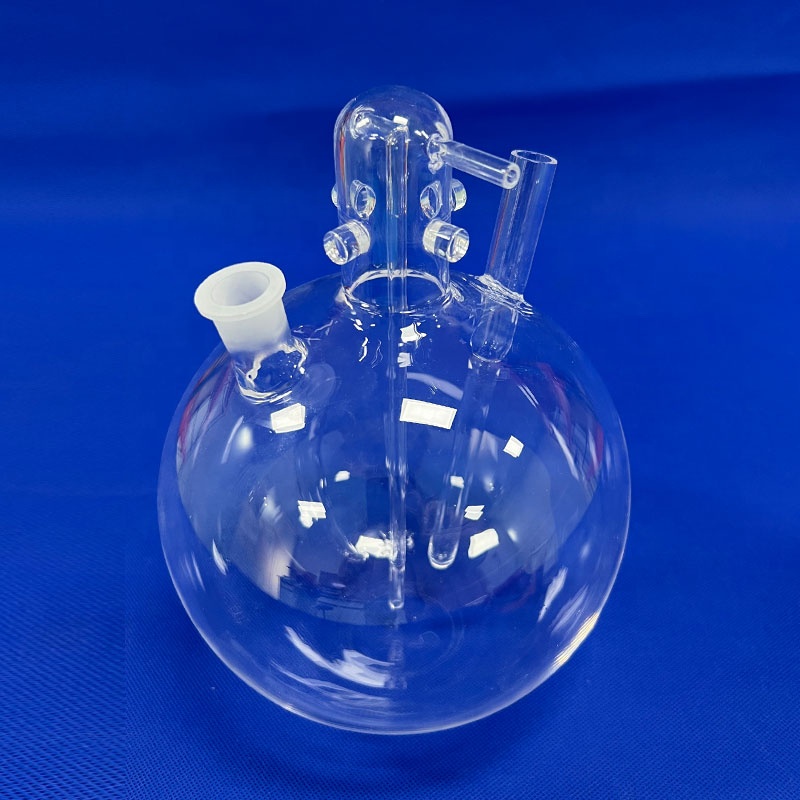
419 High Purity SiO2 Laser Reactor Instrument
Custom fused quartz reactor flask with multi-port entries designed for photochemical, laser catalysis, and ultra-clean hydrothermal synthesis.
Fabricated directly from domestic high-purity crystalline silica to meet ISO, CE, and RoHS compliance specifications for Taguig, Metro Manila industrial clients.
Custom fused quartz reactor flask with multi-port entries designed for photochemical, laser catalysis, and ultra-clean hydrothermal synthesis.
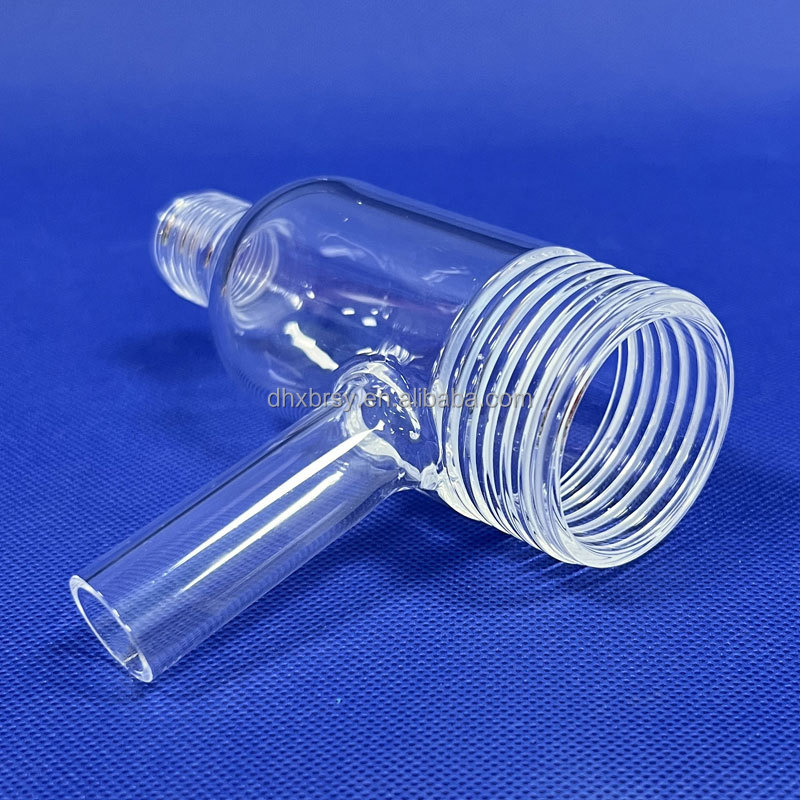
Precision ground screw-thread fused silica connection tube for pressure-retaining reaction flasks, inline sampling, and reflux systems.
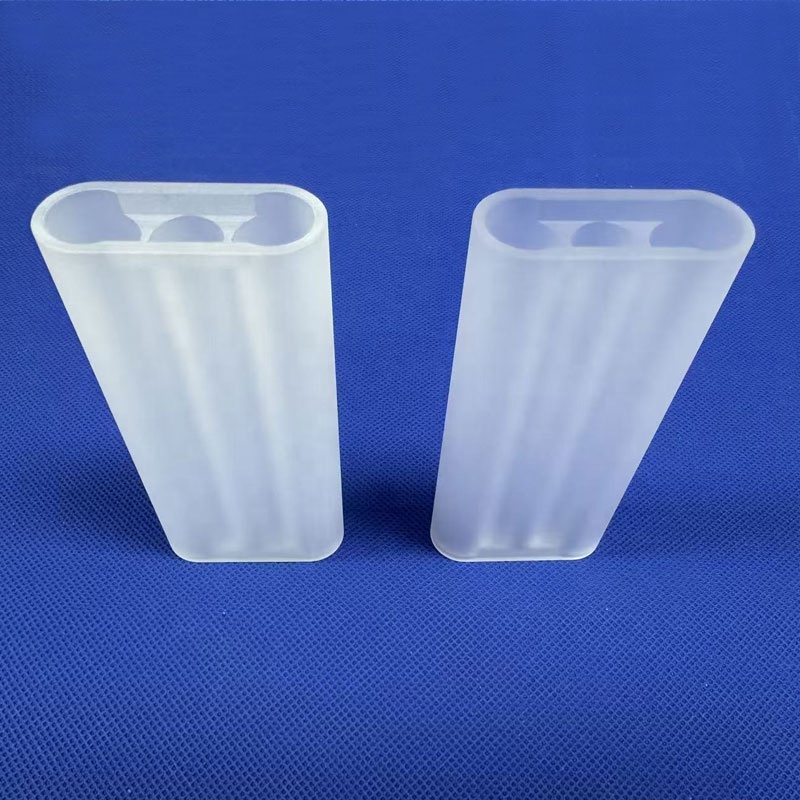
Multi-channel capillary quartz housing for laser-assisted reaction monitoring, excitation illumination, and concurrent temperature sensing.
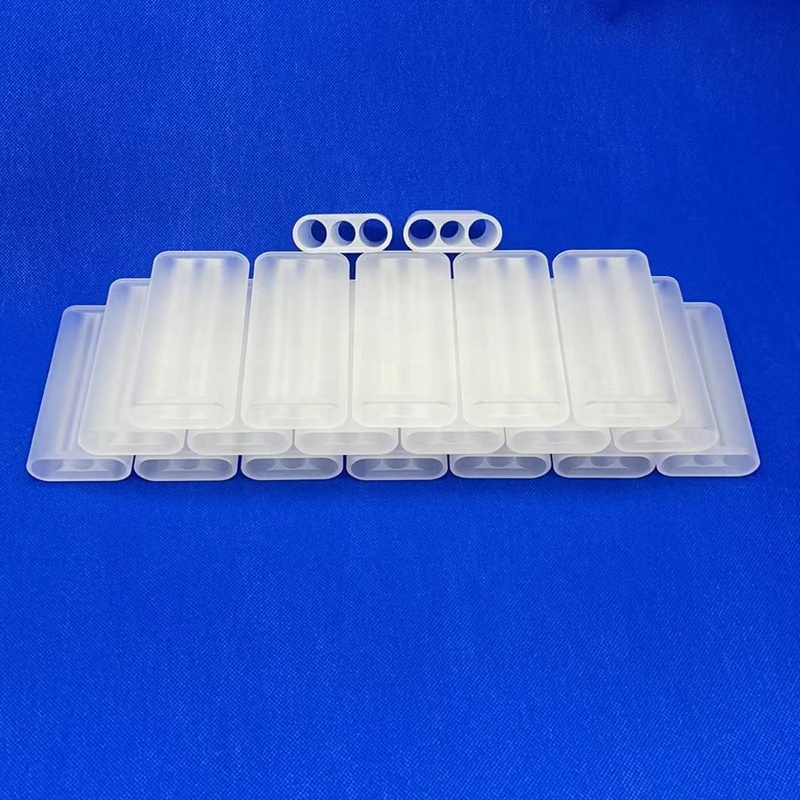
Custom bent and welded fused quartz tubes tailored for circulating condensers, reaction jacket lines, and continuous photo-microreactors.
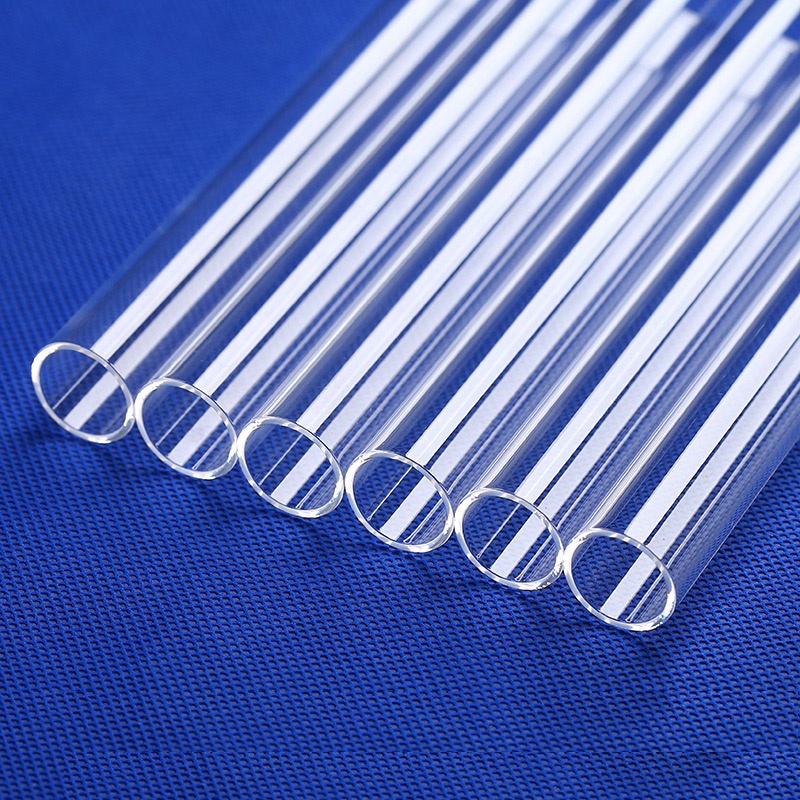
Semiconductor chemical pipeline tubing with tight wall tolerances for gas supply manifolds, quartz bubbling units, and acid digestion.
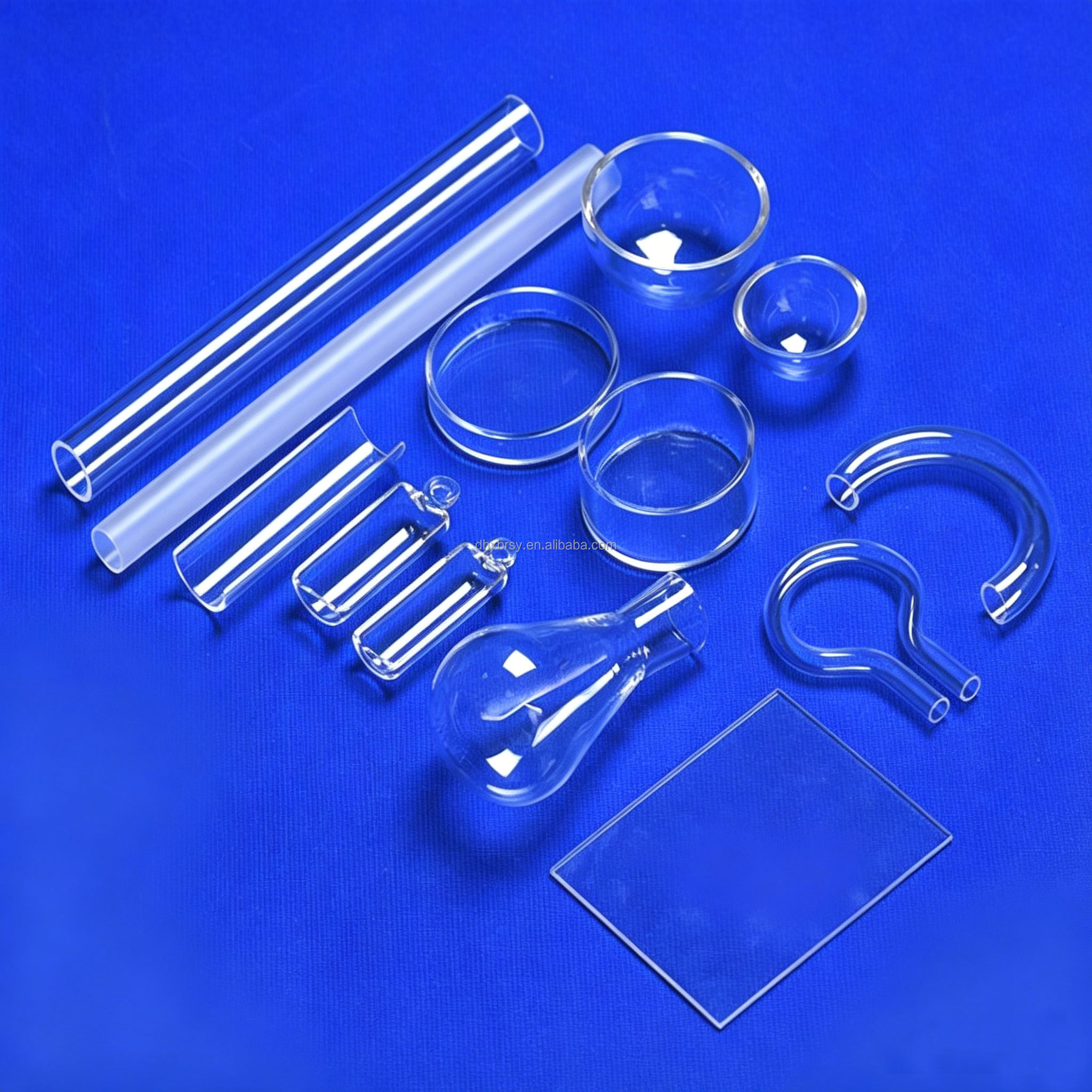
Double-side polished quartz viewing windows for high-pressure autoclaves, sight glasses, and in-situ reaction spectroscopic observation.

High deep-UV transmission (185–2500 nm) synthetic quartz for photochemical synthetic flasks and extreme-purity UV oxidation reactors.
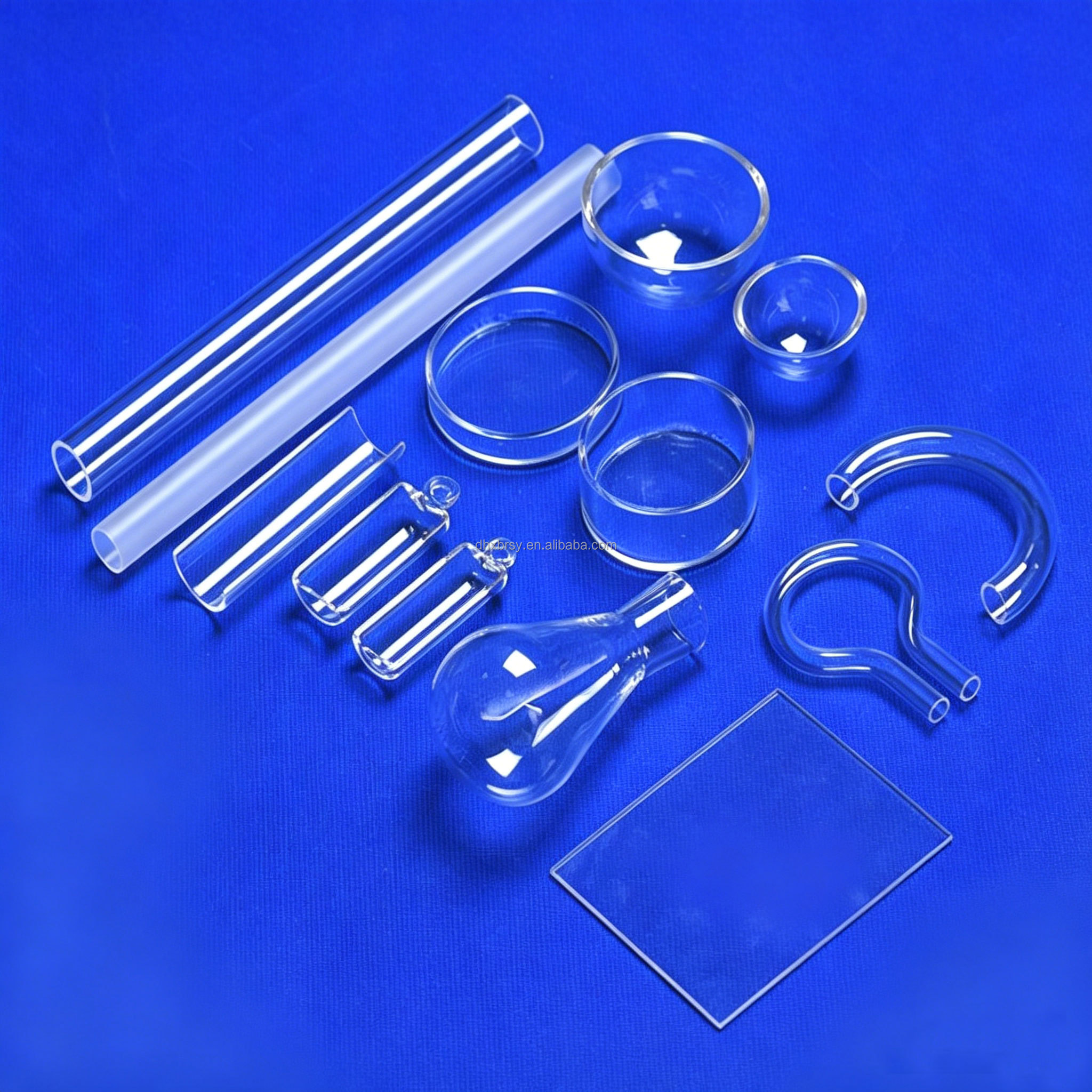
OEM/ODM flask assembly with ground ball/socket or standard taper joints, stopcocks, and jackets suited for aggressive reagent syntheses.
Examining how the microclimate, regional R&D incentives, and electronic fabrication standards drive demand across Taguig City and the surrounding National Capital Region (NCR).
Taguig City has transitioned from a light-industrial municipal region into an economic powerhouse hosting premier development centers, corporate headquarters, and technical research facilities. At the intersection of Bonifacio Global City (BGC), Arca South, and the adjacent industrial estates along the South Luzon Expressway (SLEX) and FTI (Food Terminal Inc.), enterprises are establishing specialized laboratories for materials testing, pharmaceuticals, bio-catalysis, and semiconductor validation.
Unlike standard borosilicate 3.3 laboratory glass, transparent fused quartz reaction flasks exhibit an exceptionally low coefficient of thermal expansion (approx. 5.5 × 10⁻⁷ /°C). This allows researchers in Taguig facilities to execute thermal shock reactions—such as rapid quenching from 1,000°C to room temperature—without catastrophic vessel cleavage or mechanical fatigue.
Furthermore, local electronics packaging, wafer sub-assembly, and testing operations clustered near Taguig require quartz vessels that do not leach alkali ions or heavy metals during hot acid extractions. Standard glassware can introduce trace amounts of boron, sodium, and calcium into synthesis batches; our quartz reaction vessels provide chemical inertness to all common acids (excluding hydrofluoric and hot concentrated phosphoric acid), ensuring uncontaminated semiconductor-grade chemical handling.
Comparative performance parameters critical for procurement officers evaluating chemical synthesis vessels for Metro Manila installations:
| SiO₂ Content | ≥ 99.99% (Optical/Semiconductor Grade) |
|---|---|
| Continuous Temp Limit | Up to 1,100 °C |
| Short-Term Max Temp | Up to 1,300 °C (Softening at 1,730 °C) |
| Hydrolytic Resistance | Class HGB 1 (ISO 719 compliant) |
| Heavy Metal Impurity | < 20 ppm aggregate across all elements |
From semiconductor fabrication to pharmaceutical quality assurance, our quartz reaction flasks and customized apparatus meet rigorous process conditions.
Taguig-adjacent electronics assembly plants utilize our quartz flasks for heated etching bath formulations, stripping solutions, and high-purity chemical vapor deposition (CVD) pre-reaction mixtures.
Active pharmaceutical ingredient (API) development in BGC research centers relies on UV-transparent quartz reaction flasks to conduct photochemical syntheses and heavy-metal-free digestions.
Renewable energy testbeds in the NCR employ multi-neck quartz reaction flasks to study perovskite crystals, silane gas cracking, and thin-film precursor deposition under intense halogen irradiation.
Compliance laboratories monitoring wastewater and emission particulates require closed-vessel quartz digestion flasks to withstand high pressure alongside boiling concentrated nitric acid matrices.
Adapting to shifting regulatory requirements, humidity factors, and direct manufacturer logistics within the Philippine market.
Metro Manila exhibits year-round high humidity, frequently exceeding 80% RH. When standard quartz glassware operates cyclically at elevated temperatures (above 900°C) under high moisture conditions, moisture vapor can accelerate cristobalite devitrification on surfaces containing trace sodium impurities.
By enforcing an exhaustive four-stage acid pickling process at our Lianyungang manufacturing plant, our quartz reaction flasks achieve alkali impurity levels (< 0.1 ppm Na, K, Li), significantly extending the operational lifespan of glassware operating in Taguig cleanrooms and industrial bakeries.
Procurement teams in Taguig historically purchased standard European or American branded quartz apparatus via third-party distributors in Makati or Pasig. This resulted in 8- to 16-week delivery horizons, high markups, and cumbersome drawing revision cycles for custom-ported reaction glassware.
Modern engineering operations in Taguig now preferentially interface directly with verified original equipment manufacturers (OEMs). Direct CAD drawing exchanges (STEP/DWG), rapid prototype production from single pieces, and air-freight consolidation straight into Ninoy Aquino International Airport (NAIA) reduce procurement cycles to under two weeks.
Contemporary chemical processing increasingly relies on automated process analytical technology (PAT). Rather than standard single-neck boiling flasks, laboratories in Bonifacio Global City require complex custom vessels incorporating:
Our integrated CNC cutting, precision fire-polishing, and polariscope annealing furnaces allow Taguig research teams to design bespoke reactors tailored precisely to their bench setup.
Operating from Lianyungang, Jiangsu—the premier Chinese fused silica manufacturing hub—we provide end-to-end quality control and proven industrial scale.
Our expansive industrial plant has undergone on-site audits and verification by SGS Group. With dedicated tube-drawing lines, automated cutting beds, and cleanroom packaging facilities, we guarantee continuous production capacity and verified legitimacy.
Unlike secondary glassblowers who purchase external blanks, our factory controls the entire metallurgical chain: raw crystal cutting, pulverizing, re-screening, and hydrofluoric/nitric acid pickling to yield 99.99% pure silica feedstock free of heavy metals.
Thermal failure in reaction flasks originates from latent hoop stress introduced during hand-welding of sidearms and ports. Every piece leaving our plant passes through a programmed annealing cycle and is verified via polarization stress testing.
We work directly from customer drawings provided in PDF, DWG, or 3D STEP formats. We support R&D teams with prototypes starting from 1 to 5 pieces, backed by design-for-manufacturing (DFM) reviews by experienced quartz engineers.
Fragile quartz apparatus destined for Manila are encased in custom high-density molded EPE foam, multi-layer corrugated export cartons, and fumigated solid timber crates, guaranteeing zero breakage during sea or air transit.
All fused quartz products are accompanied by material compliance certifications, spectral transmittance graphs (covering JGS1, JGS2, and JGS3 grades), and trace impurity breakdown reports upon customer request.
Clear answers on logistics, technical selection, customs clearance, and product handling in the Philippines.
We provide multiple freight terms including Door-to-Door (DDP), Air Express (DHL/FedEx/UPS), and Sea Freight (FCL/LCL) through Manila South Harbor. Air shipments typically reach Taguig laboratories within 4 to 7 business days following manufacturing completion, complete with all customs declaration documentation.
JGS1 is synthetic fused silica offering superior optical transparency extending deep into the ultraviolet range (down to 185 nm) with virtually no bubble inclusions or color centers. Standard fused quartz (JGS2/JGS3) is produced from natural quartz crystal, making it cost-effective for high-temperature synthesis, while JGS1 is chosen for UV-photochemical reactors.
Yes. Our glassblowers regularly grind standard taper joints (such as 14/20, 19/22, 24/40, 29/32, 45/50), spherical ball-and-socket joints, GL screw threads with PTFE caps, or flat vacuum flanges (NW/KF) to match your existing European or American laboratory fixtures.
We use export packaging engineered specifically for high-value scientific glassware. Each vessel is wrapped in an anti-static moisture barrier, suspended in high-rebound shock-absorbing foam molds, and placed in heavy-gauge double-wall cartons or plywood crates. In the rare event of transit damage, we provide priority replacement dispatch.
Transparent fused quartz exhibits broad resistance against acidic reagents, including boiling aqua regia, nitric acid, hydrochloric acid, and sulfuric acid. However, it must never be exposed to hydrofluoric acid (HF) or concentrated phosphoric acid above 150°C, both of which dissolve the silica matrix.
For custom engineering and bespoke laboratory prototypes, our MOQ starts from a single piece (1 unit). For commercial mass production or replacement wear parts, tiered pricing schedules are available based on quarterly or annual commitments.
Whether you require single-piece prototype fabrication for a BGC research lab or volume runs of industrial quartz reaction apparatus, our technical team is ready to evaluate your drawings and provide an itemized quote.
Contact Us