99.99% SiO₂
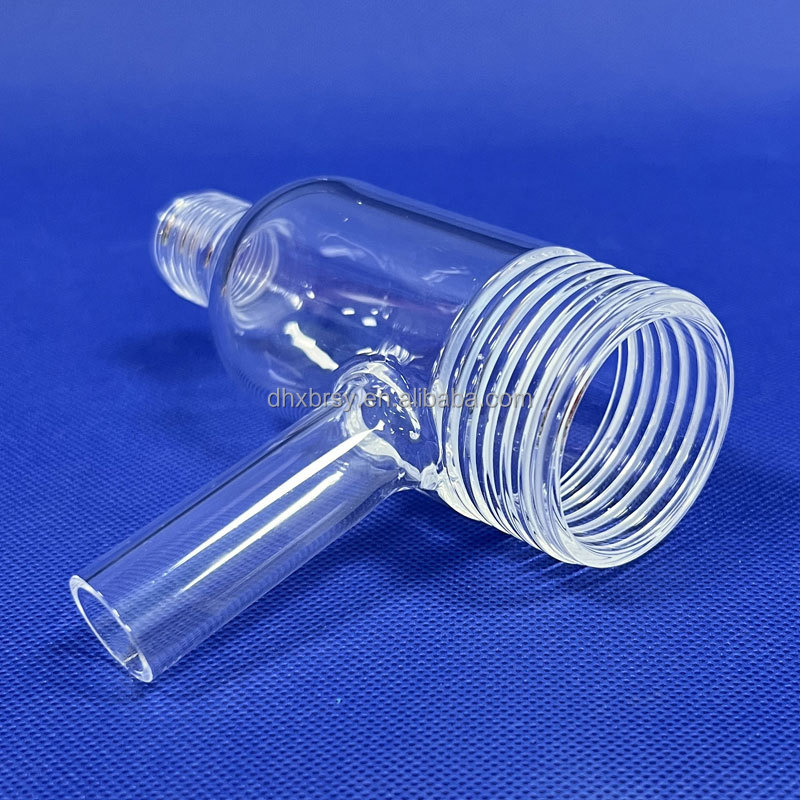
Directly manufactured to tight DIN/ISO tolerances. Fully certified for thermal resistance up to 1400°C, extreme chemical inertness, and ultra-high optical transmission across ultraviolet to infrared wavelengths.
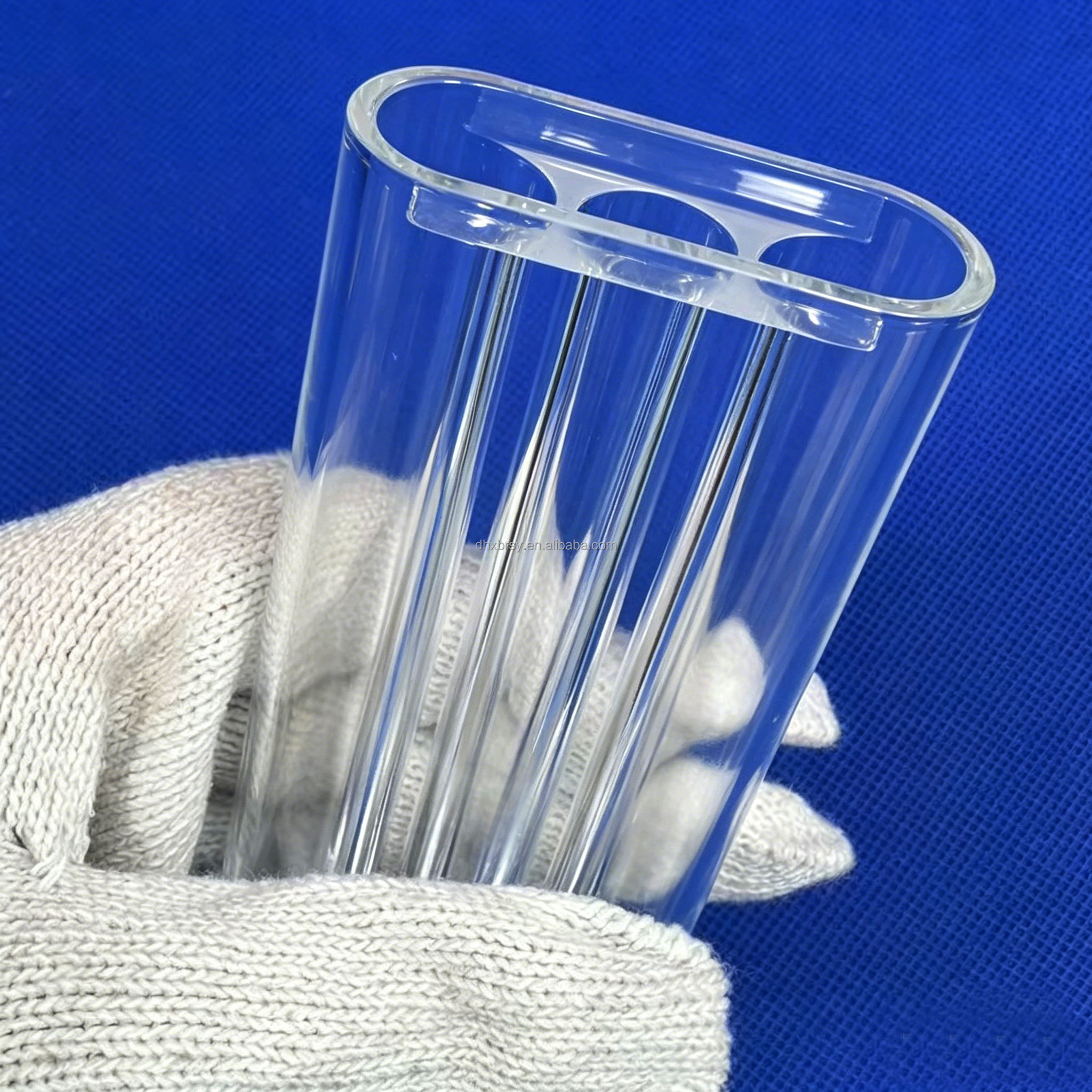
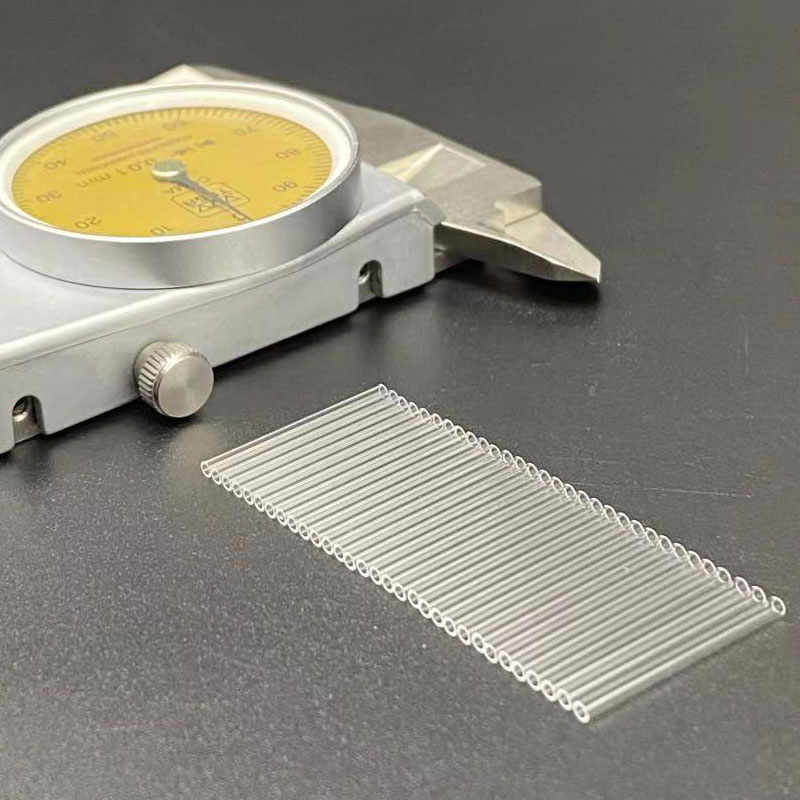
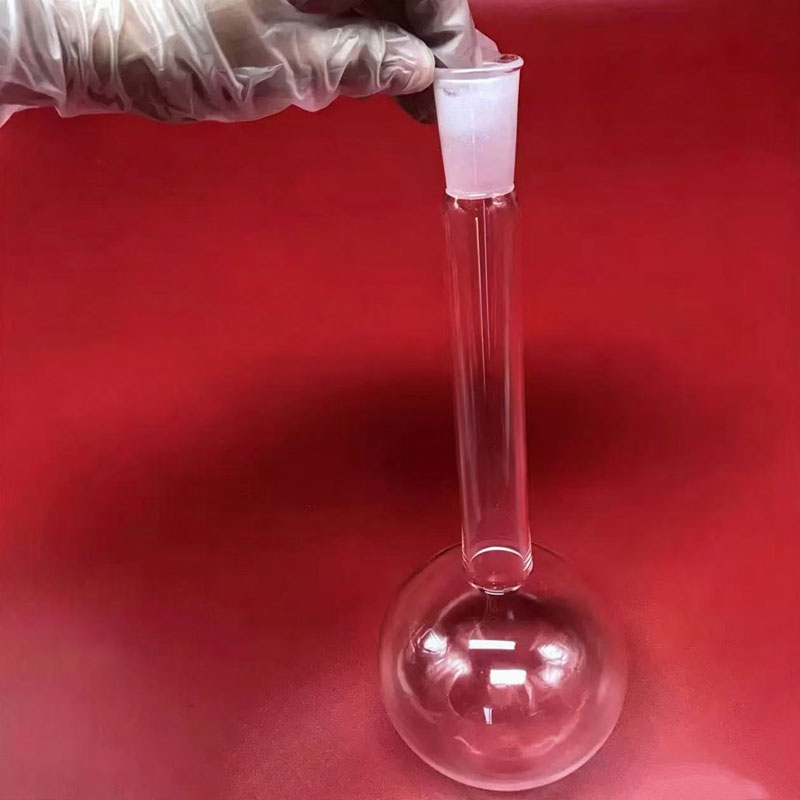
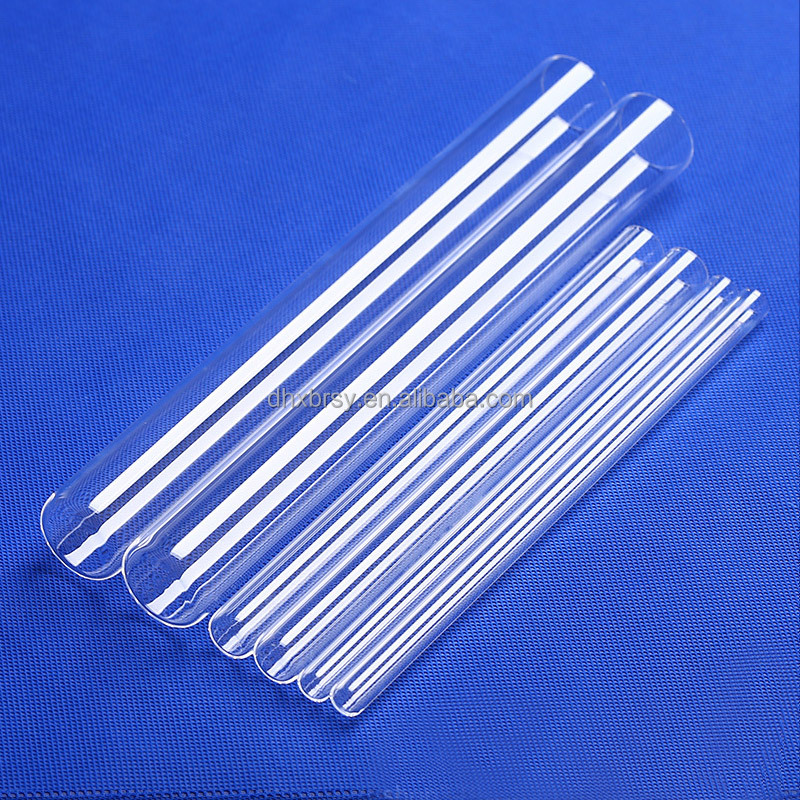
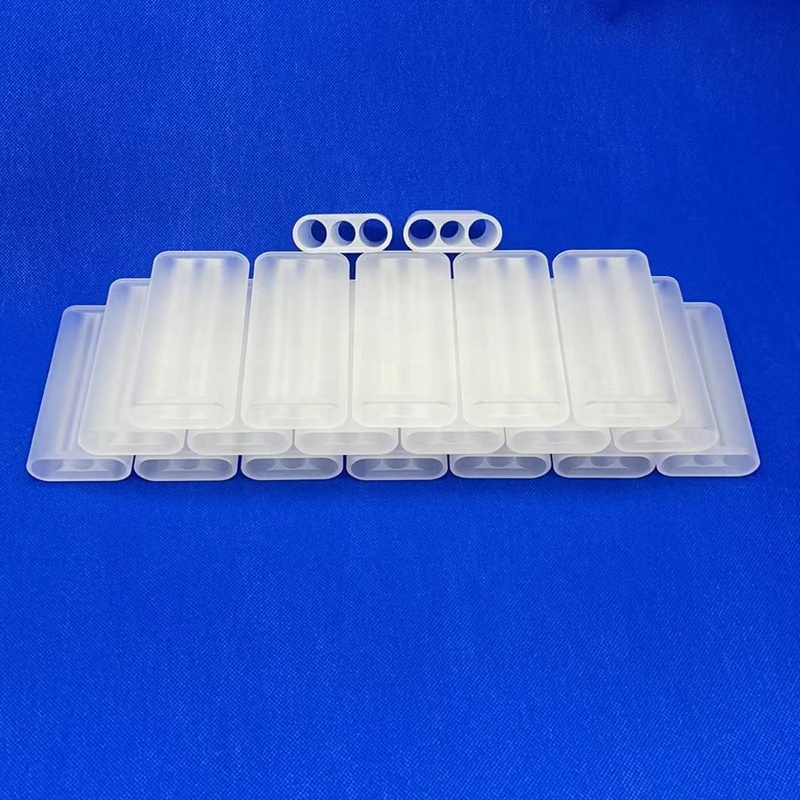
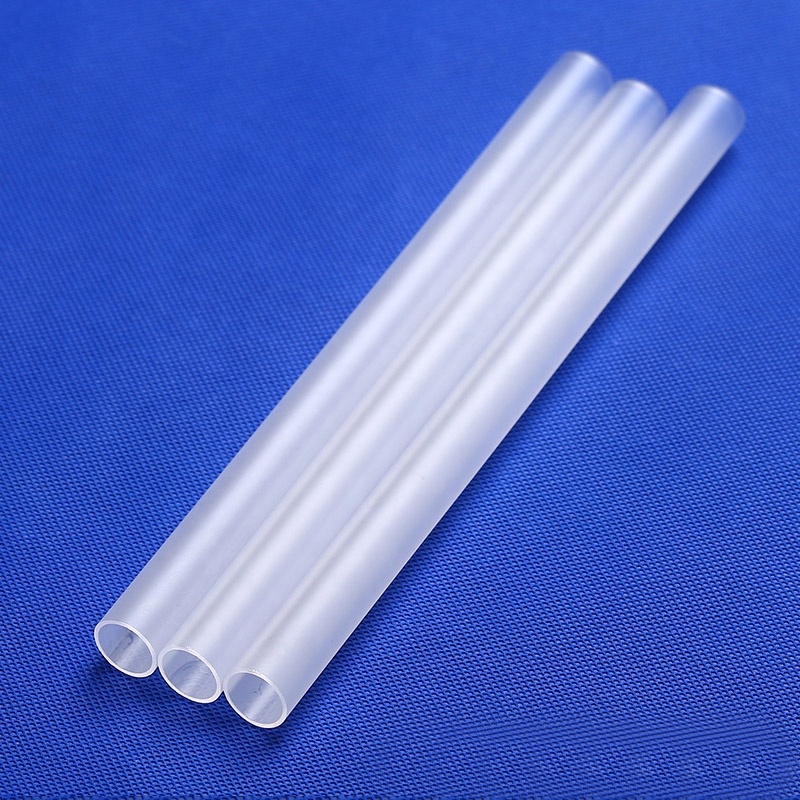
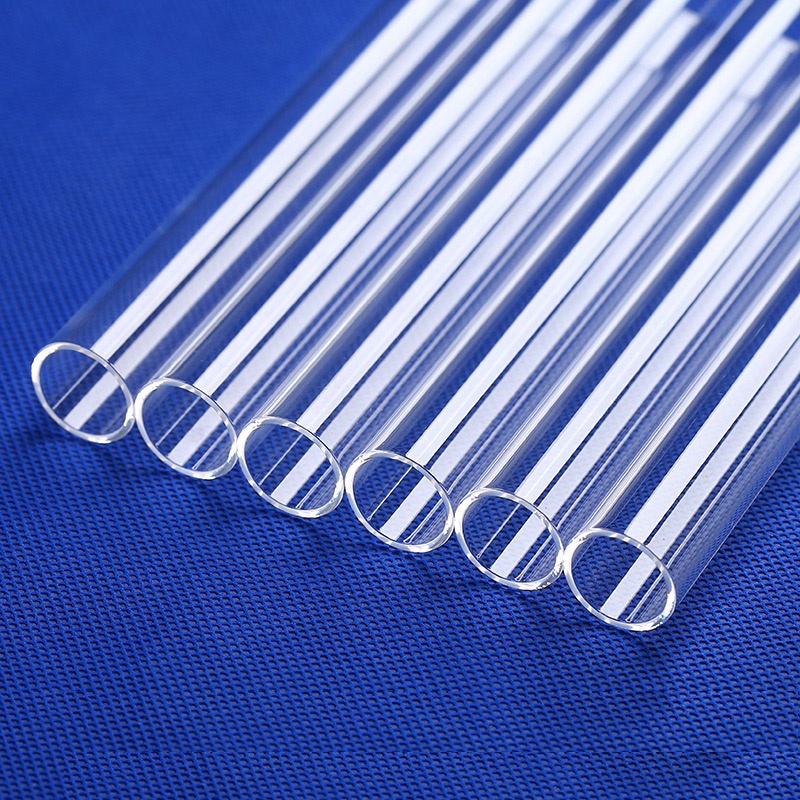
In high-demand industrial processing, the choice between conventional technical glasses (such as borosilicate 3.3 or aluminosilicate) and high-purity fused quartz is dictated by thermodynamic stability, dielectric breakdown voltage, and transmission longevity. A solid quartz rod is an amorphous silica structure consisting of a dense, three-dimensional tetrahedral network of silicon and oxygen ([SiO₄]⁴⁻). This bond structure gives fused quartz remarkable thermal and mechanical properties:
Unlike multicomponent glasses, synthetic and fused quartz rods possess an exceptionally low coefficient of thermal expansion (α ≈ 5.5 × 10⁻⁷ K⁻¹ between 20°C and 320°C). This gives the material near-total immunity to thermal shock. A heated solid quartz rod can be rapidly quenched from 1100°C into ice water without structural fracture or micro-crack propagation.
| Property Parameter | Test Standard | JGS1 (Synthetic Silica) | JGS2 (Flame Fused Quartz) | JGS3 (Electrically Fused) |
|---|---|---|---|---|
| SiO₂ Purity (%) | ICP-OES / GDMS | ≥ 99.999% | ≥ 99.99% | ≥ 99.98% |
| Hydroxyl [OH⁻] Content | FTIR Spectrometry | < 5 ppm to 1200 ppm | ≈ 150 – 200 ppm | < 5 ppm (Anhydrous) |
| Spectral Range | UV-Vis-NIR Spectrophotometry | 185 nm – 2,500 nm | 220 nm – 2,500 nm | 260 nm – 3,500 nm |
| Annealing Point | ASTM C336 | 1,180 °C | 1,215 °C | 1,210 °C |
| Softening Point | ASTM C338 | 1,710 °C | 1,730 °C | 1,725 °C |
| Refractive Index (n_d) | Abbe Refractometer (589.3 nm) | 1.4585 | 1.4584 | 1.4586 |
When specifying quartz rods for Antwerp-based industrial applications, controlling trace impurities is critical. Transition metals like iron (Fe < 0.2 ppm), titanium (Ti < 1.0 ppm), and copper (Cu < 0.05 ppm) must be minimized to prevent absorption bands in the ultraviolet spectrum and avoid devitrification centers under continuous high-temperature thermal cycling.
Negligible thermal expansion ensures dimensional stability under rapid thermal transitions up to 1300°C without mechanical rupture.
Chemically unreactive against hot concentrated acids (HCl, HNO₃, H₂SO₄) and organic solvents, except hydrofluoric and hot phosphoric acid.
Free of internal bubble inclusions, striae, and stress-induced birefringence. Delivers over 92% light transmittance through optical guide rods.
As Europe's largest integrated chemical cluster and a world-renowned hub for high-precision diamond processing, Antwerp requires quartz products that satisfy rigorous local operating standards. Our precision-drawn quartz rods, solid silica cylinders, and custom CNC apparatus are built for the area's key industrial sectors:
Used in the Scheldt River industrial zone (BASF, TotalEnergies, Covestro) for thermowell rods, liquid level prisms, catalyst support pins, and reaction-chamber viewing probes.
Supplied to the Antwerp Diamond District (Diamantkwartier) for solid silica laser beam delivery rods, internal light homogenizers, and optical waveguiding components.
Supporting API synthesis facilities across Flanders with quartz immersion heaters, ultrasonic horn rods, inert stirring shafts, and continuous-flow photochemical reaction rods.
Used in the Leuven-Antwerp high-tech corridor for high-purity carrier pins, CVD baffle supports, wafer-lift rods, and furnace thermocouple protection tubes.
In fine diamond cutting and grading, solid optical quartz rods with polished ends act as high-efficiency light guides. They channel high-energy Nd:YAG or green (532 nm) laser wavelengths with minimal internal scattering. In the petrochemical sector, engineers use heavy quartz rods as structural supports inside aggressive distillation columns and fluid-bed reactors, where metallic alloys corrode or cause unwanted catalytic reactions.
Antwerp’s manufacturing sector is undergoing an aggressive industrial transition driven by EU Net-Zero mandates, circular economy projects in the NextGen District, and the decarbonization of the Port of Antwerp-Bruges. These regional shifts are creating new, specialized performance requirements for fused quartz materials:
As Antwerp builds out its green hydrogen and ammonia import hub, high-temperature cracking reactors operate above 1000°C in reducing atmospheres. Quartz rods and furnace sleeves do not embrittle under hydrogen exposure, unlike conventional metals.
Replacing gas-fired cracking with industrial electric heaters and infrared emitters requires spiral quartz sleeves and solid dielectric support rods that handle high voltage and surface heat loads exceeding 35 W/cm².
Flemish pharmaceutical and fine-chemical companies are moving toward microreactor flow chemistry. JGS1 synthetic quartz rods allow direct ultraviolet transmission for catalyst-free photochemical synthesis.
Additionally, with stricter EU REACH chemical regulations and European carbon-border mechanisms (CBAM), Antwerp procurement teams are replacing disposable metallic or PFAS-lined reaction probes with reusable, fully recyclable, ultra-pure fused quartz rods. Quartz provides a stable, multi-year operating life even in corrosive acid environments.
Sourced from China's primary silica hub in Lianyungang, Lovri Quartz controls the complete production cycle in-house. From raw silica ore pulverization and acid pickling to continuous automatic tube/rod drawing and CNC machining, our 14,271 m² manufacturing facility delivers high-quality quartz without third-party intermediate markups:
Answers to common technical, logistics, and compliance questions from Belgian procurement teams, lab managers, and plant engineers.
Submit your project specifications, CAD drawings, or raw material performance targets. Our technical engineers review thermal loads, optical parameters, and manufacturing feasibility to deliver a comprehensive quote within 24 hours.
Inquire Now