Engineered Fused Quartz Solutions Ready for Roseau Delivery
From high-temperature pyrolysis combustion vessels to deep-UV spectrophotometric sample cells, our direct-from-factory catalogue provides seamless export packaging and guaranteed physical accuracy.
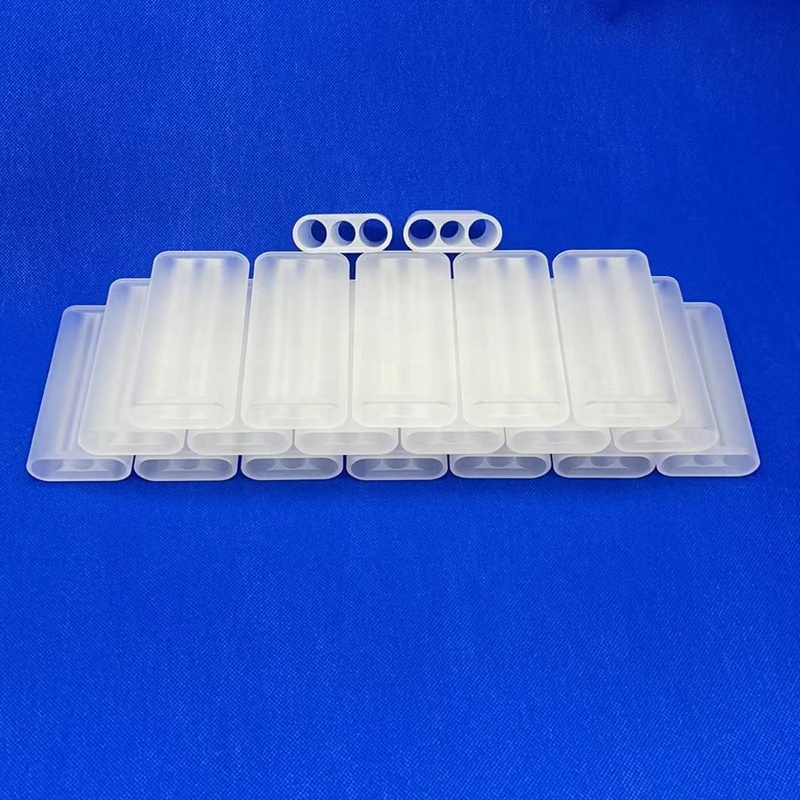
Quartz Triple Bore Flow Tubes Laser C Shape
- 99.98% SiO₂ Content
- Welding & Bending Tolerances ±0.05mm
- ROHS Certified Materials
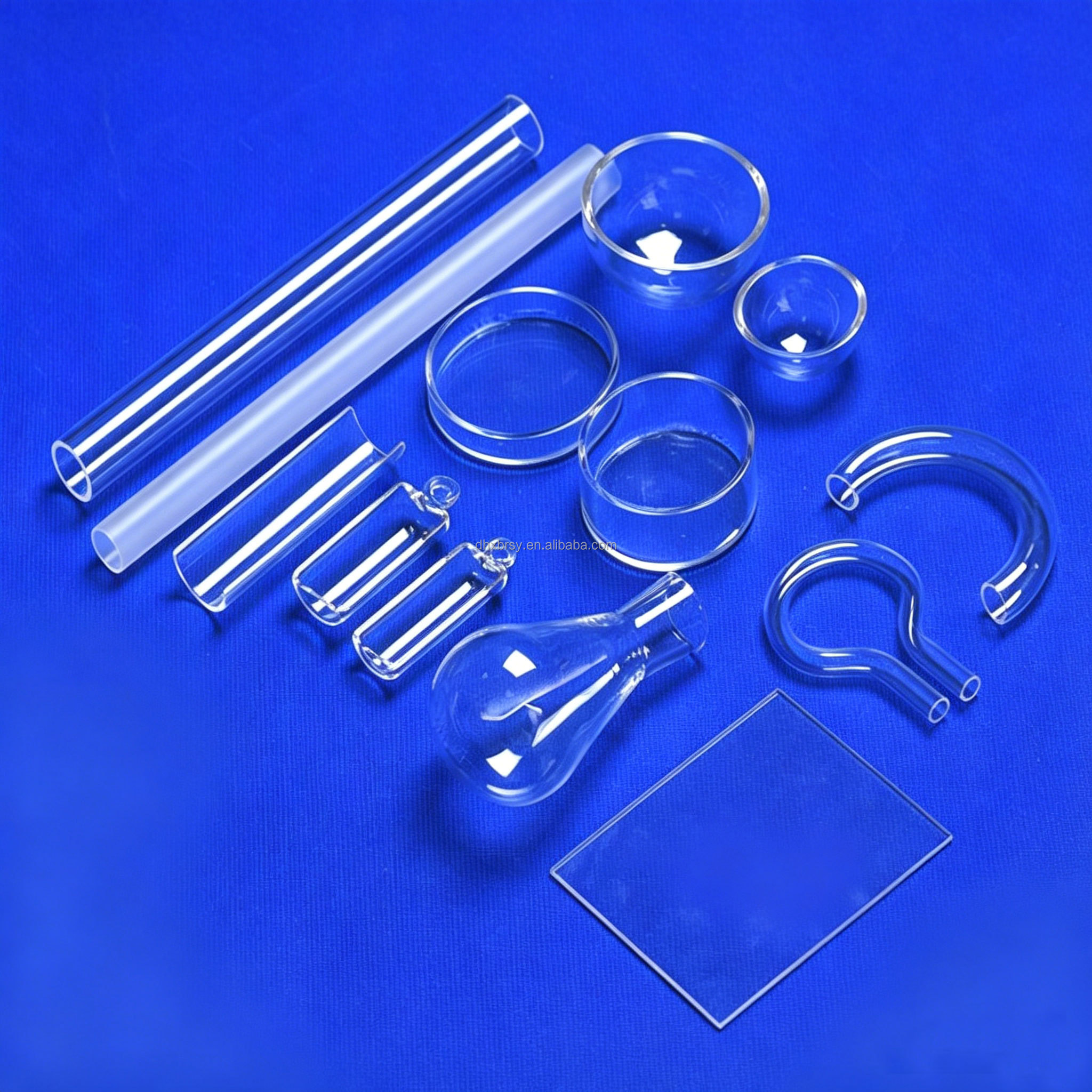
Custom Lab Quartz Glass Apparatus 99.99% SiO₂
- Ultra-Trace Chemical Neutrality
- OEM & ODM Built to Dimensional Drawing
- Zero Heavy Metal Contamination
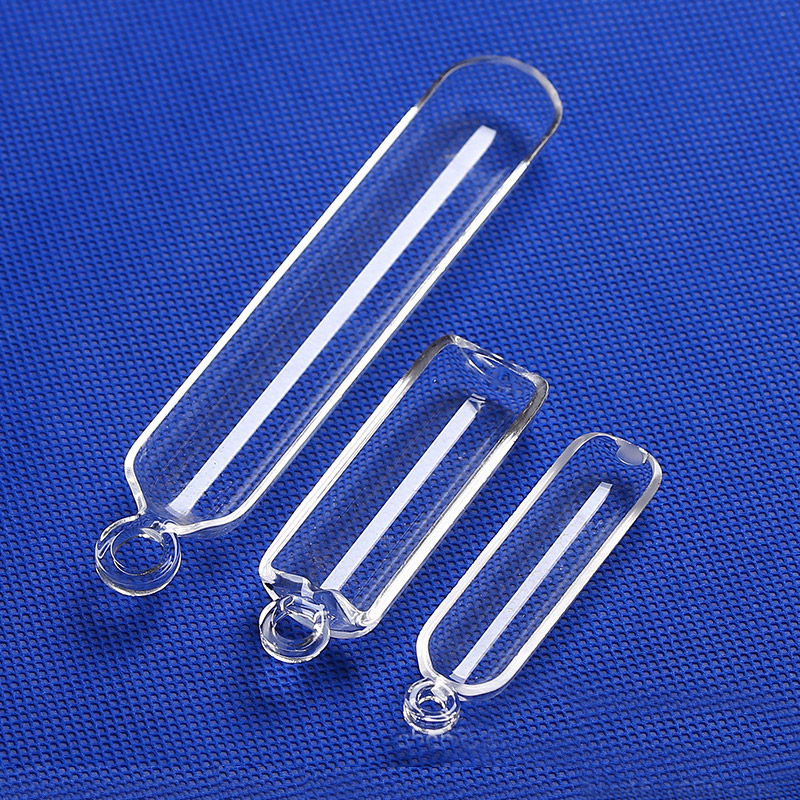
High Quality Fused Quartz Custom Made Boat
- Flame-Polished Structural Jointing
- Handles Sustained Ashing at 1,150 °C
- 99.98% High Purity Silica Integrity
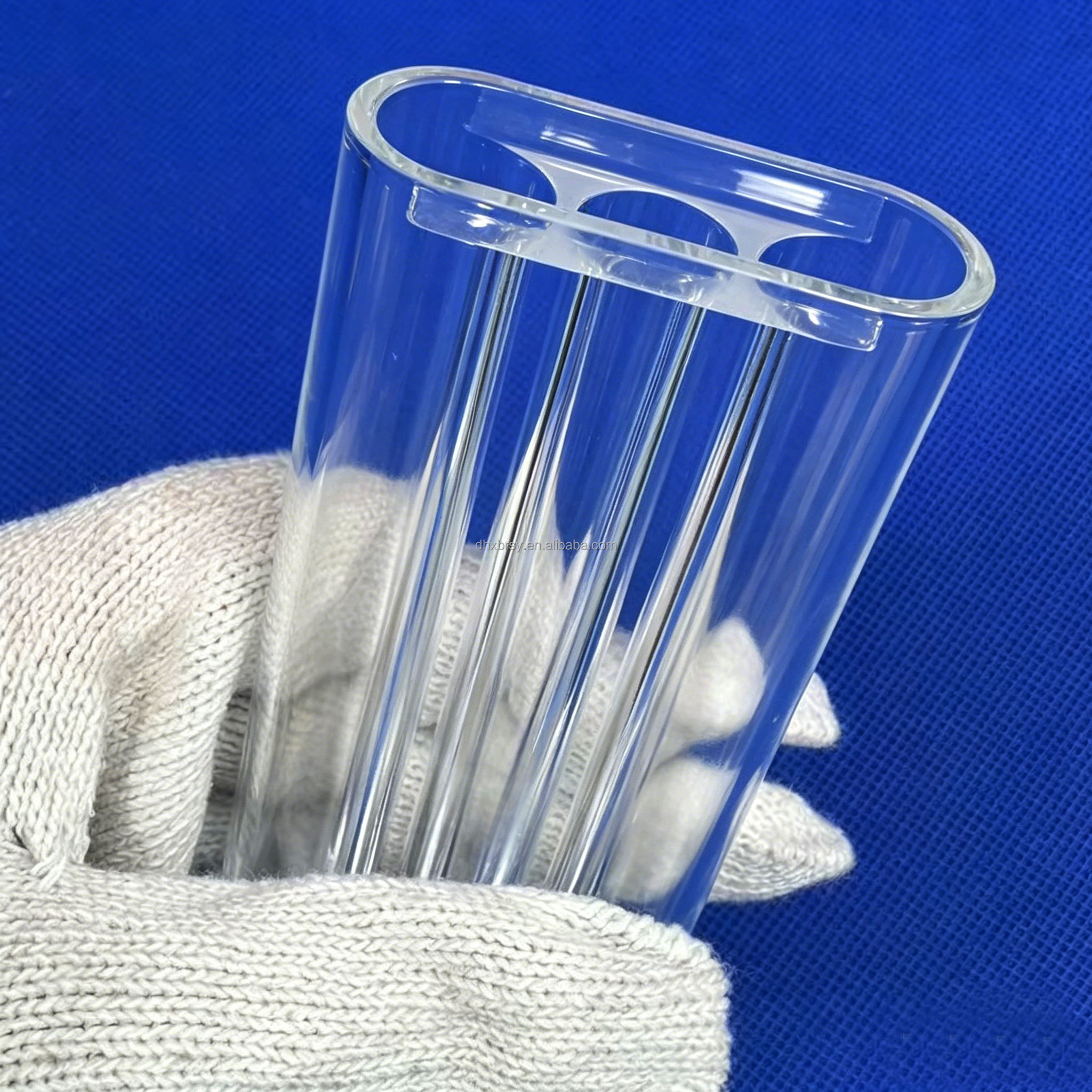
916Factory High Temperature Fused Silica Tubes
- Thermal Shock Withstand: 1,100 °C to Water
- Furnace Outer Diameters 3mm to 450mm
- Precision Bore & Parallel Concentricity
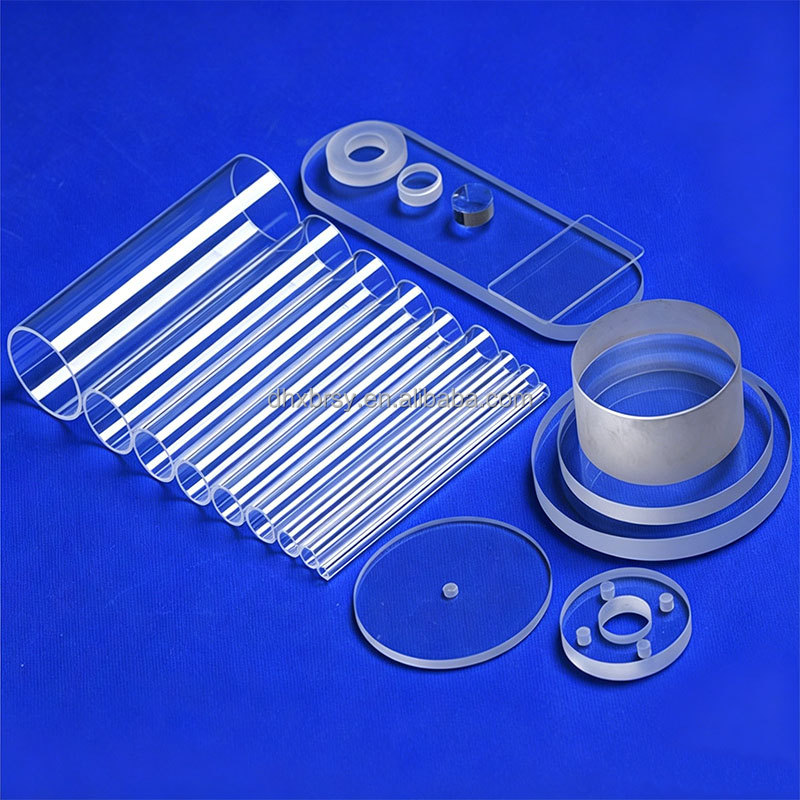
BAO RAN JGS1 Optical UV Fused Silica Window
- Spectral Transmission: 185nm – 2,500nm
- Surface Flatness λ/4, Scratch-Dig 20/10
- CNC Milled Profiles & Custom Sight Windows
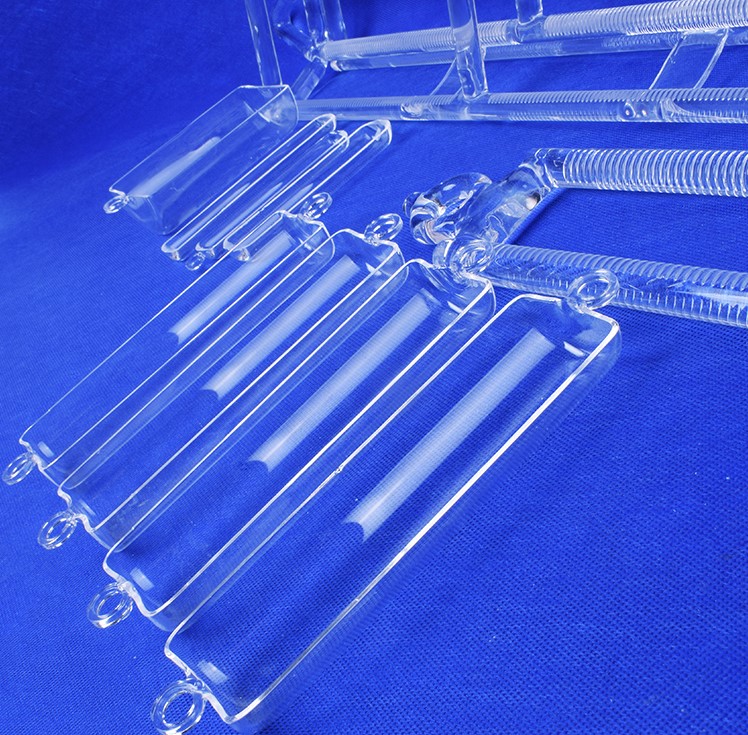
Fused Quartz Boats (SiO₂ 99.99%) Chemical Grade
- Acid, Halogen & Aqua Regia Impervious
- Custom Slotted Wafer & Substrate Guides
- Annealed Internal Stress Below 4nm/cm
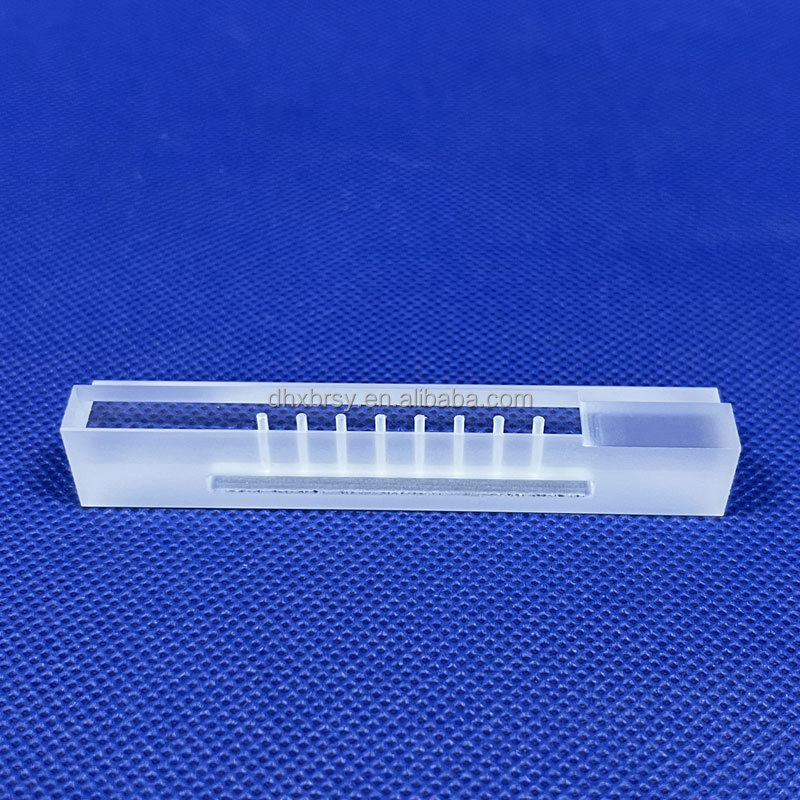
Precision Fused Quartz V-Groove Fixture Array
- Sub-Micron Machining Tolerances (±1µm)
- Telecom & Fiber Array Waveguide Grade
- Thermal Drift Elimination under High Power
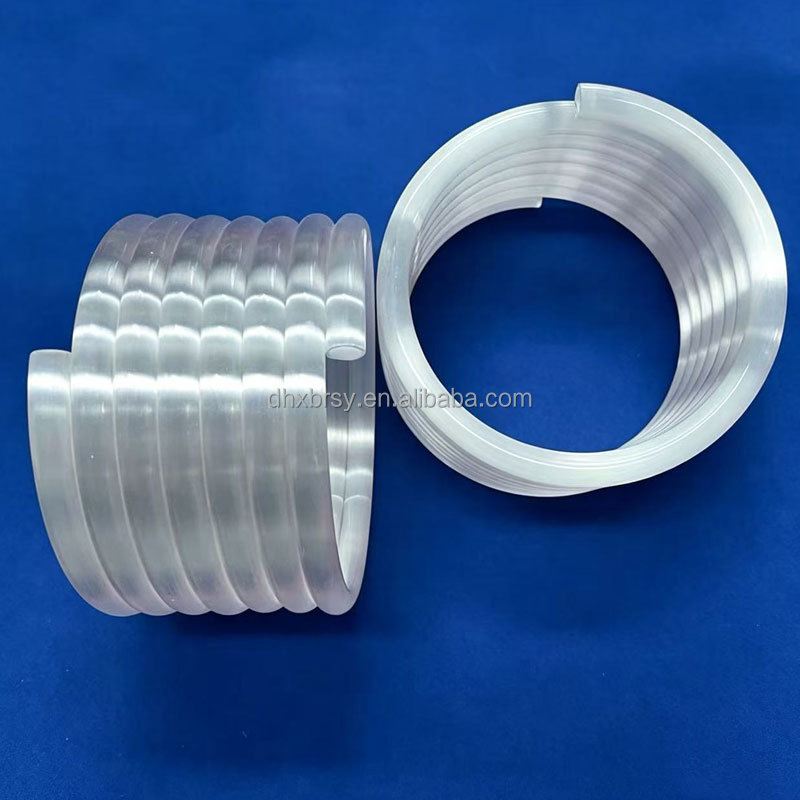
Custom Milky-White Opaque Quartz Spiral Coil
- Diffused Infrared Reflection Mechanism
- Eliminates Localized Hotspots in Furnaces
- Ideal for Fast Thermal Desorption
High-Purity Quartz Sample Vessels: Why Analytical Accuracy Relies on Amorphous SiO₂
In rigorous qualitative and quantitative analytical chemistry, the sample containment vessel cannot be regarded as an inert bystander. Standard borosilicate glassware, while ubiquitous, contains significant fractions of flux agents—principally boron trioxide (B₂O₃), sodium oxide (Na₂O), and alumina (Al₂O₃). When subjected to acidic digestion, geothermal brines, or temperature ramp cycles above 450 °C, borosilicate matrices experience ion exchange leaching. Sodium and boron ions leach into the analyte stream, yielding false-positive spectral baselines, while the structural softening point of borosilicate (circa 820 °C) causes catastrophic deformation during trace-element induction furnace combustion.
Lovri Fused Quartz Sample Tubes solve this vulnerability through high-purity amorphous silicon dioxide (>99.99% SiO₂). Synthesized from electromechanically purified crystalline silica deposits in our Lianyungang processing plant, our quartz sample tubes feature heavy metal contaminant levels (Fe, Cu, Ni, Cr) of less than 1.0 ppm total. This molecular integrity ensures zero baseline background contamination during Inductively Coupled Plasma Mass Spectrometry (ICP-MS), Atomic Absorption Spectroscopy (AAS), and Nuclear Magnetic Resonance (NMR) analytical workflows.
Critical Thermodynamic Advantage: Thermal Shock Resistance
Because the coefficient of thermal expansion of our fused silica is an exceptionally low 5.5 × 10⁻⁷ /°C (from 20 °C to 320 °C), our quartz sample tubes withstand immediate thermal plunges. A test sample heated to 1,100 °C in an ash furnace can be directly plunged into ice water (0 °C) without micro-fissuring, surface spalling, or mechanical fracturing—a capability non-negotiable for rapid mineral digestions and high-throughput field extractions in remote island environments.
Thermodynamic & Optical Property Thresholds
| Property Parameter | JGS1 (Synthetic Silica) | JGS2 (Optical Flame-Fused) | JGS3 (Infrared Fused) | Borosilicate 3.3 (Lab Glass) |
|---|---|---|---|---|
| SiO₂ Content | ≥ 99.999% | ≥ 99.99% | ≥ 99.98% | ≈ 81.0% |
| Transmission Spectrum | 185 nm – 2,500 nm (UV-Cut None) | 220 nm – 2,500 nm | 260 nm – 3,500 nm (No OH Band) | 350 nm – 2,000 nm (Zero Deep UV) |
| Softening Point (°C) | 1,730 °C | 1,680 °C | 1,680 °C | 820 °C |
| Max Continuous Temperature | 1,150 °C | 1,100 °C | 1,050 °C | 480 °C |
| Thermal Shock Tolerance | ΔT = 1,100 °C without fracture | ΔT = 1,000 °C without fracture | ΔT = 950 °C without fracture | ΔT = 150 °C max threshold |
| Hydrofluoric Acid Resistance | Rapid Etching (Universal to SiO₂) | Rapid Etching (Universal to SiO₂) | Rapid Etching (Universal to SiO₂) | Corrosive Degradation |
Specialized Scientific & Industrial Applications in Roseau, Dominica
Dominica’s aggressive clean energy transitions and environmental stewardship demand laboratory consumables capable of handling hyper-saline, sulfur-rich, and maritime-corrosive sampling matrices.
Geothermal Energy Sampling in the Roseau Valley
The development of the Wotten Waven and Laudat geothermal generation wells requires non-reactive sample collection tubes. Sub-surface geothermal brines contain high concentrations of dissolved silica, hydrogen sulfide (H₂S), and chloride salts at pressures exceeding 20 bar and temperatures above 230 °C. Standard glassware degrades rapidly; Lovri high-purity quartz tubes resist hydrothermal attack and preserve brine chemistry for precise trace mineral balance calculations.
Marine Biology & Coral Baseline Spectrometry
Institutes monitoring the Soufrière-Scott's Head Marine Reserve rely on spectrophotometric water profiling to trace coastal acidification, microplastics, and dissolved organic carbon (DOC). Lovri JGS1 optical quartz sample tubes and cuvettes deliver 92% optical clarity down to 200 nm, enabling deep-UV absorption testing indispensable for quantifying organic chemical run-off and marine biodiversity preservation.
Agrochemical Residue & Essential Oil Distillation
Export testing of Dominican bay leaf essential oils, citrus derivatives, and volcanic soil samples involves gas chromatography-mass spectrometry (GC-MS) pyrolysis. Lovri fused quartz combustion tubes and custom glass boats operate at continuous 1,100 °C without ash vitrification, delivering reproducible pesticide residue analysis needed to achieve international organic phytosanitary certifications.
Emerging Laboratory Modernization Trends across Dominica
As Roseau expands its commercial port capacity and progresses toward becoming the world's first fully climate-resilient nation, municipal and independent testing facilities are experiencing rapid technical modernization. Historically, scientific consumables were imported through indirect distributor chains in Florida or Puerto Rico, encountering markups of up to 300% and lead times extending past 14 weeks.
Modern procurement heads in the Commonwealth of Dominica are shifting to direct factory sourcing. By establishing supply lines with primary fused quartz manufacturers, regional laboratories achieve:
1. Precise Custom Tolerancing (CAD to Glass)
Caribbean environmental engineers frequently maintain legacy extraction manifolds and European-built analytical spectrometers. Standard off-the-shelf tubes rarely seat correctly into custom heating jackets. Lovri provides CNC drilling, slotted capillary tubes, and fire-welded borosilicate-to-quartz graded seals built strictly to client-provided STEP or PDF drawings.
2. Transit Safety Engineering for Island Freight
Maritime transit from international manufacturing hubs into Roseau Deep Water Harbour encounters humid tropical environments and port intermodal transshipment shocks. Every Lovri shipment uses individual vacuum polyethylene buffering, dense custom-cut EPE closed-cell foam linings, and reinforced fumigated export crates that eliminate breakage and moisture pitting during transit.
Lovri Quartz: Full Chain Manufacturing from Raw Mineral to Final Polish
Located in Lianyungang, China—the epicentre of global silica refining—our integrated infrastructure ensures complete quality control without intermediaries.
14,271 m² Dedicated Processing Facility
Assessed and onsite verified by SGS Group. Our facilities house 12 autonomous production divisions, encompassing raw crystal pulverizing, acid leaching, automatic vacuum furnace tube drawing, and precision multi-axis CNC glass machining.
100% In-Line Polariscopic Stress Relief
Residual stress created during bench blowtorch fabrication is the primary source of unpredictable tube explosions inside tube furnaces. Every Lovri sample tube undergoes high-temperature annealing followed by quantitative polarimeter stress inspection, keeping residual path differences below 4 nm/cm.
Flexible Low-Volume Prototype MOQ
We understand that public testing facilities and private geothermal consortia in the Eastern Caribbean cannot commit to containerized volumes for specialized sample designs. Lovri supports pilot testing runs with batch sizes starting at only 1 to 5 pieces for custom drawings.
Frequently Asked Questions for Buyers in Roseau & the Caribbean
Direct answers covering freight logistics, chemical compatibility, tariffs, and drawing conversions.
How are fragile quartz tubes secured against breakages during transport to Dominica?
All laboratory quartz sample tubes are individually wrapped in anti-static, zero-dust poly sleeves, embedded within tailored drop-cast polyethylene (EPE) shock absorbers, and sealed inside double-wall corrugated boxes. For multi-unit maritime or air consignments arriving via Roseau Port or Douglas-Charles Airport (DOM), these cartons are palletized and enclosed within fumigated OSB plywood crates with external tilt and shock monitoring indicators.
Can we order quartz tubes to replace European or American OEM part numbers?
Yes. If you provide the original manufacturer’s part number (e.g., PerkinElmer, Shimadzu, Thermo Fisher, or Elementar combustion tubes) or a dimensioned sketch indicating outer diameter, inner diameter, wall thickness, and flange geometry, our engineering drafting team can recreate the component in CAD and deliver an exact-fit functional replacement at direct-from-factory savings.
How does geothermal fluid composition influence devitrification in Dominica?
Quartz operates reliably at high temperatures in neutral atmospheres. However, when exposed to geothermal fluids containing alkali metals (sodium, potassium) above 800 °C, these elements act as network breakers, initiating local devitrification into high-cristobalite crystals. To maximize tube lifespan in such service conditions, our technical advisory team recommends our acid-etched flame-polished fused silica tubes, which lack surface micro-fissures where crystallization nucleates.
What documentation is included for customs clearance and chemical auditing?
Every commercial export is provided with complete international compliance paperwork, including Certificates of Analysis (COA) specifying SiO₂ purity and trace metal counts (in ppm), RoHS material compliance declarations, SGS plant assessment verifications, commercial invoices, and packing lists with clear HS Code classifications (typically 7017.10 for laboratory fused quartz goods) to simplify import duty assessment through Dominica Customs.
Consult Our Fused Silica Application Engineers for Roseau Projects
Whether you require standard sample test tubes for marine ecology baselines or specialized geothermal combustion reactors, our technical team provides rapid drawing review, quote estimations, and door-to-port export coordination.