High-Purity Fused Quartz Engineering Components
Engineered to 99.99% SiO₂ minimum purity, delivering >90% transmission down to 185 nm, near-zero thermal expansion, and verified structural integrity for harsh process environments.
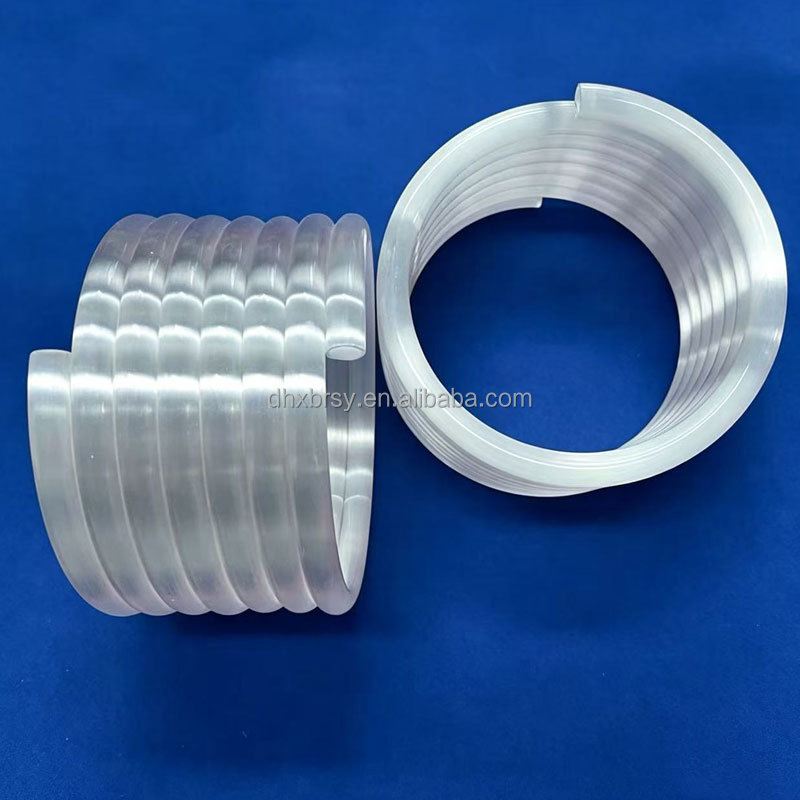
Custom Milky White Opaque Quartz Spiral Coil
High-radiance thermal diffusion coils for industrial infrared heating furnaces, thermal insulation, and rapid curing lines.
View Product Spec →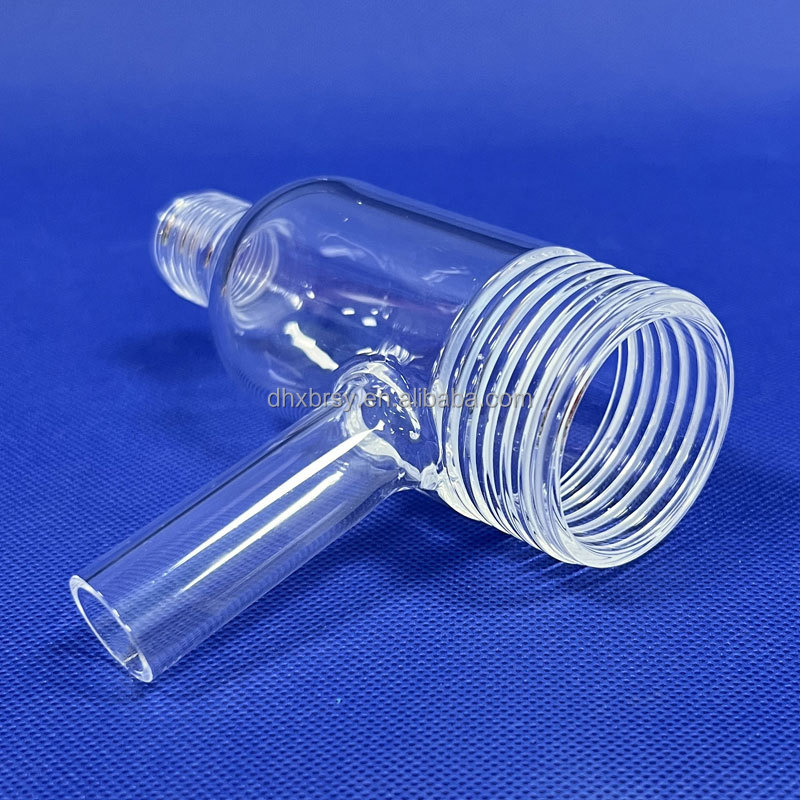
Polished High-Temp Threaded Quartz Tube
Corrosion-resistant threaded silica glass tube with 99.99% purity, certified RoHS compliance, and CNC-cut end-seals.
View Product Spec →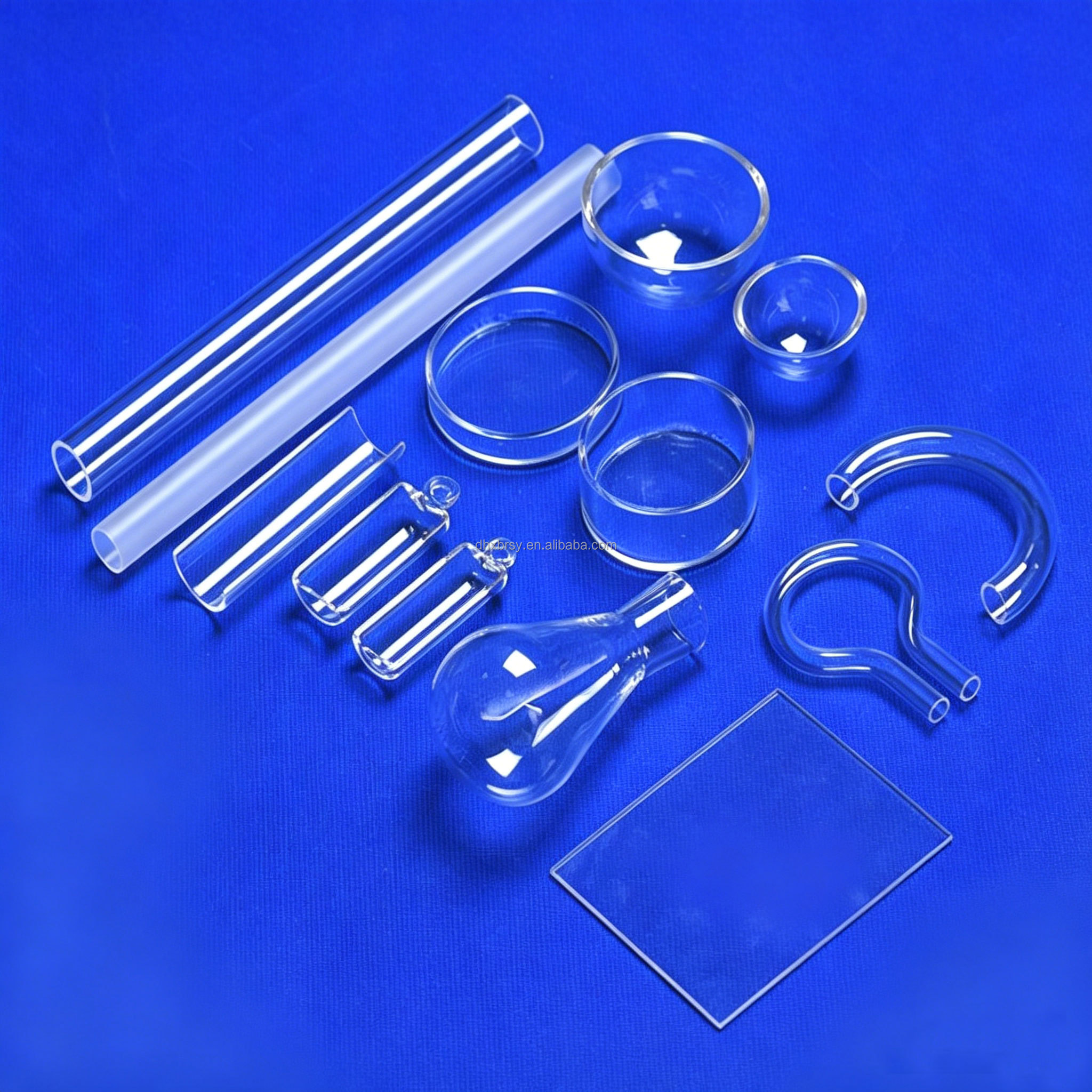
Custom Lab Quartz Apparatus & Jigs
Custom blown and CNC-machined apparatus for semiconductor wafer fabrication, chemical reaction chambers, and analytical sensors.
View Product Spec →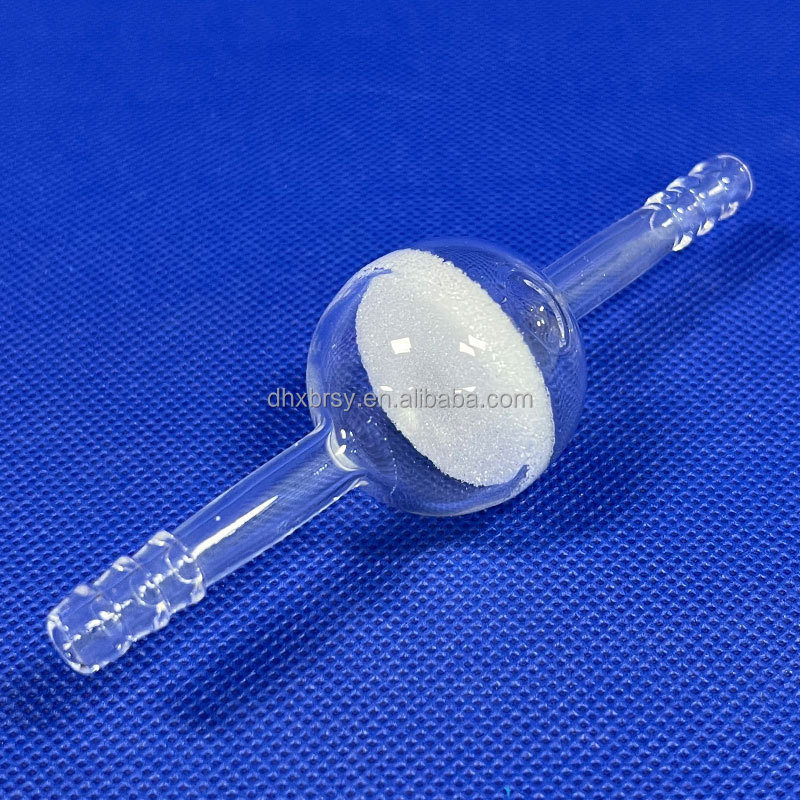
Transparent Fused Quartz Sheets & Windows
Precision optical sight glasses and digestion tubes featuring exceptional transmittance across deep UV through near-infrared bands.
View Product Spec →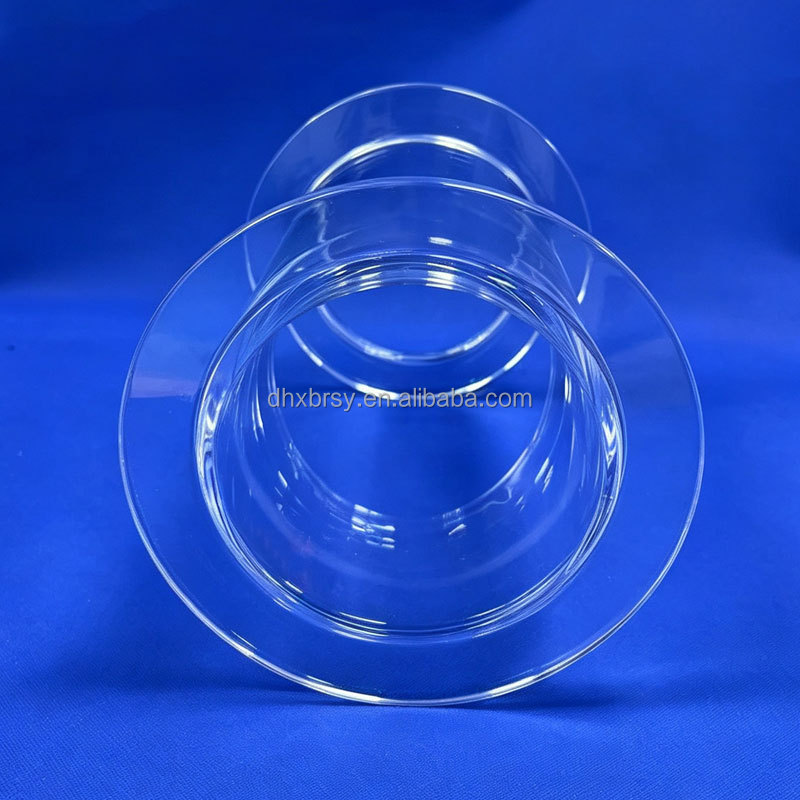
Double Flange Semiconductor CVD Quartz Cylinder
Vacuum-sealed double-flanged quartz reaction chambers constructed for chemical vapor deposition and corrosive plasma isolation.
View Product Spec →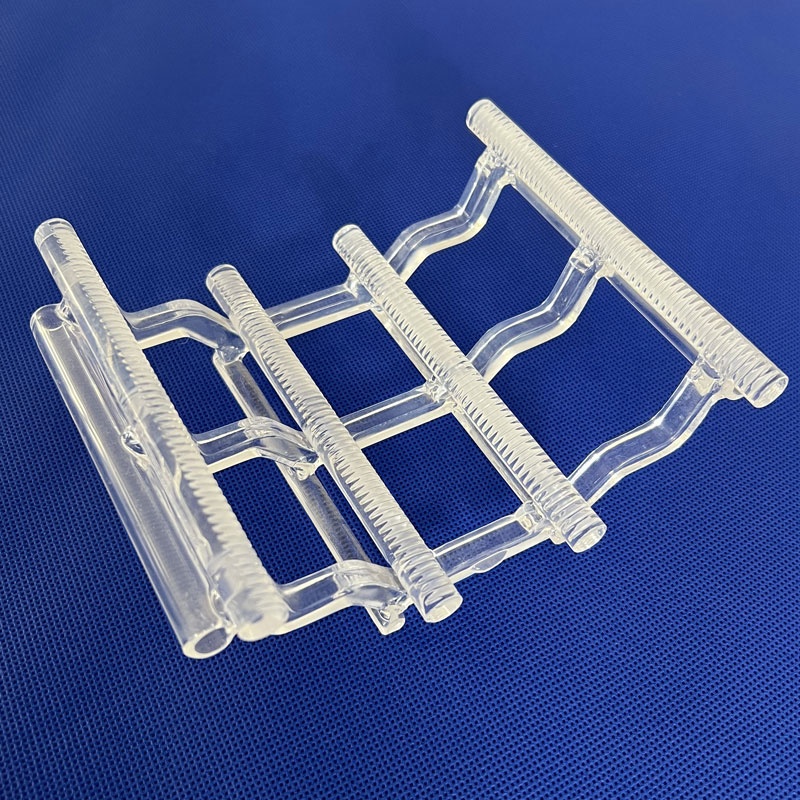
High-Temperature Quartz Wafer Boat
High-precision slotted batch wafer carriers resistant to thermal slump up to 1300°C for diffusion furnace processing.
View Product Spec →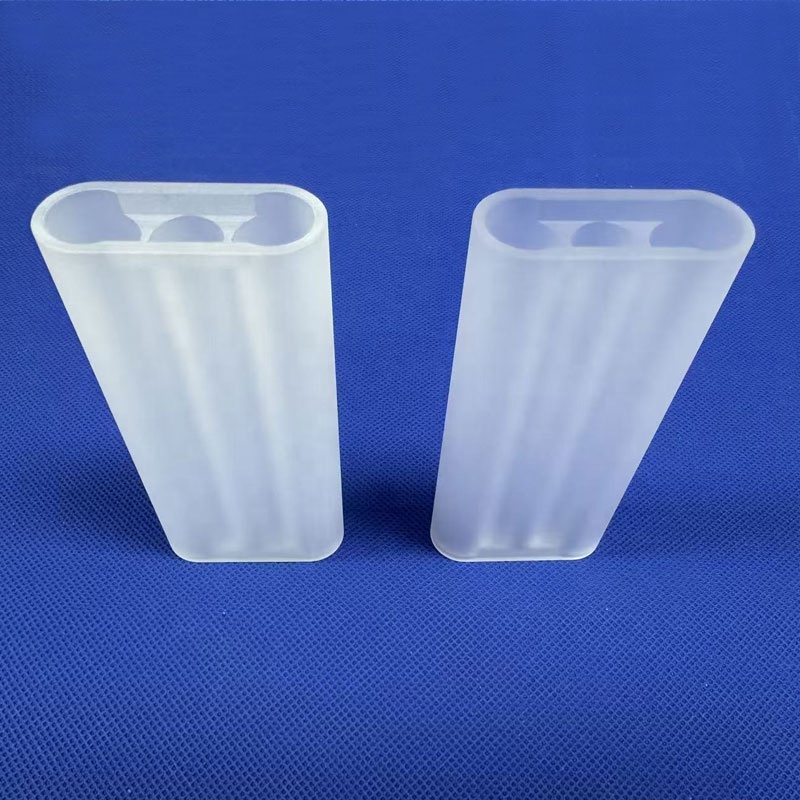
Triple Bore Quartz Laser Cavity Flow Tube
Micro-machined multi-bore flow tubes designed for high-energy Nd:YAG medical and cosmetic laser pumping assemblies.
View Product Spec →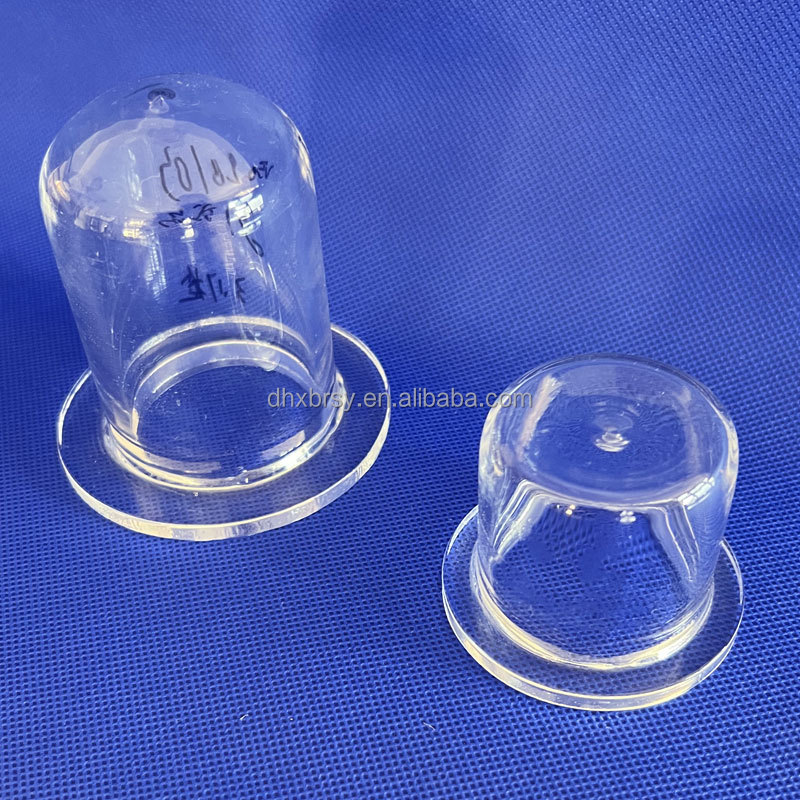
Photovoltaic Sintering High-Transmittance Tube
Ultra-pure clear fused quartz sleeves engineered for continuous solar cell metallization and rapid thermal treatment systems.
View Product Spec →Engineering Whitepaper: UV Quartz Window Manufacturing Standards for the Leeds Industrial & Scientific Cluster
As the advanced engineering, biotechnology, and academic research ecosystems throughout the Leeds City Region, West Yorkshire, and the Northern Powerhouse corridor continue their technological transformation, the demand for precision UV-grade optical interfaces has grown significantly. Industrial systems deployed in high-intensity ultraviolet environments—including excimer laser optics, ultraviolet water disinfection reactivators, photochemical flow synthesis cells, and sub-micron lithographic masking—require substrate materials capable of handling acute thermal gradients while preserving uncompromised optical wavefront transmission.
In municipal and industrial sectors across Leeds, including facilities operating throughout the Aire Valley Enterprise Zone and the manufacturing hubs of Stourton, Hunslet, and Kirkstall, high-purity fused quartz windows serve as the foundational barrier between extreme internal process physics and sensitive optical instrumentation. Standard soda-lime or borosilicate glasses fail catastrophically in these regimes due to iron-oxide absorption bands in the ultraviolet spectra (below 350 nm) and elevated thermal expansion coefficients (33 × 10⁻⁷ /°C for borosilicate versus 5.5 × 10⁻⁷ /°C for fused quartz). Lovri Quartz provides direct OEM fabrication to bridge local technical demand with high-capacity synthetic quartz synthesis.
1. Material Science Differentiation: JGS1 vs. JGS2 vs. Synthetic Fused Silica
Selecting the correct optical substrate is critical to mitigating photolytic solarization—the degradation of transmission caused by localized color-center formation when exposed to high-flux UV radiation. Procurement teams must clearly define operating wavelengths before locking specifications:
| Quartz Grade | Manufacturing Synthesis Route | Transmission Band (T ≥ 85%) | Hydroxyl (OH⁻) Content | Typical Industrial Applications |
|---|---|---|---|---|
| JGS1 (UV Fused Silica) | Chemical vapor synthesis using high-purity SiCl₄ precursor | 185 nm – 2500 nm (Deep DUV) | 1200 – 2000 ppm | Excimer lasers (193nm, 248nm), DUV spectroscopy, fluorescence viewports |
| JGS2 (Optical Quartz) | Oxy-hydrogen flame fused natural quartz crystal sand | 220 nm – 2500 nm (Near/Mid UV) | 150 – 300 ppm | UV curing lines, high-pressure mercury lamp sleeves, optical sight ports |
| JGS3 (IR Fused Quartz) | Electric vacuum furnace melted natural crystal | 260 nm – 3500 nm (Extended IR) | < 5 ppm | Infrared thermometry, thermal inspection windows, pyrometry chambers |
For applications within Leeds-based university laboratories (such as the University of Leeds Faculty of Engineering and Physical Sciences) requiring high-resolution Raman, UV-Vis spectroscopy, or photon-counting microscopy, JGS1 synthetic fused silica represents the gold standard. Its absence of metallic micro-impurities (Fe, Al, Ti < 1 ppm combined) ensures near-zero native luminescence and avoids chromatic distortion under high-density laser pulsing.
2. Localized Industrial Applications Across West Yorkshire
The manufacturing fabric of Leeds and neighboring Kirklees, Bradford, and Wakefield has evolved beyond traditional textiles and heavy mechanical casting into advanced functional engineering, medical devices, clean energy, and pharmaceuticals. Precision UV quartz windows play a central, mission-critical role across several prominent local operational sectors:
Photochemical Processing & Specialized Chemical Synthesis: Specialty chemical laboratories along the River Aire rely on fused quartz reaction viewports and customized flow cells. Because quartz remains totally inert to boiling hydrochloric, sulfuric, and nitric acids—as well as volatile organic solvents—it enables non-invasive visual process verification and precise UV photocatalytic activation without introducing metallic leachables.
Ultraviolet Disinfection & Industrial Effluent Treatment: Regional water infrastructure providers and food/beverage bottling plants situated across West Yorkshire utilize high-flux UVC (254 nm and 222 nm Far-UVC) systems for non-chemical pathogen inactivation. In these setups, our quartz windows and one-end-closed protective sleeves prevent bio-film accumulation, endure dynamic hydrostatic pressure fluctuations up to 25 bar, and provide sustained >90% transmission across thousands of continuous running hours.
High-Precision Laser Cutting & Additive Manufacturing Optics: Precision sheet metal fabrication and additive tooling represent massive industry sectors in Leeds. Laser processing centers deploy high-surface-accuracy JGS1 fused silica debris shields and protective exit windows. These substrates withstand high thermal shocks, resisting optical ablation and catastrophic shatter when exposed to airborne spatter or reflected kilowatt-range laser radiation.
3. Technical Procurement Trends in the UK & Leeds Market
Procurement strategies among UK precision engineering firms have changed noticeably. With supply chains prioritizing resilience and carbon footprint transparency, Yorkshire procurement directors increasingly seek manufacturers who provide direct root-cause quality verification rather than third-party re-sellers. Critical trends shaping the Leeds marketplace include:
- Sub-Nanometer Surface Roughness Demands: Optical windows are no longer specified simply by dimensional diameter and thickness. Today, local engineering designs routinely mandate surface quality down to 20/10 Scratch/Dig, λ/10 surface wavefront flatness, and sub-0.5 nm Ra microroughness to minimize laser beam scattering.
- Thermal Shock & Stress Elimination: Components subjected to furnace thermal cycles (from ambient room temperatures to above 1100°C in vacuum brazing or sintering) undergo 100% polarization stress testing. Lovri Quartz employs automated polariscopes to verify that residual annealing birefringence does not exceed 5 nm/cm, completely removing the hidden shear stresses that cause premature field fracturing.
- Consolidated CNC Machining Capabilities: Rather than sourcing flat quartz plates and re-machining them domestically at high subcontract rates, Leeds buyers specify drop-in ready components: bevelled edges, countersunk fixing holes, stepped flange diameters, and hermetic O-ring seal grooves cut directly by 5-axis ultrasonic CNC machinery.
Why UK Procurement Teams Choose Lovri Quartz
Eliminating middleman markups through end-to-end direct control: from natural raw crystal purification to certified precision CNC export fabrication.
Source Crystal Acid-Pickling
Unlike secondary fabricators who cut from commercial glass stock of unknown origin, we pulverize, screen, and acid-pickle raw natural quartz in-house to achieve pristine 99.99% SiO₂ elemental purity.
- Extremely low heavy metal impurities (Fe < 0.2 ppm)
- Zero air bubble inclusion under shadowgraph testing
- Continuous lot-to-lot spectroscopic tracking
Micron CNC Glass Machining
Our workshop houses high-rigidity CNC machining centers, automated ultrasonic milling heads, and double-sided planetary optical lapping units built exclusively for brittle silica materials.
- Custom geometries, chamfers, stepped flanges
- Precision optical polishing down to 20/10 scratch-dig
- Laser drilling for micro-fluidic flow ports
Validated Export Packaging
Fragile quartz requires professional logistics engineering. We employ vacuum cleanroom wrapping, custom form-molded EPE shock-absorbent cushioning, and reinforced international crates.
- SGS onsite-verified factory operational compliance
- Direct express and air freight with customs readiness
- Guaranteed crack-free arrival directly to your facility
Leeds Procurement & Engineering Questions Answered
Answers to common technical, logistics, and quality assurance questions raised by UK optical engineers and procurement specialists.
Q: How do your JGS1 windows compare to proprietary synthetic quartz such as Suprasil or Corning 7980?
JGS1 conforms directly to the international synthetic fused silica standard, produced via the vapor-phase oxidation of pure silicon tetrachloride. It provides equivalent deep-ultraviolet internal transmittance (>90% at 200 nm for a 10 mm path) and negligible fluorescence, making it an entirely drop-in compatible, cost-effective replacement for Corning 7980, Heraeus Suprasil 1/2, or Spectrosil substrates in laser viewing ports and spectroscopy windows.
Q: What is the typical lead time for delivery to manufacturing facilities in Leeds?
For standard rectangular or circular UV quartz window blanks held in stock, dispatch occurs within 48 to 72 hours. Custom CNC-machined components requiring step profiles, hole drilling, and fine optical polishing typically ship in 10 to 15 business days. We ship regular consignments directly via air express (DHL/FedEx) delivering directly to facilities across West Yorkshire within 3 to 5 transit days.
Q: Can you fabricate custom UV quartz windows directly from our mechanical CAD files?
Yes. Our engineering department works natively with STEP, IGES, DWG, DXF, and dimensioned PDF mechanical drawings. Our technical team conducts a complete design-for-manufacturability (DFM) review prior to cutting, checking edge bevel ratios, thermal transition points, and tolerance limits to guarantee performance and reduce unit production costs.
Q: What temperature limits can your fused silica windows safely endure without devitrification?
Our transparent fused quartz exhibits a continuous operating threshold of 1100°C and can endure intermittent short excursions up to 1300°C without mechanical distortion (annealing point is 1215°C; softening point is 1730°C). Unlike borosilicate glasses, quartz can be repeatedly taken from 1000°C and plunged directly into cold water without cracking, due to its low coefficient of thermal expansion (5.5 × 10⁻⁷ /°C).
Q: What documentation and quality inspection certifications accompany export shipments?
Every commercial delivery includes a Certificate of Conformance (CoC), raw material purity analysis confirming ≥ 99.99% SiO₂ content, dimensional inspection reports, and RoHS compliance declaration. Upon request prior to production, we can also provide spectrophotometer transmission curves (190 nm–1100 nm) and polarization stress inspection records.
Q: What is your policy on Minimum Order Quantities (MOQ) for prototypes and pilot trials?
We actively support university research, pilot projects, and initial prototyping runs across Leeds. We have a low MOQ policy: standard sight glasses and single custom prototypes can be ordered in quantities as small as 1 to 5 pieces before your team commits to full series batch manufacturing.
Request a Direct Engineering Quote for Your UV Quartz Project
Send our team your target dimensions, required optical transmission band (JGS1, JGS2, JGS3), operating temperatures, and CAD drawings. We will review your application requirements and respond with a detailed technical quotation.