Precision Quartz Tubing & Fabricated Glassware
Engineered to exact geometric tolerances, offering extreme thermal shock resistance, ultra-low trace metal contamination, and superior broadband optical transmittance.
Comprehensive Engineering Guide: Material Science of Fused Quartz Tubing
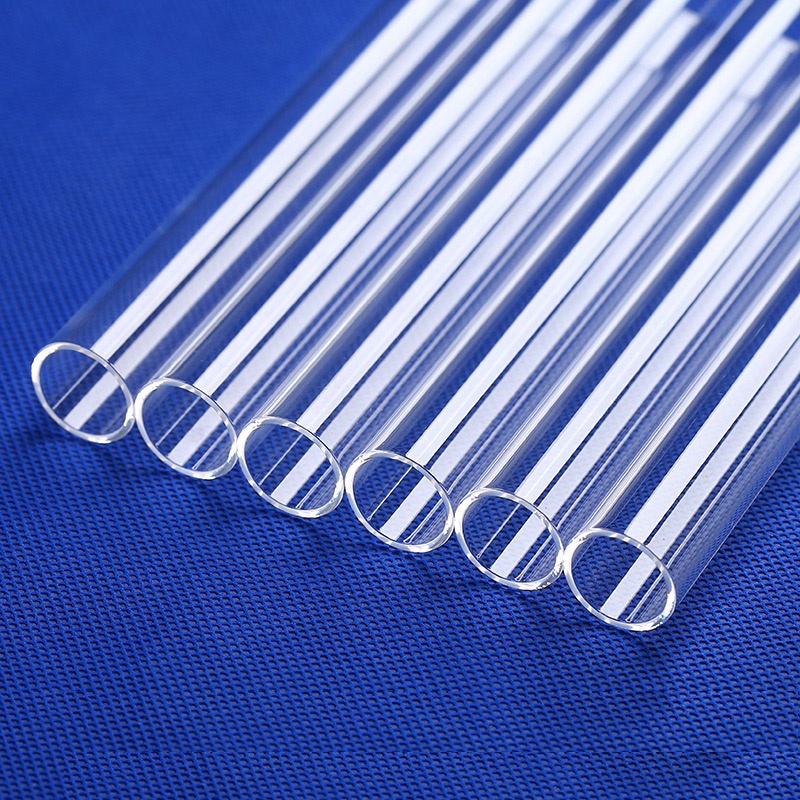
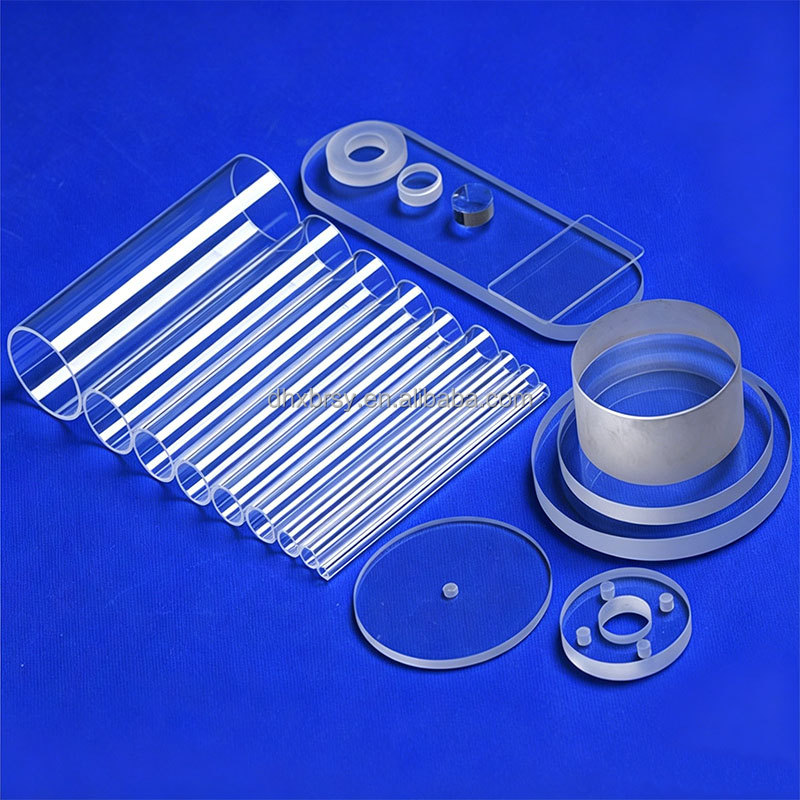
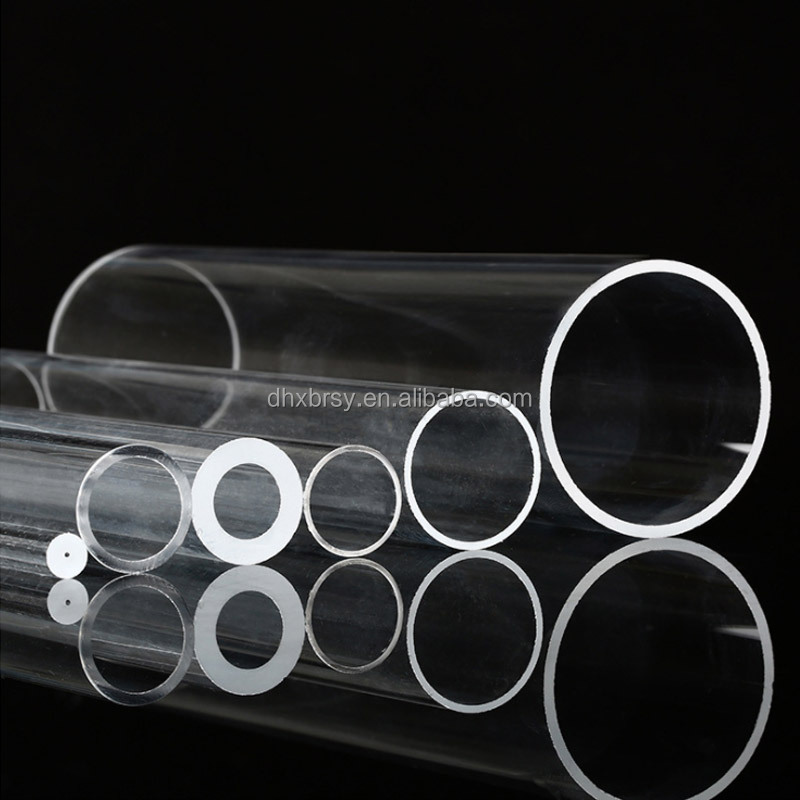
Fused quartz tubing represents one of the most vitrified, physically stable structural mediums utilized across cleanroom semiconductor manufacturing, industrial photolithography, epitaxy fabrication, and advanced chemical vapor deposition (CVD). Fabricated from natural crystalline quartz of exceptional purity or synthesized via chemical vapor hydrolysis (synthetic fused silica), clear quartz glass stands unique among technical ceramics and silicate glasses. The fundamental strength of fused quartz tubing lies in its three-dimensional tetrahedral network of silicon and oxygen (SiO₄), devoid of conventional network-modifying fluxing agents like sodium, calcium, or boron.
The total absence of fluxing components endows our quartz tubing with an exceptionally high strain point (1120 °C) and annealing point (1215 °C), allowing continuous service operation at temperatures surpassing 1100 °C, and cyclic threshold endurance up to 1300 °C or 1400 °C for intermittent durations. Because its coefficient of thermal expansion (CTE) is roughly 5.5 × 10⁻⁷ /°C—approximately 1/10th that of borosilicate lab glassware—fused quartz tubing can survive extreme thermal down-shocks: a red-hot quartz tube heated above 1000 °C can be plunged into ice water without micro-fracturing or structurally failing. For hardware designers, process engineers, and procurement directors, sourcing quartz tubing from a vertically integrated Chinese producer guarantees not only competitive component economics but tight thermodynamic performance repeatability.
| Critical Parameter | Electrically Fused Quartz (JGS2 / JGS3) | Synthetic Fused Silica (JGS1) | High-Borosilicate 3.3 Glass |
|---|---|---|---|
| SiO₂ Purity Level | ≥ 99.99% (4N) | ≥ 99.9999% (6N) | Approx. 81% |
| Continuous Max Temperature | 1100 °C – 1150 °C | 1150 °C – 1200 °C | 450 °C – 500 °C |
| Softening Point (η = 10^7.6 dPa·s) | 1730 °C | 1600 °C – 1710 °C | 820 °C |
| Thermal Expansion (0-300 °C) | 5.5 × 10⁻⁷ /K | 5.2 × 10⁻⁷ /K | 33 × 10⁻⁷ /K |
| Deep UV Transmittance (193-260 nm) | Moderate to Nil | Superior (> 90% internal) | Opaque / Absorptive |
| Hydroxyl (OH⁻) Concentration | < 5 ppm to 30 ppm | Typ. 150 - 1200 ppm | N/A (Multi-component) |
| Dielectric Strength (20 °C, 1MHz) | 25 – 40 kV/mm | 30 – 50 kV/mm | Typ. 10 – 15 kV/mm |
Future Procurement & Industry Fabrication Trends
The global quartz products market is encountering a monumental paradigm shift driven by technological transitions within microelectronics node scaling and next-generation green tech. Sourcing departments are abandoning generic trading channels in favor of deeply aligned partnerships directly with primary tier-1 Chinese manufacturers. Several distinct macro trends dictate technical specifications and supply chain decisions:
1. Sub-ppb Impurity Control
As semiconductor lithography expands into gate-all-around (GAA) architectures and sub-3nm nodes, trace metallic contaminants (Al, Fe, Cu, Ni, Na, K, Li) in diffusion quartz tubes act as devastating yield killers. Sourcing mandates now demand specialized hot chlorination purification and dynamic acid leaching protocols to drive alkali and transition metals down to single-digit parts-per-billion metrics.
2. Large-Bore Solar Diffusion
The global transition to N-type TOPCon and Heterojunction (HJT) solar cells requires continuous expansion of thermal furnace tube dimensions. High-volume photovoltaic facilities now deploy ultra-large-diameter fused quartz furnace chambers ranging from OD 350mm to 650mm, challenging manufacturing lines to preserve structural roundness, minimal warp, and balanced wall uniformity under long durations of thermal stress.
3. Advanced Laser Flow Tubing
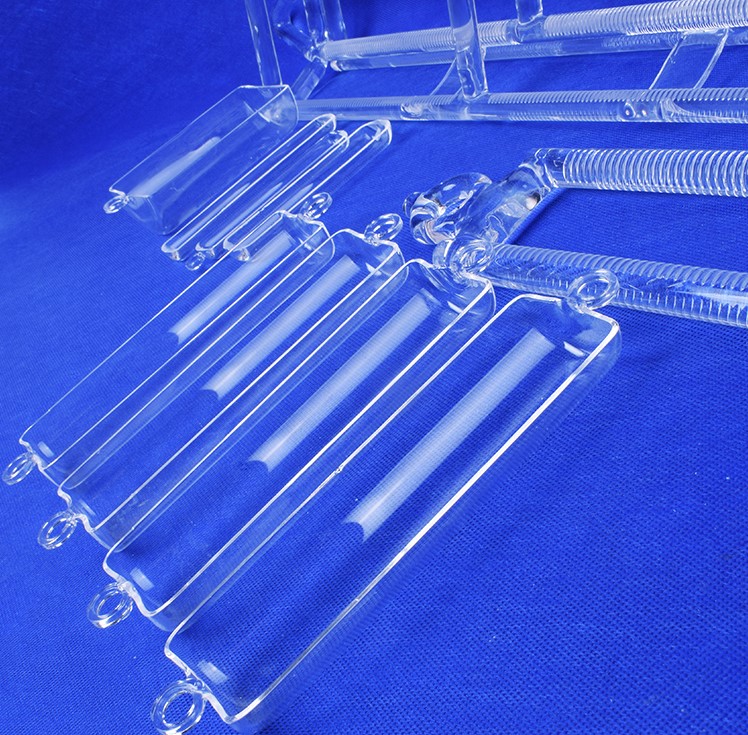
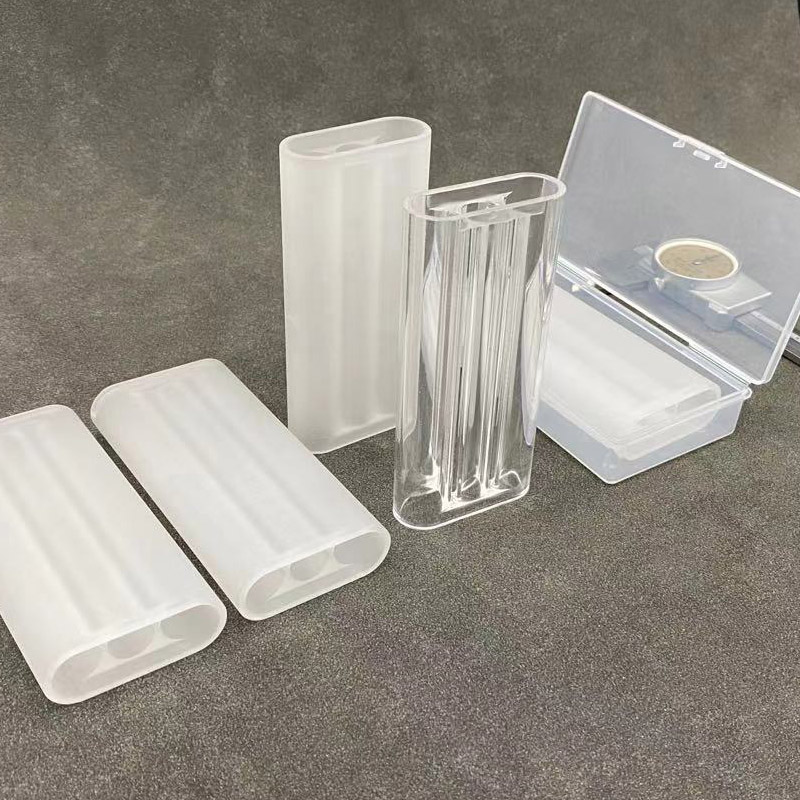
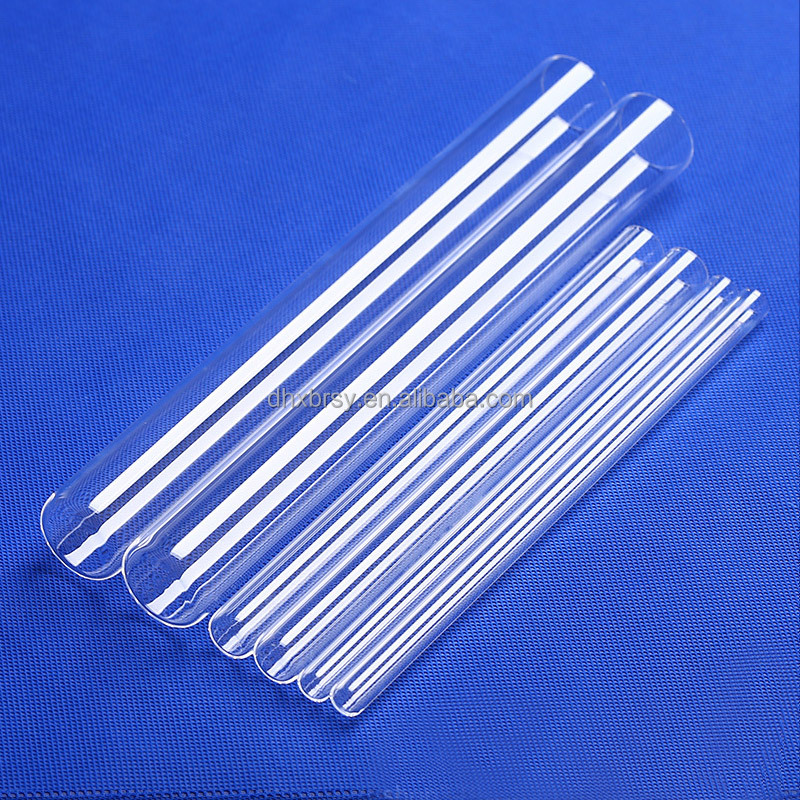
Medical aesthetics and diode-pumped solid-state (DPSS) industrial laser engines increasingly pivot toward complex multi-bore (double, triple, quad-bore) and C-shaped quartz flow conduits. These specialized geometries combine coolant distribution alongside laser gain medium housings within a monolithic, precision-drawn and CNC-ground fused silica chassis to minimize refractive deflection.
Furthermore, ESG directives and environmental auditing standards are prompting major multinational corporations to audit carbon footprints across raw mineral crushing, hydrogen-oxygen flame refining, and chemical waste neutrality. By implementing clean electrical continuous drawing systems and high-efficiency oxy-hydrogen combustion furnaces, top-tier Chinese facilities are delivering export-compliant, fully certified high-purity quartz tubing while significantly mitigating lifecycle carbon emissions.
End-to-End Vertical Manufacturing Authority
Operating from Lianyungang, Jiangsu—the epicenter of China's high-purity silica industry—Lovri Quartz combines unrefined mineral acid-leaching, proprietary furnace drawing, and 5-axis CNC machining under one roof.
Integrated Mineral Refining
Unlike secondary workshops that purchase generic third-party tubing, our 14,271 m² operational facility maintains native crushing, granulometric classification, and aggressive multi-stage acid pickling lines. We control SiO₂ content precisely at ≥99.99%, ensuring uniform melting viscidity, near-zero bubble clusters, and superior metallurgical integrity from step zero.
Full Polarization Stress Annealing
Thermal failure in industrial quartz tubing predominantly stems from frozen residual hoop stresses induced during rapid flame forming. Every batch traversing our workshop undergoes computer-controlled thermal ramping and prolonged dwell cycles inside dedicated annealing kilns, with 100% downstream polarization stress metrology verification.
SGS Onsite Audited & Compliant
International procurement is shielded by institutional rigor. Lovri Quartz maintains verified onsite certifications administered by SGS Group. Every material run fulfills European Union RoHS environmental standards and CE machinery safety regulations, accompanied by comprehensive spectral analysis and dimensional QA sheets.
Multi-Axis CNC Cold Processing
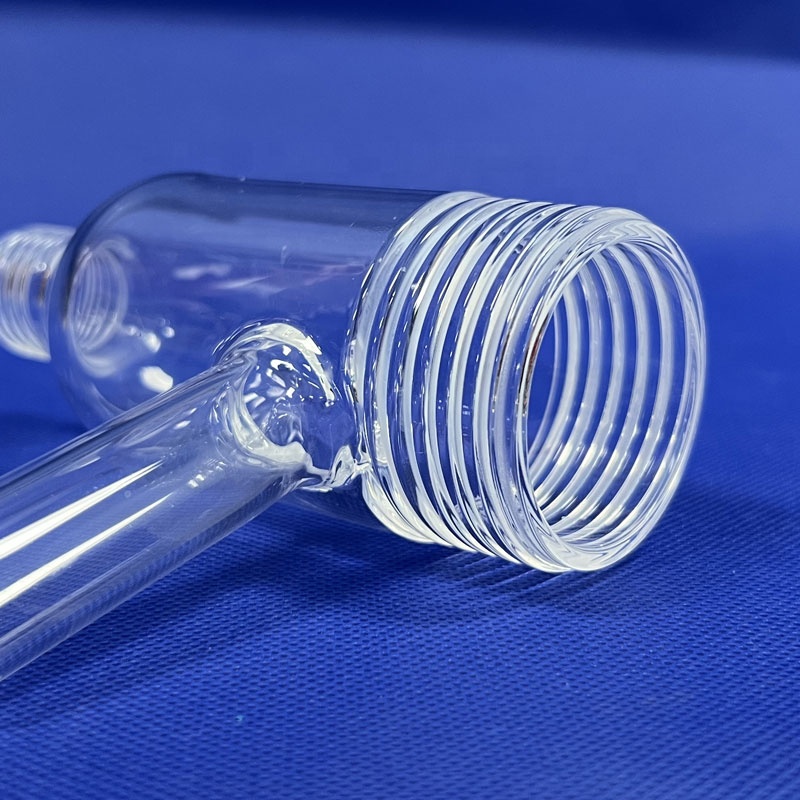
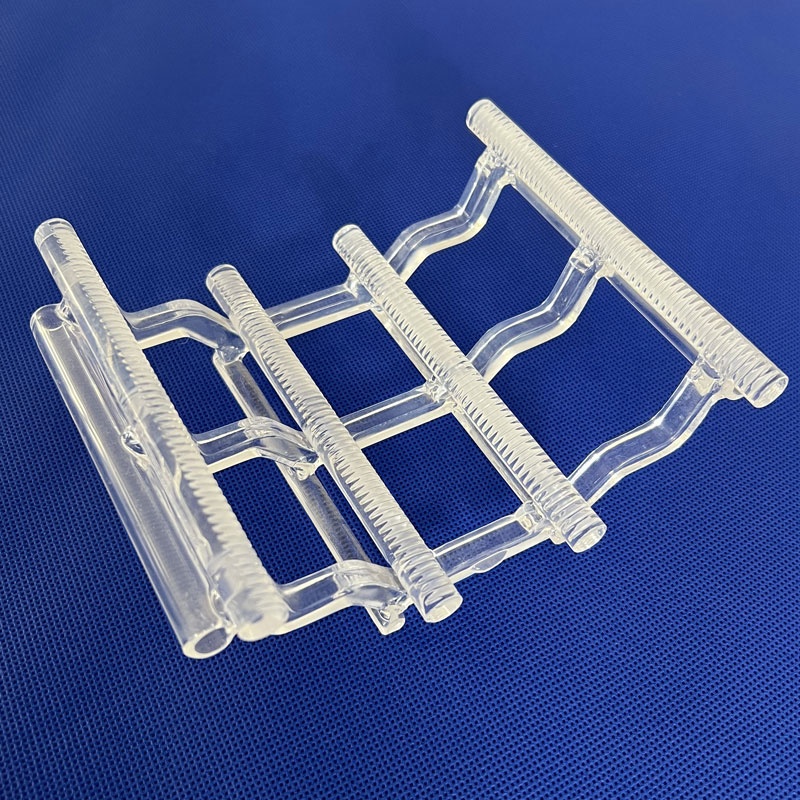
Beyond rotary glass blowing and thermal tube cutting, our precision center hosts diamond-tooled CNC machining centers capable of micro-drilling 96-well biological plates, helical threads, blind slots, internal capillary bores, and ground optical mating surfaces with linear tolerances strictly bounded within ±0.01 mm.
Engineered Export Shockproof Logistics
Fragile high-aspect-ratio quartz tubes, delicate diffusion wafer boats, and ground joint vessels require zero-defect transit survival. Our packaging line utilizes custom thermoformed multi-density EPE foam cradles, vapor-barrier desiccants, and solid plywood sea/air export crates engineered to withstand international intermodal shipping dynamics.
Rapid Prototyping to Full Volume Delivery
Whether you require a single high-temperature customized CVD reaction vessel for institutional research or recurring container shipments of ozone-generation sleeves, our manufacturing structure supports agile prototyping with a minimum order quantity starting from 1 unit, paired with dedicated engineering review turnarounds within 24 hours.
Frequently Asked Questions
Everything you need to know about quartz material classification, operational tolerances, chemical resistance, and drawing evaluation.
How do JGS1, JGS2, and JGS3 quartz grades differ in spectral transmission and purity?
What are the maximum operational thermal parameters for your clear fused quartz tubes?
How does fused quartz react when exposed to aggressive industrial acids and alkalis?
Can you execute multi-axis custom fabrication directly from CAD / STEP engineering models?
What visual and dimensional testing certifications accompany custom export shipments?
How do you mitigate risk of breakage during international multimodal shipping?
Accelerate Your Quartz Component Sourcing Today
Consult directly with our materials engineers. Submit your dimensional specifications, operating temperature targets, and required volume to receive an optimized quote, comprehensive DFM feedback, and production timeline within 24 hours.
Get a Quote