Featured Custom High-Purity Fused Quartz Components
Fabricated from electro-fused and synthetic silica ingots, engineered to withstand continuous thermal exposure up to 1100°C and severe corrosive chemical reagents in industrial operations.
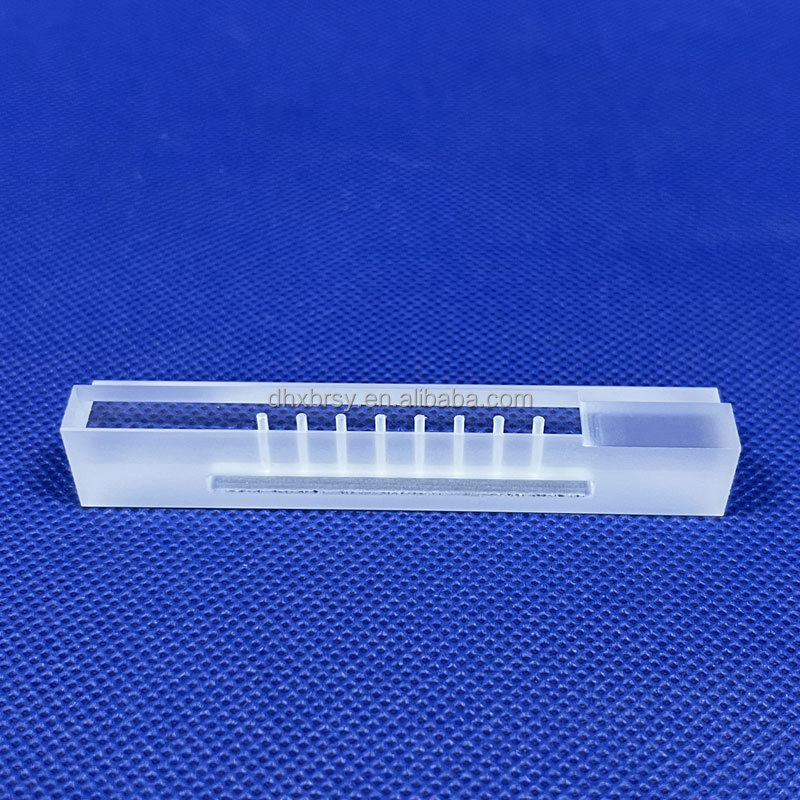
Precision Fused Quartz V-Groove Fixture & Array Holder
Micro-machined optical communication sub-mount with sub-micron pitch accuracy, designed for high-power laser diode and optical fiber array alignment.
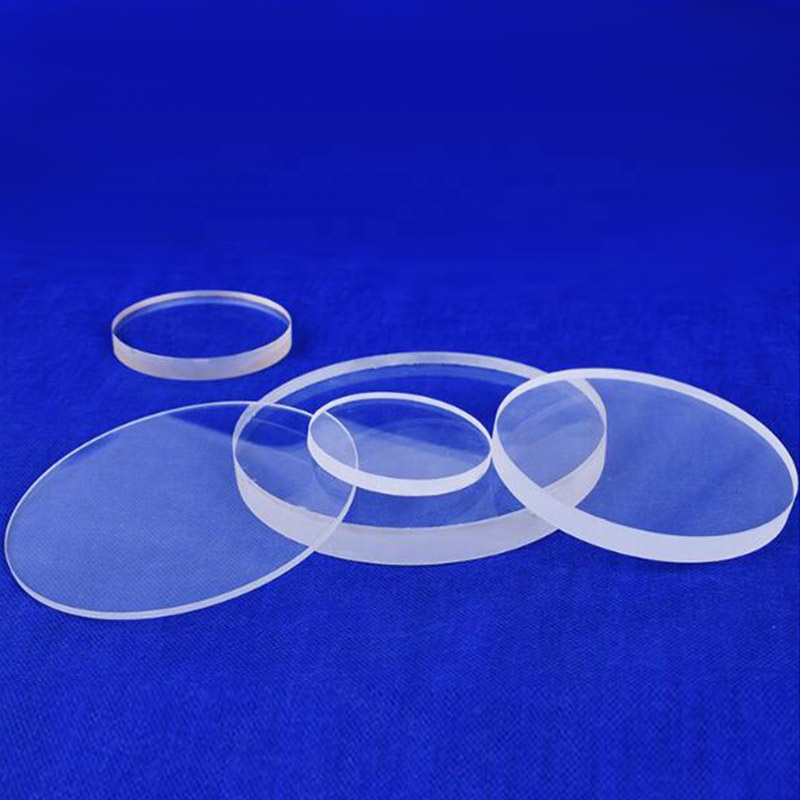
JGS1 / JGS2 Polished Quartz Plate & Optical Viewport Disc
Double-side polished optical flats with surface figure λ/4 to λ/10, bubble class 0, and deep ultraviolet to near-infrared spectrum transmittance.
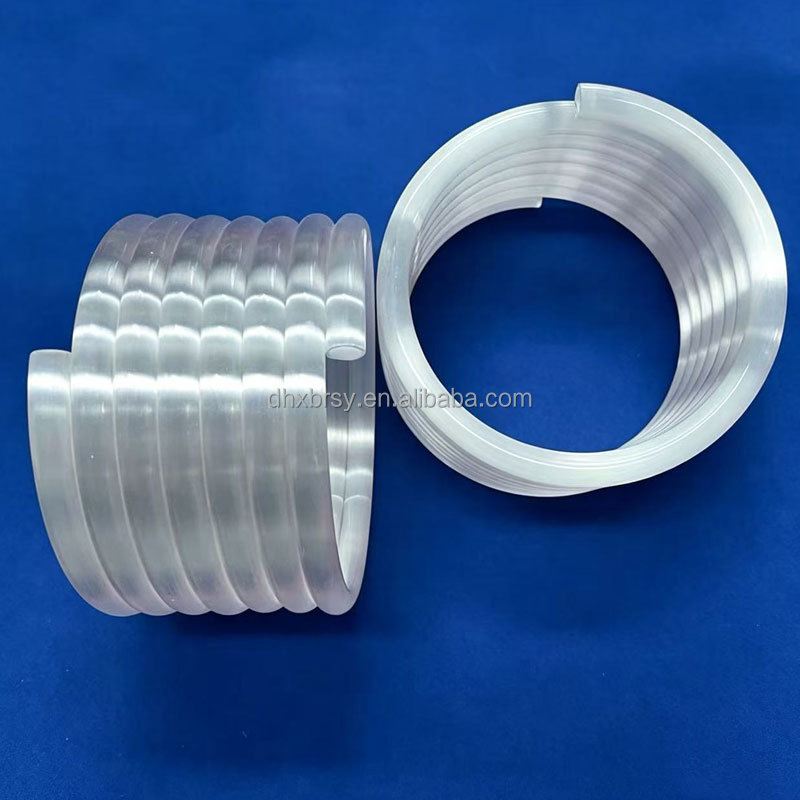
Opaque Milky White Quartz Spiral Tube & Helix Coils
Uniform micro-bubble porous structure offering optimal infrared thermal back-scattering for rapid diffusion furnace and semiconductor bake heating elements.
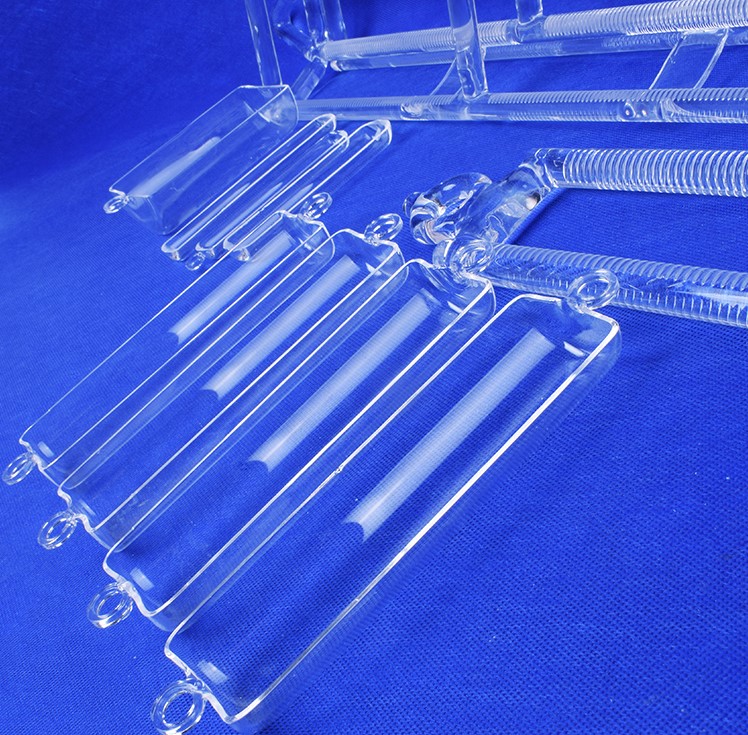
Custom Fused Quartz Wafer Boats & Carriers (SiO₂ 99.99%)
Ultra-low contamination semiconductor and PV diffusion boats featuring laser-slotted wafer grooves with tight pitch tolerances and stress-relieved fire joints.
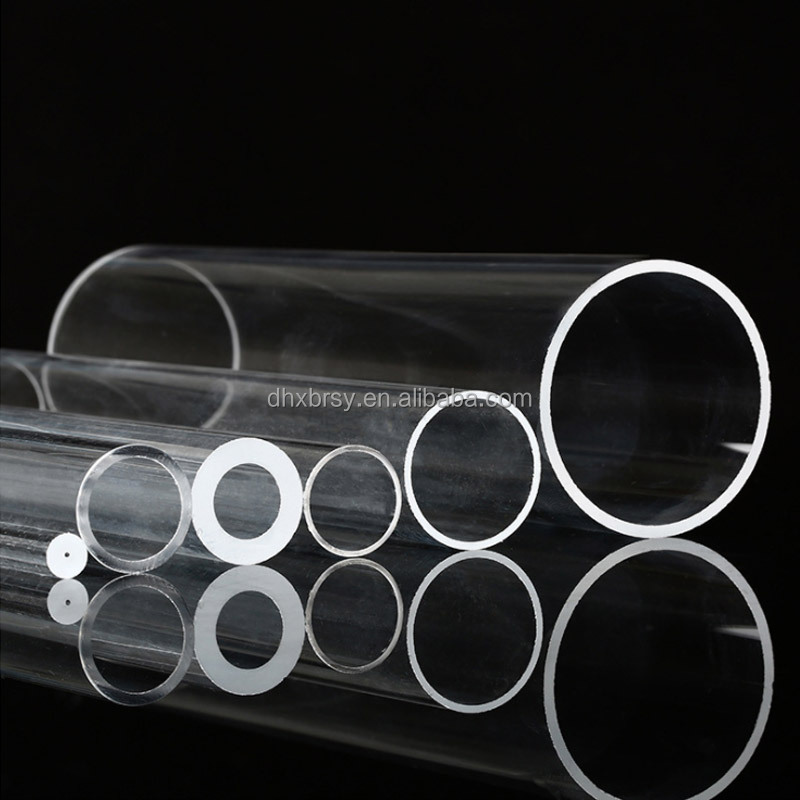
High-Yield SiO₂ Heating Quartz Tubes for Industrial Cavities
Specialized rapid-response heating quartz jackets engineered for disinfection apparatus, laboratory drying cabinets, and industrial process drying chambers.
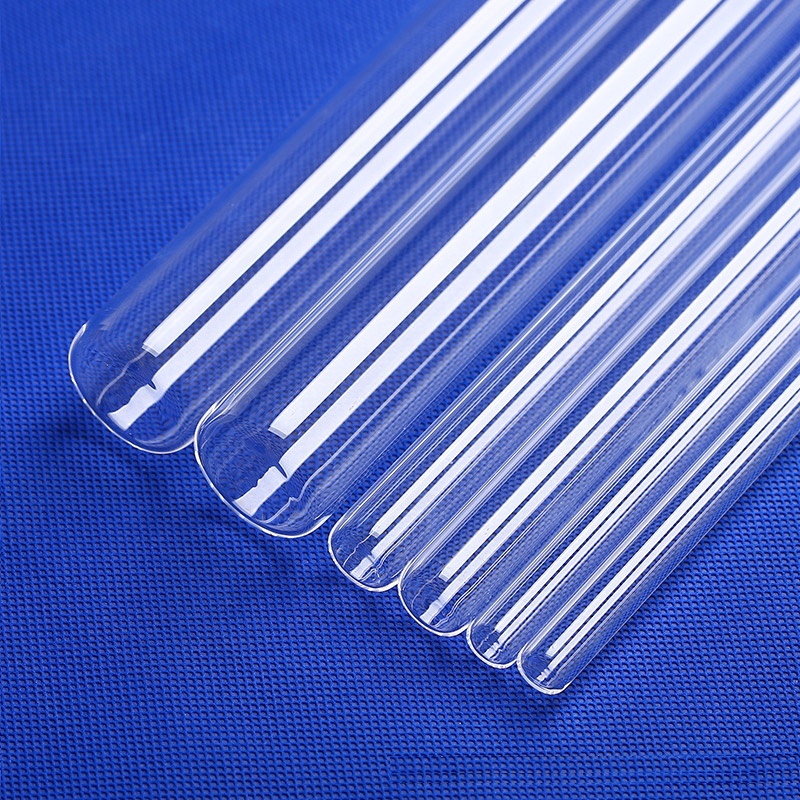
One-End Closed Fused Silica Quartz Reaction Test Tubes
Heavy-wall, flame-sealed flat or hemispherical closed bottom tubes configured for high-pressure autoclaves, CVD precursor containment, and digestion vessels.
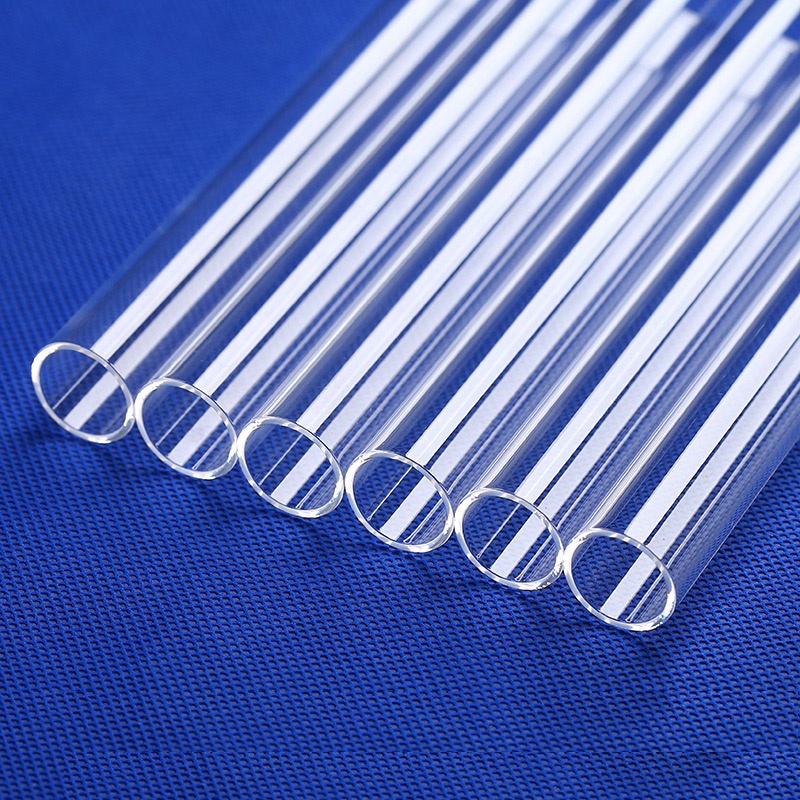
High Precision Heat-Resistant Quartz Pipeline & Tubing
Diameters calibrated from OD 10mm to 300mm with strictly controlled concentricity, tailored for corrosive fluid transit, plasma torches, and gas cleaning lines.
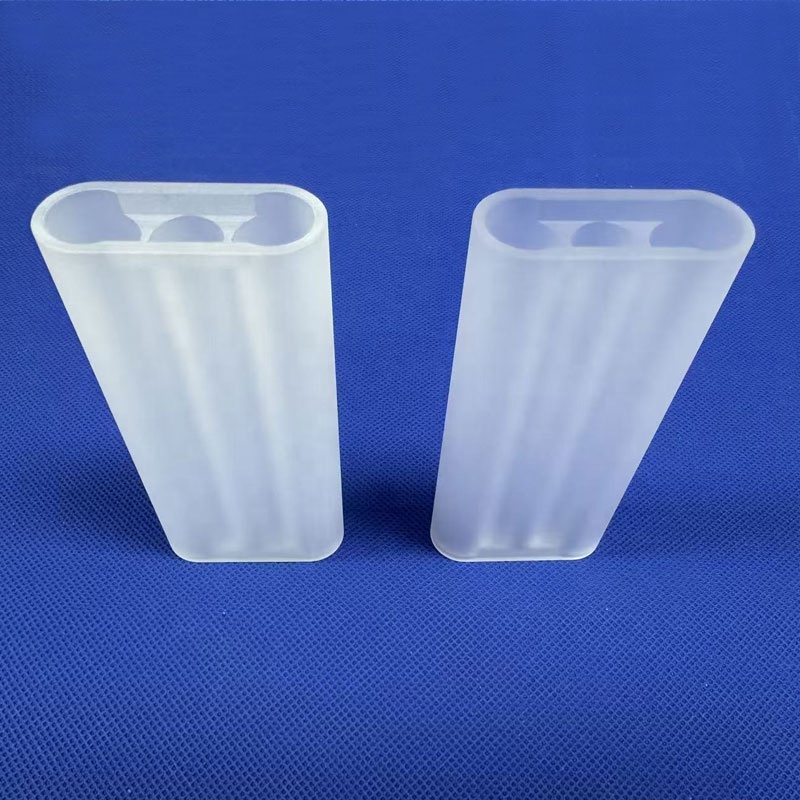
Triple-Bore Quartz Laser Cavity Flow Tube for Medical Systems
Ultra-precision multi-channel coolant and pump chamber sleeves, compatible with aesthetic GentleYag/GentleMax systems and industrial solid-state lasers.
Material Science: Thermodynamic Stability & Purity Thresholds
High-purity fused quartz (fused silica) serves as an irreplaceable engineering medium in high-temperature, chemically aggressive, and precision-optical settings. Unlike standard borosilicate or soda-lime glass matrices that soften below 600°C and contain alkali modifiers (Na, K, Ca), fused quartz represents a single-component vitreous silica (SiO₂) system linked by a random tetrahedral three-dimensional network.
The absence of network-modifying fluxing agents provides fused quartz with its defining physical traits: an extremely low thermal expansion coefficient (approximately 5.5 × 10⁻⁷ /°C between 20°C and 320°C), an extraordinarily elevated continuous annealing threshold at 1140°C–1215°C, and an optical bandgap broad enough to allow uninterrupted light transmission from 185 nm deep ultraviolet (DUV) through 3500 nm infrared (NIR).
Critical Engineering Principle: Under semiconductor cleanroom thermal cycling, even trace metallic contaminations (ppm to ppb level) such as Fe, Cu, Ni, or Na catalyze high-temperature devitrification into crystalline cristobalite at temperatures above 1150°C, causing micro-fissuring and batch failure. Source-level acid pickling and vacuum electrical melting remain the only viable mitigations.
For custom OEM buyers, selecting between Synthetic Fused Silica (Type IV / JGS1), Flame-Fused Quartz (Type II / JGS2), and Electrically Fused Natural Quartz (Type I / JGS3) is a function of operating wavelength, hydroxyl radical [OH⁻] absorption levels, and structural thermal load requirements.
| Quartz Grade | Optical Range | [OH⁻] Content | Primary Application |
|---|---|---|---|
| JGS1 (Synthetic) | 185 – 2500 nm | < 5 – 1200 ppm | Excimer Lasers, DUV Litho, Fiber Preforms |
| JGS2 (Flame Fused) | 220 – 2500 nm | 150 – 300 ppm | Viewport Flanges, Spectrophotometry, Sight Discs |
| JGS3 (Electric Fused) | 260 – 3500 nm | < 5 ppm | Infrared Windows, Semiconductor Furnace Tubes |
| Opaque Silica | Diffuse / Heat Shield | < 30 ppm | PV Diffusion Flanges, Thermal Baffle Collars |
Why Top Tier Global OEMs Partner With Lovri Quartz
Situated in Lianyungang, Jiangsu — China's premier silica supply hub — Lovri Quartz provides full-spectrum vertically integrated manufacturing, eliminating third-party markups and metallurgical variance.
In-House Sand Beneficiation
From raw lump crushing, pulverizing, and hydraulic classification to hydrofluoric-free multi-stage acid leaching, we manage quartz sand refinement to guarantee base silica levels strictly exceeding 99.99%.
5-Axis CNC Precision Machining
Equipped with specialized ultrasonic-assisted milling, multi-axis diamond wire-saws, and computerized double-disc lapping machines capable of meeting ±0.005mm micro-tolerances on wafer boats and slotted discs.
Polariscopic Annealing Verification
Thermal stress failure is systematically eliminated. Every furnace batch undergoes programmed 1215°C soaking and slow-ramp descent, verified via cross-polarization photoelastic analyzers prior to dispatch.
SGS Onsite Verified Infrastructure
Operating across 14,271 m² of advanced industrial floor space with complete ISO9001/ISO14001 process control, audited and validated onsite by SGS Group for transparent compliance.
Zero-Damage Custom Export Packaging
We employ form-fitting multi-density polyethylene cushioning, vacuum-sealed barrier pouches, and shock-isolated heavy fumigated timber cases certified for international air, express, and maritime logistics.
Agile OEM/ODM Drawing Support
From single-piece rapid R&D functional prototyping to annual scheduled call-off agreements. Our engineering department accepts native CAD formats (STEP, IGES, DWG, DXF, and PDF blueprints).
Future B2B Procurement Trends in Fused Quartz (2025–2030)
Shifting industrial parameters, geopolitical realignments, and clean-energy scale are transforming how procurement directors source critical quartz components worldwide.
Sub-ppb Metallic Purity Mandates for Next-Gen Wafers
As semiconductor wafer fabrication transitions deeper into sub-3nm nodes and 3D Gate-All-Around (GAA) architectures, allowable trace metal limits (specifically Fe, Li, Cu, and Alkali metals) in quartz process vessels have decreased from parts-per-million (ppm) to sub-parts-per-billion (ppb). OEM procurement teams increasingly demand comprehensive ICP-MS spectrometry documentation per component lot.
Dimensional Scale in N-Type TOPCon & Perovskite Solar Cells
The photovoltaic industry's shift to larger M10/G12 wafer sizes requires massive diffusion furnace tubes with diameters extending past 350mm to 500mm and lengths over 3,000mm. Sourcing strategies focus heavily on high-viscosity synthetic/electric blend materials that combat sag deformation and thermal elongation during high-throughput 1100°C POCl₃ diffusion runs.
Direct Source-Factory Consolidation & Risk Mitigation
Enterprise procurement departments are actively bypassing intermediate distributors and trading entities. Contract manufacturing is moving directly to vertically integrated source factories in established industrial hubs (e.g., Lianyungang) to secure lower total cost of ownership (TCO), traceable raw material lines, and rapid CNC drawing revisions without multi-tier communication latency.
Stringent Life-Cycle Sustainability & Energy Efficiency
With stringent global carbon accounting (CBAM and ESG directives), the electrical melting of natural quartz is outperforming energy-intensive flame fusion methods. Buyers favor electrically fused silica produced with sustainable hydropower electricity grids, accompanied by full RoHS 2.0 and REACH chemical compliance certificates.
Technological Horizons: Advanced Quartz Processing Innovations
How advanced machining methodologies and next-generation silica synthesis are redefining performance benchmarks across mission-critical hardware.
1. Ultrasonic Micro-Milling & Cold Laser Drilling
Traditional diamond tooling induces subsurface micro-cracks in vitreous silica that propagate catastrophically under extreme thermal gradients. Modern OEM production utilizes ultrasonic-assisted 5-axis CNC machining centers. High-frequency micro-vibrations (20–40 kHz) dramatically minimize tool cutting forces, enabling crack-free micro-apertures down to 0.1mm diameter, micro-fluidic channels, and optical V-groove arrays with optical-grade edge finishes.
2. Low-Hydroxyl [OH⁻] Dehydroxylation Thermal Treatment
For high-power NIR laser systems and high-temperature vacuum equipment, standard fused quartz exhibits a detrimental absorption band at 2.73 µm caused by fundamental OH⁻ vibration. Vacuum thermal dehydroxylation techniques applied during furnace sintering drive structural hydroxyl concentrations below 5 ppm, substantially elevating the material's thermal deformation point to 1250°C while suppressing laser-induced heat damage.
3. Automated Robot-Assisted Glass Lathe Welding
Manual bench glassblowing is rapidly converging with robotic multi-axis articulation. Automated quartz lathes incorporate dual-infrared pyrometers and closed-loop oxy-hydrogen burner arrays to weld large flanges, branches, and custom manifold joints. This automation eliminates human variation, wall-thickness disparities, and localized stress concentrators.
4. Plasma Chemical Vapor Deposition (PCVD) Synthetic Ingot Growth
Addressing the demand for excimer-laser (193nm ArF / 248nm KrF) longevity, synthetic vitreous silica generated via high-purity SiCl₄ vapor hydrolysis yields completely bubble-free, inclusion-free glass blocks exhibiting isotropic refractive indices and exceptional solarization resistance against harsh ionizing radiation.
B2B Procurement FAQ: Expert Guidance for Sourcing Teams
Direct answers addressing engineering specifications, material distinctions, testing procedures, and commercial terms.
JGS1 is synthetic fused silica with maximum deep-ultraviolet transparency (down to 185 nm) and virtually zero bubble inclusion, ideal for UV lasers and precision lenses. JGS2 is natural flame-fused quartz transmitting from 220 nm to 2500 nm, providing a cost-effective optical solution for viewports and lamp envelopes. JGS3 is electrically fused silica containing negligible hydroxyl content (<5 ppm), offering extended infrared transmittance up to 3500 nm and superior structural viscosity at 1150°C+.
Yes. Due to an ultra-low linear thermal expansion coefficient of ~5.5 × 10⁻⁷ /°C, transparent fused quartz glass boasts thermal shock resistance unmatched by conventional borosilicate. A standard 3mm wall quartz tube heated to 1100°C can be repeatedly plunged into 20°C water without catastrophic fracture, making it indispensable for rapid thermal processing (RTP).
Our engineering department directly interfaces with SolidWorks, AutoCAD, and Pro/E workflows. We accept 3D STEP, STP, IGES formats as well as 2D DWG, DXF, and vector PDF blueprints. For customized prototype requests, manufacturability review takes 24 hours, with physical prototype fabrication completing in 5 to 9 working days.
For standard machined outer and inner diameters, we maintain ±0.05 mm to ±0.1 mm. Utilizing ultrasonic 5-axis machining, high-precision surface grinding, and optical polishing, we regularly hold critical tolerances of ±0.005 mm on center-to-center hole distances, groove depths, and surface flatness down to λ/4 per inch.
All custom assemblies—such as wafer boats, flanged furnace tubes, and triple-bore laser cavities—undergo computer-controlled thermal annealing cycles in specialized furnaces up to 1215°C. Following cooling, 100% of lots are inspected via a photoelastic cross-polarization polariscope to verify zero residual fringe stress prior to packaging.
We employ a multi-barrier defense packaging standard: individual items are enveloped in dust-free PE bags, cushioned within high-density cut-to-size Pearl EPE foam cells, enclosed in robust inner cartons, and suspended inside heavy-duty ISPM-15 compliant plywood crates with built-in drop-shock and tilt indicators.