Precision Fused Quartz Components for High-Flux Applications
Manufactured by Lovri Quartz, an SGS onsite-verified synthetic and high-purity fused silica fabrication facility. Every optical rod, laser flow conduit, and custom apparatus is built to strict DIN/ISO precision standards.
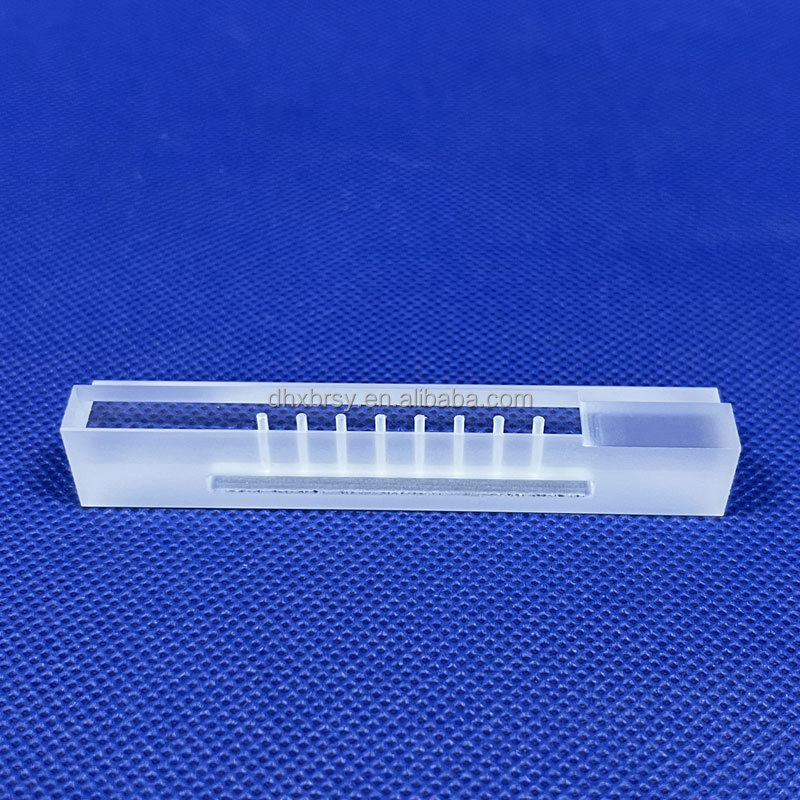
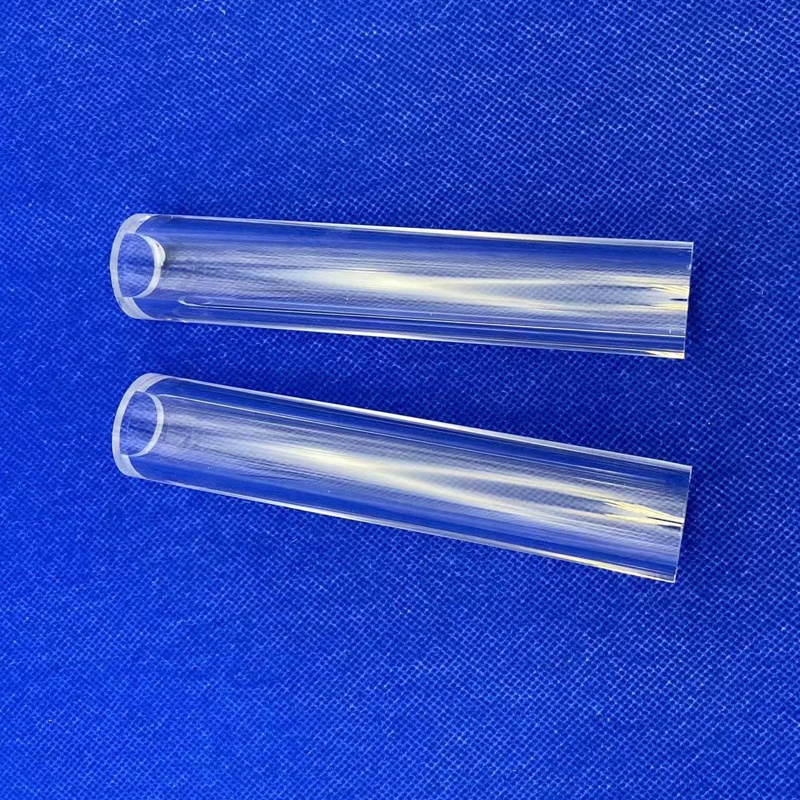
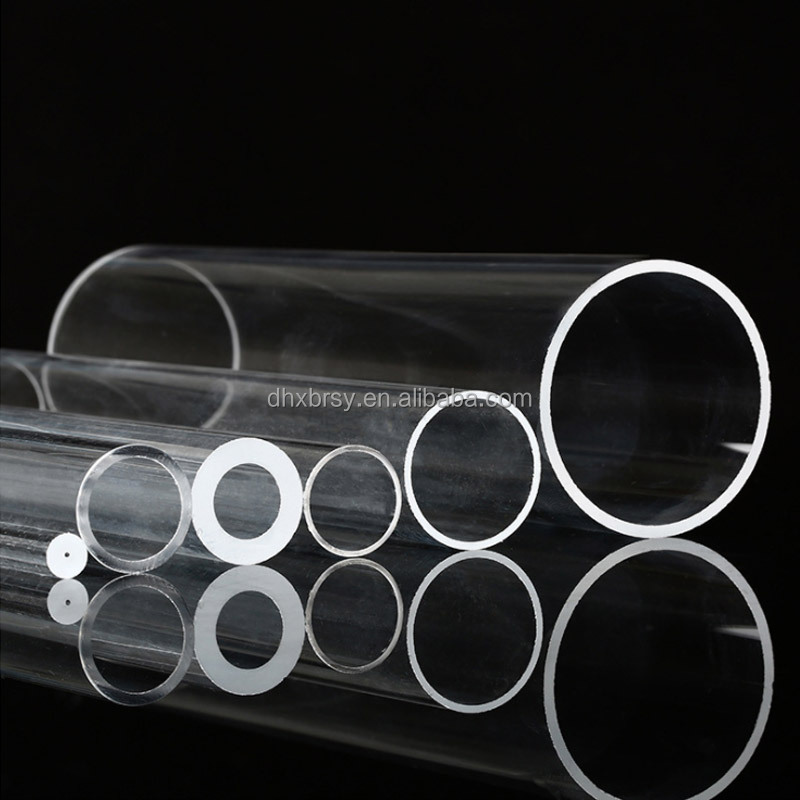
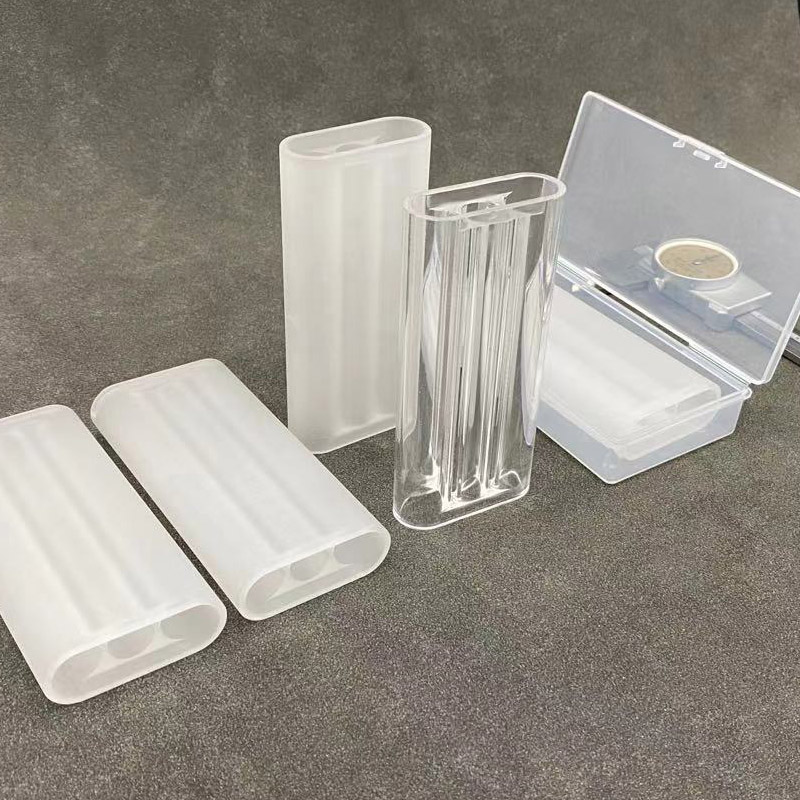
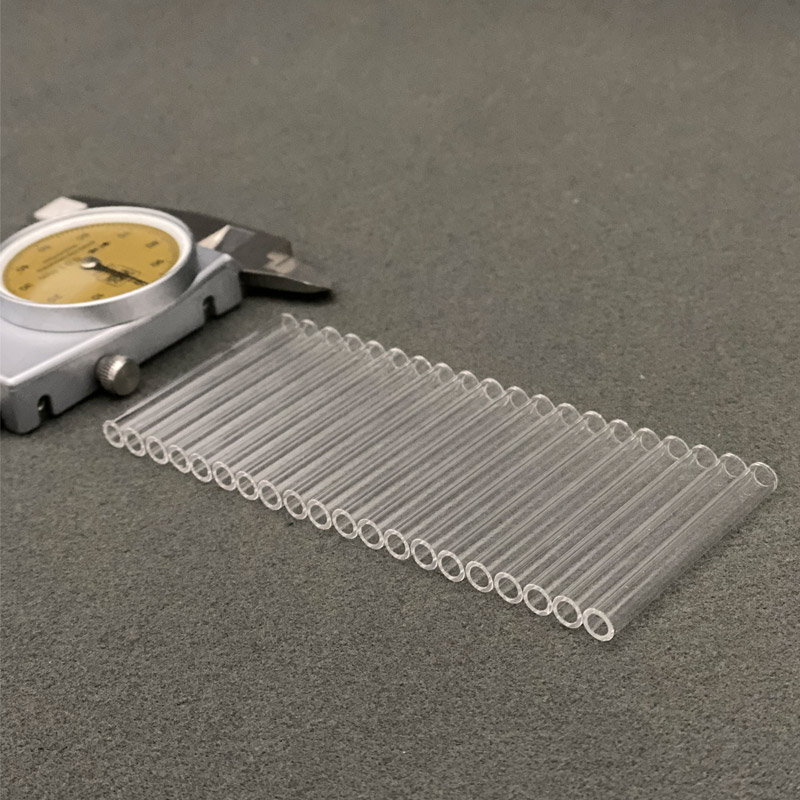
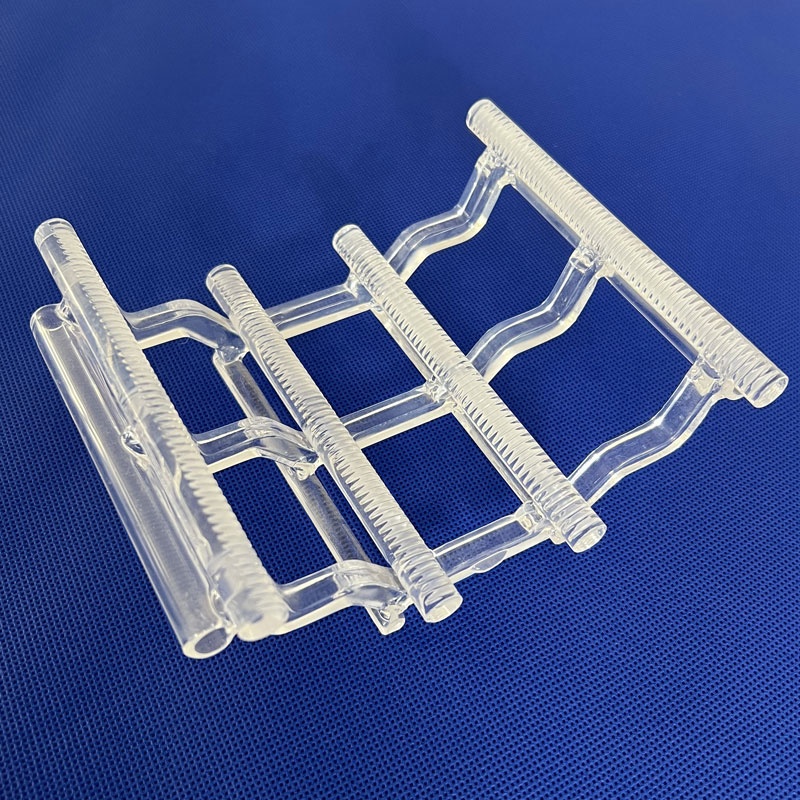
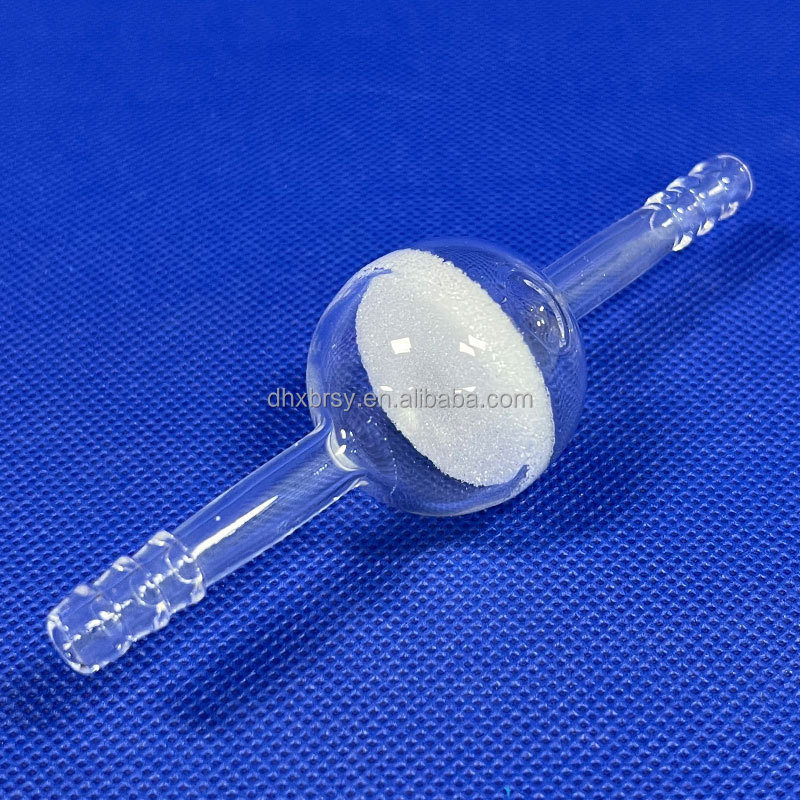
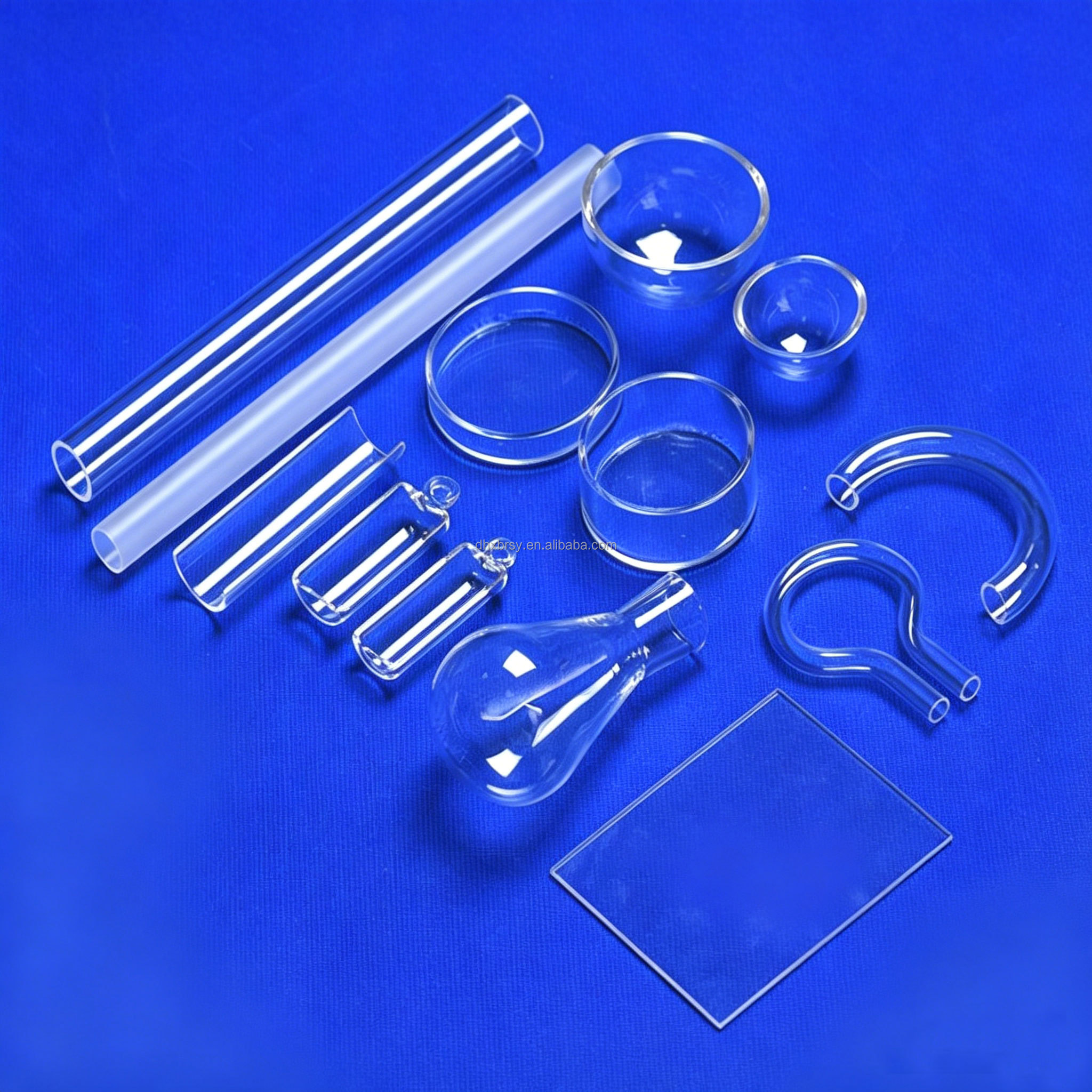
Engineering Fundamentals of Fused Quartz Light Guide Rods
Fused silica and fused quartz light guide rods function via Total Internal Reflection (TIR) to transmit optical radiation efficiently across extreme environmental envelopes, high laser powers, and aggressive chemical environments.
Zero Laser Thermal Lensing
Standard multi-component glasses suffer from thermal distortion under high photonic flux. Fused quartz exhibits an extraordinarily low coefficient of thermal expansion (CTE of ~5.5 × 10⁻⁷ /°C), ensuring zero focal displacement and zero optical wave-front distortion during megawatt-level industrial pulsed laser transmission.
Broadband Transmission Bands
By strictly synthesizing JGS1, JGS2, and JGS3 synthetic fused silicas, our cylindrical and polygon homogenizing rods deliver >92% internal transmittance spanning 185 nm deep-UV (excimer laser lines) through 2,500 nm near-infrared, fully free of micro-bubble scattering centers and striations.
Sub-Nanometer Surface Roughness
TIR efficiency hinges completely on boundary polish. Lovri utilizes dual-sided planetary CNC lapping and fire-polishing to achieve end-face surface finishes of Ra < 0.5 nm, flatness within λ/4, and surface quality rated at 20-10 scratch-dig, preventing evanescent wave leakage.
High-Precision Applications in Chicago & the Greater Midwest Corridor
From the industrial automation clusters in Cook and DuPage counties to advanced national laboratory physics initiatives, fused quartz light guide rods play a critical role in regional manufacturing and cutting-edge research.
Advanced EV Battery Laser Welding
As the Illinois-Indiana-Michigan corridor expands into tier-1 gigafactories and electric powertrain manufacturing, high-power fiber laser processing relies on fused silica homogenizing rods to transform Gaussian laser profiles into uniform flat-top beams, ensuring spatter-free tab welding.
Synchrotron & Quantum Physics Research
Collaborating with scientific institutes across the Chicago quantum exchange network, Lovri supplies custom vacuum-compatible fused quartz wave-guides and capillary arrays engineered to withstand intense ionizing radiation without solarization or color-center formation.
In-Line Semiconductor Metrology
Silicon and silicon-carbide (SiC) wafer processing facilities leverage our precision ground quartz light guides within ultra-clean spectroscopic ellipsometers and deep-UV wafer inspection optics to maintain pure optical clarity under corrosive chamber conditions.
Pharmaceutical Flow-Cell Spectroscopy
Chicago's extensive medical and biopharmaceutical processing sectors utilize transparent quartz light rods and flow cuvettes for non-invasive Raman and absorption spectroscopy across strict cleanroom environments where chemical inertness against harsh sterilizers is required.
UV-LED Curing for High-Speed Converting
Commercial printing, flexible packaging, and precision converting operations in Chicagoland implement our curved and polished square quartz homogenizing rods to focus high-intensity 365–395 nm UV radiation onto heat-sensitive substrates with negligible transmission loss.
High-Temperature Pyrometry Viewports
In heavy steel, metallurgical casting, and heat treatment plants across northern Illinois and northwest Indiana, fused quartz rods act as heat-blocking optical conduits delivering radiation directly from inside 1,200 °C blast chambers to remote pyrometers.
High-Purity Fused Quartz Engineering Specifications
Reference data for optical systems engineers, procurement heads, and machine designers specifying thermal and transmission limits for customized quartz light guides.
| Property | Standard Fused Quartz | Synthetic Fused Silica (JGS1) | Test Standard / Conditions |
|---|---|---|---|
| SiO₂ Chemical Purity | ≥ 99.99% | ≥ 99.9999% | ICP-MS Elemental Trace Analysis |
| Density | 2.20 g/cm³ | 2.201 g/cm³ | ASTM C693 |
| Thermal Expansion (20-300 °C) | 5.5 × 10⁻⁷ /°C | 5.2 × 10⁻⁷ /°C | Dilatometry (ASTM E228) |
| Max Continuous Working Temp | 1,100 °C | 1,150 °C | Standard Atmosphere |
| Short-Term Peak Temperature | 1,300 °C | 1,350 °C | Annealing Strain Limit |
| Refractive Index (nd @ 589 nm) | 1.4585 | 1.4584 | Precision Spectroscopic Goniometer |
| Spectral Transmission Window | 220 nm – 2,500 nm | 185 nm – 2,500 nm | Spectrophotometer (10 mm thickness) |
| Thermal Shock Resistance | Pass (1,100°C to 20°C water quench) | Pass (1,150°C to 20°C water quench) | Rapid cyclic thermal test |
Midwest Trends: The Shift to Resilient, Direct-to-Factory Quartz Procurement
Analyzing procurement patterns across the Great Lakes industrial ecosystem: why leading North American manufacturers are moving away from local intermediary stockists to partner directly with source quartz fabricators.
Tier-1 Reshoring & Quality Traceability
Industrial automation OEMs throughout Illinois are standardizing on raw material trace verification. Intermediate resellers frequently mix silica origins, whereas direct-from-source relationships with verified processors guarantee batch polarization testing records and full chemical certs with every shipment.
Miniaturization in Photonic Medical Equipment
Chicago's medical equipment sector is demanding smaller form-factor polygonal light guide rods, requiring micro-CNC shaping, facet beveling, and fire-polished edges down to sub-millimeter profiles that domestic machine shops cannot fabricate without high breakage rates.
O'Hare Air Freight & Direct Maritime Freight Options
With O'Hare International Airport serving as a premier North American cargo hub, critical custom quartz prototypes and replacement production rods arrive at Chicago manufacturing docks in as fast as 4 to 6 business days from our Lianyungang furnace lines, backed by export-grade cushioned packaging.
Why Chicago Engineers & Buyers Choose Lovri Quartz
Operating inside China's primary silica processing hub in Tuofeng Industrial Park, Lianyungang, Lovri Quartz controls the complete vertical processing chain—from crushing high-grade crystalline lump quartz to precision multi-axis CNC grinding.
SGS Onsite Assessment Certified
Our complete 14,271 m² operational facility, specialized drawing furnaces, chemical leaching baths, and dimensional inspection rooms are officially evaluated and audited onsite by SGS Group, giving Midwest procurement teams verified confidence.
In-House Annealing & Stress Testing
Unrelieved internal stress is the leading cause of structural quartz failure under high heat and intense laser energy. Every batch of light guide rods undergoes 1,215 °C stress-relief annealing and 100% polarimeter stress-birefringence screening prior to release.
Full CAD/CAM Drawing-Based Fabrication
We work directly with engineering blueprints supplied in PDF, DWG, DXF, or 3D STEP formats. We fabricate custom geometries, tapered rods, hexagonal kaleidoscope integrators, micro-bored capillary tubes, and fire-polished lens ends without costly mold charges.
Zero-Breakage Export Packaging
Precision optical rods are individually sealed in anti-static, cleanroom-grade sleeves, embedded in custom shock-absorbing high-density polyethylene foam cavities, and secured within reinforced multi-wall export crates built to withstand international ocean and air freight handling.
Direct-from-Source Cost Advantage
By eliminating import middlemen and trading distributors, Chicago equipment manufacturers reduce their optical component BOM expenses by 30% to 50% while enjoying direct communication with the quartz furnace engineers producing the raw material.
Rapid Prototyping (1-Piece MOQ)
We support R&D teams and academic research projects with single-unit sample batches. Test custom geometries and validate transmission parameters on the bench before scaling to volume production.
Frequently Asked Questions by Chicago & U.S. Quartz Buyers
Clear, direct answers regarding optical rod tolerances, delivery timelines, tariffs, and engineering feasibility for Midwest manufacturers.
Q1 How does Lovri handle customs clearance and delivery into the Chicago area?
We provide full DDP (Delivered Duty Paid), DAP, or CIF Chicago O'Hare / Chicago rail ramp terms. All US Customs filings, HTS classification codes (Chapter 7002/7017 for fused quartz), commercial invoices, packing lists, and RoHS documentation are managed for direct door-to-door transit.
Q2 What is the difference between synthetic fused silica (JGS1) and natural fused quartz (JGS2) for light guide rods?
JGS1 is synthesized through silicon chemical vapor deposition, yielding a virtually bubble-free material with ultra-low OH ion content for high deep-UV transmission (185-400 nm) and high laser damage threshold. JGS2 is produced by melting refined natural quartz crystals; it provides high optical clarity across visible and NIR wavelengths (260-2,500 nm) at a lower cost.
Q3 What are your standard manufacturing tolerances for custom quartz light rods?
Our standard production tolerances are ±0.05 mm on diameter and width, and ±0.1 mm on length. For high-precision laser integration, our CNC optical grinding and lapping division can achieve diameter tolerances down to ±0.01 mm, angular precision within 30 arc-seconds, and end-face parallelism < 1 arc-minute.
Q4 Can you fabricate square, hexagonal, and tapered light-pipe integrating rods?
Yes. In addition to standard cylindrical rods, we manufacture square, rectangular, and regular hexagonal light guide homogenizers that mix inhomogeneous beam profiles through repeated internal reflections. We also produce linear-tapered quartz rods to adapt disparate numerical apertures (NA).
Q5 How do you prevent internal mechanical stress that causes cracking during thermal cycles?
Every piece is put through an extended computer-monitored annealing cycle reaching 1,215 °C to relax the molecular silica matrix, followed by controlled gradient cooling. Each part is then visually audited using crossed-polarizer strain testers to verify zero residual stress rings.
Q6 What is your typical production turnaround and air freight lead time to Illinois?
Standard quartz light rods and stocked dimension profiles ship within 3 to 7 business days. Custom CNC machining, lapping, and fire-polishing to custom prints generally requires 10 to 18 business days. Air express delivery to the Chicago area averages 4 to 6 business days.