Core Fused Quartz Components for Nordic Research & Fabrication
Verified structural integrity, sub-micron dimensional repeatability, and absolute thermal-shock immunity configured for vacuum metallurgy, lithography, and pharmaceutical chromatography.
Material Science Whitepaper: High-Purity Fused Quartz for Mission-Critical Engineering
In high-precision manufacturing and cutting-edge academic research environments throughout Uppsala—from the Ångström Laboratory's cleanroom fabrication facilities to advanced biopharmaceutical synthesis centers in Fyrislund—amorphous silicon dioxide (SiO₂) serves as a foundation for non-negotiable thermal, optical, and chemical reliability. The performance of quartz components depends strictly on trace-element purity and internal molecular stress management. Lovri Quartz Products Co., Ltd. controls the processing chain from raw silica sorting to furnace flame-fusion, delivering products with a consistent SiO₂ content exceeding 99.99%.
When selecting fused quartz components for semiconductor diffusion, chemical vapor deposition (CVD), or deep-ultraviolet (DUV) spectroscopy, engineers must balance thermal elongation, devitrification thresholds, and hydroxyl ([OH⁻]) concentration. Synthetic fused silica (such as JGS1) features virtually zero metallic impurities, rendering it immune to solarization under excimer laser exposure. Conversely, electrically fused quartz (JGS3) offers low hydroxyl levels, minimizing absorption bands in the infrared spectrum up to 3500 nm.
| Physical / Thermal Parameter | Standard Grade (JGS2) | Optical / Deep UV (JGS1) | Infrared Transparent (JGS3) |
|---|---|---|---|
| Silica Purity (SiO₂) | ≥ 99.99% | ≥ 99.999% | ≥ 99.99% |
| Thermal Expansion Coeff. (20–320 °C) | 5.5 × 10⁻⁷ K⁻¹ | 5.4 × 10⁻⁷ K⁻¹ | 5.5 × 10⁻⁷ K⁻¹ |
| Softening Point (log η = 7.65) | 1730 °C | 1710 °C | 1735 °C |
| Annealing Point (log η = 13.0) | 1215 °C | 1180 °C | 1220 °C |
| Hydroxyl ([OH⁻]) Content | 150 – 200 ppm | < 10 ppm (or synthetic > 1000) | < 5 ppm |
| Spectral Transmission Band | 220 – 2500 nm | 185 – 2500 nm | 260 – 3500 nm |
| Residual Birefringence / Stress | ≤ 15 nm/cm | ≤ 5 nm/cm | ≤ 10 nm/cm |
A primary failure mode in high-temperature diffusion tubes and reaction chambers is premature devitrification—the phase transformation from metastable amorphous quartz to crystalline cristobalite above 1150 °C. Devitrification is accelerated exponentially by alkali metal contaminants (specifically Sodium, Potassium, and Lithium). Lovri Quartz eliminates these catalysts through a multi-stage hot hydrofluoric and hydrochloric acid leaching process, keeping cumulative alkali impurities strictly below 1.5 ppm. This guarantees prolonged furnace lifetimes, resistance against thermal-cycling fracture, and pristine wafer yield in nanolithography processing lines.
High-Purity Quartz Applications Across Uppsala's Research & Industrial Sectors
Custom glass configurations engineered to meet the operational demands of Uppsala's world-leading biotechnology infrastructure, university cleanrooms, and photonics research laboratories.
Ångström Microstructure Cleanroom (MSL)
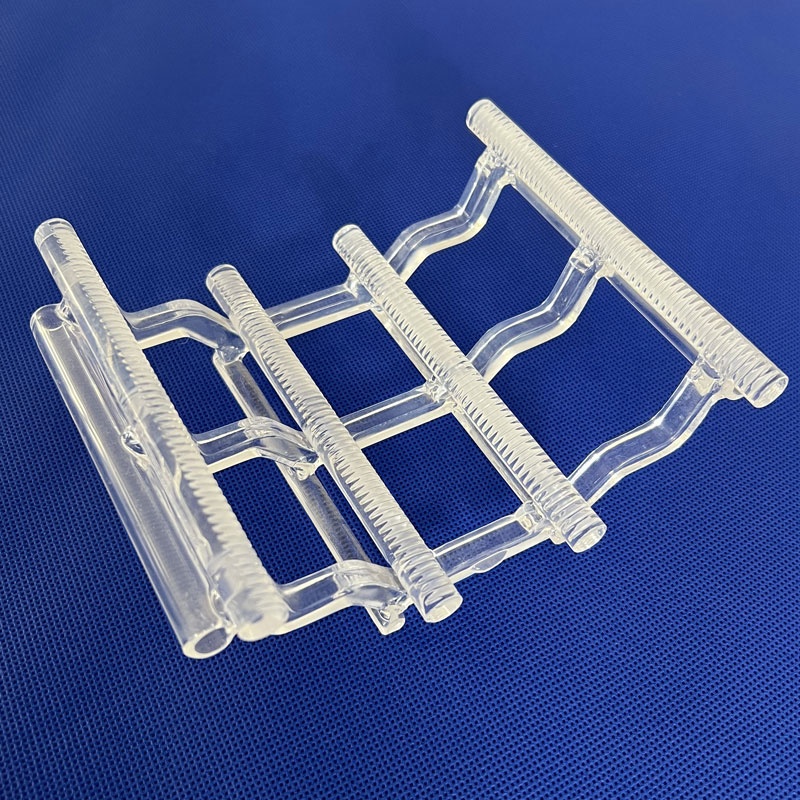
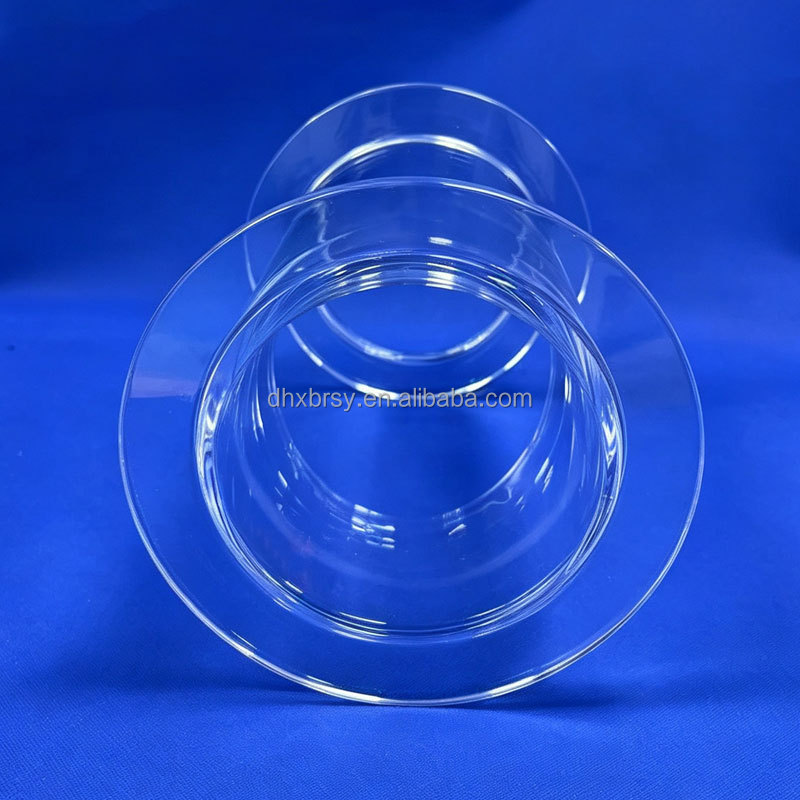
Uppsala University's Ångström Laboratory maintains leading cleanroom operations dedicated to microfluidics, MEMS, and wide-bandgap semiconductors. Our double-flanged quartz reaction chambers, furnace diffusion tubes, and slotted quartz boats are certified with tight slot parallelism tolerances (±0.05 mm), preventing wafer slippage and uniform thermal flux during high-heat oxidation runs.
Biomanufacturing & ÄKTA Chromatography
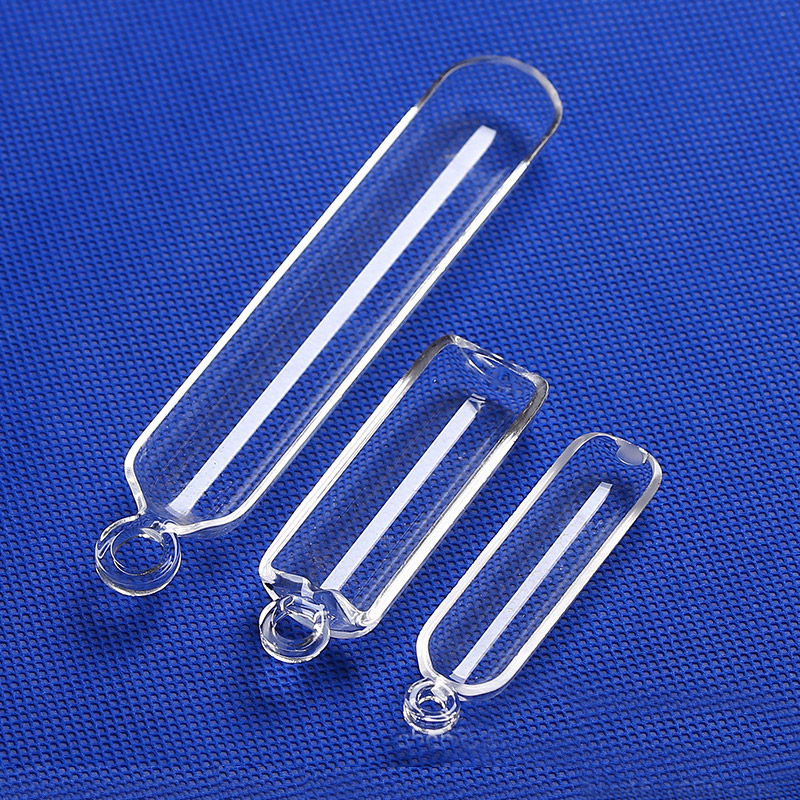
Uppsala is historically renowned as the global epicenter for protein purification, liquid chromatography, and downstream bio-separation. We supply precision bore fused quartz flow-through cuvettes, UV absorption monitoring sight-tubes, and chromatographic column bodies featuring near-zero optical path variance (±0.002 mm) to sustain signal resolution across UV 214–280 nm protein tracking channels.
Solid-State Laser & Medical Optics
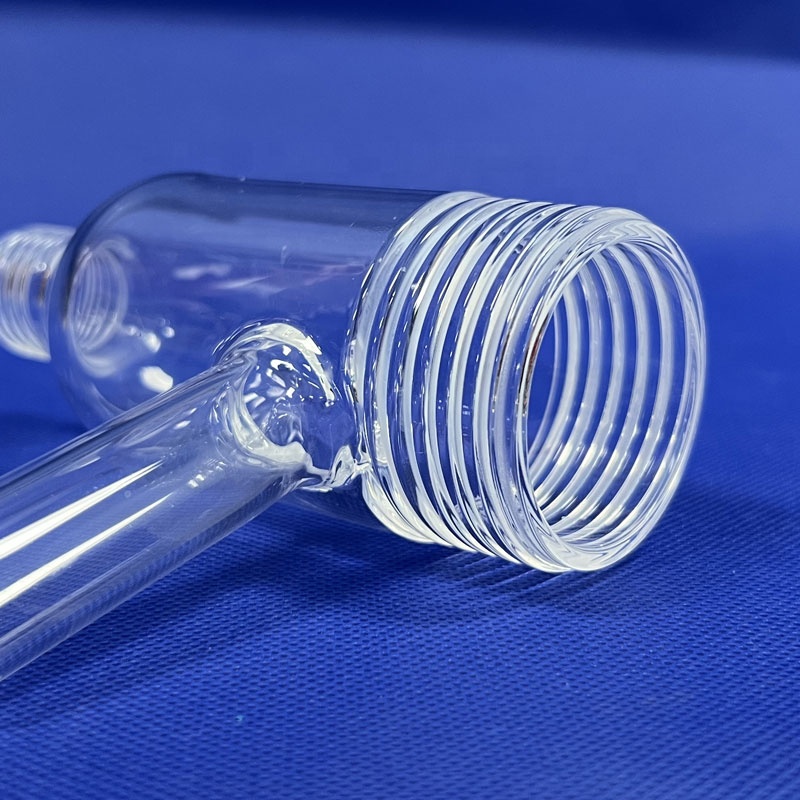
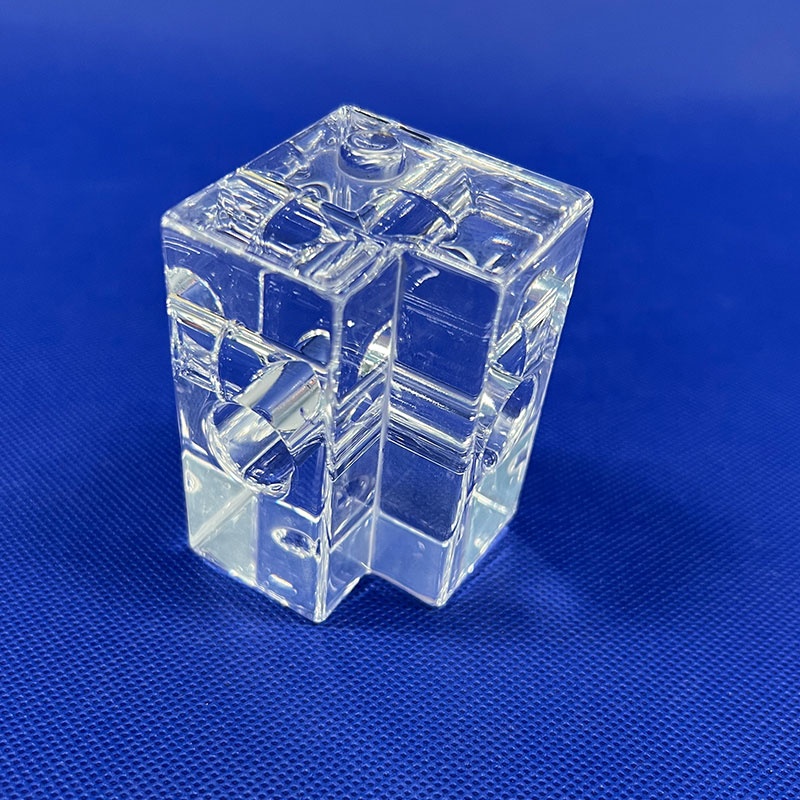
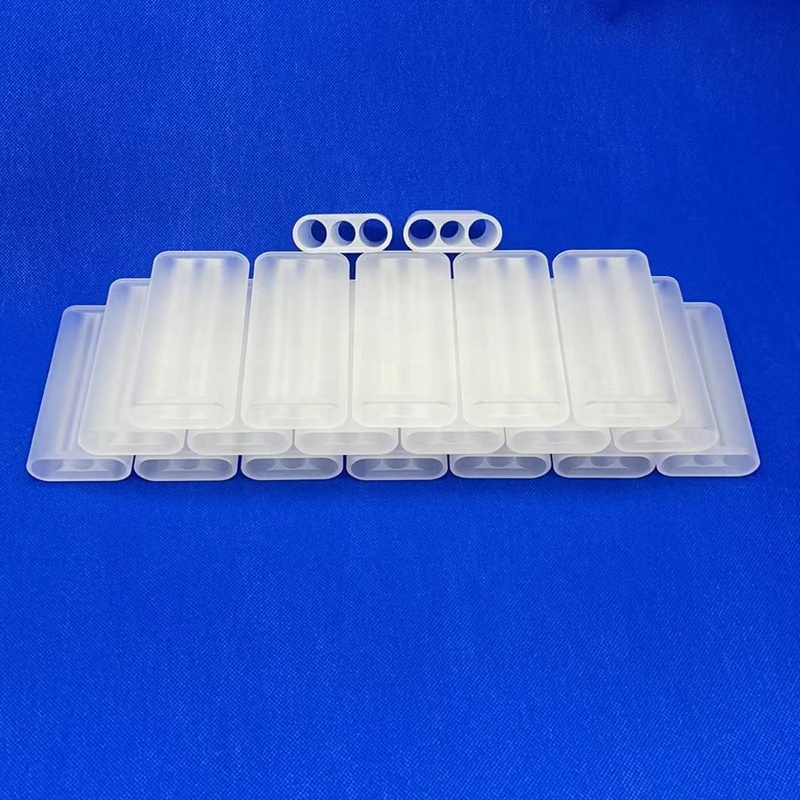
Industrial photonics and laser developers around Uppsala rely on specialized C-shape and triple-bore quartz flow tubes for Nd:YAG and optical amplifier fluidic cooling. Through diamond-tool CNC drilling and flame edge polishing, our flow conduits provide laminar coolant flow without cavitation bubbles while maintaining resistance to intense flashlamp irradiation without devitrifying.
Advanced Material Pyrolysis & Sintering
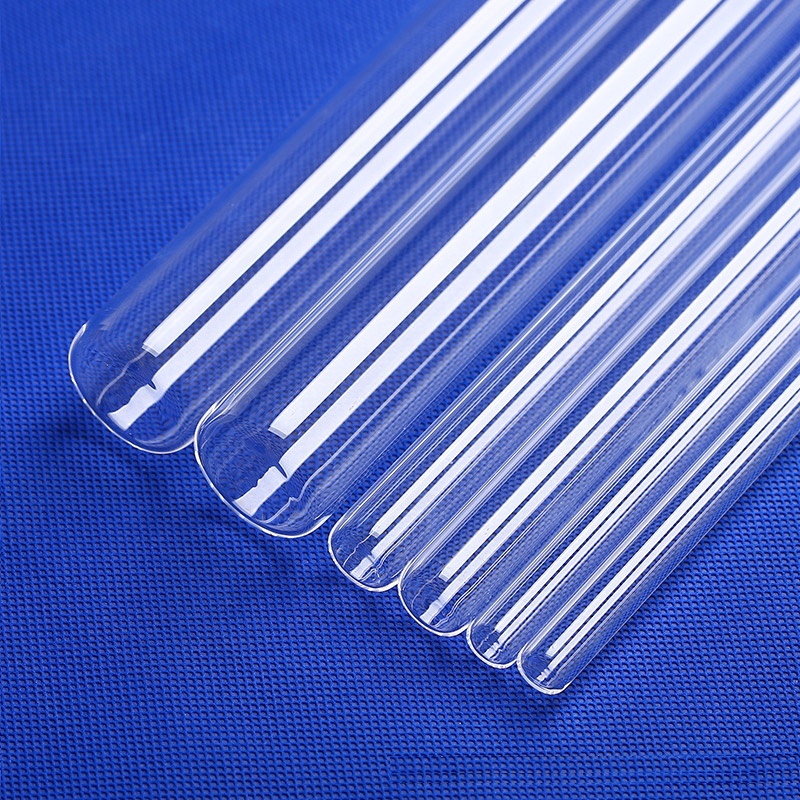
From battery cathode syntheses to advanced carbide nanocomposites developed in Uppsala Science Park, our closed-bottom test vessels and heavy-wall furnace envelopes offer vacuum-tight structural integrity up to 1300 °C, ensuring zero volatile loss and inert sample calcination environments even when exposed to corrosive halide atmosphere transitions.
Ozone Water Disinfection & Cleanroom TOC
For high-purity water loops meeting European Pharmacopoeia WFI (Water for Injection) standards in Uppsala's pharmaceutical plants, our synthetic quartz ozone generating sleeves and UV reactor conduits deliver 185 nm deep-UV transmittance to split oxygen into hydroxyl radicals for total organic carbon (TOC) destruction without surface micro-crazing.
Integrated Photonics & Fiber Array V-Grooves
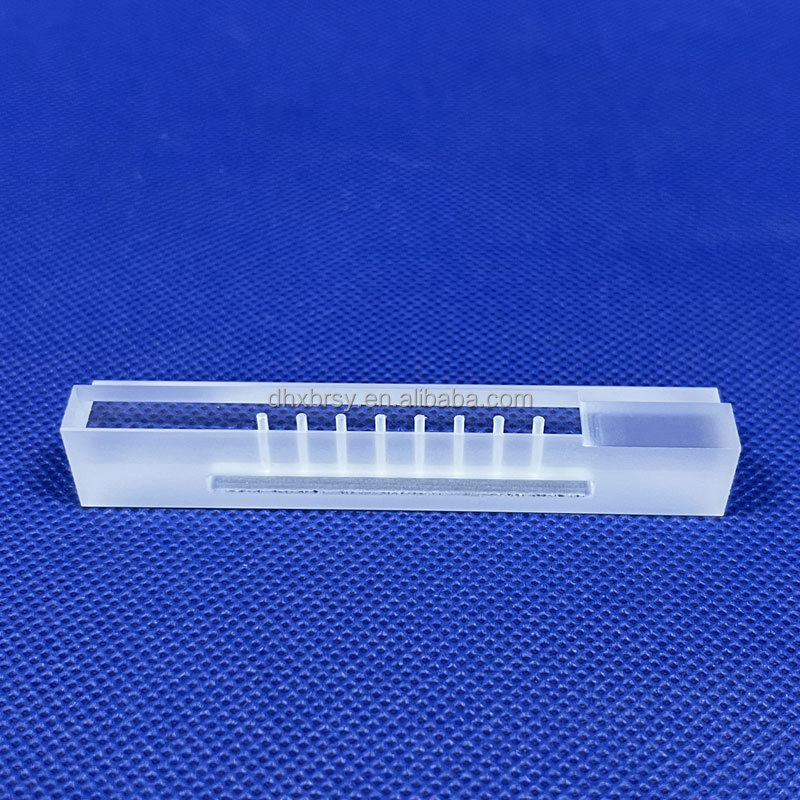
As Scandinavian telecommunications and quantum computing groups advance optical interconnect architectures, our sub-micron precision CNC micro-slotted V-groove quartz fixtures deliver thermal stability matched to standard telecommunication fibers, preventing mechanical drift across extreme cryogenic to boiling temperature swings.
Industrial & Scientific Trends in Uppsala: The Push for Sub-Micron Precision
The innovation corridor between Uppsala and Stockholm (the Upp-Stockholm Life Science Hub) is experiencing a shift toward intensified automation, localized green-hydrogen production, and semiconductor-level miniaturization. These developments place strict, revised demands on raw fused quartz specifications:
1. Escalating Cleanliness Standards in Downstream Bio-Processing: With the development of modern mRNA vaccines and personalized cell therapies, analytical inspection equipment requires optical flow cells featuring zero residual extractables and leachables (E&L). Standard borosilicate glass tends to leach boron and silicate networks when exposed to hot alkaline sanitation cycles (0.1M–0.5M NaOH). High-purity fused silica provides complete chemical inertness and structural resilience, eliminating sample matrix contamination.
2. Silicon Carbide (SiC) and Gallium Nitride (GaN) Epitaxy Transitions: Research teams operating at the Ångström Laboratory and affiliated industrial incubators are pushing semiconductor boundaries into wide-bandgap electronics. Processing temperatures for GaN and SiC often surpass 1200 °C—operating limits where standard quartz glasses rapidly sag or deform under gravity. Lovri Quartz addresses this trend by integrating heavy-wall geometries (≥6–8 mm wall thickness) alongside precision hydrogen-oxygen flame annealing cycles that reduce internal stress, delivering long-term dimensional retention.
3. Deep Ultraviolet (DUV) and Vacuum UV (VUV) Metrology: As photonics architectures shift to shorter wavelengths (193 nm and below), optical components encounter solarization—a phenomenon where trace iron or titanium impurities create color centers, diminishing transmission. The regional demand for JGS1-grade synthetic silica components with < 0.2 ppm Fe impurity has increased by over 40% in Uppsala over the past 24 months.
End-to-End Vertical Manufacturing & SGS-Verified Quality Control
Direct from Lianyungang, the world's leading silica manufacturing cluster, to your Uppsala laboratory bench—eliminating trading markups while ensuring full drawing traceability.
Raw Silica Beneficiation
Our facility operates in-house quartz lump crushing, optical sorting, and acid pickling. By avoiding outsourced semi-finished stock, we guarantee raw batch purity before heat processing begins.
5-Axis CNC Precision
Diamond tooling, core drilling, slot milling, and micro-grooving executed to dimensional tolerances down to ±0.005 mm based on customer STEP, DWG, and PDF technical drawings.
Polarization Annealing
Thermal stress is the hidden killer of quartz tubes under thermal cycle loads. Every single batch is soaked in our programmed 1200 °C annealing ovens and inspected using polariscopes.
Clean Packaging for Export
Multi-layer foam suspension packaging, vacuum cleanroom bagging, and certified wooden crates designed for fragile freight, ensuring damage-free transit to Stockholm Arlanda Airport (ARN) and direct to Uppsala.
Uppsala Procurement & Engineering FAQ
Clear, direct answers for Scandinavian procurement officers, technical buyers, and principal investigators regarding custom quartz fabrication, logistics, and compliance.
How are import customs and logistics managed for deliveries to Uppsala?
We provide full export documentation (Commercial Invoice, Packing List, Certificate of Origin, and Material Inspection Reports). Shipments destined for Uppsala are typically flown via express air courier directly into Stockholm Arlanda Airport (ARN), just 35 kilometers south of Uppsala, clearing Swedish Customs (Tullverket) efficiently for same-day delivery to your facility or loading dock via DAP or DDP terms.
What is the minimum order quantity (MOQ) for custom-engineered prototypes?
We accept low MOQ orders starting from 1 to 5 pieces for prototyping and custom academic projects. We recognize that R&D groups at Uppsala University and emerging biotechnology ventures often require iterative physical testing before authorizing full-scale production runs.
What CAD formats do you accept for custom CNC quartz fabrication?
Our engineering department works directly with 3D model formats including STEP (.step, .stp), IGES (.igs), and SolidWorks files, along with 2D drawings in DXF, DWG, or dimensioned PDF formats. If you only have a damaged physical component from a legacy furnace system, you can provide physical dimensions or ship us the sample for reverse engineering.
How do you guarantee that quartz tubes will not break under rapid temperature shifts?
Fused quartz has an extremely low coefficient of thermal expansion (5.5 × 10⁻⁷ /°C), enabling a red-hot quartz piece heated to 1100 °C to be plunged directly into cold water without shattering. However, physical failures do occur if manufacturing induces residual internal stress. We verify that each item passes through an electric annealing schedule followed by crossed-polarizer birefringence inspection to confirm zero structural tension.
Can you provide compliance documentation for cleanroom contamination audits?
Yes. Upon request, we provide RoHS compliance certificates, raw material trace metal analysis sheets (ICP-MS reports indicating parts-per-billion purity levels), and dimensional inspection reports confirming compliance with your required tolerances.
What is the standard procedure for cleaning quartz apparatus before cleanroom entry?
Components should be degreased in an ultrasonic bath using electronic-grade solvent, rinsed thoroughly with deionized water (18.2 MΩ·cm), soaked briefly in a 5% to 10% hydrofluoric (HF) acid bath to etch the outermost monolayer, and dried under filtered cleanroom nitrogen. Avoid touching raw quartz surfaces with bare hands, as sodium fingerprints will trigger local devitrification upon heating.