SGS Onsite-Verified Fused Quartz Manufacturer [email protected]
Tokyo High-Tech Glass Logistics Hub • SGS Audited

Quartz Glass Bottle Exporter & Exporters in the Tokyo Market

Precision Fused Silica Vessels, Semiconductor Quartzware & Optical Cylindrical Bottles Engineered to JIS / SEMI Standards for Japan's Frontier Industries

Precision Catalog Portfolio

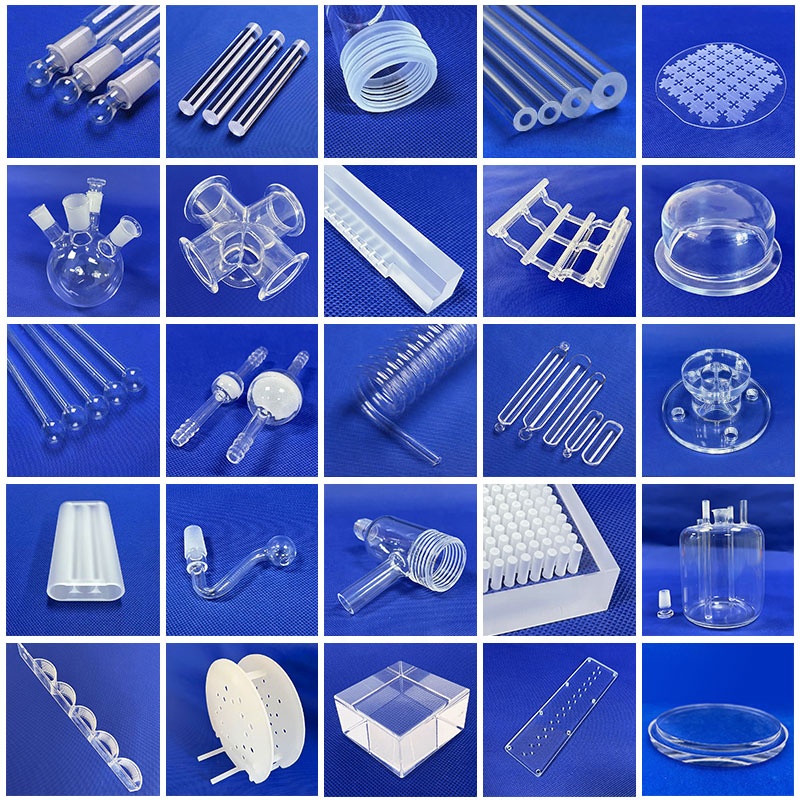
High-Purity Fused Quartz Series for Tokyo's Advanced Fabricators

Ultra-pure 99.99% SiO₂ apparatus, reaction cylinders, micro-structured bottles, and vacuum components custom-fabricated for semiconductor wafer lines, UV laser analytics, and cleanroom R&D facilities across the Greater Tokyo Area.
99.99%
SiO₂ Chemical Purity
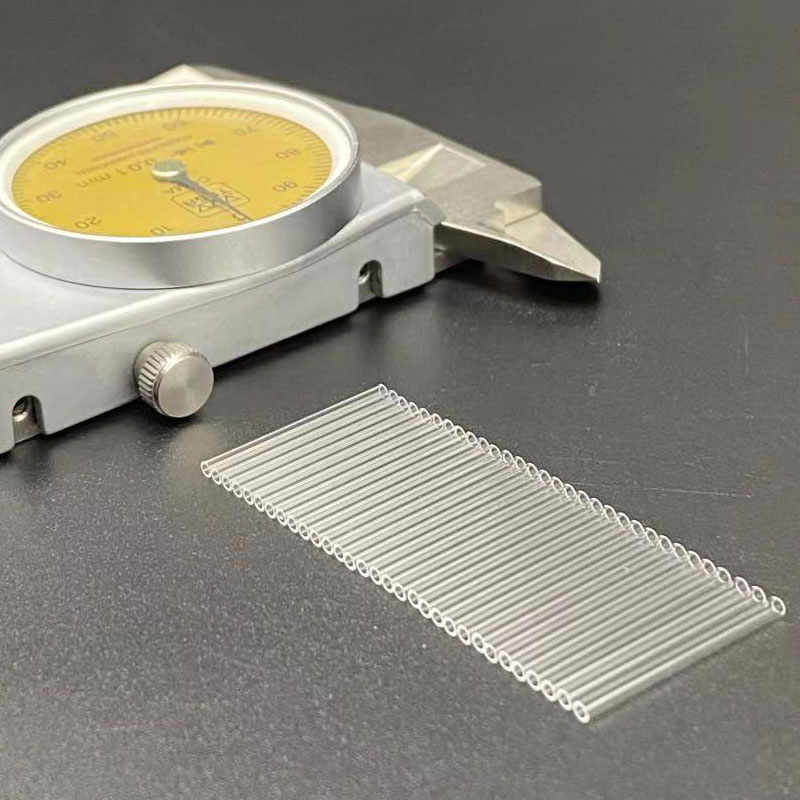
±0.01mm
CNC Machining Precision
1,100°C
Continuous Service Temp
100%
Polarization Stress Tested
Regional Industrial Ecosystem

Precision Quartz Applications Across the Greater Tokyo Industrial Corridor

From the Keihin Industrial Zone across Kanagawa to the Tsukuba Science City research clusters, Japanese high-tech procurement mandates rigorous fused silica stability, strict batch homogeneity, and micro-defect exclusion.

Front-End Semiconductor & Lithography (Ota-ku / Kanagawa)

Tokyo's fab equipment builders and component sub-contractors demand fused quartz bottles and gas scrubbers engineered with sub-ppb metallic impurities. Used extensively in chemical vapor deposition (CVD), wafer cleaning with heated ultra-pure nitric acid, and stepper optical assemblies where non-linear refractive stability is vital.

Tsukuba & Tokyo Tech Photonic Research Infrastructure

National institutes and private R&D laboratories require synthesized JGS1 quartz reagent flasks and spectroscopic bottles capable of deep ultraviolet transmittances down to 185 nm. Our vessels host high-temperature catalytic reactions and laser excitation synthesis without optical solarization or wall leaching.

High-Purity Pharmaceutical & Fine Chemical Packaging

Tokyo-based biopharma and electronic chemical formulation houses utilize inert fused silica bottles for standard reference storage, trace metal reference calibration samples, and sensitive photo-initiators where Type-I borosilicate fails due to alkali metal ion extraction into the payload.

Market Shift Analysis

Transitioning from Domestic Monopoly to Resilient Cross-Border Quartz Supply

Historically, Japanese semiconductor manufacturers and precision instrument brands relied on domestic Japanese quartz glass fabricators. However, rapid shifts in domestic factory capacity, extended delivery lead times (exceeding 24–36 weeks), and soaring local fabrication costs in the Kanto region have driven Tokyo procurement directors toward vetted overseas exporters with certified technical pedigree.

The imperative in Tokyo today is "Resilience + Purity Assurance": sourcing partners capable of adhering strictly to JIS R 3209 (Quartz Glass) while maintaining rapid prototype turnaround and flexible batch scalings from 1 piece to 5,000 pieces.

Modern Japanese optical and semiconductor operations increasingly favor agile manufacturers that control everything upstream—from raw quartz pulverized sand acid-pickling to CNC automated 5-axis slotting, ultrasonic cleansing, and cleanroom vacuum packaging.

Technical Material Benchmarks: Fused Silica vs. Borosilicate

Parameters critical for Tokyo procurement engineers evaluating high-purity glass containers and process reactors:

Metric High-Purity Fused Quartz Borosilicate 3.3
SiO₂ Content ≥ 99.99% ≈ 80 - 81%
Softening Point ≈ 1,730°C ≈ 820°C
Max Continuous Use 1,100°C - 1,200°C 450°C - 500°C
Thermal Coeff. (α) 5.5 × 10⁻⁷ /°C 33 × 10⁻⁷ /°C
UV Transmittance (254nm) > 90% (JGS1/JGS2) < 5% (Opaque in DUV)
Unmatched Manufacturing Power

Why Tokyo's Leading Engineering Teams Choose Our Fused Quartz Vessels

Combining world-class raw silica refining, an SGS-audited 14,271 m² production base, and rigorous German-standard optical inspection protocols to ensure flawless reliability in mission-critical environments.

Integrated Raw Material Synthesis to 99.99% SiO₂

Located in Lianyungang, China's premier silica basin, we manage every processing step in-house: natural mineral selection, multi-stage crushing, centrifugal rescreening, and hydrofluoric/nitric acid pickling. By eliminating intermediary ingot traders, we guarantee uncompromising purity with traceable chemical heat sheets for every delivery.

Dual Annealing & Polarization Stress Release

Thermal cracking in vacuum chambers and furnace bottles results directly from latent internal stress. We subject every single manufactured quartz bottle, flange, and machined cylinder to programmable 1,215°C annealing cycles, verified against JIS and ASTM standards on computerized polarization optical strain viewers before dispatch.

Tokyo-Fast Logistics & Zero-Breakage Crating

Equipped with standardized overseas logistics conduits directly serving Narita (NRT), Haneda (HND), Tokyo Port, and Yokohama. Fragile quartz apparatuses and ultra-thin custom bottles are double-sealed in cleanroom polyethylene, embedded in form-fitting molded expanded foam, and secured in treated plywood shock crates.

Procurement Guidelines

Frequently Asked Questions: Sourcing Quartz Bottles in the Tokyo Market

Key technical, regulatory, and logistical considerations answered directly by our senior fused silica materials engineers.

How do you guarantee your quartz bottles meet Japanese cleanroom & semiconductor purity standards?
Our manufacturing operations are audited onsite by SGS Group. Every delivery of fused quartz bottles, tubes, or custom vessels is supplied with certified ICP-MS (Inductively Coupled Plasma Mass Spectrometry) assay reports confirming residual metallic elements (Fe, Al, Ca, Mg, Ti, Cu) are held under strict thresholds (<15 ppm aggregate; synthetic JGS1 grades <1 ppm), fully compliant with SEMI standards and Japanese electronic-grade cleanroom protocols.
Can you manufacture custom-threaded quartz bottles and ground-joint reaction flasks to Japanese JIS drawings?
Yes. Our specialized CNC grinding and glassblowing facilities readily process 2D/3D drawings in CAD (DWG, DXF), STEP, and PDF formats. We regularly engineer bottles matching JIS standard taper joints (e.g., TS 15/25, TS 24/40, TS 29/42), spherical ball-and-socket vacuum fittings, ISO GL thread closures (GL14, GL25, GL45) with inert PTFE liners, or bespoke KF/NW vacuum flanges welded with flawless precision.
What is the typical shipping lead time and import customs procedure into Tokyo / Yokohama?
Prototype orders or urgent custom batches shipped via express courier (DHL, FedEx, UPS) clear customs and arrive at Tokyo destinations within 3 to 5 business days after final packaging. For volume deliveries shipped by air to Narita/Haneda or ocean freight into Tokyo Port/Yokohama, typical transit is 7 to 14 days. We provide comprehensive documentation including Certificates of Analysis (COA), RoHS compliance declarations, commercial invoices, and packing lists formatted for expedited customs clearance with Japan Customs.
How does your factory prevent breakage and micro-scratching during transpacific shipping to Japan?
Every quartz item is first ultrasonically washed and wrapped in dust-free electrostatic protective film to eliminate abrasive contact. Parts are then cushioned within custom-molded high-density polyethylene foam cavities designed to prevent point-load stress. Outer packaging uses heavy-duty double-wall corrugated cartons or fumigated, export-grade solid plywood cases lined with moisture barriers, tested against rigorous drop and vibration transit simulations.
What is the difference between JGS1, JGS2, and JGS3 when selecting quartz bottles for optical or laser testing?
JGS1 is synthetic fused silica with zero bubbles and exceptional ultraviolet transmission down to 185 nm (UV-C), crucial for excimer lasers and deep-UV spectroscopy. JGS2 is natural quartz fused by oxygen-hydrogen flame, providing outstanding optical transmission across 220 nm to 2,500 nm, making it the industry standard for observation windows and chemical containment. JGS3 is electrically melted quartz with practically zero hydroxyl (-OH) radicals, delivering superior transparency in the infrared spectrum up to 3,500 nm.
What is your Minimum Order Quantity (MOQ) for custom fabricated quartz bottles and accessories?
We understand that university labs and R&D engineering divisions in Tokyo often require single-unit proof-of-concept validation before committing to batch procurement. Therefore, we support prototype runs starting from just 1 to 5 pieces for most custom quartz parts, wafer boats, and bottle geometries, backed by dedicated design-for-manufacturability (DFM) reviews by our technical engineering team.

Ready to Optimize Your Quartz Supply Chain in Tokyo?

Submit your component drawings, temperature requirements, and volume specifications. Our senior fused silica glass specialists will deliver a comprehensive engineering analysis and formal quotation within 24 hours.