SGS Onsite-Verified Fused Quartz Manufacturer [email protected]

China Top Quartz Glass Crucible Factory & Exporters Serving the Kawasaki Market

Precision-Engineered Semiconductor-Grade High-Purity Fused Silica (SiO₂ ≥ 99.99%) Solutions for Kawasaki's Keihin Industrial Zone Advanced Nanomanufacturing & Green Energy Ecosystems

Product Recommendation Matrix

Precision Quartz Glass Solutions Engineered for Kawasaki R&D and Fabs

Direct manufacturer export capabilities from Lianyungang to the Greater Tokyo Bay industrial basin. Explore our audited high-performance fused silica catalog engineered to ASTM and JIS microelectronics standards.

99.995%
SiO₂ Elemental Purity
14,271 m²
SGS Audited Facility
< 0.12 nm
Optical Surface Roughness (Ra)
1,730°C
Vitreous Softening Threshold
Localized Industrial Landscape

High-Purity Quartz Glass and Crucible Deployments in the Kawasaki Market

Serving the strategic transition of Kawasaki City (Kanagawa Prefecture) from classical heavy chemicals to next-generation compound semiconductors, hydrogen-energy metallurgy, and quantum photonics.

Kawasaki occupies an indispensable position within the Keihin Industrial Zone (京浜工業地帯). Stretching along Tokyo Bay through Kawasaki-ku and Saiwai-ku, the region has transformed from basic petrochemical refinement into one of Japan's densest advanced microfabrication clusters. Leading technology enterprises, chemical conglomerates, and advanced research facilities—including those situated at the King Skyfront (Kawasaki Innovation Gateway at Skyfront)—rely heavily on ultra-pure synthetic fused silica (JGS1) and natural fused quartz crucibles to maintain uncompromised yield rates.

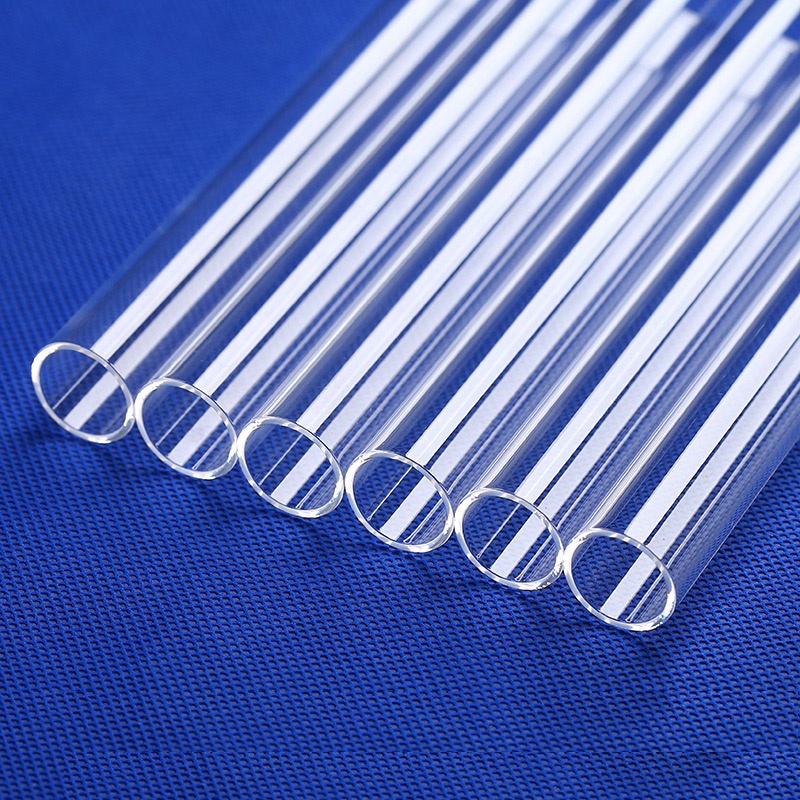
In high-temperature semiconductor crystal pulling and epitaxial growth, even microscopic traces of alkali metals (Na, K, Li) or heavy metals (Fe, Cu, Ni) cause lattice defects and premature carrier recombination. Our direct-from-source fused quartz crucibles, tubes, and wafer carriers are engineered specifically to eliminate devitrification risks and trace element migration under prolonged thermal dwell cycles exceeding 1150°C.

Compound Semiconductor & SiC Epitaxy

Fabrication centers in Kawasaki focusing on Silicon Carbide (SiC) and Gallium Nitride (GaN) power devices deploy our high-purity quartz apparatus within Chemical Vapor Deposition (CVD) and high-temperature MOCVD reactors. Our crucibles withstand extreme thermal gradients without micro-fissuring.

Hydrogen Metallurgy & Chemical Catalysis

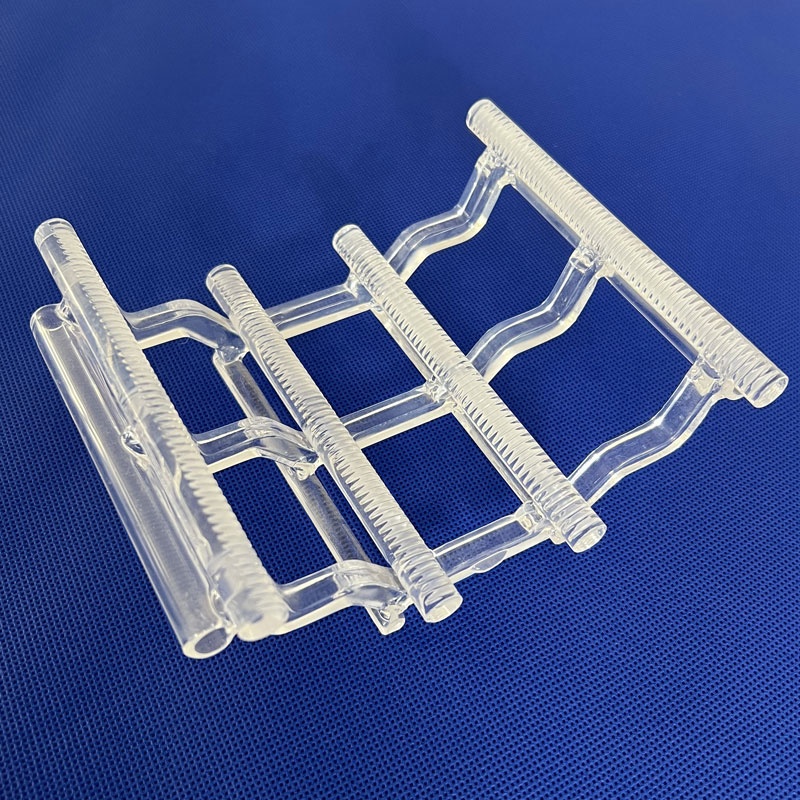
Kawasaki’s coastal industrial district leads Japan's experimental hydrogen supply chain network. Our quartz process reaction tubes and custom-machined T-shape quartz manifolds serve as chemically inert vessels for high-temperature cracking, dry reforming, and catalytic synthesis up to 1300°C.

Deep UV Optics & Synchrotron Applications

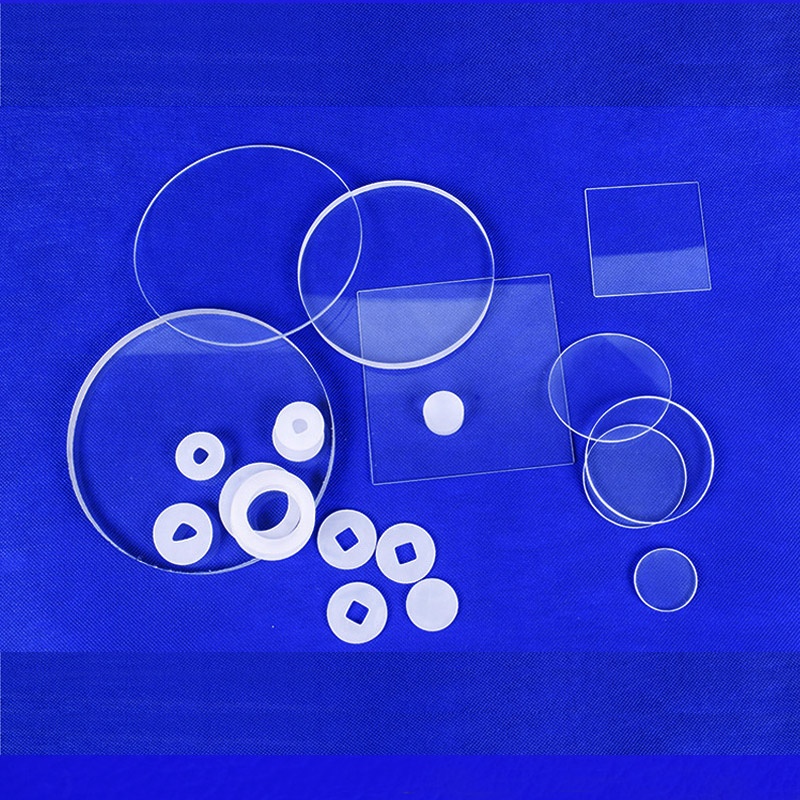
With R&D laboratories at King Skyfront advancing excimer laser lithography and analytical spectroscopy, our synthetic JGS1 fused quartz plates deliver high VUV-UV internal transmittance (>90% at 193 nm) with negligible bubble content and ultra-low refractive index inhomogeneity.

Market Foresight

Key Market Drivers Transforming Kawasaki's Quartz Crucible Procurement

A rigorous analysis of technological shifts, supply chain de-risking, and decarbonization trends across Kanagawa Prefecture's industrial corridor.

Procurement practices across Japanese fabs and academic research institutions are undergoing structural changes. Historically dominated by domestic integrated glass conglomerates, Japanese engineering buyers in Kawasaki are actively seeking diversified factory-direct partnerships in China that deliver equivalent or superior chemical purity, reduced lead times, and comprehensive compliance transparency.

Supply Chain Resiliency & Lead-Time Optimization

Kawasaki equipment builders face severe bottlenecks when procuring custom quartz glassware domestically, where delivery times often stretch beyond 18 to 26 weeks. Lovri Quartz's integrated raw-material-to-CNC pipeline slashes prototype-to-delivery windows down to 3 to 4 weeks via direct air freight to Haneda Airport (located directly across the Tama River from Kawasaki) or ocean shipments to Tokyo/Yokohama ports.

Demand for Micro-Precision CNC Quartz Machining

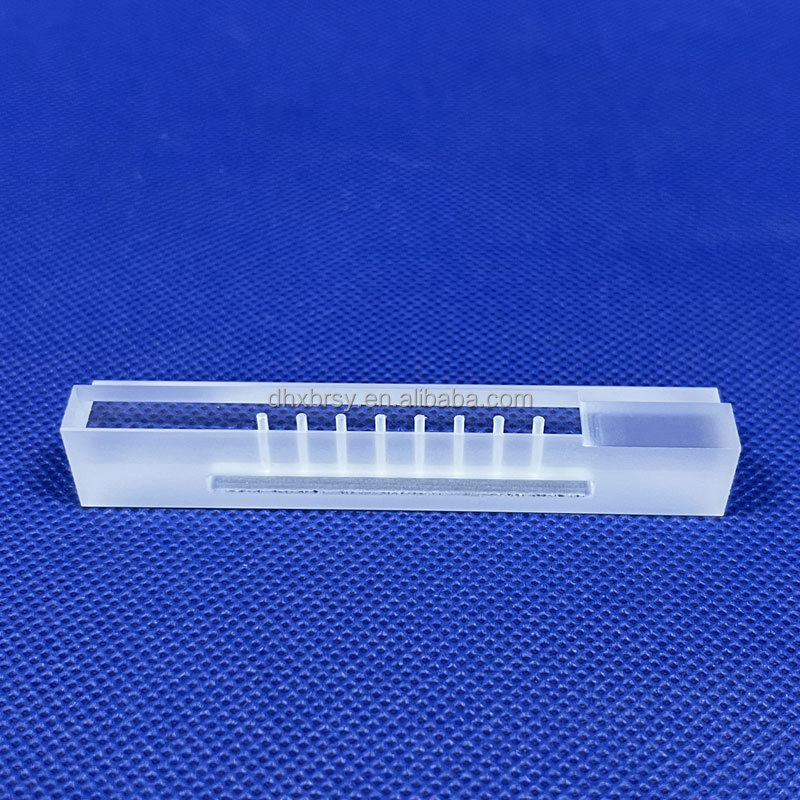
Next-generation semiconductor toolheads require complex internal passages, counterbored stepped holes, and sub-micron dimensional repeatability. Conventional flame-worked glass cannot satisfy modern tolerances. The Kawasaki market increasingly requires high-axis CNC ultrasonic milling, diamond grinding, and polarization-stress relief verification on every finished quartz unit.

Transition Toward Zero Carbon & High-Yield Furnaces

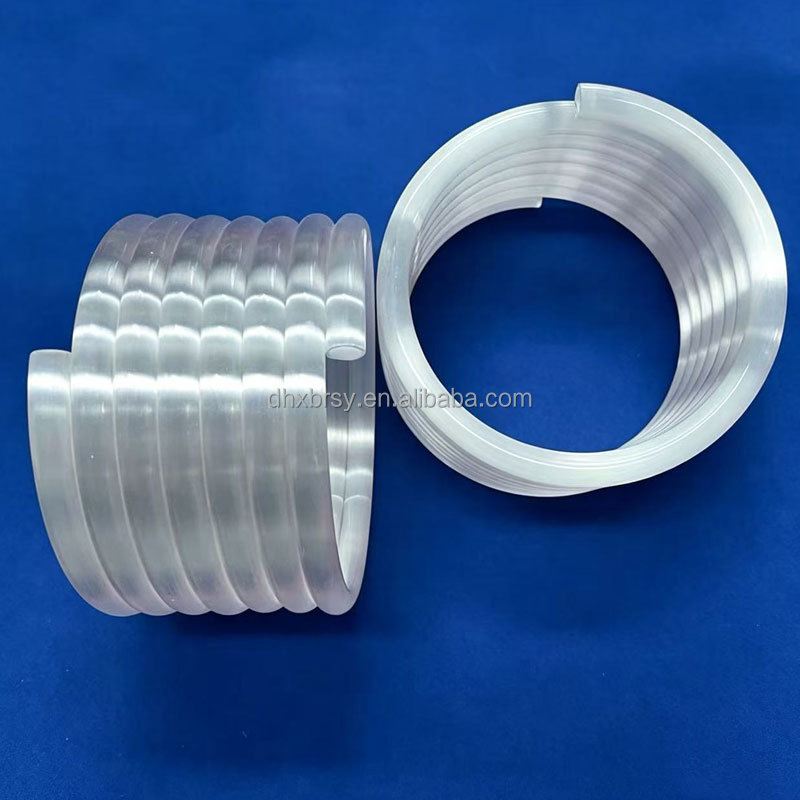
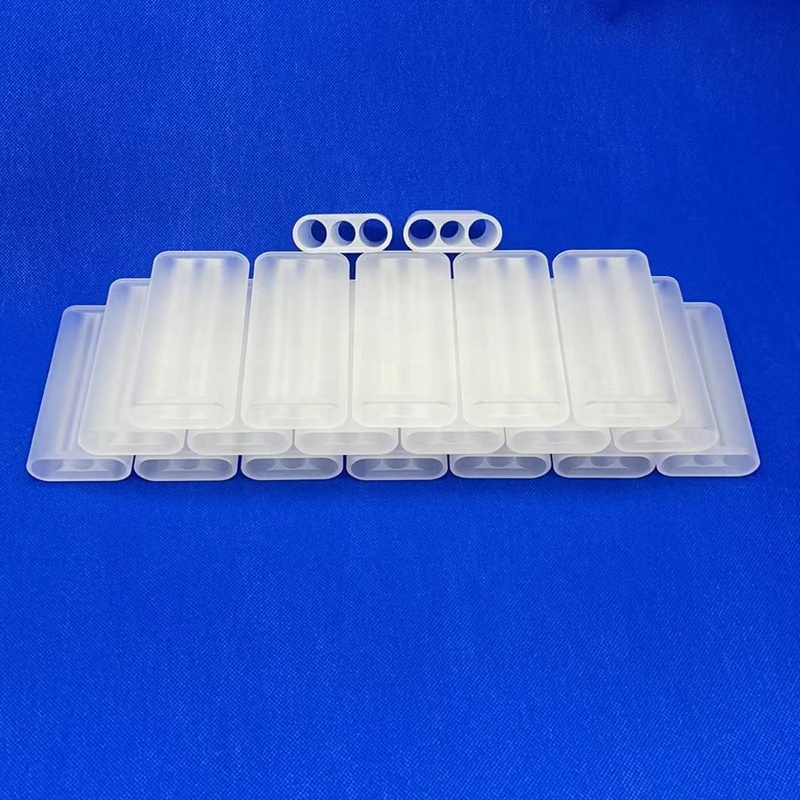
Under Japan’s Green Growth Strategy, Kawasaki's heavy thermal processors are upgrading legacy resistance furnaces to high-efficiency infrared radiation heating. Our opaque milky-white fused silica spiral sleeves offer maximum diffuse infrared scatter, reducing furnace heat loss and cutting energy overhead in high-temperature calcination lines.

Material Science Whitepaper

Fused Quartz Material Grade Selection Guide for Precision Engineering

Engineered to assist procurement engineers and QA directors in selecting optimal silica grades based on spectral transmission, OH- content, and maximum thermal thresholds.

Material Grade Manufacturing Method SiO₂ Purity Key Spectral Range Hydroxyl (OH⁻) Content Primary Kawasaki Application
JGS1 Synthetic Silica SiCl₄ Vapor Phase Hydrolysis ≥ 99.999% 185 nm – 2,500 nm (Deep UV) < 5 ppm to 1200 ppm (Grade dep.) Deep UV lithography windows, laser flow cells, excimer laser optics
JGS2 Fused Quartz Oxyhydrogen Flame Fusion ≥ 99.99% 220 nm – 2,500 nm (Optical UV/VIS) < 30 ppm Sight glasses, UV sterilization lamp jackets, fluid observation flanges
JGS3 Fused Quartz Vacuum Electric Arc Melting ≥ 99.99% 260 nm – 3,500 nm (Extended IR) < 5 ppm (Water-Free) Infrared furnace observation viewports, thermal sensor sheaths
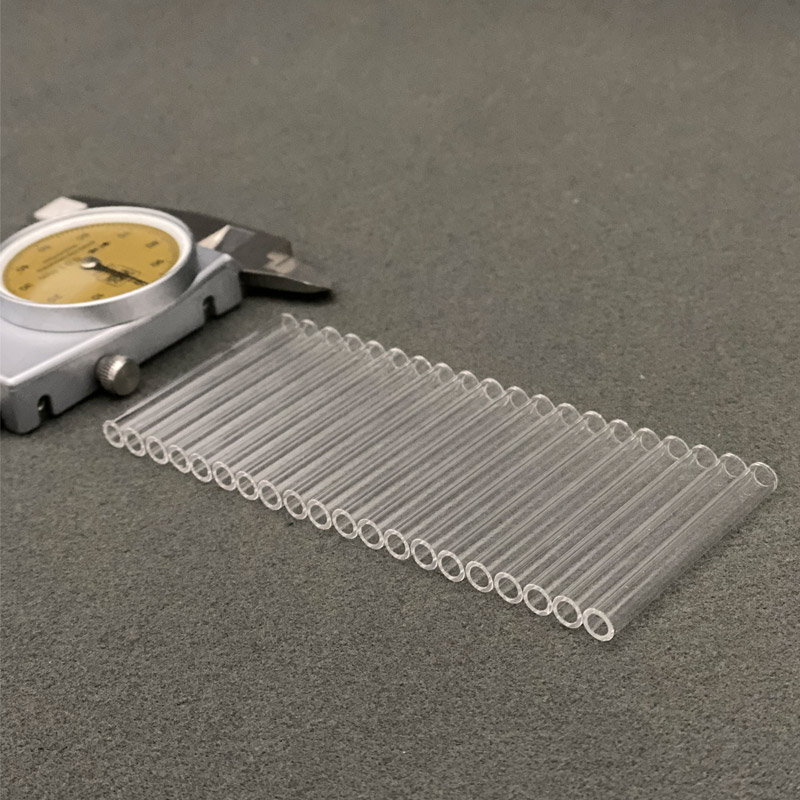
Semiconductor Clear Tubing Continuous Electric Thermal Drawing ≥ 99.99% Broadband / Visible < 20 ppm LPCVD / Diffusion furnace process tubes, wet bench chemical carriers
Opaque Fused Silica Sintered High-Purity Silica Sand ≥ 99.95% Diffuse Scattering / IR Blocking < 15 ppm Heat insulation baffles, IR heating coils, thermocouple protection blocks
Manufacturing Pedigree

Lovri Quartz Factory Advantages: Complete Vertical Integration

Operating from Lianyungang, China's premier silica supply cluster, we deliver complete quality governance from raw crystal sand processing to multi-axis CNC fabrication.

Selecting an international quartz component vendor requires absolute certainty in raw material provenance, dimensional repeatability, and contamination containment. Lovri Quartz Products Co., Ltd. operates an SGS onsite-verified 14,271 m² advanced production base located in Tuofeng Industrial Park, Lianyungang, Jiangsu Province.

Unlike secondary glass processing workshops that buy pre-drawn tubing from unknown sources, our operational framework controls the entire 12-stage production continuum: from natural lump sorting, automated pulverization, and proprietary multi-stage acid leaching, up to precision continuous electric tube drawing, CNC diamond ultrasonic milling, and polarizing polariscope stress release inspection.

SGS Assessed & RoHS Certified

Fully compliant with international chemical hazard constraints. Every batch is certified with comprehensive spectrometer and RoHS compliance documentation.

100% Polarization Stress Relief

Every furnace tube, crucible, and sealed glass flange undergoes controlled 1215°C annealing and polariscope stress analysis to eliminate residual fracture points.

Precision CNC & Flame Craftsmanship

Equipped with 4-axis and 5-axis CNC diamond machining centers capable of holding dimensional tolerances down to ±0.01 mm on custom customer CAD/STEP drawings.

Zero-Breakage Export Packaging

Custom multi-layer suspended EPE closed-cell foam cushions and reinforced vacuum wooden crating ensure zero breakage via air or sea transit to Japanese ports.

Procurement FAQ

Frequently Asked Questions by Japanese Engineers & Buyers in Kawasaki

Direct technical and commercial answers regarding quality verifications, logistics routes, and CAD-based fabrication standards.

How does your quartz glass prevent trace metal contamination in sensitive semiconductor processes?
Our raw silica lumps undergo proprietary chemical acid washing (HF and multi-acid pickling) to remove all surface and interstitial alkali metal contaminants. The total heavy metal concentration (Fe, Cu, Ni, Cr) is kept below 0.1 ppm, and alkali elements (Na, K, Li) are maintained at < 0.5 ppm. This guarantees that during thermal oxidation, diffusion, or SiC crystal growth, no foreign ions diffuse into your wafer substrates.
What is the typical shipping lead time and customs transit process from Lianyungang to Kawasaki Port / Haneda?
For urgent prototypes and small batches, we utilize direct express air courier to Tokyo Haneda Airport (HND), which is situated immediately adjacent to Kawasaki across the Tama River, achieving door-to-door delivery within 48 to 72 hours following factory dispatch. For standard volume orders, sea freight from Lianyungang Port directly to the Port of Tokyo or Port of Yokohama takes approximately 3 to 5 days on water, ensuring an end-to-end delivery cycle far shorter than domestic backlogs.
Can you manufacture customized quartz apparatus according to Japanese Industrial Standards (JIS)?
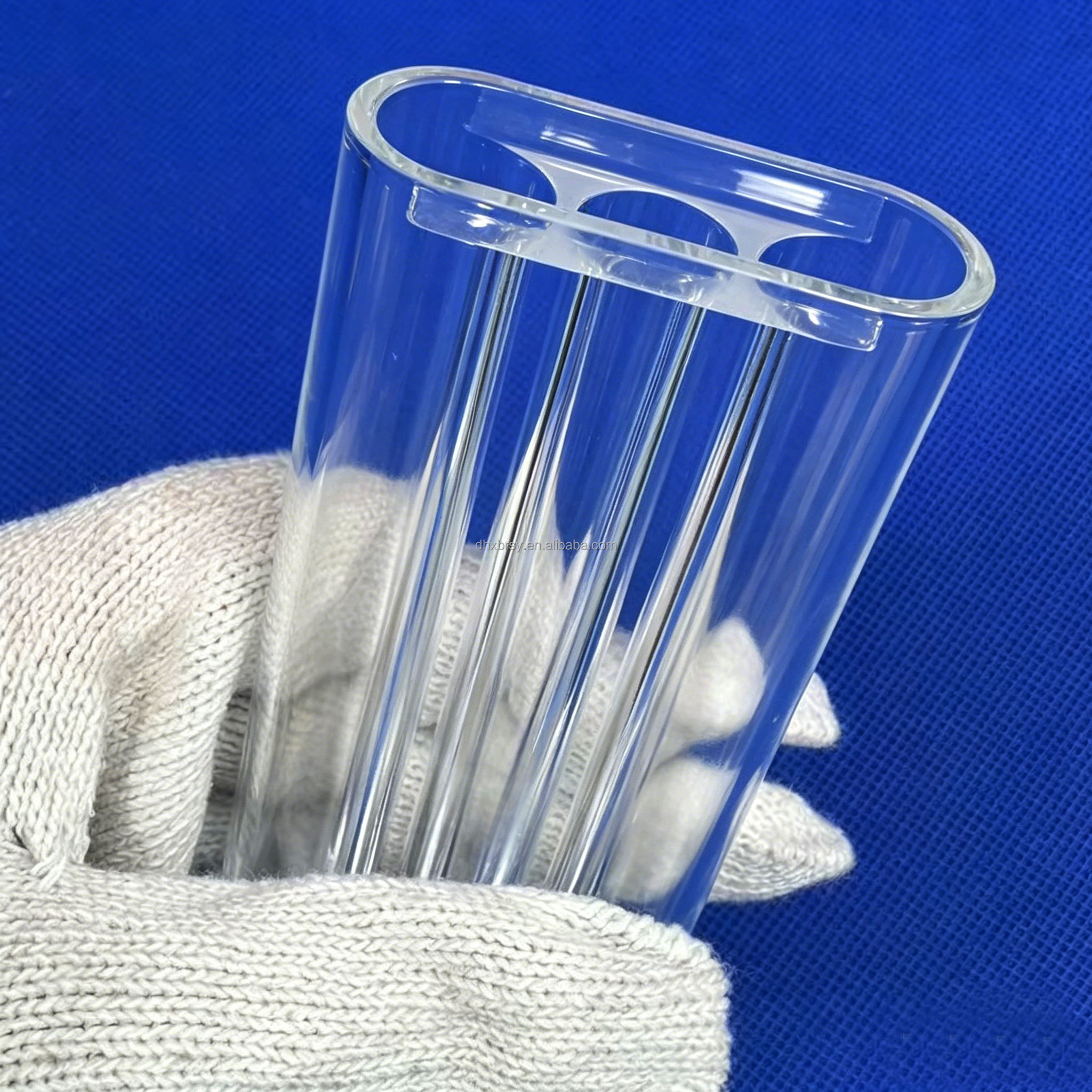
Yes. Our engineering division regularly interprets JIS drawings, geometrical dimensioning and tolerancing (GD&T), as well as 3D STEP, IGES, and DWG files. We manufacture custom flange faces, ground joints, quartz wafer boats with non-standard pitch, and triple-bore laser flow tubes with absolute adherence to your specified tolerances (down to ±0.01 mm where required).
What is your minimum order quantity (MOQ) for custom fabricated quartz research components?
We support pilot engineering trials, university laboratory prototyping (such as for research labs at King Skyfront), and full production volumes. The MOQ for most custom-machined or custom-welded quartz apparatus is just 1 piece. This allows engineers to validate thermal, chemical, and dimensional fit before committing to volume manufacturing runs.
How do you verify internal strain and structural stability in high-temperature quartz crucibles and tubes?
All fabricated and welded items pass through our multi-stage computer-controlled electric annealing furnaces, soaking at 1215°C followed by a strictly controlled cool-down schedule to fully relax vitreous internal stress. Prior to packaging, 100% of finished parts are inspected under high-sensitivity crossed-polarizer stress meters (polariscopes). Any unit displaying anomalous birefringence or residual stress concentration is rejected and re-annealed.

Connect with Our Engineering Desk for the Kawasaki Market

Send your CAD drawings, required quartz grades (JGS1/JGS2/Opaque), temperature parameters, and annual quantities. Receive a comprehensive DFM manufacturability evaluation and factory quotation within 24 hours.

Send an Inquiry